
Late 19th-Century German/Austrian Stag-Antler Cheroot Holder
Central Europe, circa 1890–1920
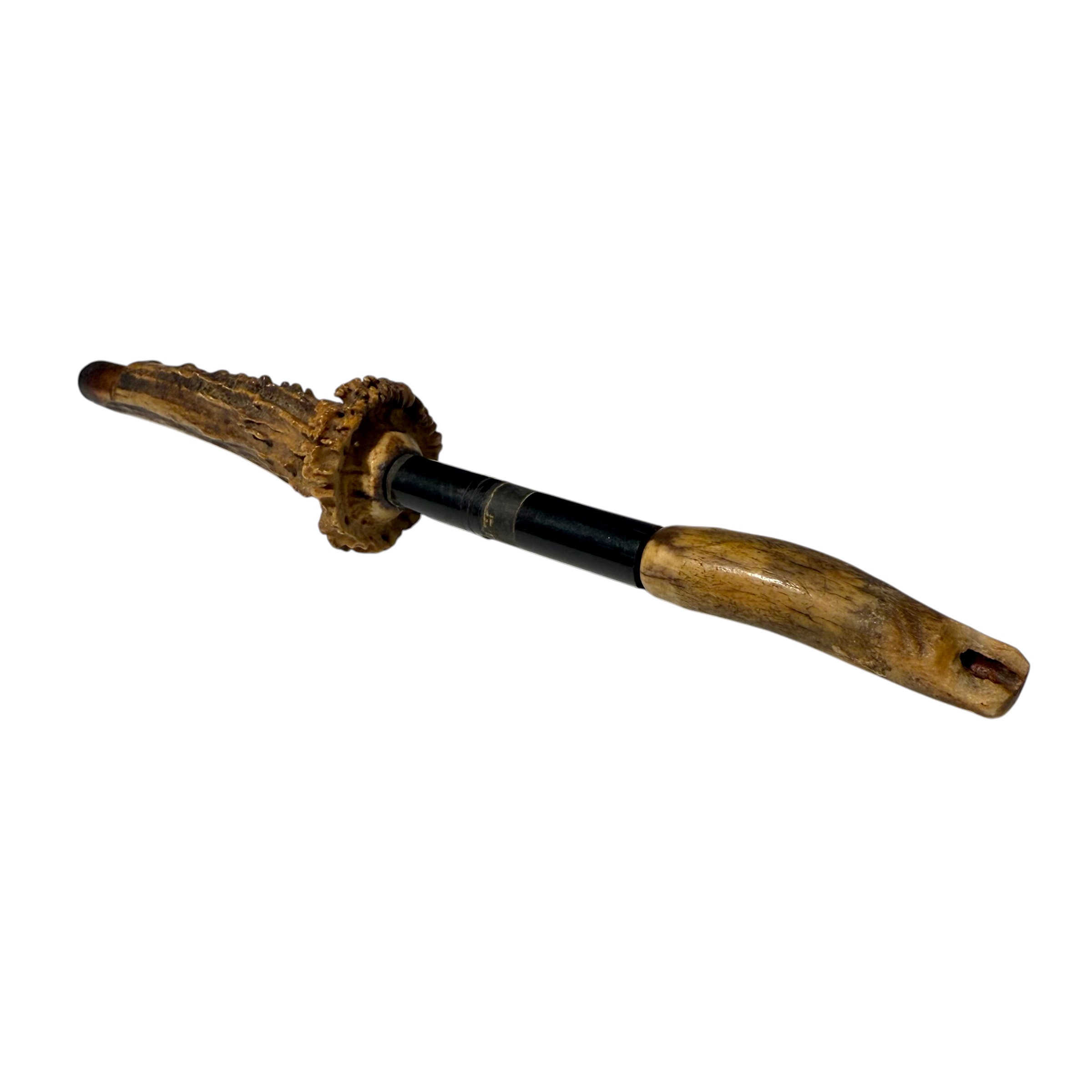
This unusual antique smoking implement combines natural stag antler, polished horn, a dark cylindrical stem, and a metal ferrule in a compact form associated with the hunting and smoking traditions of Central Europe.
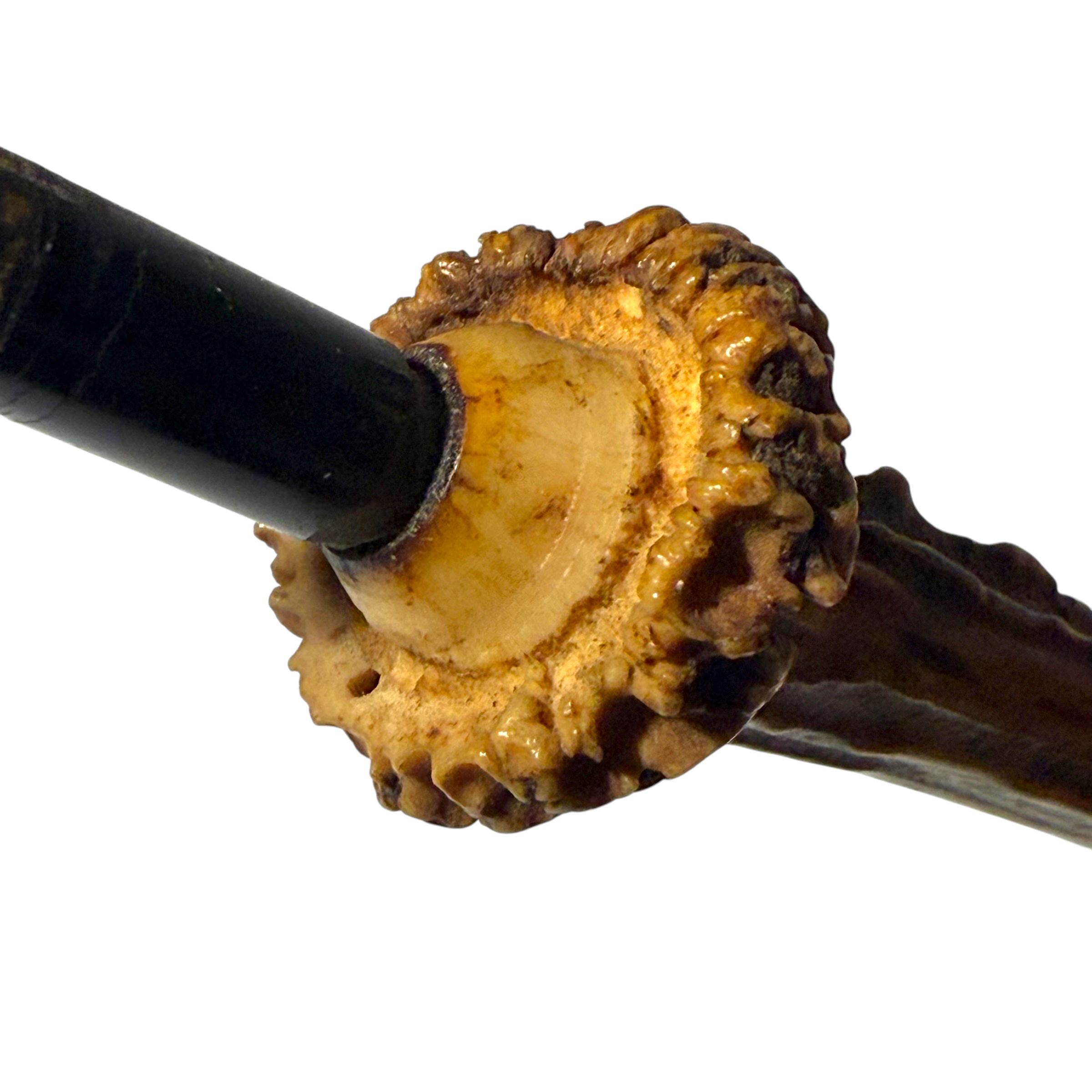
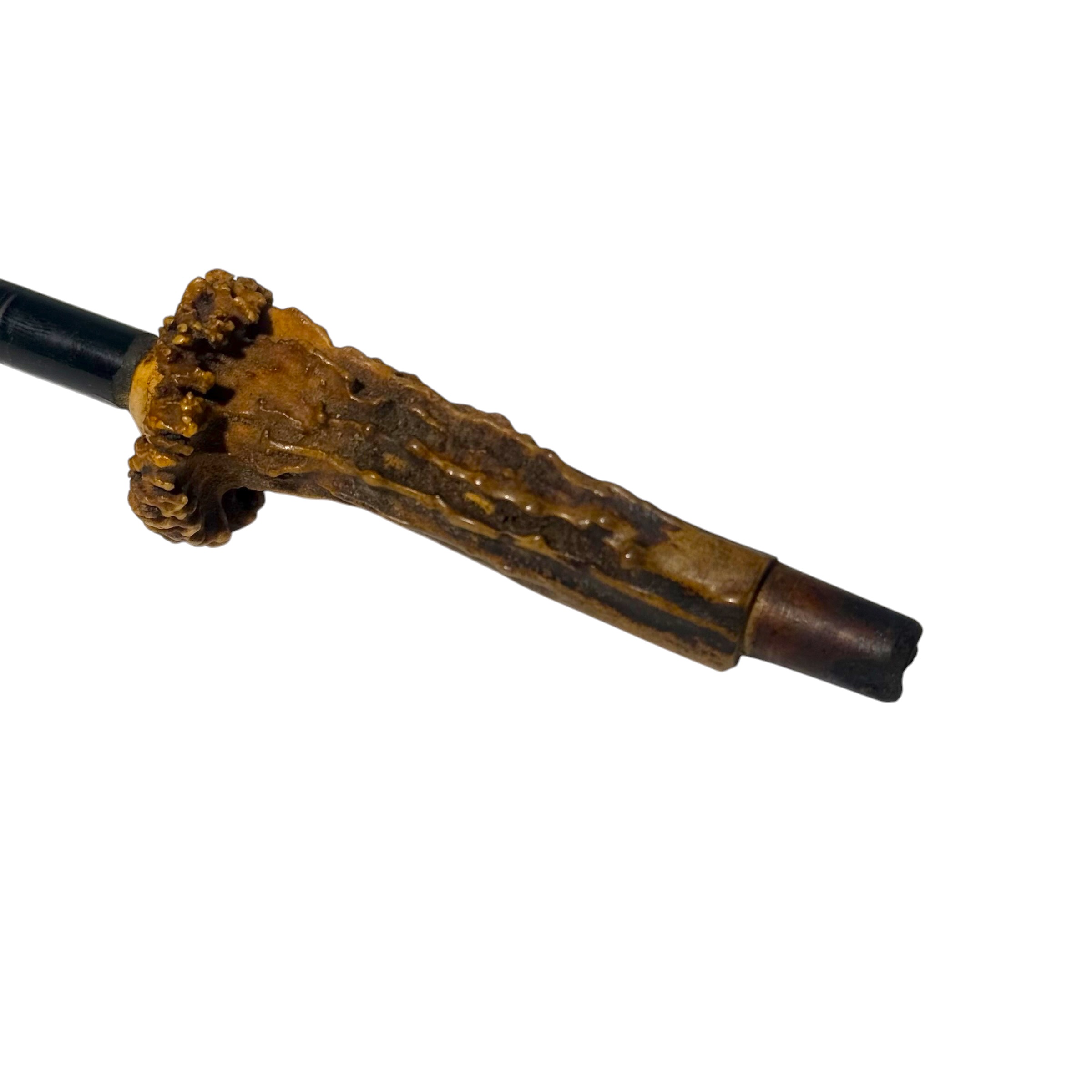
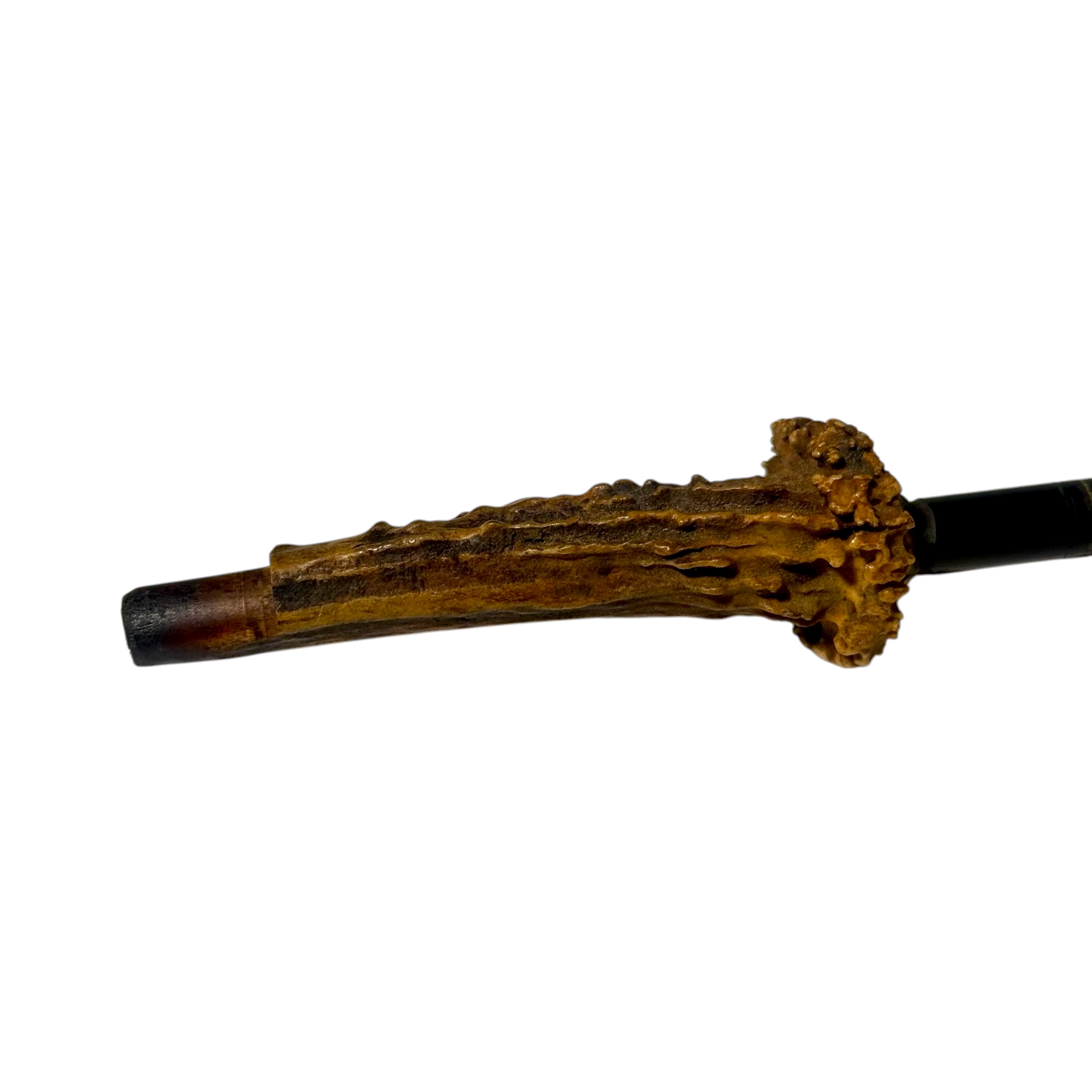
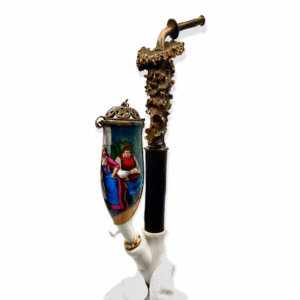
Measuring approximately 7 inches long, the piece is constructed around a naturally formed 3-inch section of stag antler that retains the irregular ridges, grooves, and pronounced burr found near the base of the antler.
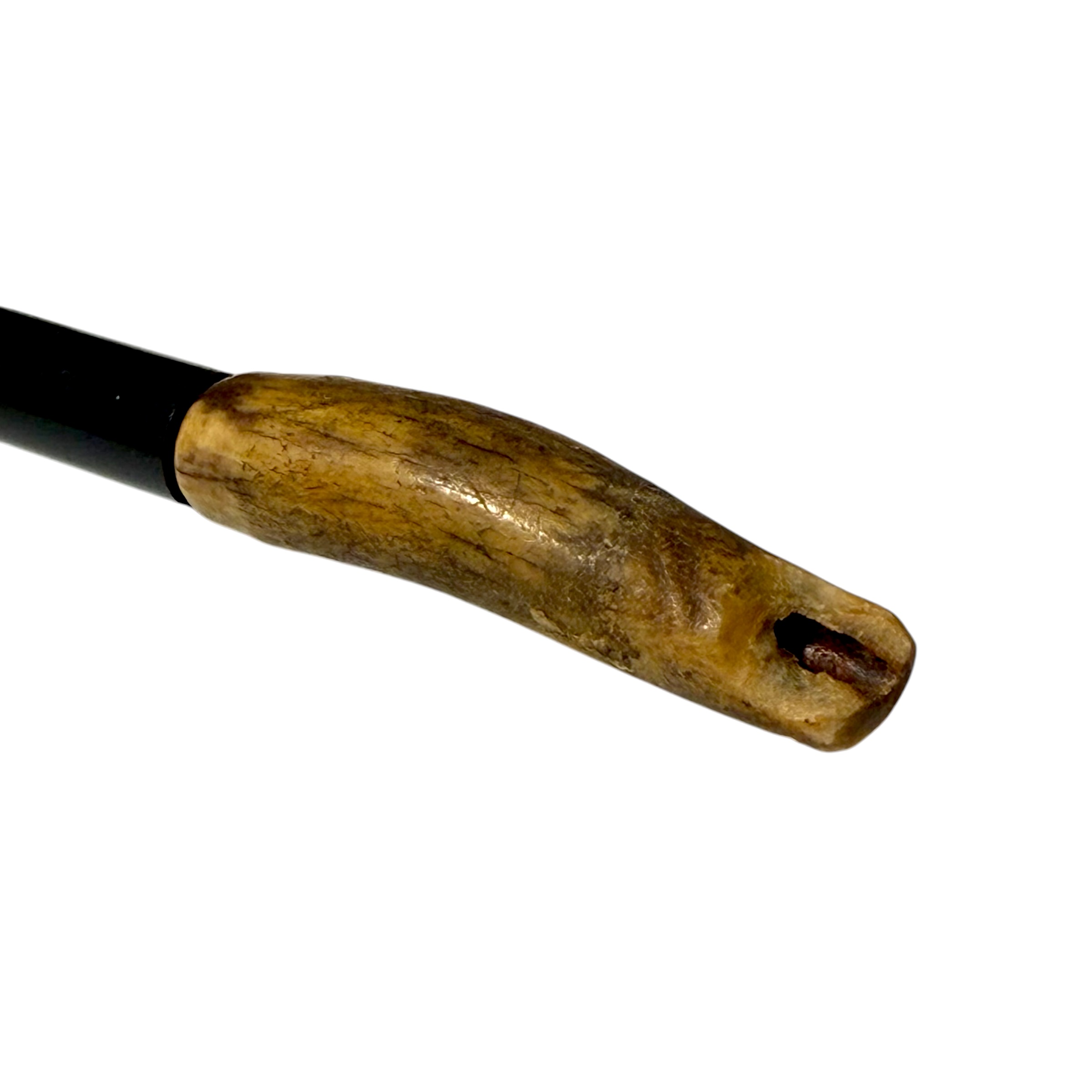
At the opposite end, a 1.5-inch polished horn mouthpiece completes the piece, while a dark central stem and narrow metal ferrule connect the natural components.
Its straight-through construction suggests that the object was most likely intended as a cheroot or small cigar holder, although an unusual compact straight tobacco-pipe function cannot be completely excluded.
Object Details
Date: Circa 1890–1920
Origin: Likely Germany or Austria
Region: Central Europe
Object Type: Cheroot / cigar holder
Associated Tradition: Hunting and outdoor smoking culture
Material: Stag antler, probable bovine or buffalo horn, dark hard-rubber or phenolic-type stem, metal ferrule
Length: Approximately 7 in.
Antler Section: Approximately 3 in.
Mouthpiece: Approximately 1.5 in.
Condition: Good antique condition with visible historical use
Stag Antler Construction
The most distinctive feature of the object is its use of naturally formed stag antler.
Rather than completely reshaping the material, the maker preserved much of the antler’s original surface.
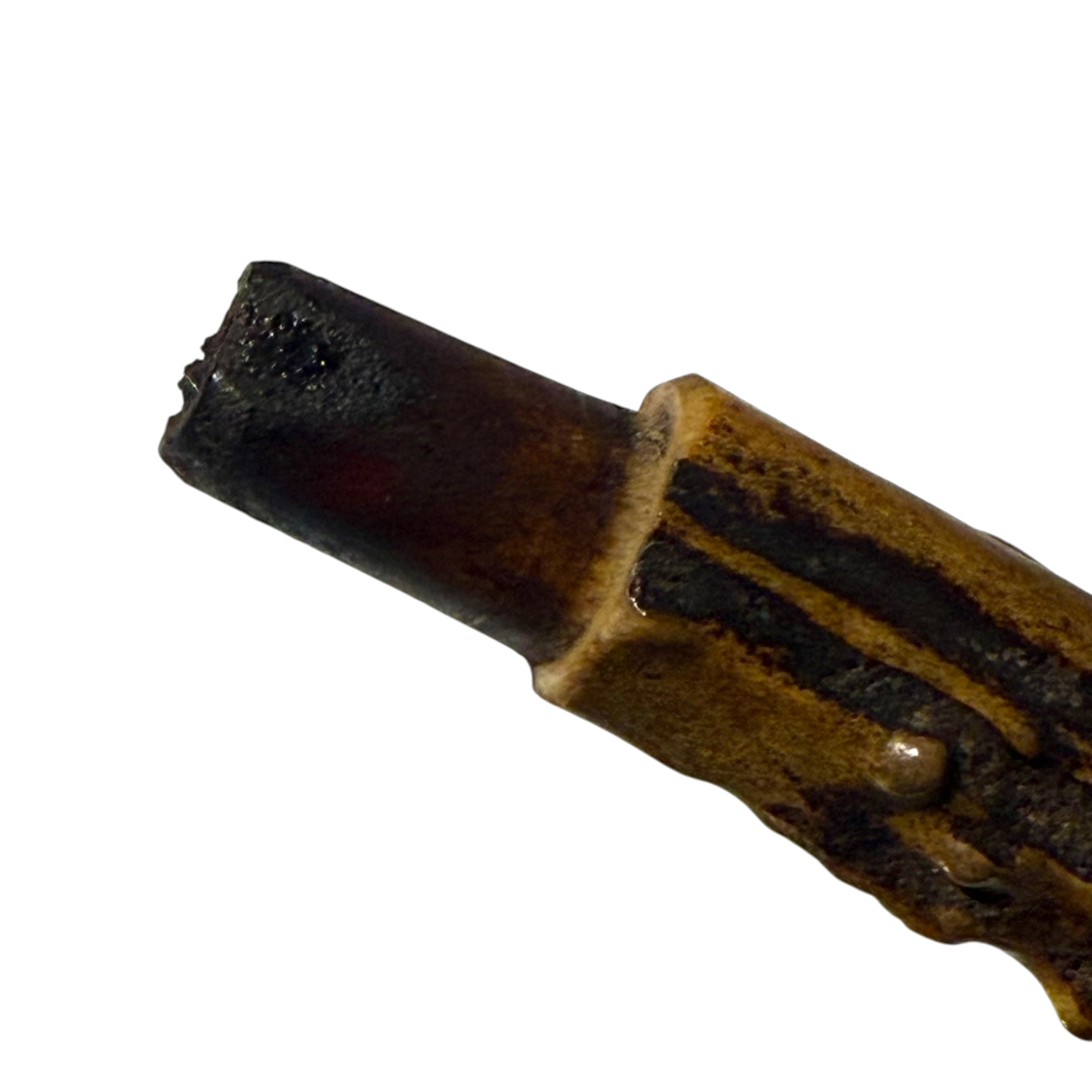
Deep grooves, ridges, irregular projections, and natural texture remain visible along the smoking end.
At the base of the antler is the enlarged irregular ring known as the burr or coronet, the naturally textured section found near the point where an antler grows from the animal’s skull.
Its deliberate inclusion gives the piece a distinctly rustic character and strongly connects it with the hunting culture in which antler smoking accessories became particularly popular.
Hunting and Smoking Culture
Antler and horn were widely used in the production of smoking accessories throughout German-speaking Central Europe.
During the 19th century, hunters, foresters, sportsmen, and craftsmen incorporated materials associated with hunting directly into objects used during everyday life.
Smoking pipes, cigar holders, walking sticks, knife handles, powder containers, and other personal objects were frequently made from or embellished with stag antler.
In a smoking implement such as this, the material served both a practical and symbolic role.
The antler created a durable structure while visually connecting the object with hunting, forests, game animals, and outdoor life.
Cheroot and Cigar Smoking
The straight construction of this example differs from the familiar upright bowl of a conventional tobacco pipe.
Instead, the smoking end runs directly in line with the stem and mouthpiece.
This configuration is consistent with cheroot and cigar holders, into which a short cigar or cheroot could be inserted before smoking.
The holder created additional distance between the burning tobacco and the smoker while providing a permanent reusable mouthpiece.
Cheroot holders were produced in a wide variety of materials during the 19th century, ranging from simple wood and horn examples to elaborate carved ivory, amber, silver, meerschaum, and antler pieces.
This example belongs to the more rustic hunting tradition.
Horn Mouthpiece
The mouthpiece appears to be formed from natural horn rather than bone.
Its polished brown surface displays elongated grain and color variation characteristic of horn.
Bovine and buffalo horn were commonly used for pipe and cigar-holder mouthpieces because the material could be shaped, polished, and comfortably held between the lips or teeth.
The natural variation of the horn contrasts strongly with the dark central stem and rougher stag-antler smoking end.
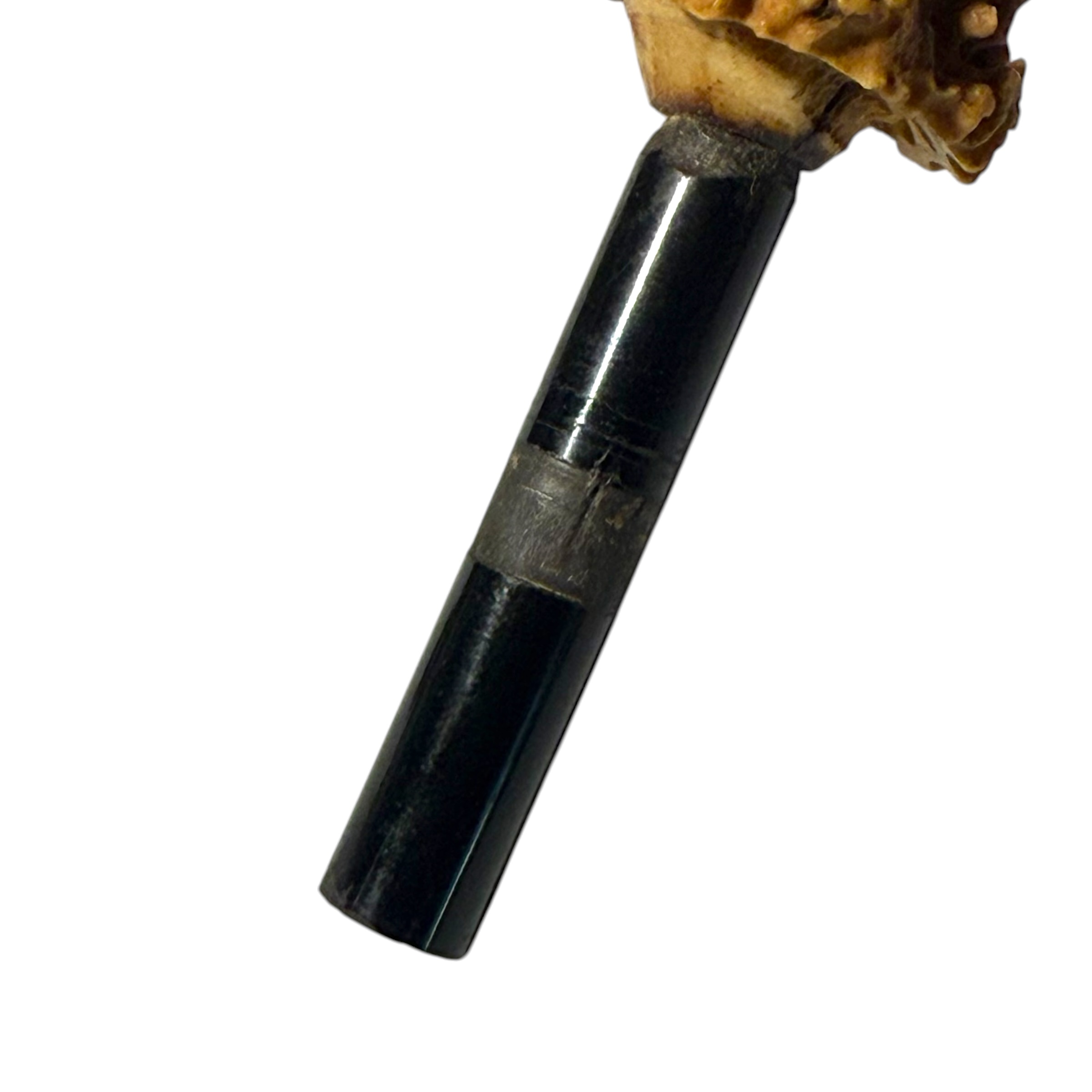
Dark Central Stem
The cylindrical black stem appears to be manufactured from a dense polished material.
Possible materials include:
- Ebonite or vulcanized hard rubber
- Black horn
- Ebonized material
- Early phenolic resin
Bakelite or another early phenolic material is possible if the piece dates from the early decades of the 20th century, although the material has not been scientifically tested.
For that reason, the stem is conservatively described as dark hard-rubber or phenolic-type material.
Metal Ferrule
A narrow metal band surrounds the center of the dark stem.
This ferrule likely served to reinforce a joint or connection between sections of the smoking implement.
Its worn gray surface suggests nickel silver, plated brass, or a similar metal alloy rather than a precious-metal fitting, although no metallurgical testing has been performed.
Evidence of Use
The smoking end displays substantial darkening and surface discoloration.
This is particularly visible around the terminal opening, where repeated exposure to smoke and heat appears to have produced a dark brown-to-black patina.
These surviving traces are important because they demonstrate that the object was not merely decorative.
It appears to have been actively used as a smoking implement.
German and Austrian Smoking Traditions
Germany and Austria developed especially rich traditions surrounding pipes and smoking accessories during the 19th century.
Long porcelain pipes, carved wood pipes, meerschaum pipes, hunting pipes, cigar holders, and antler smoking implements all circulated within these regions.
Hunting culture produced some of the most visually distinctive examples.
Stag antler was particularly suitable because every piece retained slightly different natural contours.
This allowed smoking accessories to function both as practical objects and as individual expressions of craftsmanship.
Condition
The piece remains in good antique condition with wear consistent with age and historical use.
The stag antler retains extensive natural surface texture.
The smoking end shows significant darkening and heat-related patina, while the mouthpiece displays age-related surface variation and wear.
The central stem and metal ferrule also exhibit minor scratches, oxidation, and handling wear.
These characteristics contribute to the historical surface of the object and provide visible evidence of its original use.
Please review all photographs carefully for a complete record of condition.
Collector Context
This piece may appeal to collectors of:
- Antique smoking pipes
- Cheroot and cigar holders
- German tobacciana
- Austrian tobacciana
- Hunting antiques
- Stag-antler objects
- Folk smoking implements
- 19th-century smoking culture
- Central European decorative arts
- Natural-material smoking accessories
Its combination of stag antler, horn, handmade construction, compact size, and surviving smoking patina makes it an especially evocative artifact of European hunting and smoking culture.
Reviews
There are no reviews yet.