
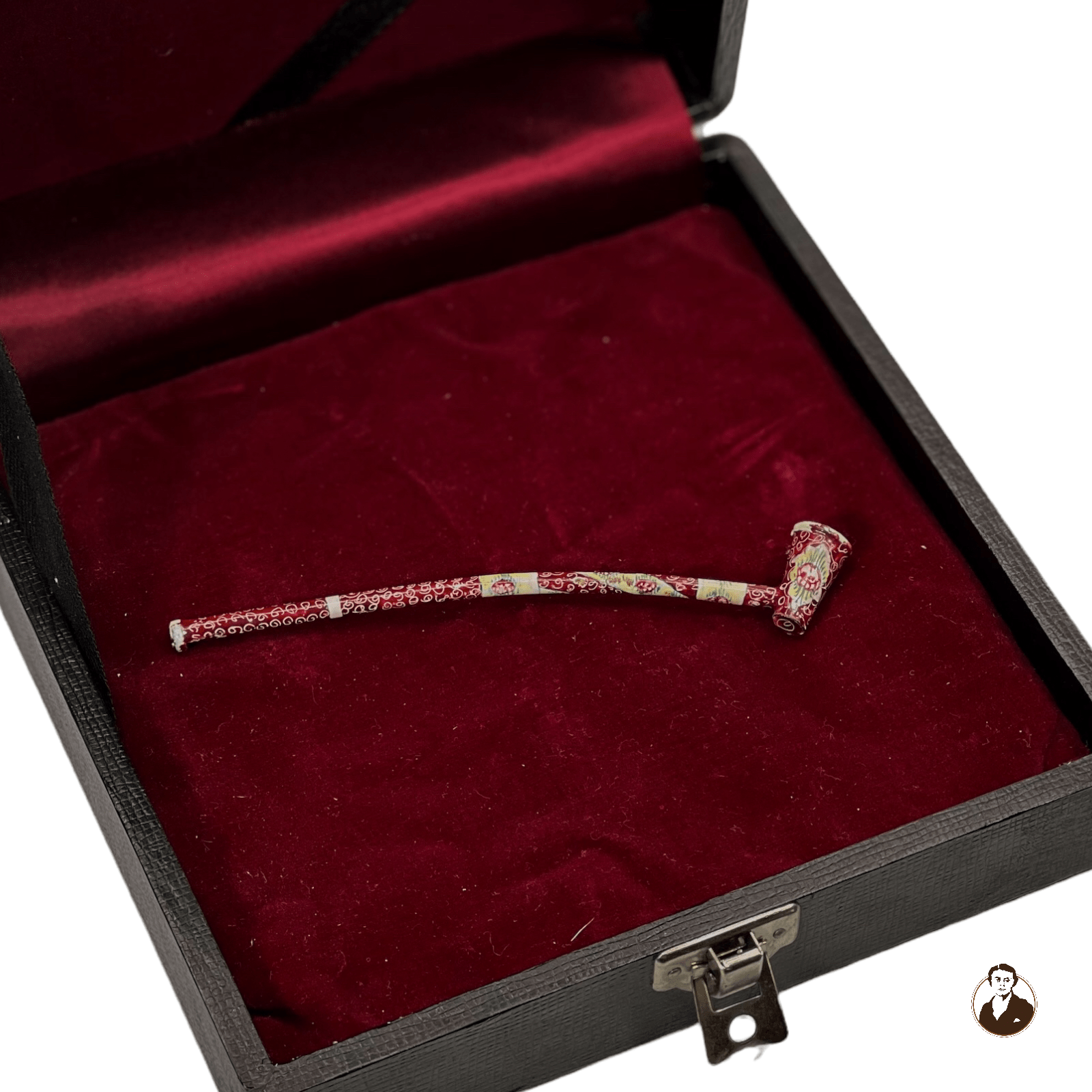
19th-Century Qajar Persian Woman’s Enameled Dokha Pipe
Persia, circa 1850–1890
This exceptionally delicate 19th-century Persian smoking pipe combines miniature scale, fine enamel decoration, and an elegant curved form associated with the refined decorative arts of the Qajar period.
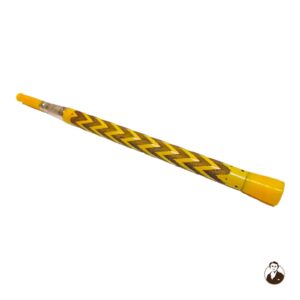
Measuring approximately 5 inches long, the pipe is constructed from copper and covered with finely painted enamel decoration. The narrow stem is ornamented with repeating red-and-cream patterns, while small floral and figural-style panels punctuate the length of the pipe.
At the terminal end, the compact angled bowl is decorated in matching enamel, creating a visually continuous design from mouthpiece to bowl.
Object Details
Date: Circa 1850–1890
Origin: Persia
Period: Qajar Dynasty
Object Type: Dokha / smoking pipe
Attributed Use: Woman’s smoking pipe
Material: Copper with painted enamel
Length: Approximately 5 in.
Decoration: Hand-painted floral and geometric enamel
Condition: Very Good antique condition
Miniature Form
One of the most distinctive characteristics of this pipe is its scale.
Unlike the long-stemmed pipes and large water pipes often associated with Middle Eastern smoking culture, this example is compact and highly personal.
Its small dimensions make the pipe feel almost like a piece of jewelry or a personal accessory rather than a purely utilitarian smoking instrument.
The slender curved stem and compact bowl create an elegant silhouette while allowing the painted decoration to remain the visual focus.
Painted Enamel Decoration
The pipe is covered with exceptionally fine enamel work.
Red scrolling and floral motifs dominate the surface, contrasted against pale cream-colored sections and small painted panels along the stem.
The decoration appears carefully planned around the geometry of the object, with alternating bands and ornamental fields visually dividing the pipe into sections.
This kind of miniature painted metalwork reflects the sophisticated decorative vocabulary associated with Persian luxury objects of the Qajar era.
Women and Smoking in Qajar Persia
The pipe has traditionally been identified as a woman’s smoking pipe.
Compact, finely decorated smoking implements could function as highly personal possessions, and elaborate enamelwork would have distinguished such an object from more utilitarian pipes.
Within the social world of 19th-century Persia, smoking was embedded in domestic life, hospitality, leisure, and social ritual.
This example is especially interesting because its small scale and refined decoration suggest a different relationship to smoking than the monumental hookahs associated with formal male gathering spaces.
Rather than emphasizing size or architectural presence, the design is intimate, portable, and decorative.
Qajar Decorative Arts
The Qajar period, spanning much of the 19th century, produced some of Persia’s most recognizable decorative arts.
Artists frequently worked in:
- Painted enamel
- Lacquer
- Metalwork
- Miniature painting
- Ceramics
- Jewelry
- Calligraphy
- Illustrated manuscripts
Floral designs, courtly imagery, portraiture, and densely patterned surfaces were especially characteristic of the period.
This pipe belongs naturally within that visual tradition.
Construction
The underlying structure appears to be formed from copper, providing a durable base for the enamel surface.
The pipe consists of a long narrow stem terminating in a compact raised bowl.
Its construction balances practical smoking function with decorative craftsmanship, demonstrating how even small personal objects could receive extensive artistic treatment.
Condition
The pipe remains in very good antique condition considering its age and delicate enamel surface.
The painted decoration remains highly visible, with age-related wear, surface variation, and minor losses consistent with historical handling and use.
The pipe retains its recognizable form and extensive original decorative character.
Please review all photographs carefully for a complete record of condition.
Collector Context
This piece may appeal to collectors of:
- Qajar Persian decorative arts
- Antique smoking pipes
- Persian enamel
- Women’s material culture
- Middle Eastern smoking artifacts
- Miniature decorative objects
- Tobacciana
- 19th-century Islamic art
- Persian metalwork
Its miniature scale, extensive enamel decoration, Persian origin, and association with women’s smoking culture give it a very different character from the larger hookahs and utilitarian pipes of the same period.
Reviews
There are no reviews yet.