History
of Smoke
For centuries, smoking has been an art, a ritual, a symbol of status and culture. History of Smoke offers a rare collection of certified historical smoking pipes and artifacts, each piece carrying a unique story. From antique advertising to ornate ceremonial pipes, these are not just relics they are treasures meant to be admired and preserved.
The Archive
A comprehensive survey of rare smoking antiquities, cataloged by material, origin, and cultural era. Each artifact has been evaluated for historical significance and physical preservation.
Smoking Pipes

Mid-19th Century Indian Silver-Plated Hookah
Copper with heavy silver plate, hand-worked | India, circa 1850–1870
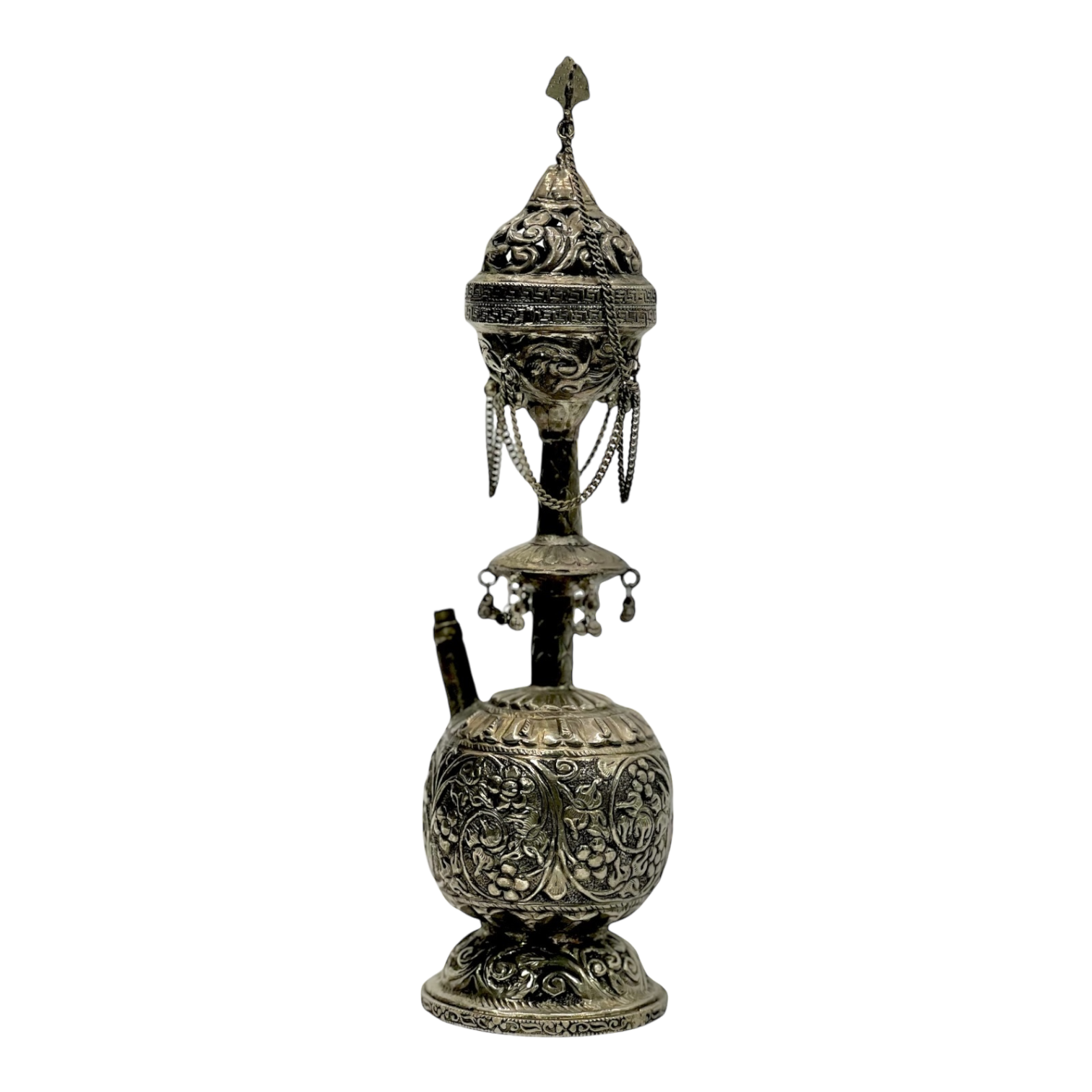
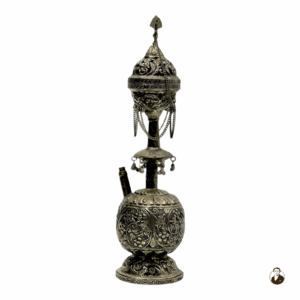
An ornate example of 19th century Indian metalwork, this silver-plated hookah is richly embellished with hand-bezeled floral and vine motifs, accented by decorative rope forms and suspended chains. Subtle design influences evoke cross-cultural exchange, reflecting the interconnected artistic traditions of India and the broader Ottoman world during this period.
Both functional and ceremonial, the piece retains its original downstem, underscoring its intended use within social and ritual contexts. As an object of craftsmanship and cultural dialogue, it embodies the elegance and complexity of historic smoking traditions in the Indian subcontinent.

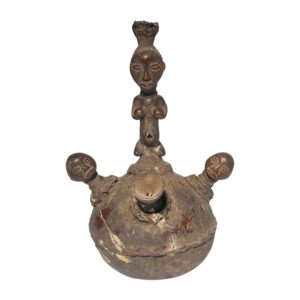
Ancient South American Stone Phallic Pipe
Carved stone | South America, pre-Columbian attribution
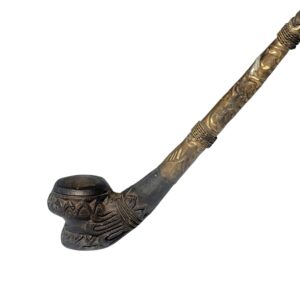
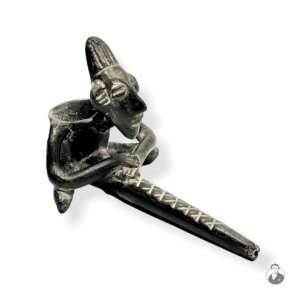
A striking example of symbolic form in early material culture, this carved stone pipe presents a phallic design often associated with fertility, ritual, and spiritual expression in ancient South American societies. Its carefully shaped contours and incised detailing reflect a tradition in which utilitarian objects carried layered cultural and ceremonial meaning.
Though its exact age remains undetermined, the piece conveys a sense of antiquity through its weathered surface and enduring form. As both artifact and symbol, it offers a compelling glimpse into the intersection of ritual practice, craftsmanship, and belief in the ancient Americas.

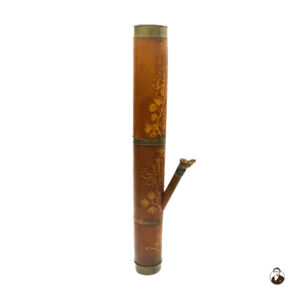
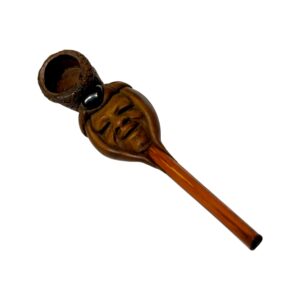
Mid-20th Century Chinese Bamboo Water Pipe
Bamboo | China, circa 1940s
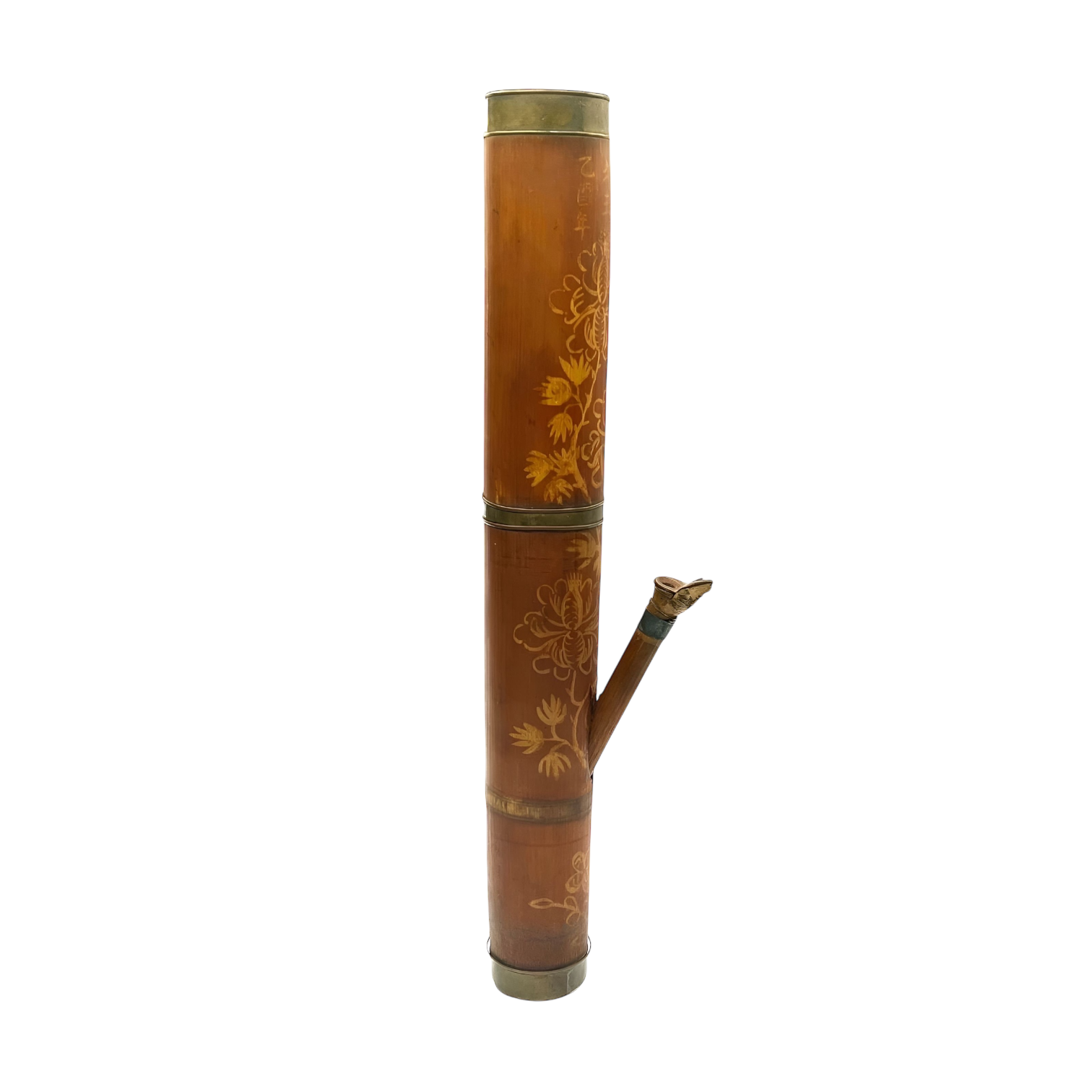
A humble yet evocative artifact, this bamboo water pipe reflects the resourceful craftsmanship of wartime-era China. Formed entirely from natural bamboo, including its bowl and downstem, the piece embodies a simplicity of design rooted in accessibility, function, and local material tradition.
Carried home by a World War II veteran, it bears a visible split along its side, a mark of both age and journey. As an object, it offers a quiet but powerful connection to personal history and cultural practice, where everyday utility intersects with the broader narrative of a global conflict.

19th Century Chinese Brass Opium Water Pipe
Brass, hand-worked | China, Qing Dynasty, circa 1850–1900
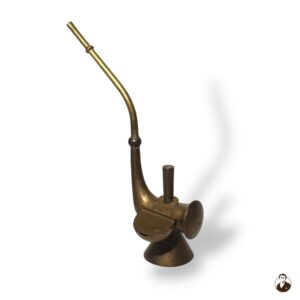
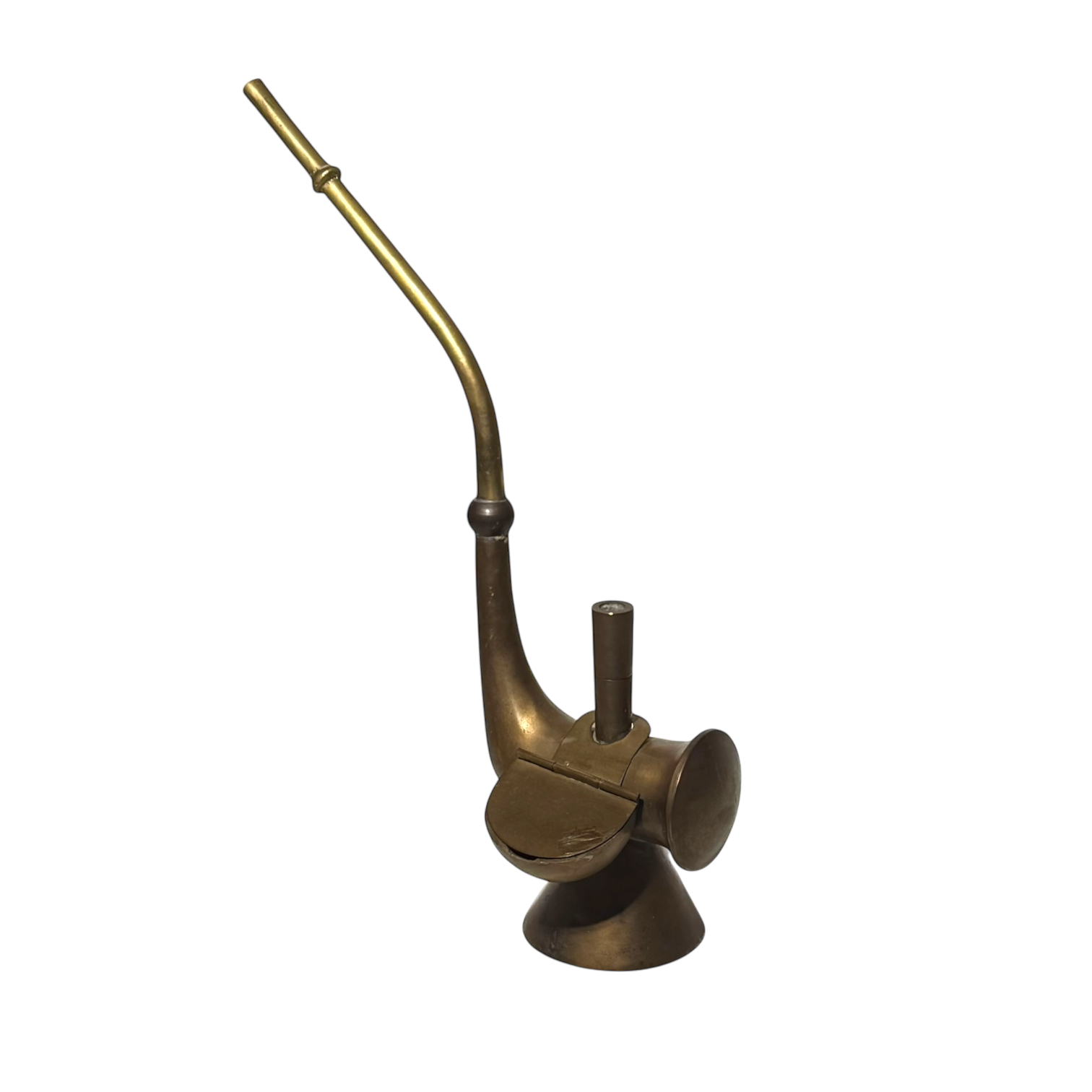
An exceptional artifact of Qing dynasty material culture, this brass opium water pipe reflects the refined engineering and ritual significance of 19th century opium practices. Its elongated, curved stem and integrated water chamber demonstrate a specialized design intended to cool and filter vapor, embodying the technical sophistication of its time.
Beyond function, the piece carries profound historical resonance, linked to a period that shaped both domestic life and global trade. As a surviving example, its aged patina and preserved form offer a tangible connection to a complex cultural legacy where craftsmanship, ritual, and history converge.

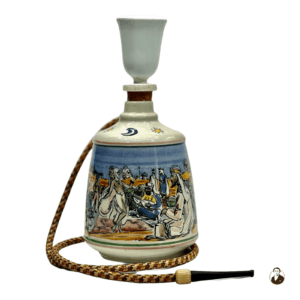
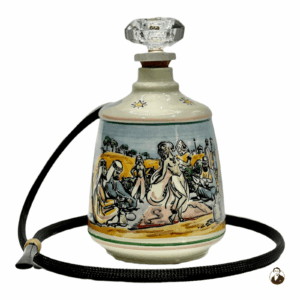
Royal Goedewaagen Gouda Arabic-Style Porcelain Hookah
Porcelain with mixed materials | Gouda, Holland, circa 1950s
A vivid example of mid-20th century Dutch ceramic artistry, this porcelain hookah by Royal Goedewaagen is adorned with a finely hand-painted scene of Arabic dancers set within a stylized desert landscape. The imagery reflects a European interpretation of Middle Eastern motifs, rendered with precision and vibrant color on the celebrated wares of Gouda.
Complete with its original tube, cloth wrapping, and bakelite mouthpiece, the piece remains a remarkably intact example of both function and design. As an object, it embodies the intersection of global inspiration and European craftsmanship, capturing a moment when cultural imagery and decorative tradition converged in collectible form.

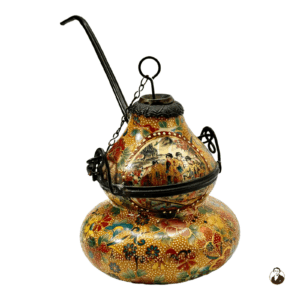
Late 19th Century Japanese Hand-Painted Porcelain Opium Pipe
Porcelain, hand-painted | Japan, circa 1870–1890
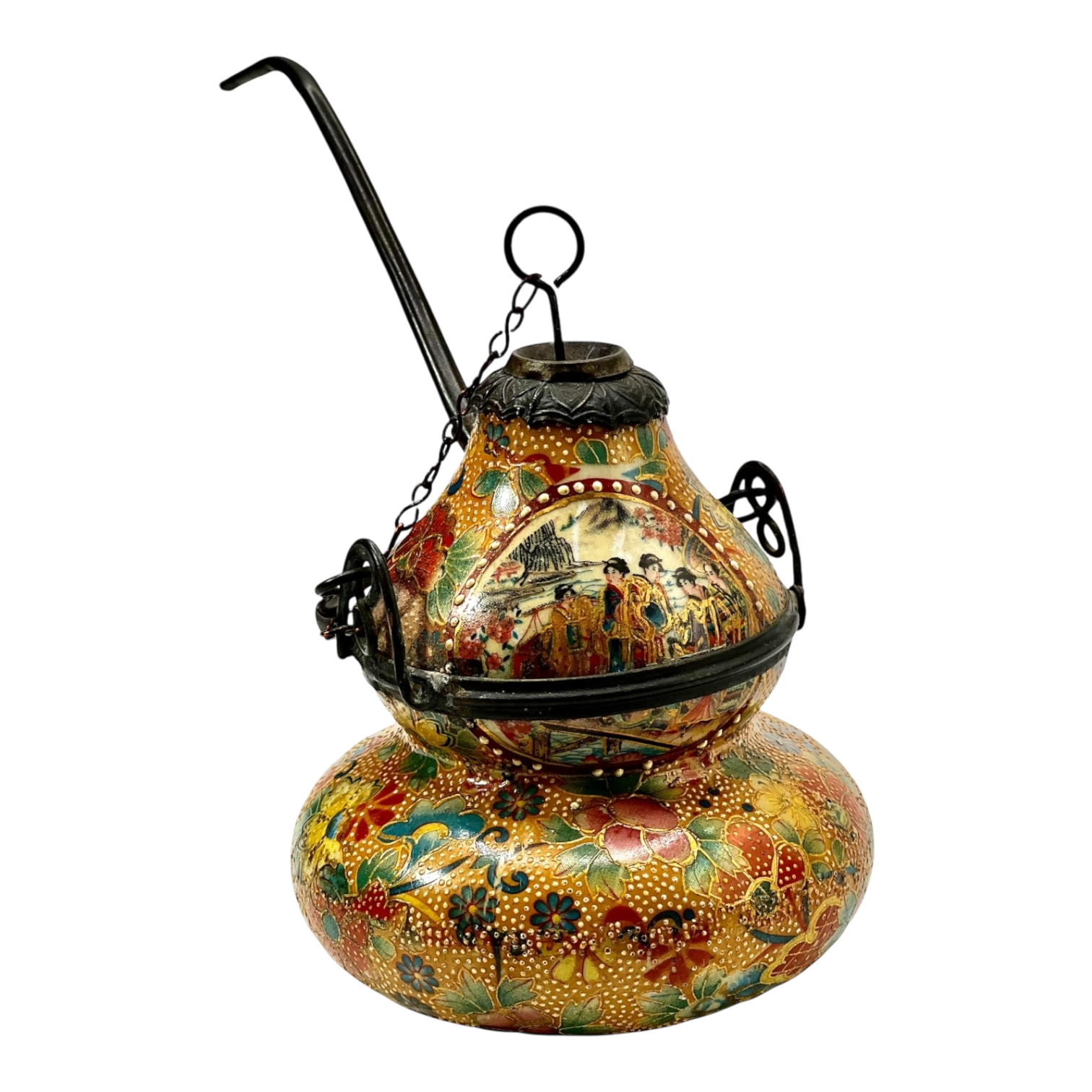
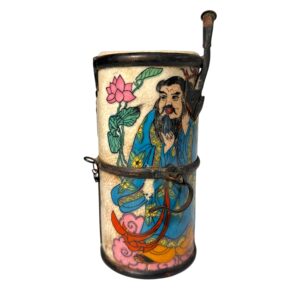
A finely executed example of late 19th century Japanese porcelain artistry, this opium pipe features a delicately hand-painted scene of women by the ocean, rendered with remarkable precision and subtle color. Its miniature scale and refined detailing reflect the aesthetic sensibilities of the period, where even utilitarian objects were elevated through narrative and craftsmanship.
Originally created for opium use, the piece now endures as a work of cultural and artistic significance. As both artifact and artwork, it captures a serene visual moment while offering insight into the intersection of daily life, ritual, and decorative tradition in Meiji-era Japan.

17th Century Jerusalem Ornate Ceremonial Pipe
Metal, intricately worked | Jerusalem, circa 1600–1700
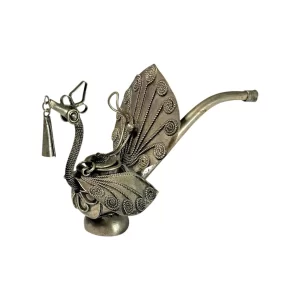
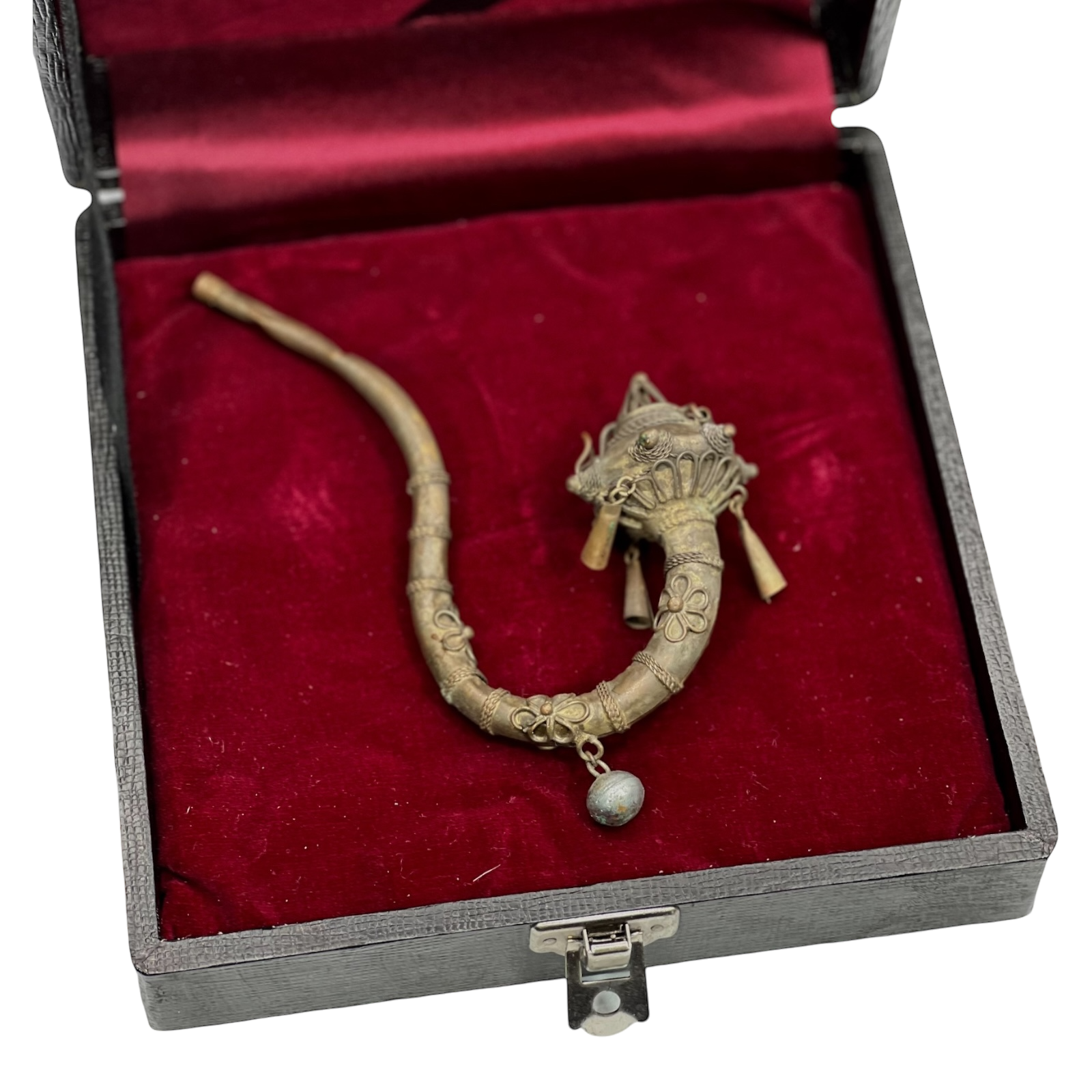
An evocative object of ritual and craftsmanship, this ornate ceremonial pipe is fashioned from thin metal and embellished with finely executed decorative motifs. Its intricate surface reflects the skilled metalwork traditions of the region, where objects of use were often elevated through detailed ornamentation and symbolic design.
Preserved in very good condition, with a minor indentation that speaks to its age and journey, the piece carries both historical presence and tactile authenticity. As an artifact, it offers a rare glimpse into ceremonial practices and the artistic expressions of early modern Jerusalem.

18th Century Austrian Bavarian Antler Pipe
Antler, metal, and porcelain, hand-painted | Austria (Bavaria), circa 1750–1790
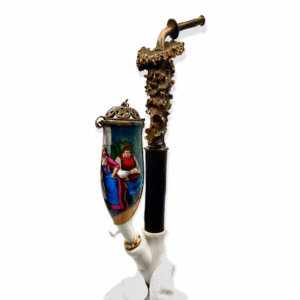
A richly expressive example of Alpine folk artistry, this antler pipe features a hand-painted scene of rural life, capturing the charm and narrative tradition of 18th century Bavarian culture. The natural curvature of the deer antler stem is complemented by metal fittings and a finely crafted porcelain bowl, uniting organic material with decorative craftsmanship.
Signed by the artist, the piece carries both personal and cultural significance, bridging utility and storytelling. As an object of daily ritual and artistic expression, it embodies the heritage and identity of its regional origins with remarkable authenticity.

Early 19th Century Chinese Wood and Metal Hookah Base
Wood and metal | China, circa 1800–1850
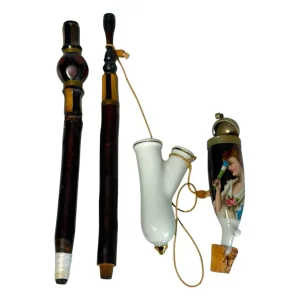
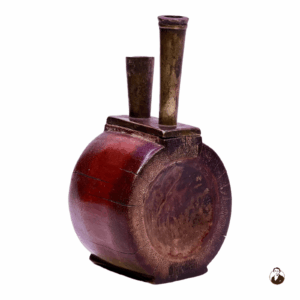
An uncommon surviving element of a larger smoking apparatus, this hookah base is crafted from a combination of wood and metal, reflecting the ingenuity of early 19th century Chinese design. Its form suggests integration within a more complex assembly, once supporting additional stems and a bowl for communal or individual use.
Though now incomplete, the piece retains a strong material presence and historical intrigue. As an artifact, it offers a rare glimpse into the evolving traditions of water pipe use in China, where function, adaptability, and craftsmanship converged in everyday ritual objects.

19th Century Chinese Porcelain Opium Pipe
Porcelain and metal, hand-painted | China, circa 1830–1850
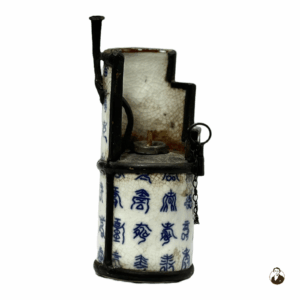
A distinctive example of early 19th century Chinese smoking culture, this porcelain opium pipe features a cylindrical form adorned with finely hand-painted script in the native language. The presence of untranslated characters lends the piece an added sense of mystery, offering a direct yet enigmatic connection to its historical and cultural context.
Combining ceramic artistry with functional design, the pipe reflects the refined craftsmanship and aesthetic sensibilities of its time. As both artifact and object of contemplation, it captures a complex chapter of social ritual and material culture in Qing dynasty China.

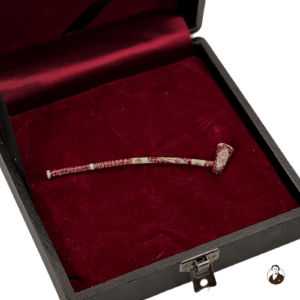
19th Century Persian Woman’s Dokha Pipe
Copper with enamel, hand-painted | Persia (Iran), circa 1850–1890
A refined example of Persian decorative metalwork, this slender dokha pipe is adorned with finely hand-painted floral motifs rendered in delicate enamel. Its graceful proportions and intimate scale reflect its association with personal use, offering insight into the nuanced material culture of women in 19th century Persia.
Both functional and ornamental, the piece embodies a quiet elegance where craftsmanship and daily ritual converge. As an object of cultural expression, it captures the artistry and sophistication embedded within Persian smoking traditions of the period.

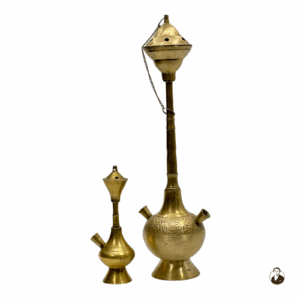
Pair of Mid-20th Century Ukrainian Brass Hookahs
Brass | Ukraine, circa 1940–1950
This matched pair of solid brass hookahs, comprising one large and one smaller example, reflects the enduring tradition of Eastern European metalwork in the mid-20th century. Their balanced forms and preserved luster speak to both functional design and the material resilience of brass as a medium for ritual and social objects.
Originally intended for communal use, the absence of tubes today emphasizes their sculptural presence as collectible artifacts. Together, they embody a period in which craftsmanship, durability, and shared custom converged in the ritual of smoking.

19th Century Persian Cobalt Glass Hookah Base
Cobalt glass, hand-painted | Persia (Iran), 19th century
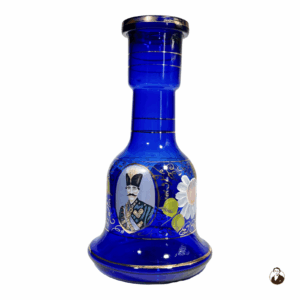
An elegant vessel from the rich tradition of Persian hookah culture, this cobalt glass base is adorned with a finely hand-painted portrait surrounded by intricate floral motifs. The deep, luminous blue glass reflects the technical mastery of 19th century artisans, while the painted decoration evokes the refinement and symbolism of Persian courtly art.
Both functional and ornamental, the form embodies the social ritual of the hookah as a centerpiece of leisure and gathering. As an object of beauty and cultural expression, it captures the harmony between craftsmanship, artistry, and daily life in historic Persia.

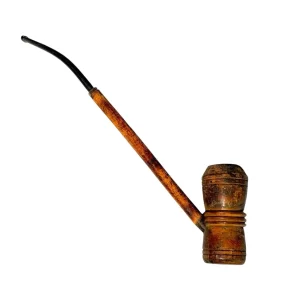
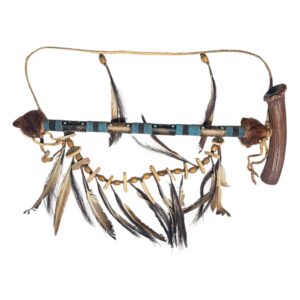
Antique Native American Attributed Hand-Carved Bone Smoking Pipe
Natural bone, hand-carved | North America, likely 19th century or earlier
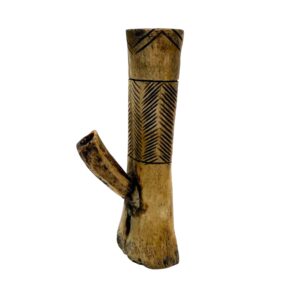
A striking example of early utilitarian craftsmanship, this hand-carved bone pipe features a traditional side-stem form with incised geometric detailing. Its unrefined carving and organic structure emphasize function over ornament, reflecting a material honesty often associated with Indigenous tool-making traditions.
The surface bears a deep, natural patina shaped by time and use, lending the object both visual gravity and historical resonance. As an artifact of cultural practice and daily life, it stands as a testament to enduring craftsmanship, where simplicity, purpose, and material converge.

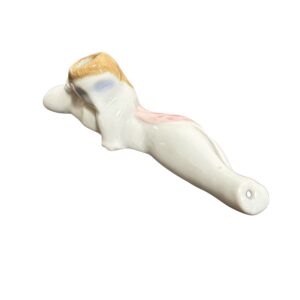
Vintage 1950s Hawaiian Porcelain Reclining Woman Pipe
Porcelain, hand-painted | Hawaii, circa 1950s
A playful artifact of mid-century Hawaiian tourism, this hand-painted porcelain pipe depicts a reclining female figure rendered in soft pastel tones and delicate detail. Created during the postwar boom in travel souvenirs, it reflects the era’s fascination with exoticism, leisure, and the romanticized imagery of the Pacific.
Balancing function and ornament, the integrated bowl and gentle glaze wear speak to both use and age, while its whimsical form embodies the charm and kitsch of collectible Americana. As both object and narrative, it captures a moment when artistry, novelty, and cultural allure converged in the souvenir trade.
Curiosities

1920s German Art Deco Telescopic Cigarette Holder
Bakelite | Germany, circa 1920s
A striking expression of Art Deco design, this telescopic cigarette holder embodies the bold geometry and modern materials of the Roaring Twenties. Crafted from richly toned bakelite in yellow and brown hues, its elongated, extendable form reflects both stylistic innovation and the era’s fascination with elegance and theatrical presentation.
Extending to an impressive length, the piece merges function with visual drama, transforming a simple smoking accessory into a statement of sophistication. As an object, it captures the spirit of early 20th century modernity, where design, material, and social ritual converged in refined form.

Late 19th Century Victorian Silver-Plated Cigar Tube
Silver plate, engraved | England, circa 1890–1920
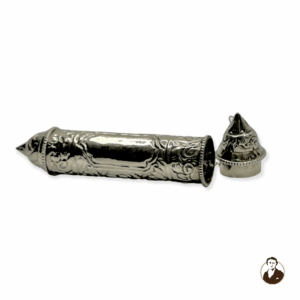
An elegant accessory of the late Victorian period, this silver-plated cigar tube is adorned with finely engraved ornamentation that reflects the era’s dedication to detail and decorative refinement. Its slender form and polished surface convey both practicality and the quiet luxury associated with personal smoking accoutrements of the time.
Designed to protect and preserve a single cigar, the piece embodies a culture of ritual and presentation within Victorian society. As both functional object and crafted adornment, it offers a glimpse into the refined habits and material sensibilities of the period.

1950s Revolving Globe Music Box Cigarette Holder
Mixed materials with mechanical movement | Mid-20th century, circa 1950s
A charming fusion of function and novelty, this globe-form music box doubles as a revolving cigarette holder, designed to store and present up to eighteen cigarettes. When wound, the internal mechanism plays a classical melody while gently rotating, transforming a utilitarian object into a moment of movement and sound.
Reflecting the playful ingenuity of mid-century design, the piece balances practicality with decorative appeal. As both storage vessel and mechanical curiosity, it captures a period when everyday objects were imbued with entertainment, craftsmanship, and a sense of delight.

1930s Zig-Zag Cigarette Papers Porcelain Advertising Sign
Porcelain enamel, hand-painted | United States, circa 1930s
A vibrant example of early 20th century American advertising, this hand-painted porcelain sign features the iconic Zig-Zag sailor rendered in bold yellow and black. Its durable enamel surface and enduring graphic design reflect the golden age of tobacco marketing, where visual identity and craftsmanship combined to create lasting commercial imagery.
Later signed by Cheech Marin and Tommy Chong, the piece bridges generations of smoking culture, uniting classic Americana with 20th century countercultural influence. As both advertisement and artifact, it embodies the evolving narrative of social ritual, branding, and cultural expression.

Early 20th Century Ottoman Rolling Papers
Paper, original packaging | Ottoman Empire (Turkey), dated 1910
A rare surviving example of early 20th century smoking ephemera, these Ottoman rolling papers remain preserved within their original packaging, offering a direct connection to everyday life in the final years of the empire. Their careful production and enduring condition reflect the quality and attention to detail characteristic of the period.
As both utilitarian object and historical artifact, the set carries quiet significance, embodying the material culture of a transitional era. With original contents intact, it stands as a tangible link to the social rituals and craftsmanship of the late Ottoman world.

The Connoisseur’s Handbook of Marijuana
First edition, softcover | William Daniel Drake Jr., United States, 1971
A landmark publication of the American countercultural era, this first edition of The Connoisseur’s Handbook of Marijuana reframes cannabis through a lens of refinement, offering early discussions of strains, methods, and etiquette. Its design and tone reflect a moment when underground culture began to intersect with notions of sophistication and connoisseurship.
Signed by Cheech Marin and Tommy Chong, the volume carries added cultural resonance, linking literary history with the figures who helped define cannabis in popular consciousness. As both book and artifact, it captures a pivotal shift in social attitudes and the evolving identity of modern cannabis culture.

The Pleasures of Smoking
Poetry volume, softcover | Circa 1948
A reflective literary work from the mid-20th century, The Pleasures of Smoking explores the ritual and cultural significance of smoking through a collection of poetic verse. Blending wit, nostalgia, and introspection, the text captures a moment when smoking was often framed as both a social art and a personal indulgence.
With its naturally aged pages and enduring themes, the book serves as both a literary artifact and a window into postwar sensibilities. As an object, it embodies the intersection of habit, identity, and expression within the cultural landscape of its time.
Framed Archival Canvas Reproductions
A definitive collection of historic smoking imagery, meticulously rendered on 100% cotton canvas and hand-fitted into custom wood frames.
Each acquisition includes a formal Certificate of Authenticity, validating the print’s provenance and ensuring its place within the Goodson Gallery curated collection.

“Permit to Smoke – A Good Cigar”
Archival canvas reproduction after c.1910 advertisement | Framed print
A refined reimagining of early 20th century tobacco advertising, this canvas reproduction captures the elegance and visual allure of a circa 1910 cigar poster. The composition, featuring a poised female figure with a cigar, reflects the period’s evolving blend of sophistication, marketing, and aspirational lifestyle imagery.
Printed on archival-quality canvas and framed for display, the work bridges historical design with contemporary presentation. As both decorative object and visual reference, it evokes a time when advertising itself was crafted as an art form, merging commerce with enduring aesthetic appeal.

Two Dapper Men Smoking
Archival canvas reproduction after 1920s photograph | Framed print
A sophisticated glimpse into early 20th century social culture, this photographic reproduction captures two elegantly dressed men engaged in the ritual of cigar smoking. Their refined attire and composed demeanor reflect an era in which smoking was closely tied to status, leisure, and masculine identity.
Faithfully reproduced on a large-scale canvas, the image preserves the texture and atmosphere of the original photograph while elevating it for contemporary display. As both visual document and decorative work, it embodies the enduring appeal of vintage photography and the cultural rituals it depicts.

Dog with Tobacco Pipe
Archival canvas reproduction after c.1870 photograph | Re-colorized print
A whimsical yet compelling image, this late 19th century photograph depicts a Labrador posed with a tobacco pipe, blending humor with the formal conventions of early studio portraiture. The composition reflects a period fascination with staged imagery, where animals were often anthropomorphized to mirror human habits and social rituals.
Re-colorized and presented as a contemporary canvas print, the work bridges past and present, preserving the charm of the original while enhancing its visual presence. As both curiosity and cultural artifact, it offers a playful insight into Victorian-era photography and its enduring appeal.

Couple Smoking
Archival canvas reproduction after 1920s photograph | Re-colorized print
A romantic glimpse into the social atmosphere of the 1920s, this photograph captures a couple engaged in the shared ritual of smoking, framed by the elegance and intimacy of the era. Their poised interaction reflects a time when smoking was woven into moments of connection, style, and modern identity.
Re-colorized to enhance depth and detail, the image is reinterpreted for contemporary viewing while preserving its historical essence. As both visual document and decorative work, it evokes the sophistication and evolving social dynamics of early 20th century life.

Two Men Smoking in an Automobile
Archival canvas reproduction after 1920s photograph | Framed print
A dynamic snapshot of early 20th century modern life, this photograph captures two well-dressed men smoking cigars while seated in an automobile, symbolizing the intersection of leisure, status, and technological progress. The setting reflects a transformative era in which mobility and social ritual became closely intertwined.
Reproduced on canvas for contemporary display, the image preserves the clarity and character of the original composition. As both historical document and decorative work, it evokes the sophistication and forward momentum of the 1920s, where style and innovation defined a new cultural landscape.
Dedicated to the global preservation and study of smoking’s cultural heritage, Archiving the evolution of human ritual through historic pipes, curiosities, artwork, and literature.
Global Archiving
Collecting and preserving the diverse history of smoking cultures worldwide, ensuring every artifact tells its original story.
Curated Media
A definitive archive of historic advertisements, photographs, and literature restored to museum-grade standards.
Public Sharing
Bringing the aesthetic of smoke into the modern era through exclusive, framed canvas reproductions of the collection’s most iconic imagery.
Correspondence & Acquisitions
The History of Smoke Curatorial Team typically responds within two gallery days.