
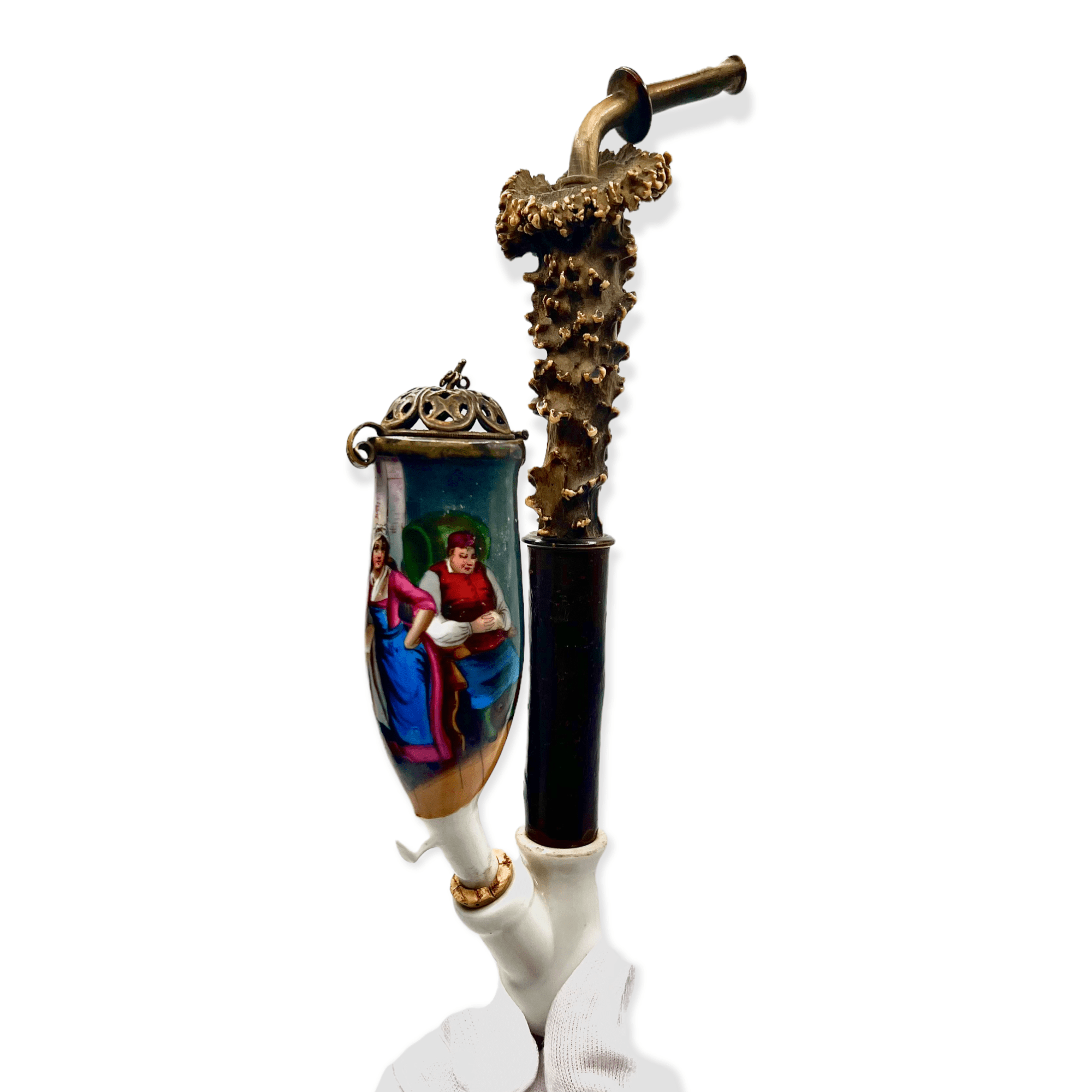
18th-Century Austrian Bavarian Antler & Porcelain Smoking Pipe
Austria / Bavaria, circa 1750–1790
This exceptional late-18th-century smoking pipe brings together several traditions of Central European craftsmanship in a single highly decorative object.
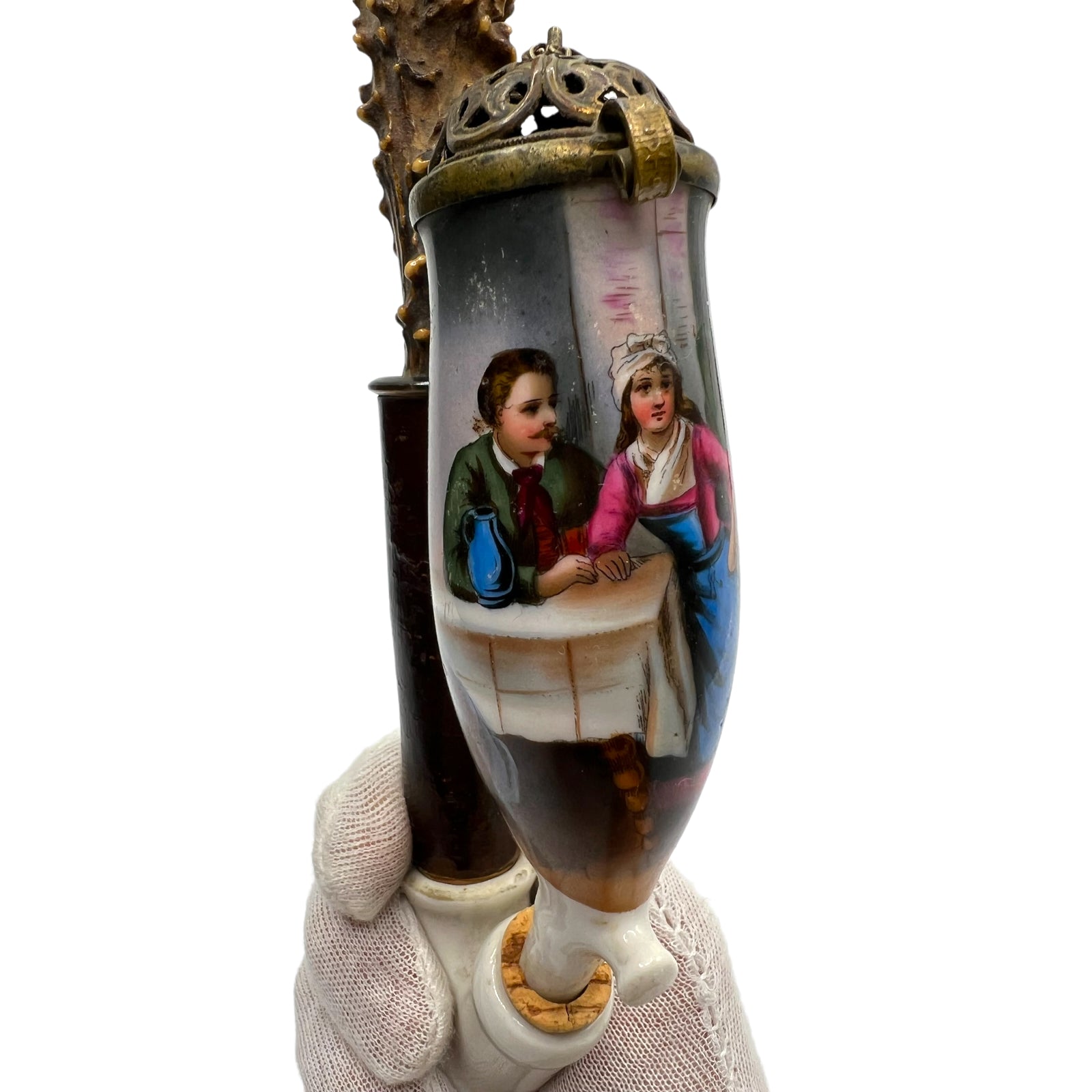
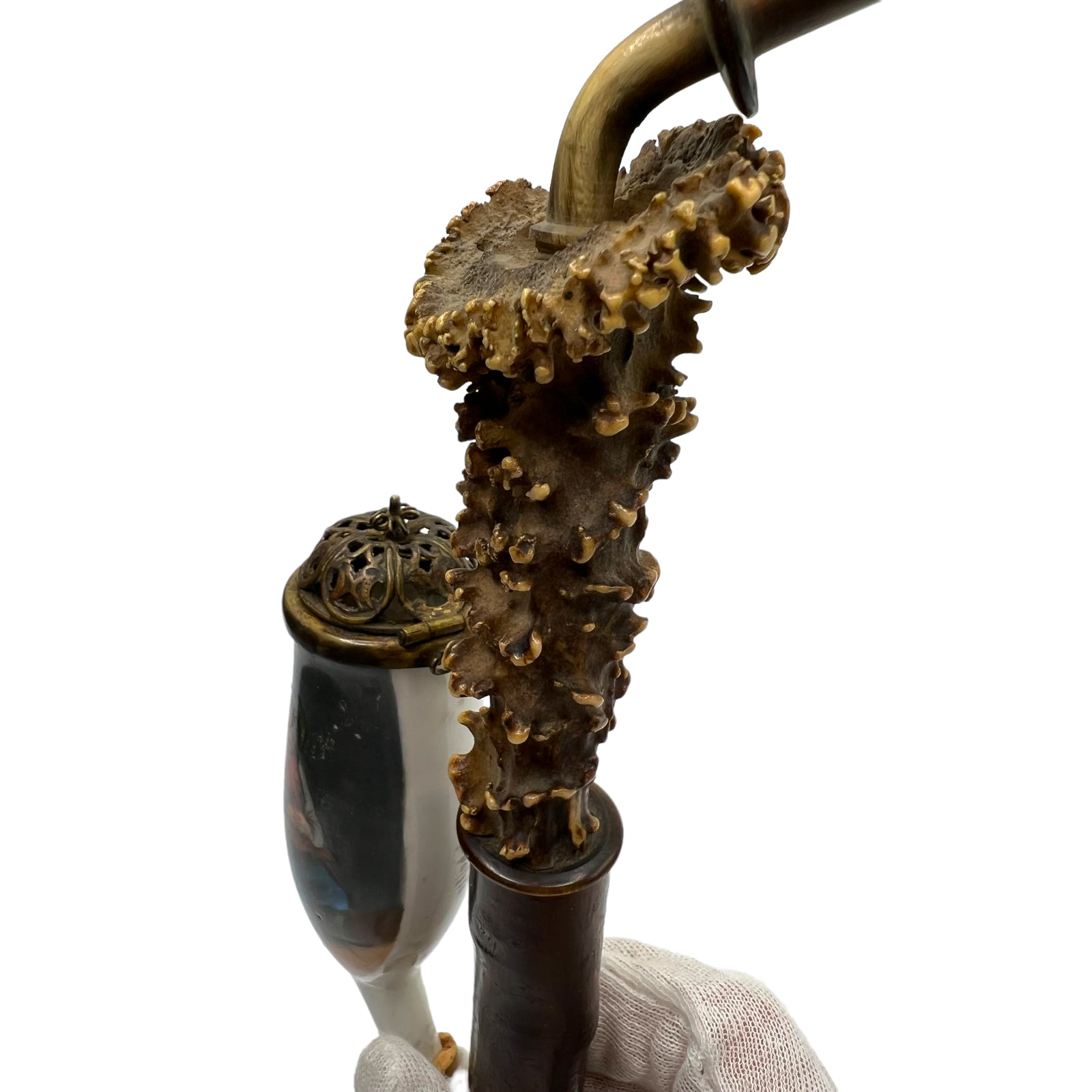
The long stem is formed from natural deer antler with metal fittings, giving the pipe a strong sculptural presence and distinctly regional character. At the end sits a finely formed porcelain bowl, hand-painted with a pastoral folk-art scene depicting a traditional home and rural life.
Rather than functioning as a purely utilitarian smoking implement, the pipe was created as an object of personal expression and craftsmanship. Pipes of this type were closely associated with the social culture of Central Europe, where elaborate smoking accessories could reflect regional identity, occupation, taste, and status.
The painted porcelain bowl provides the strongest artistic element. Its domestic scene offers a small visual window into the romanticized landscapes and everyday environments represented in Germanic and Austrian decorative arts during the period.
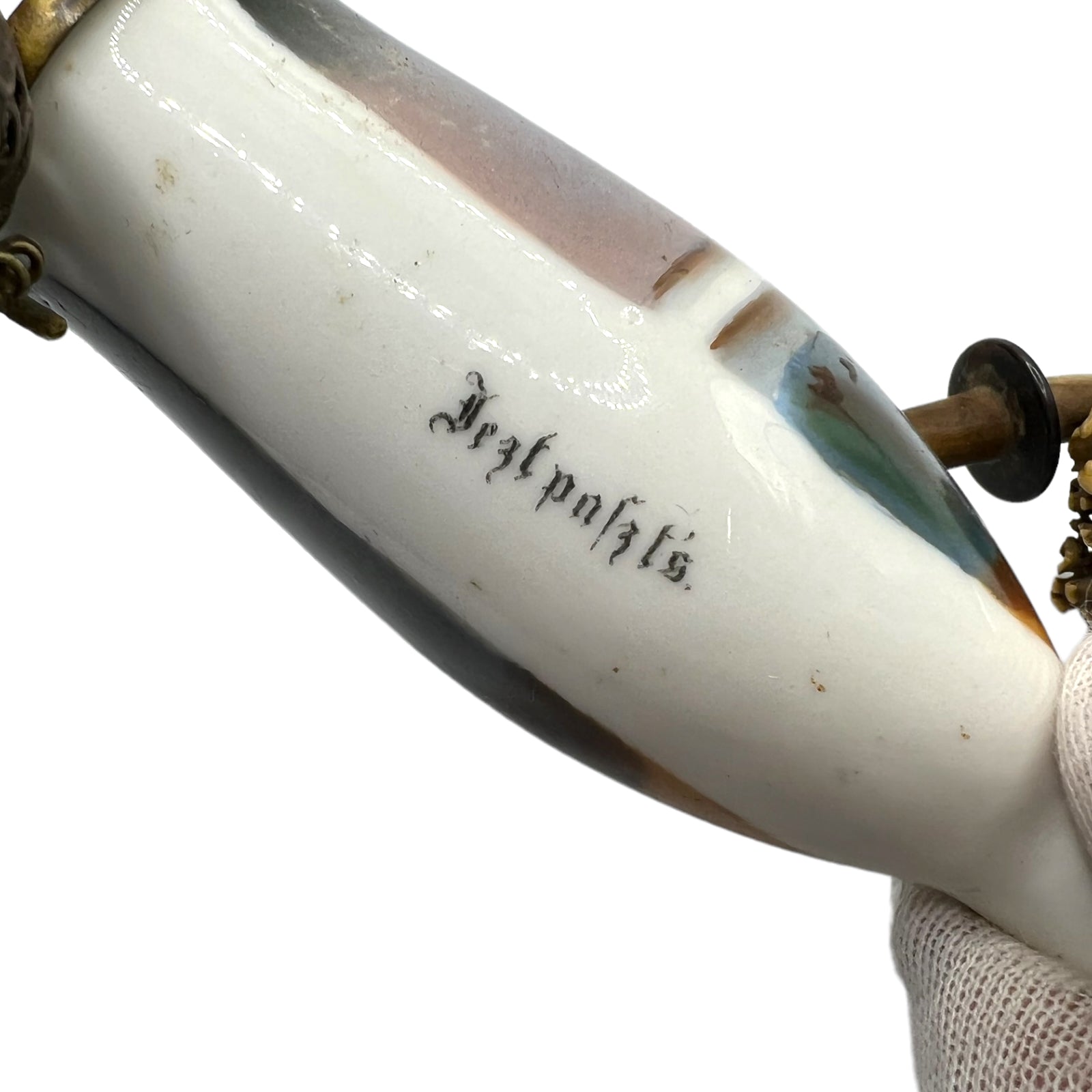
The bowl is also signed by the artist, adding an unusual personal dimension to the piece and preserving a direct trace of the individual responsible for its painted decoration.
Object Details
Date: Circa 1750–1790
Origin: Austria / Bavarian cultural region
Object Type: Smoking pipe
Stem Material: Deer antler with metal fittings
Bowl Material: Hand-painted porcelain
Decoration: Folk-art rural / domestic scene
Signature: Artist-signed
Period: Late 18th century
Craftsmanship
The use of antler is particularly important to the character of the pipe. Antler provided a naturally durable and visually distinctive material that could be shaped into long, expressive smoking stems.
Combined with metal fittings and painted porcelain, the pipe demonstrates the way European smoking implements increasingly became decorative personal objects rather than simple tools.
The contrast between the organic antler stem and refined porcelain bowl gives the piece much of its visual appeal.
Cultural Context
During the 18th and 19th centuries, elaborate smoking pipes became strongly associated with Central European social life, particularly across German-speaking regions.
Long-stemmed pipes appeared in taverns, hunting culture, domestic interiors, and social gatherings, while their decorative components could reflect regional folk traditions and individual ownership.
This example is especially compelling because it brings together:
- Natural antler construction
- Hand-painted porcelain
- Regional folk imagery
- Metal craftsmanship
- An artist signature
- Late-18th-century smoking culture
Condition
Antique condition consistent with age and historical use.
The pipe retains its principal decorative and structural elements, including the antler stem, metal fittings, and painted porcelain bowl.
Surface wear, patina, and minor age-related variation should be considered part of the historical character of the object.
Please review all photographs carefully for a complete visual record of condition.
Collector Context
Surviving European antler pipes with decorative porcelain bowls are collected across several fields, including:
- Antique smoking implements
- Tobacciana
- German and Austrian folk art
- Porcelain
- Hunting and sporting antiques
- European decorative arts
- Ethnographic and regional material culture
Its combination of age, materials, figural decoration, and artist signature gives this example considerably more historical presence than a standard utilitarian pipe.
Reviews
There are no reviews yet.