
19th-Century Japanese Enameled Porcelain Opium Pipe
Japan, circa 1870–1890
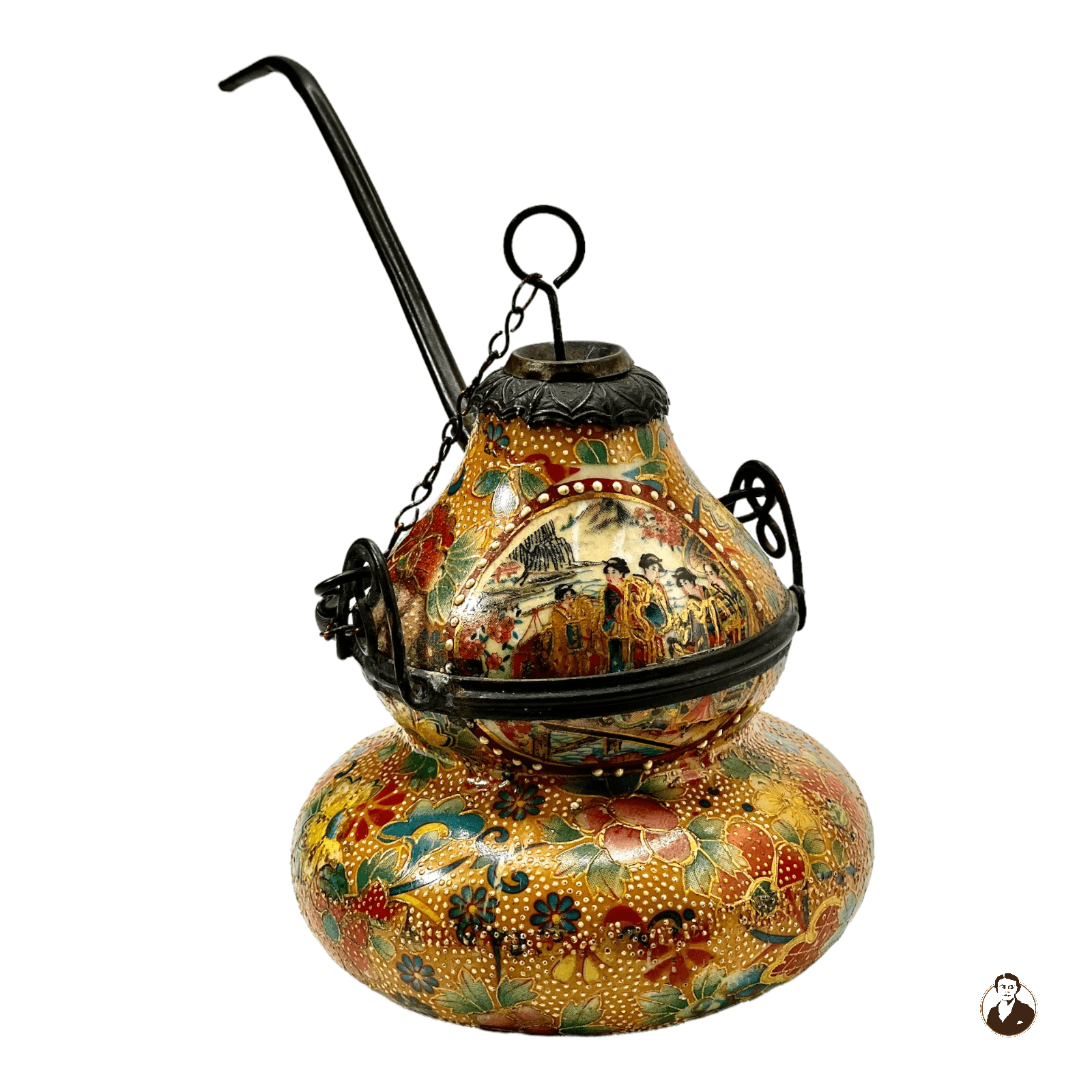
This exceptionally ornate late-19th-century Japanese smoking pipe combines richly decorated porcelain, miniature hand-painted imagery, and an elaborate black metal framework in one highly unusual form.
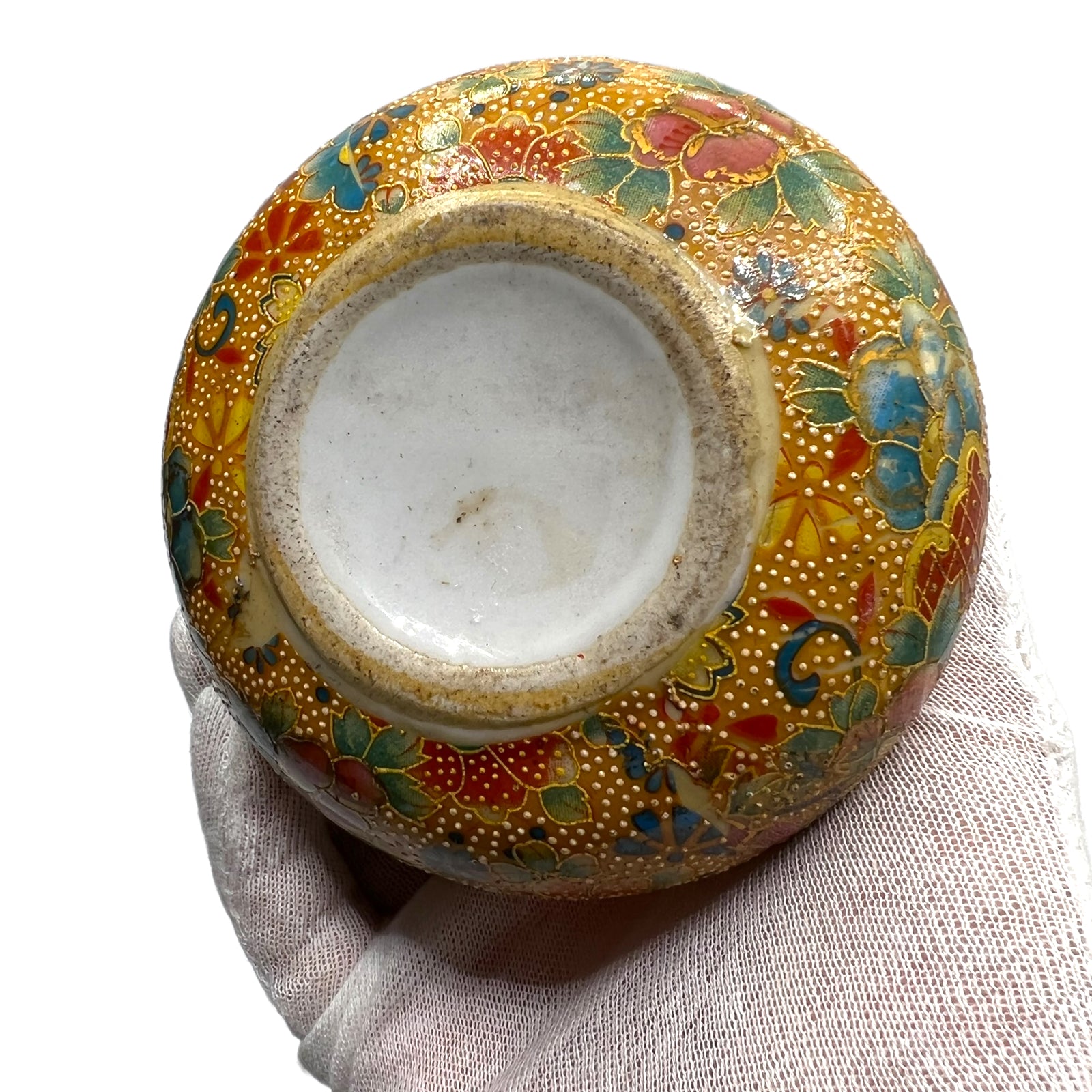
Dating to approximately 1870–1890, the piece features a double-gourd porcelain body covered in dense floral enameling, dotted decorative accents, and richly colored figural scenes. The upper section is partially enclosed by a dark metal support frame with chainwork, a suspension ring, and a long angled smoking stem.
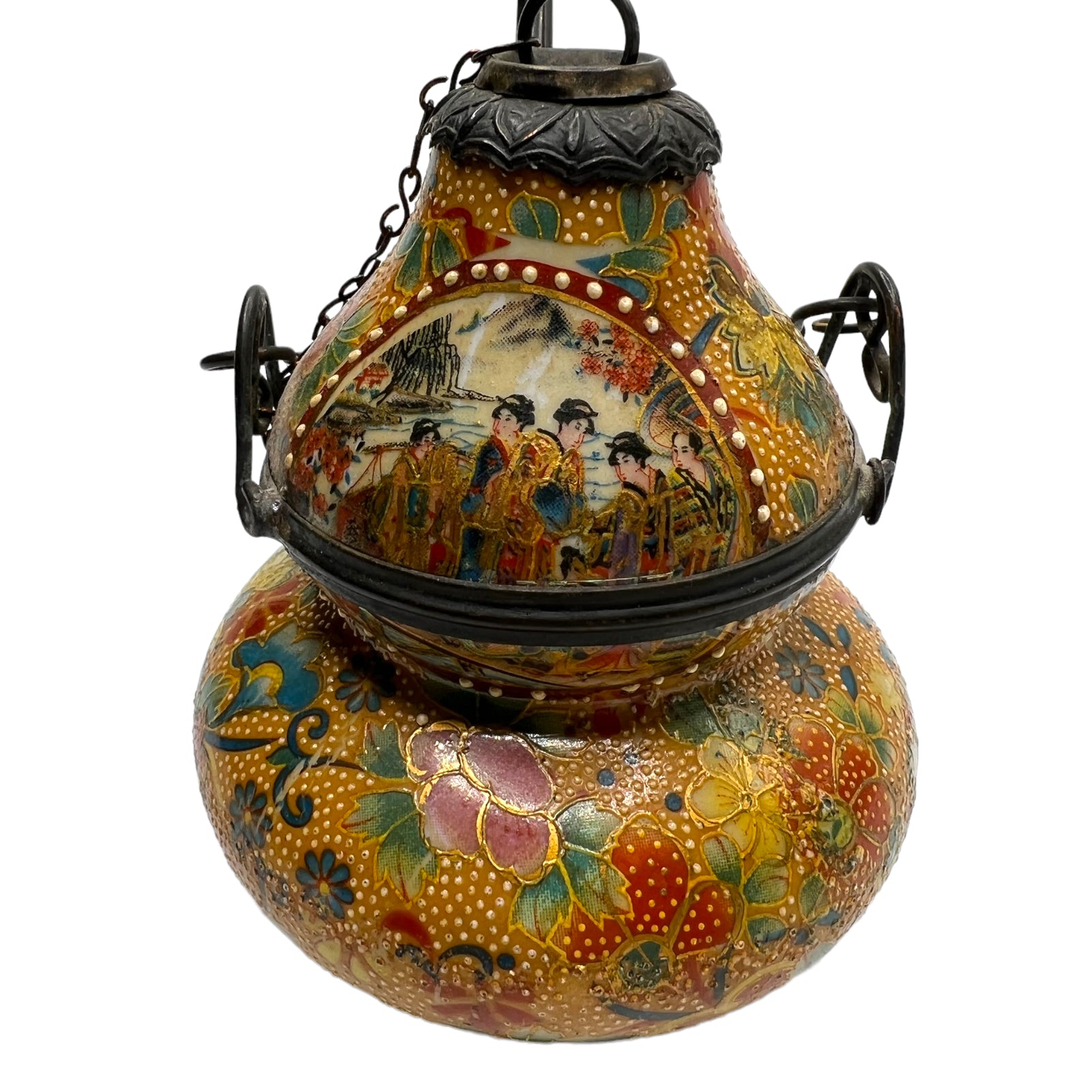
One of the most remarkable features is the miniature hand-painted scene on the upper porcelain section, measuring only approximately 1.5″ × 2.5″. Despite its compact size, the scene contains multiple figures, landscape elements, and architectural detail, demonstrating an exceptional level of precision.
Object Details
Date: Circa 1870–1890
Origin: Japan
Period: Meiji era
Object Type: Opium / smoking pipe
Material: Porcelain with metal fittings
Decoration: Hand-painted enamel and figural scenes
Miniature Painting: Approximately 1.5″ × 2.5″
Height: Approximately 5 in.
Overall Length: Approximately 8 in. with stem
Condition: Very Good antique condition
Notable Provenance: Featured on Pawn Stars Texas in 2024
Double-Gourd Porcelain Form
The vessel is built around a distinctive double-gourd silhouette, with a broad rounded lower chamber supporting a narrower upper section.
This shape gives the pipe a sculptural quality even before the decoration is considered. The rounded lower body provides a large surface for floral ornament, while the upper chamber acts almost like a miniature painted panel framed by the surrounding metal structure.
The compact size of the object contrasts with the visual complexity of its design, making it feel far more elaborate than a conventional utilitarian pipe.
1.5″ × 2.5″ Miniature Hand-Painted Scene
The upper porcelain section features an exceptionally detailed hand-painted figural scene measuring approximately 1.5 inches by 2.5 inches.
Within this very small painted field, several women in traditional dress appear within a landscape setting. Architectural and natural elements are worked into the background, giving the scene an unusual sense of depth despite its miniature scale.
The amount of visual information contained within such a small area is one of the most distinctive aspects of the entire object.
Rather than serving as simple surface decoration, the scene gives the pipe a narrative quality and transforms the smoking implement into a miniature work of decorative art.
Floral Enamel Decoration
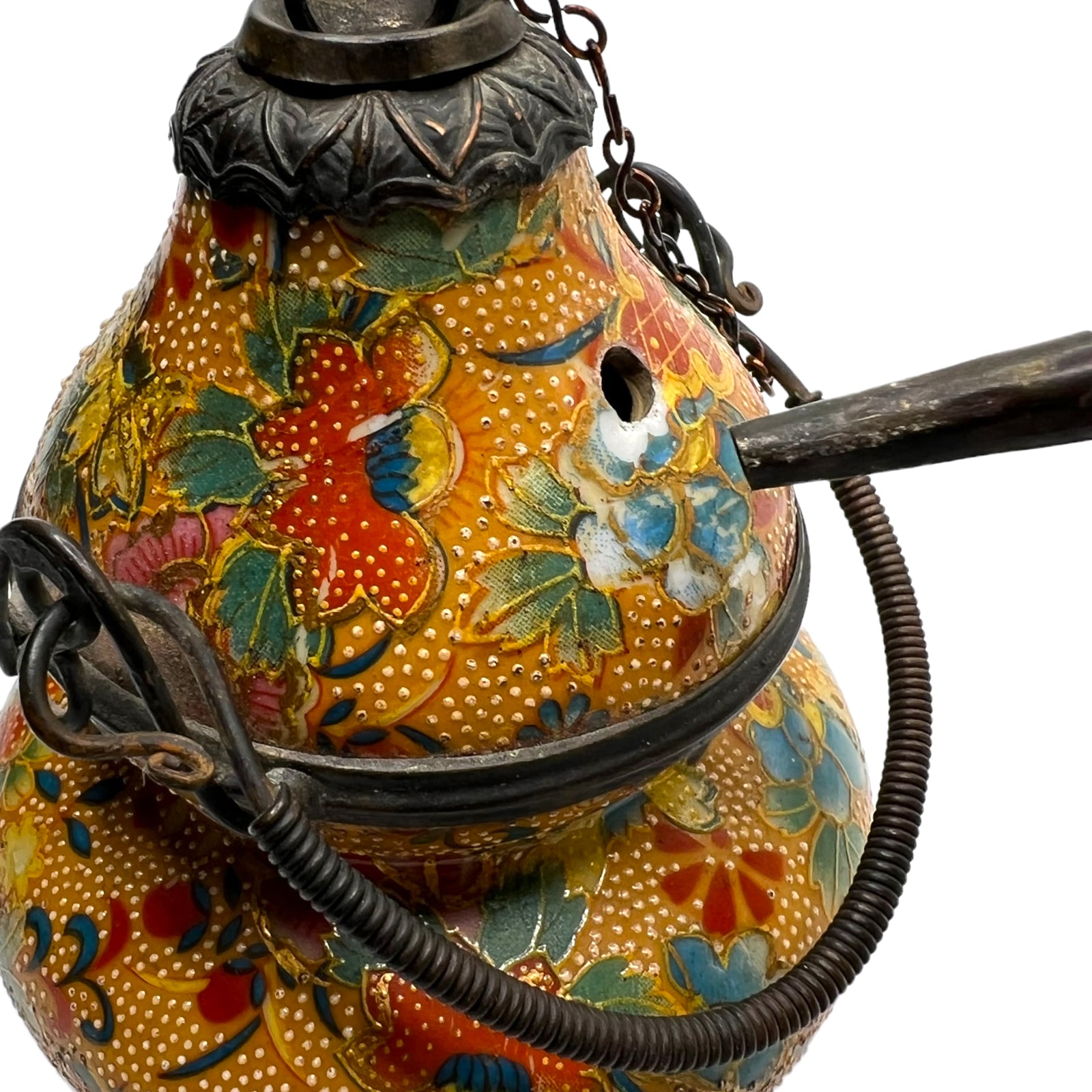
The remainder of the porcelain body is densely covered with floral motifs in red, green, blue, yellow, cream, and gold-toned accents.
Small dotted details fill the background between larger flowers and painted panels, creating a richly textured surface across the vessel.
The decoration reflects the highly detailed ornamental character associated with Japanese decorative arts of the late 19th century.
The contrast between the brightly colored porcelain and the dark metal fittings makes the painted surface especially striking.
Metal Framework and Suspension System
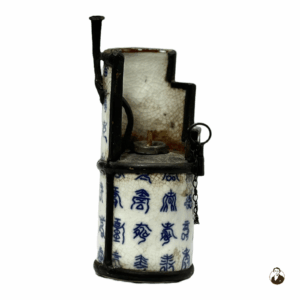
The porcelain body is partially enclosed within a black metal framework that adds both structural complexity and visual drama.
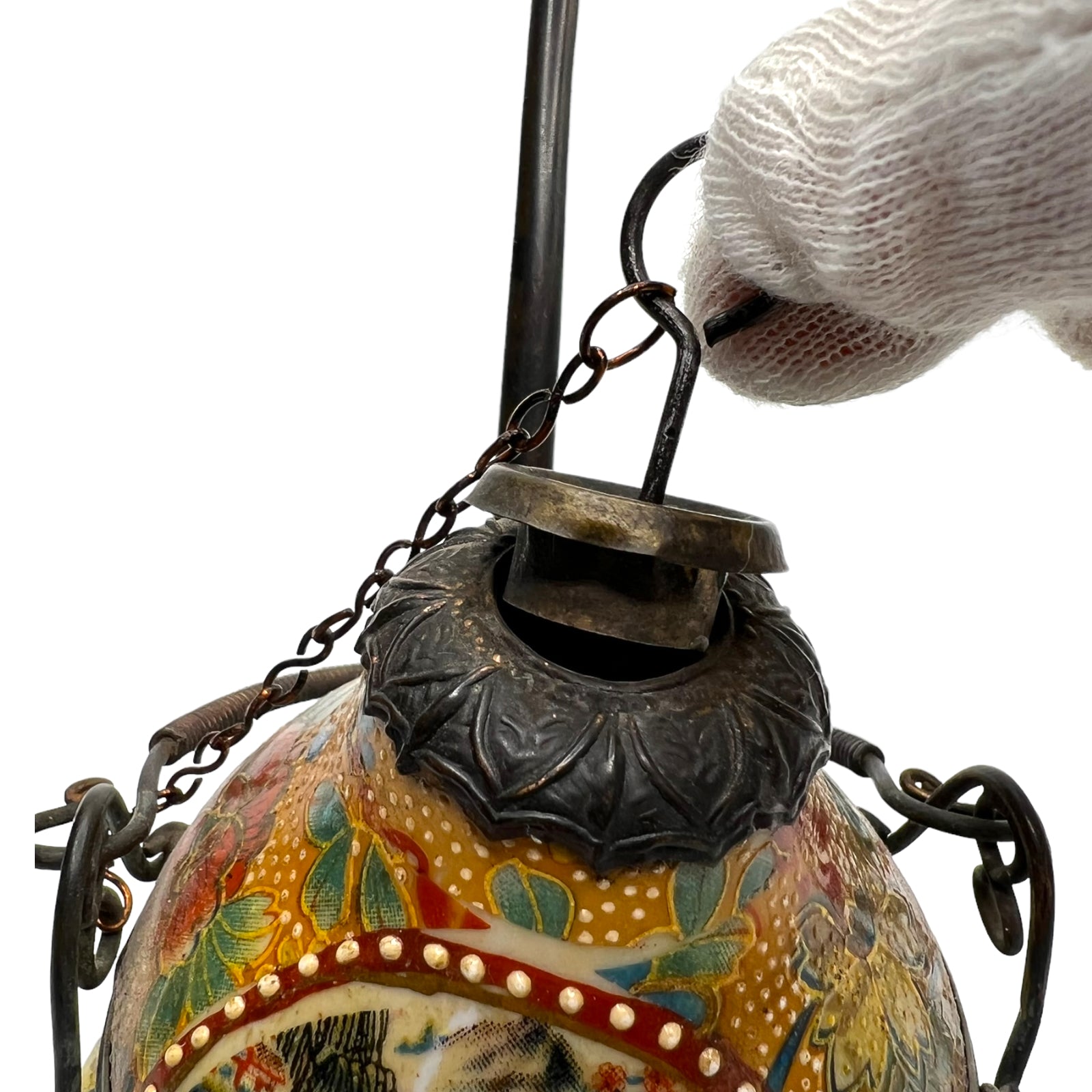
The surviving metal elements include:
- Circular support bands
- Decorative side brackets
- Suspension ring
- Attached chain
- Upper metal collar
- Long angled smoking stem
The dark metal structure frames the porcelain body almost architecturally, enclosing the upper chamber while leaving the miniature painted scenes visible.
The chain and ring also contribute to the unusual mechanical character of the object and distinguish it from more conventional Japanese smoking pipes.
Historical Smoking Function
The piece has historically been identified as an opium-smoking pipe.
Its reservoir-style porcelain body, long stem, metal framework, and specialized construction clearly separate it from the simple tubular form of a conventional Japanese kiseru.
The combination of ceramic chamber, stem, fittings, and supporting metalwork indicates that this was a specialized smoking apparatus rather than a purely decorative vessel.
Because historical smoking devices can vary considerably in form, the object is best described as a late-19th-century Japanese smoking pipe with an opium-use attribution.
Meiji-Era Decorative Arts
The Meiji period was one of the most important eras in the development and international appreciation of Japanese decorative arts.
Japanese craftsmen produced extraordinarily detailed ceramics, enamelwork, lacquer, metalwork, and export objects, often combining traditional artistic techniques with increasingly elaborate forms.
This pipe reflects that decorative spirit particularly well.
Its combination of:
- Miniature figural painting
- Floral enameling
- Sculptural porcelain form
- Metal framework
- Chainwork
- Functional smoking components
places it firmly within the more elaborate end of late-19th-century smoking material culture.
Condition
The pipe remains in very good antique condition for its age and complexity.
The porcelain retains extensive original decoration, including the floral enameling and the approximately 1.5″ × 2.5″ miniature painted scene.
The metal framework, chain, suspension ring, stem, and supporting components remain present.
Age-related surface wear, patina, minor losses, and natural variation are visible and consistent with a 19th-century object.
Please review all photographs carefully for the most complete record of condition.
Featured on Pawn Stars Texas
This object was featured on Pawn Stars Texas in 2024, adding a notable chapter to its modern provenance and public exhibition history.
Its appearance provides additional collector interest beyond the object’s artistic and historical significance.
Collector Context
This piece may appeal to collectors of:
- Japanese smoking artifacts
- Meiji-period decorative arts
- Antique opium pipes
- Japanese porcelain
- Asian enamelware
- Miniature painting
- Tobacciana
- Historical smoking technology
- Japanese export art
- 19th-century Asian material culture
Its combination of an unusually complex form, surviving metal framework, vivid porcelain decoration, and especially the tiny 1.5″ × 2.5″ hand-painted figural scene makes it a particularly distinctive object within the History of Smoke collection.

Reviews
There are no reviews yet.