
Qing Chinese Porcelain & Metal Water Pipe
China, circa 1830–1850
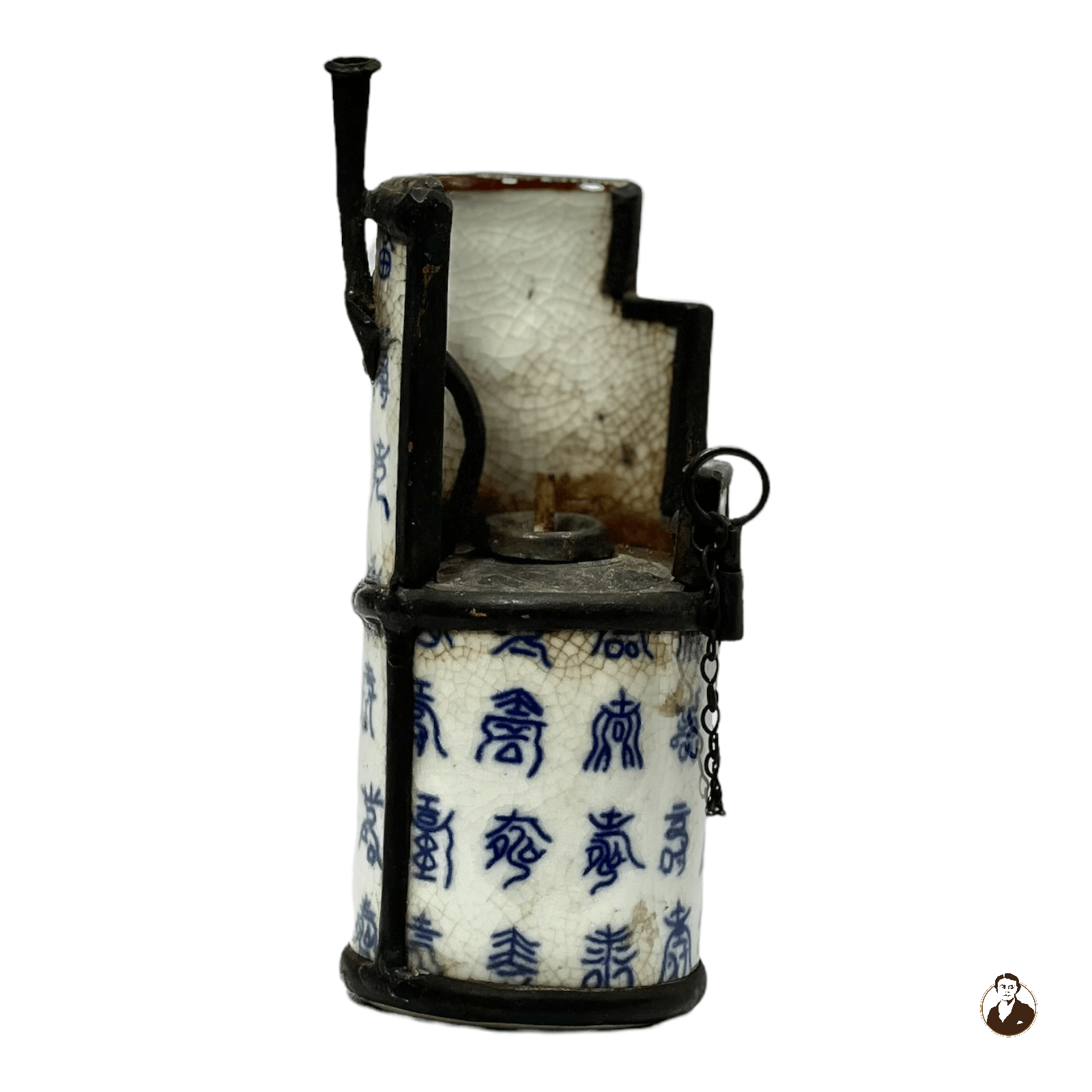
This unusual early 19th-century Chinese smoking pipe combines hand-painted porcelain with an intricate dark metal framework, creating a compact but highly architectural smoking apparatus.
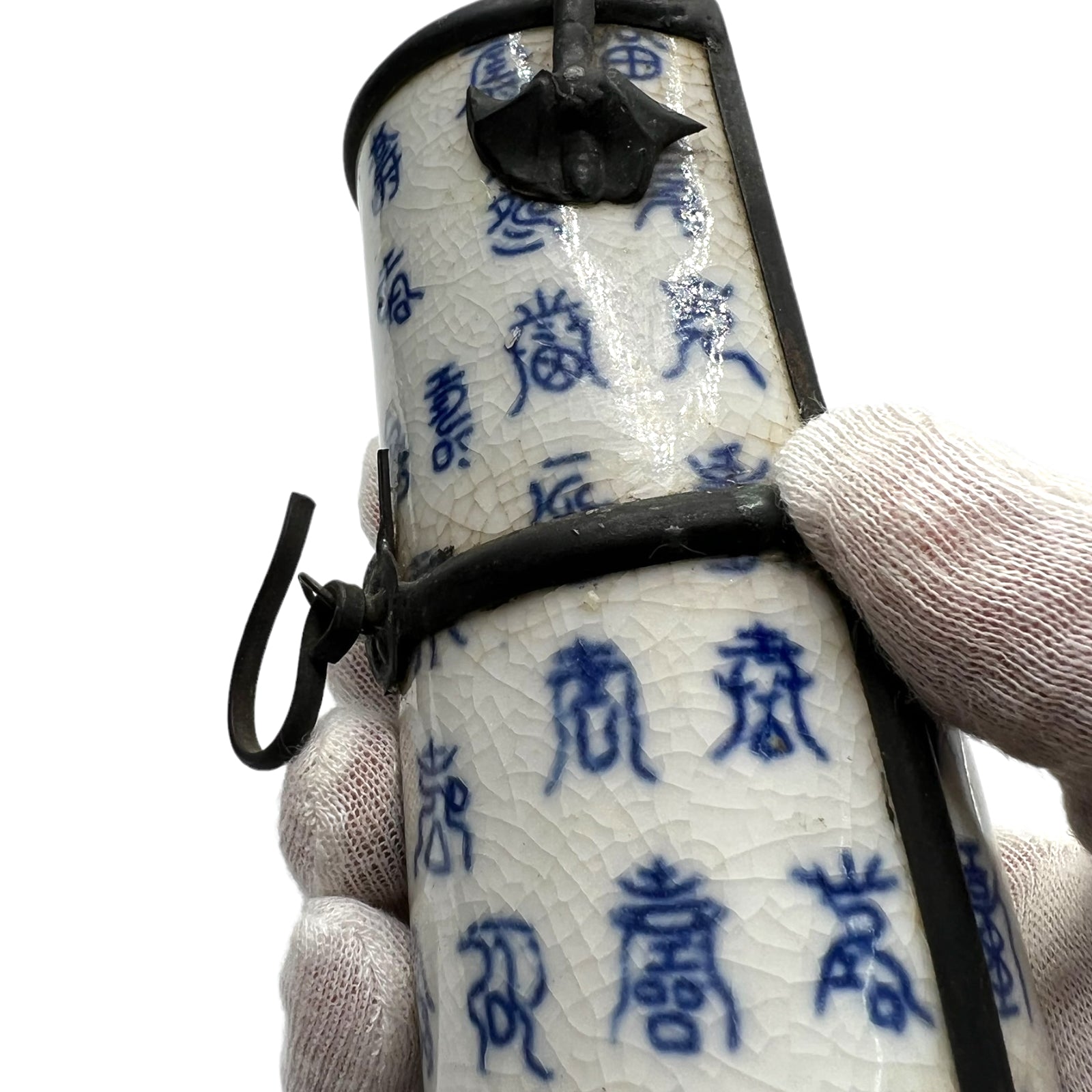
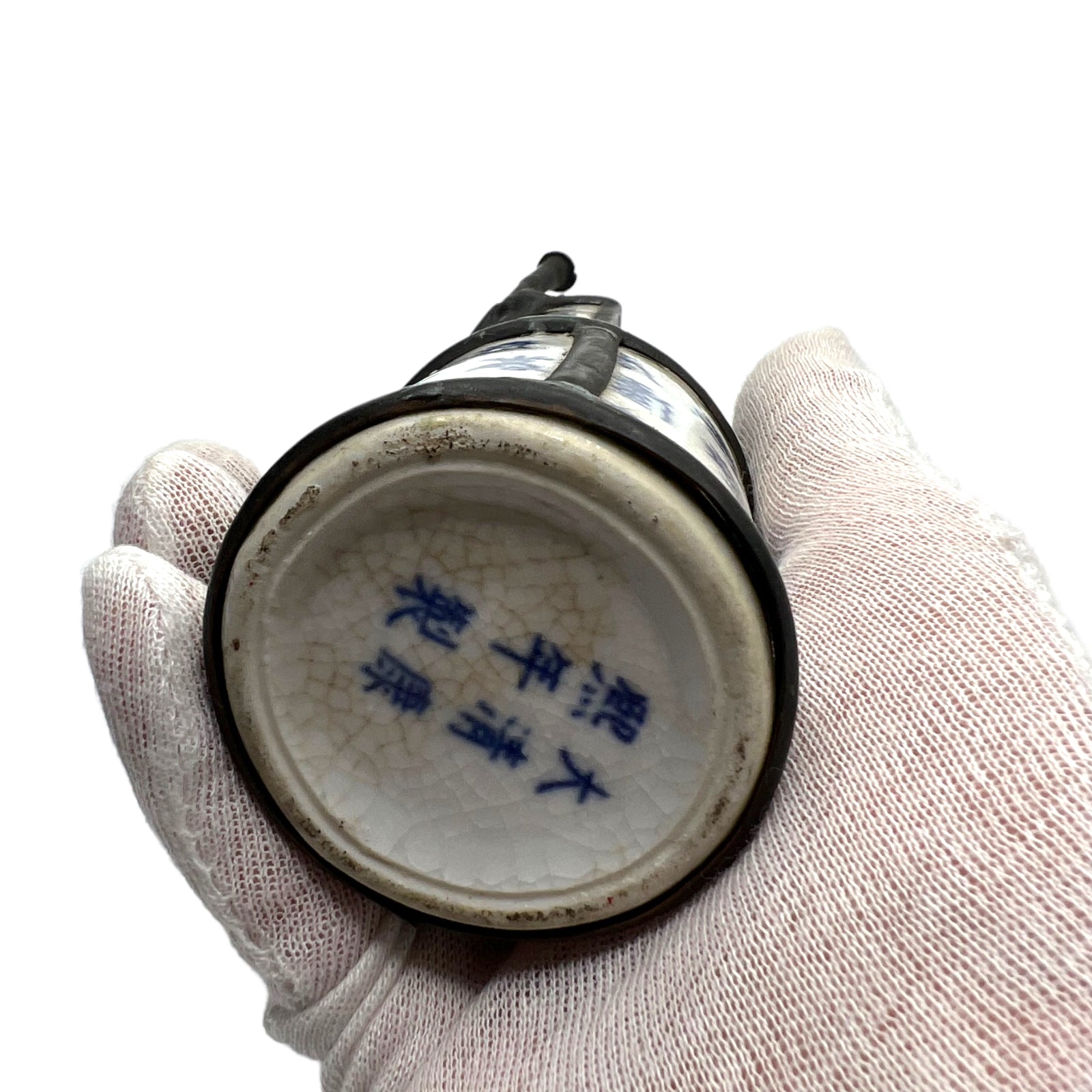
The principal body is cylindrical and formed from white glazed porcelain decorated in blue Chinese script. The characters wrap around the vessel in repeated vertical arrangements, giving the object a strongly graphic appearance while preserving an important element of its original cultural context.
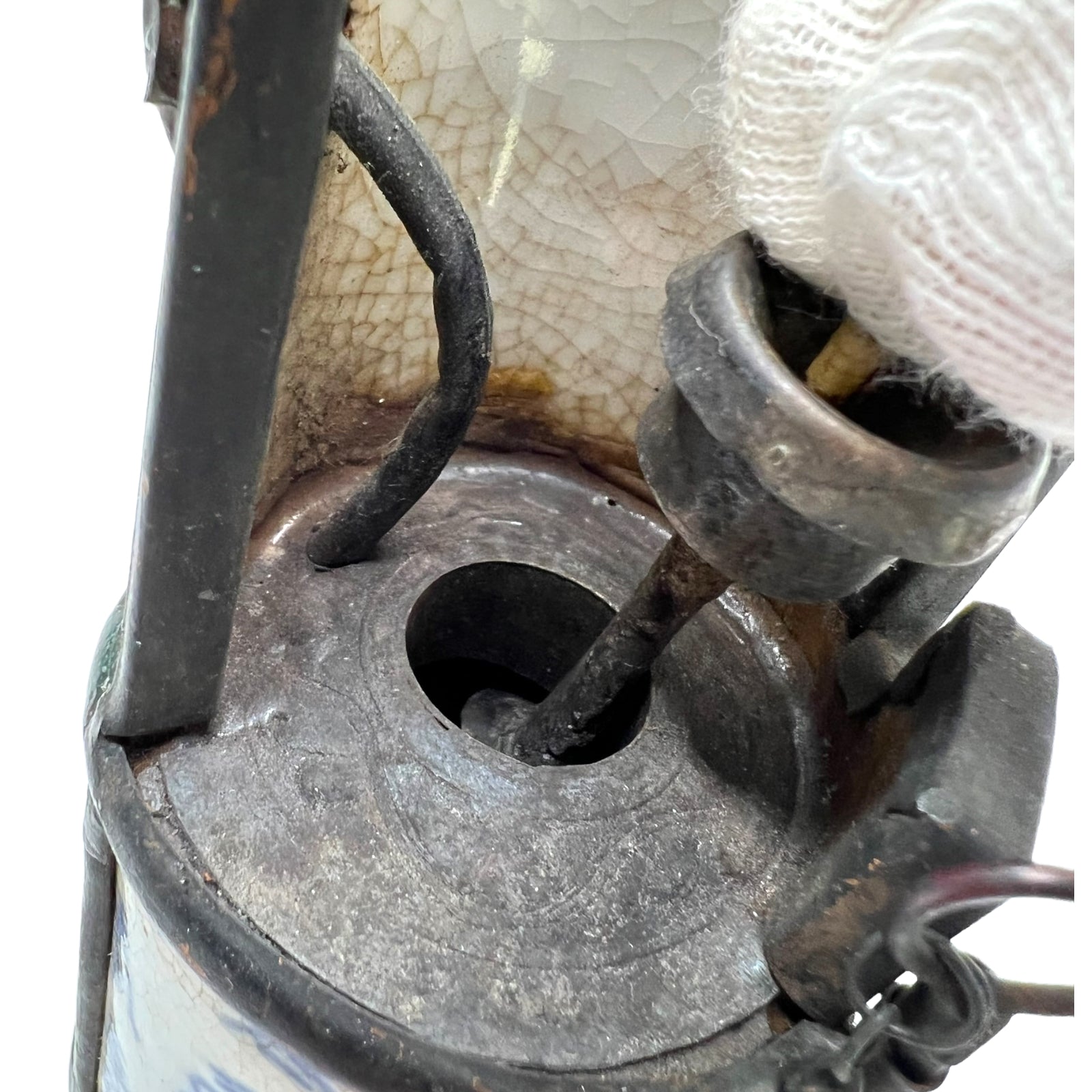
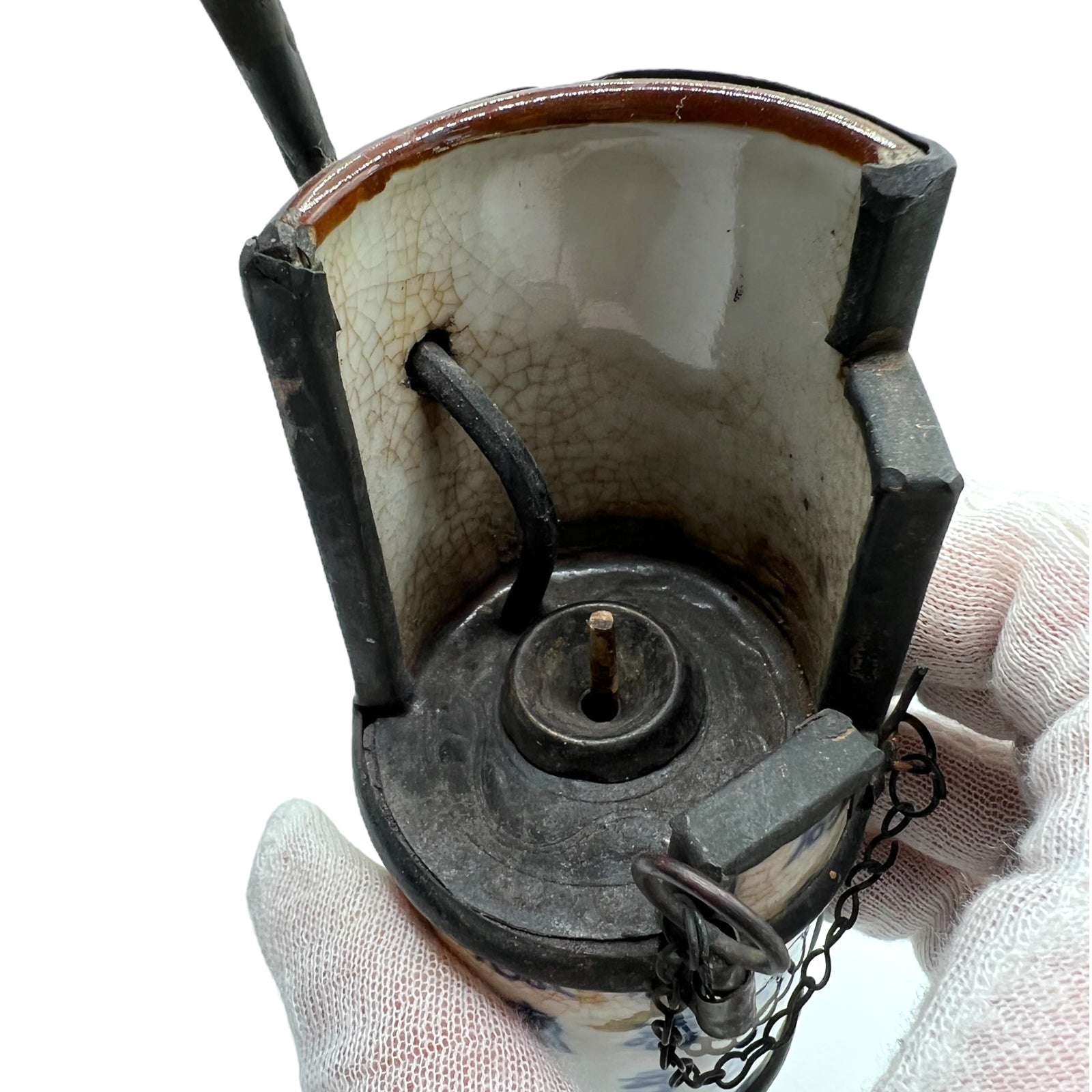
Above the porcelain chamber rises a stepped upper assembly of porcelain and metal. A tall narrow mouthpiece extends upward from one side, while the central platform incorporates the smoking-bowl fitting and surrounding structural elements.
Object Details
Date: Circa 1830–1850
Origin: China
Period: Qing Dynasty
Object Type: Water pipe
Materials: Porcelain and metal
Decoration: Hand-painted blue Chinese script
Height: Approximately 5.5 in.
Condition: Very Good antique condition
Construction
The pipe is particularly interesting for the way its ceramic and metal components work together.
The porcelain cylinder forms the principal body of the object, while the dark metal structure surrounds and reinforces the upper assembly. The surviving construction includes:
- Cylindrical porcelain chamber
- Hand-painted blue script
- Upright narrow mouthpiece
- Metal upper framework
- Central bowl fitting
- Side suspension ring
- Attached chain
- Raised stepped porcelain backing
These components give the pipe an almost mechanical quality, emphasizing that historical smoking implements were often sophisticated pieces of functional design.
Painted Chinese Script
The exterior is decorated with numerous hand-painted Chinese characters in cobalt-blue pigment.
Rather than treating the untranslated writing simply as decorative mystery, its survival is important in its own right. The script forms part of the original visual identity of the object and may eventually provide additional information regarding its maker, intended meaning, ownership, literary reference, or decorative tradition if fully translated.
The irregularity of the painted characters and glaze surface also reinforces the handmade nature of the piece.
Historical Context
During the Qing period, Chinese smoking culture produced an extraordinary variety of specialized pipes and smoking apparatus made from porcelain, bamboo, brass, silver, wood, and other materials.
Porcelain was especially well suited to decorative smoking implements because it allowed makers to combine practical construction with painted imagery, inscriptions, and calligraphic decoration.
This example stands out for its compact vertical form and the contrast between the pale crackled porcelain surface, cobalt script, and dark metal fittings.
Condition
The pipe remains in very good antique condition considering its age.
The porcelain retains visible age-related surface character, discoloration, glaze variation, and wear. The metal components exhibit established patina and oxidation consistent with historical use and age.
The surviving mouthpiece, framework, bowl fitting, ring, and chain contribute significantly to the completeness and visual interest of the object.
Please review all photographs carefully for a complete record of condition.
Collector Context
This pipe may appeal to collectors of:
- Qing Dynasty material culture
- Antique Chinese smoking pipes
- Opium-related artifacts
- Chinese porcelain
- Tobacciana
- Asian decorative arts
- Historical smoking technology
- Calligraphic and inscribed objects
Its combination of porcelain, handwritten script, metalwork, unusual form, and early 19th-century date makes it a particularly distinctive object within the History of Smoke collection.
Reviews
There are no reviews yet.