
Central Europe, circa 1890–1920
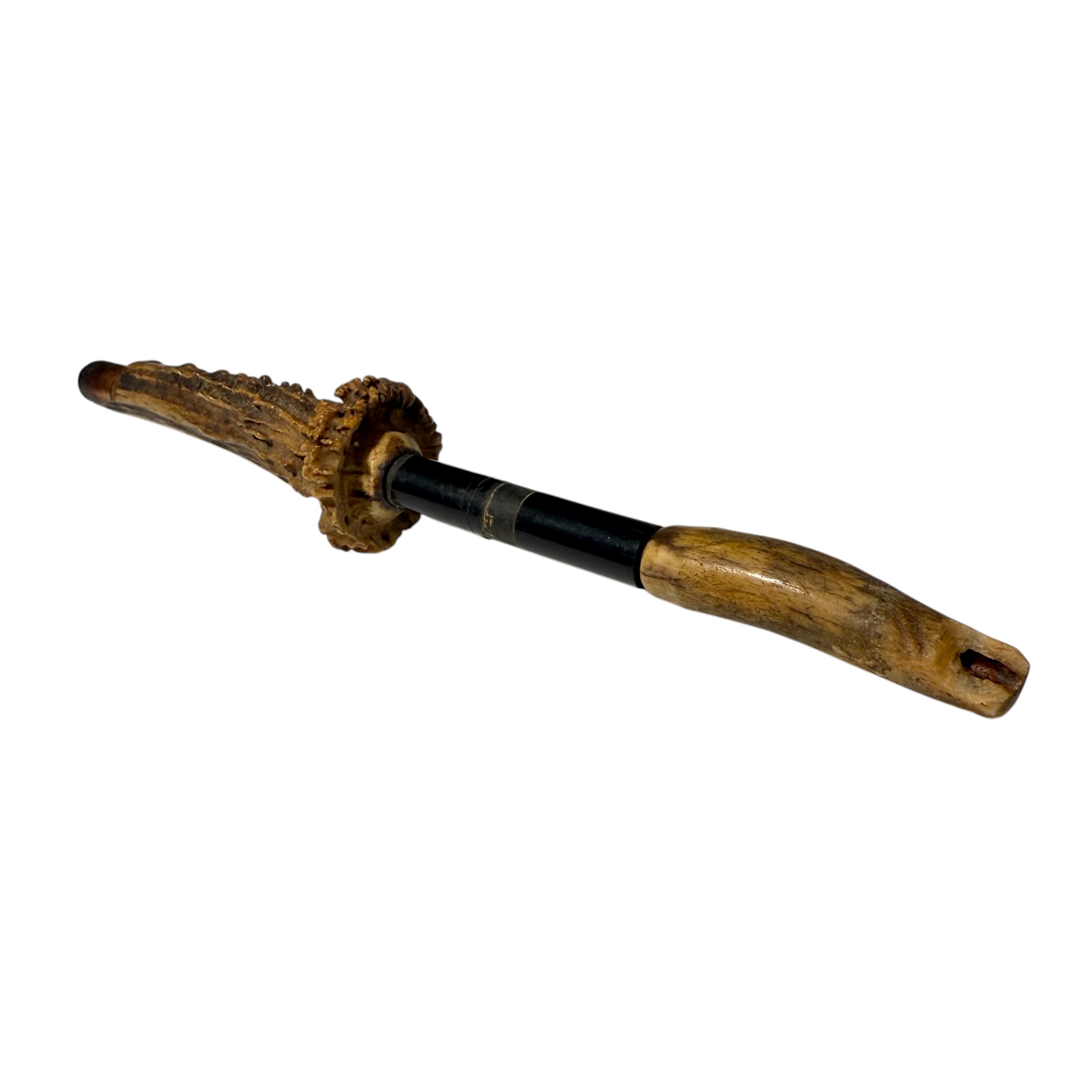
An unusual antique smoking implement, most likely originating in Germany or Austria, constructed from natural stag antler, polished horn, a dark cylindrical stem, and metal fittings. Originally believed to be a cheroot holder, further examination suggests that the piece was more likely manufactured as the detachable stem of a larger tobacco pipe, with evidence raising the possibility of a secondary smoking function later in its history.
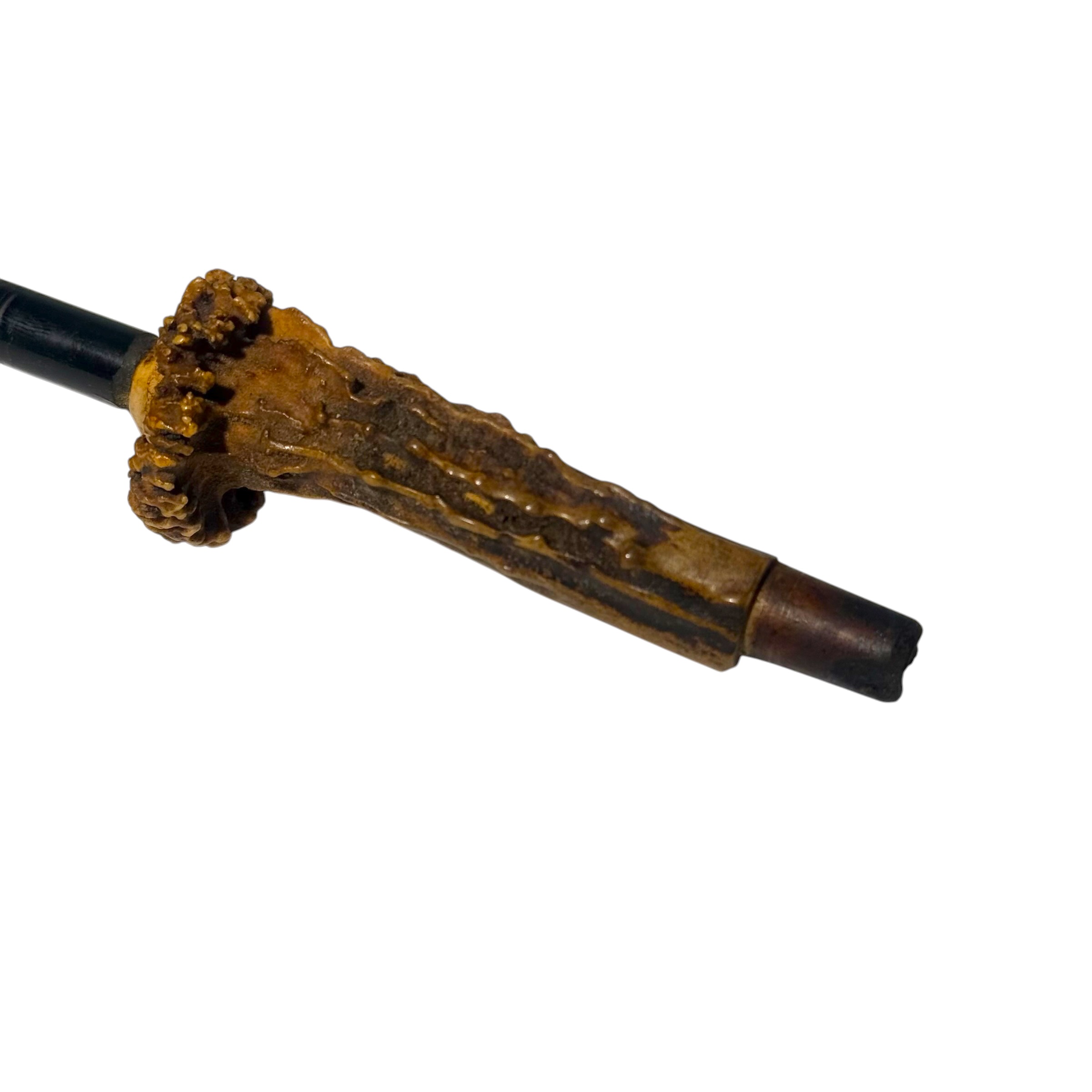
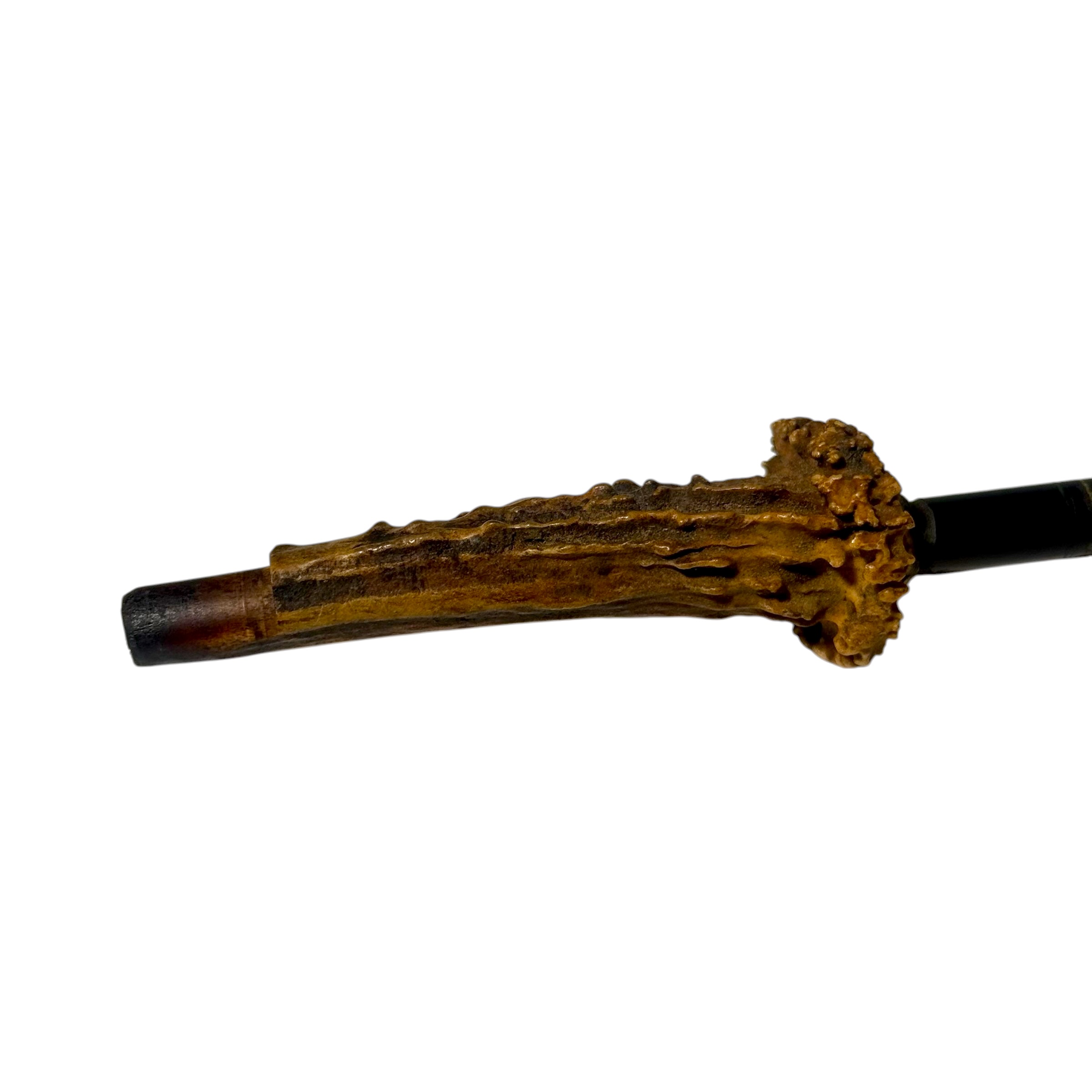
Measuring approximately 7 inches long, the piece incorporates a naturally formed 3-inch section of stag antler, retaining the irregular ridges, grooves, and pronounced burr near its base.
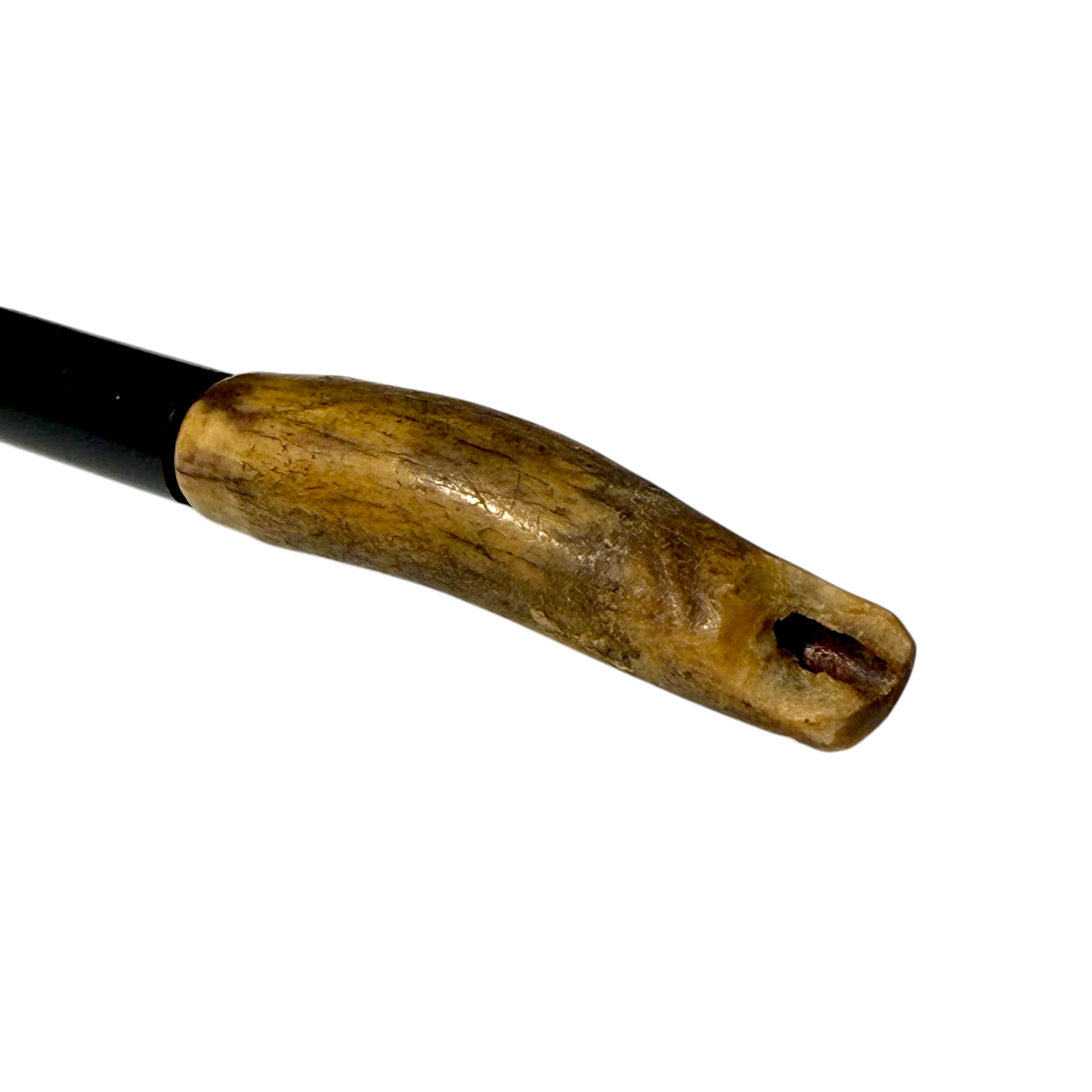
At the opposite end, a 1.5-inch polished horn mouthpiece completes the assembly, while a dark central stem and metal fittings connect the individual components.
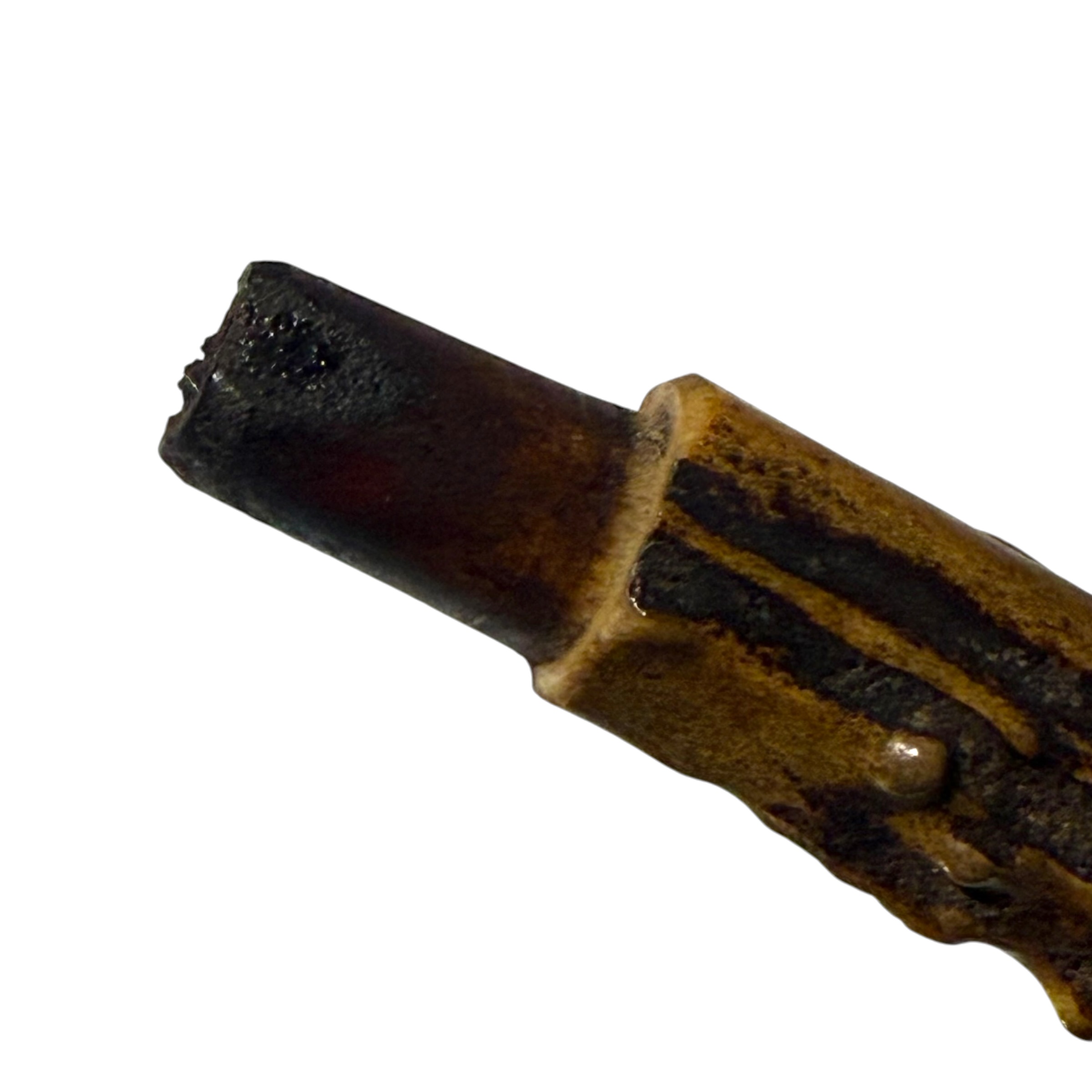
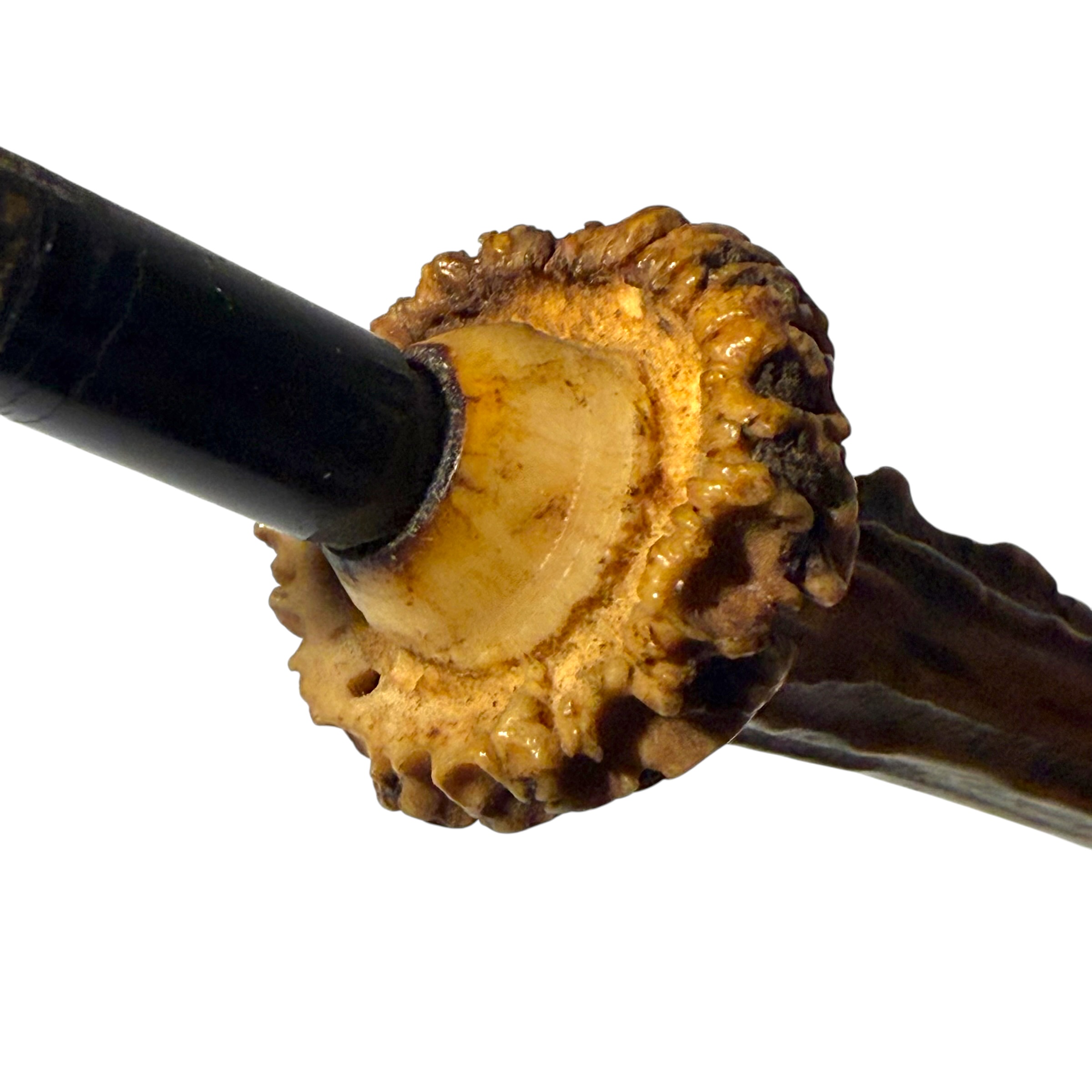
Of particular interest are the substantial dark deposits inside the forward opening and visible heat-related marks around the metal fitting. These characteristics raise the possibility that, after separation from its original pipe bowl, the stem may have been repurposed for direct smoking.
Its original function and possible later adaptation offer two distinct chapters in the history of this unusual object.
Object Details
Date: Circa 1890–1920
Origin: Likely Germany or Austria
Region: Central Europe
Object Type: Antique tobacco pipe stem; possible later use as a standalone smoking implement or cheroot holder
Original Function: Probable detachable stem from a larger tobacco pipe
Possible Secondary Use: Direct-smoking pipe, one-hitter or chillum-style implement, or cheroot holder; unconfirmed
Associated Tradition: Central European hunting and smoking culture
Material: Stag antler, probable bovine or buffalo horn, dark hard-rubber or phenolic-type stem, metal fittings
Length: Approximately 7 in.
Antler Section: Approximately 3 in.
Mouthpiece: Approximately 1.5 in.
Condition: Good antique condition with substantial evidence of historical use; original pipe bowl absent
Stag Antler Construction
The most distinctive feature of the object is its use of naturally formed stag antler.
Rather than completely reshaping the material, the maker preserved much of the antler’s original surface.
Deep grooves, ridges, irregular projections, and natural texture remain visible along its length.
The antler incorporates the enlarged irregular ring known as the burr or coronet, the naturally textured section found near the point where an antler grows from the animal’s skull.
Its deliberate inclusion gives the piece a distinctly rustic appearance and connects it with the hunting traditions in which antler smoking accessories became particularly popular.
The hollowed construction allows smoke to pass through the antler section toward the mouthpiece.
Original Function as a Tobacco Pipe Stem
Further examination suggests that this object was most likely originally manufactured as the stem of a larger tobacco pipe.
During the late 19th and early 20th centuries, German and Austrian smoking pipes were frequently constructed from multiple detachable components.
A typical example might incorporate a separately manufactured tobacco bowl, connecting fittings, a wooden or horn stem, and a removable mouthpiece.
Stag antler was sometimes incorporated into these assemblies, particularly in pipes associated with hunters, foresters, and rural smoking traditions.
The construction of this example is consistent with such a design.
Its elongated form, combination of natural materials, and fitted connections suggest that the antler section may once have joined a separate tobacco bowl.
That bowl is no longer present, and its original material, shape, and method of attachment remain unknown.
A Possible Second Life as a Smoking Implement
Although the object appears to have originated as a pipe stem, its present condition raises an interesting question about how it may have been used after becoming separated from its original bowl.
The forward opening contains substantial darkened residue, while the surrounding metal fitting exhibits visible heat-related discoloration and apparent burn marks.
These characteristics may indicate that combustible material was placed and burned directly at the opening, rather than smoke passing exclusively through the stem from a separate bowl.
If so, the object may have been adapted into a simple straight smoking pipe, functioning in a manner comparable to a one-hitter or chillum-style pipe.
Alternatively, the exposed opening may have been used to hold a small cigar or cheroot, allowing the original pipe stem to serve as a reusable smoking holder.
Its narrow, straight-through configuration also resembles certain modern tubular smoking tools, including what are now called nectar collectors. However, this is a modern visual comparison rather than evidence of a particular historical function.
The precise circumstances of any secondary use cannot be established from the surviving evidence alone. Some residue may also relate to the object’s original use as part of a larger pipe.
Nevertheless, the combination of internal deposits, heat-related wear, and the absence of the original bowl makes the possibility of later adaptation worthy of consideration.
Hunting and Smoking Culture
Antler and horn were widely used in smoking accessories throughout German-speaking Central Europe.
During the 19th century, hunters, foresters, sportsmen, and craftsmen incorporated materials associated with hunting into objects used in everyday life.
Smoking pipes, cigar holders, walking sticks, knife handles, powder containers, and other personal possessions were frequently made from or embellished with stag antler.
In a smoking implement such as this, the material served both practical and symbolic purposes.
Its durable structure and distinctive natural appearance connected the object with forests, game animals, and the outdoor pursuits of its owner.
Many such pieces combined carefully finished components with sections of antler left deliberately rustic, creating a contrast between natural form and manufactured craftsmanship.
Horn Mouthpiece
The mouthpiece appears to be formed from natural horn rather than bone.
Its polished brown surface displays elongated grain and color variation characteristic of horn.
Bovine and buffalo horn were commonly used for smoking-pipe mouthpieces because they could be shaped, polished, and fitted comfortably between the lips or teeth.
The natural variation of the horn contrasts with the dark central stem and the rougher stag-antler section.
Dark Central Stem
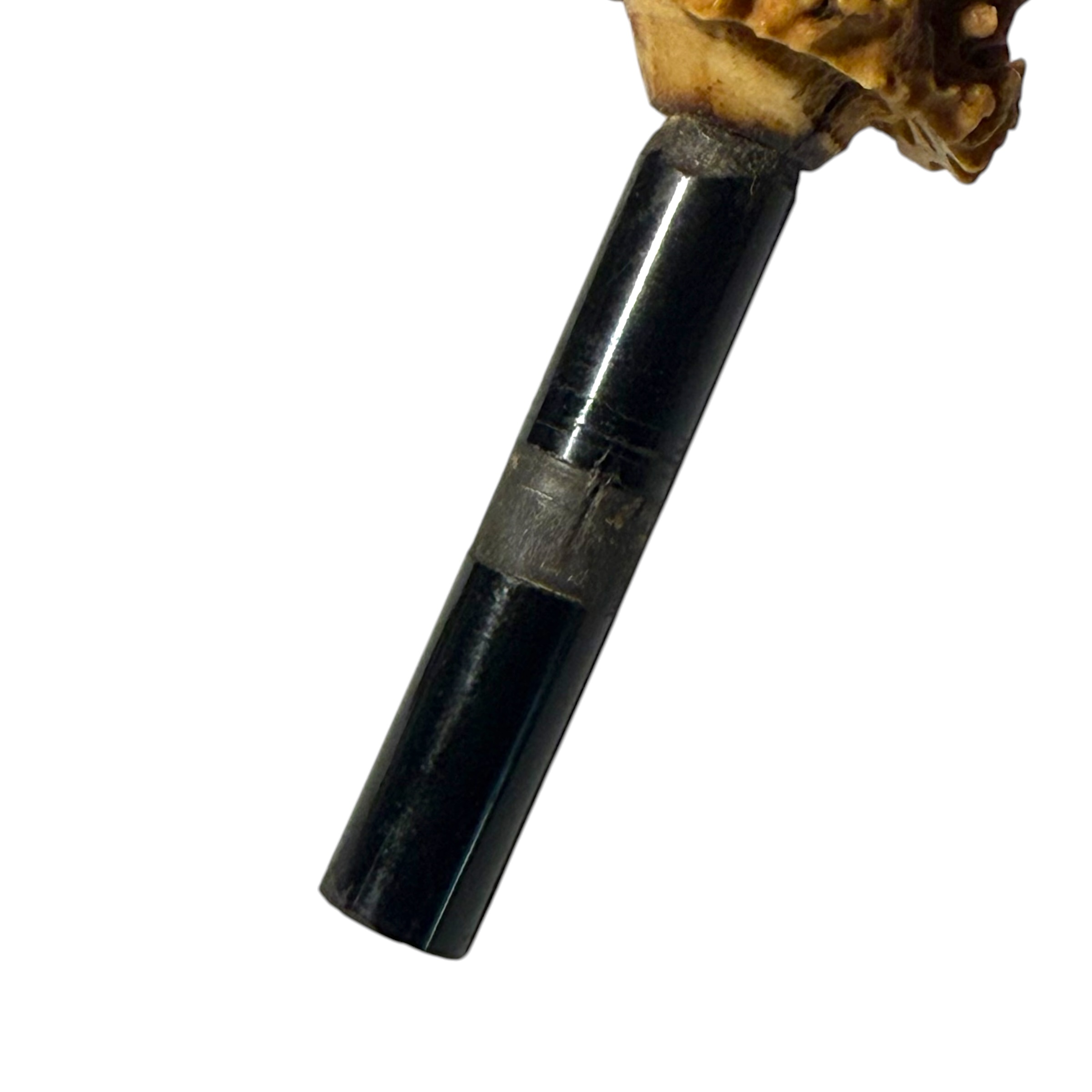
The cylindrical black stem appears to be manufactured from a dense polished material.
Possible materials include ebonite or vulcanized hard rubber, black horn, ebonized material, or an early phenolic resin.
Bakelite or a related phenolic material is possible if the component dates from the early decades of the 20th century, although no material testing has been conducted.
The stem is therefore conservatively described as dark hard-rubber or phenolic-type material, pending further examination.
Metal Fittings
The object incorporates metal fittings that connect and reinforce its individual sections.
These components would have been particularly useful in a multi-part smoking pipe, where removable sections required secure connections.
A narrow metal ferrule surrounds part of the dark central stem, while the forward assembly also exhibits visible discoloration and wear.
The metal appears consistent with nickel silver, plated brass, or another base-metal alloy, although its exact composition remains untested.
The heat-related marks around the forward fitting are especially interesting in assessing the possibility of later direct-smoking use.
Evidence of Historical Use
The piece displays substantial evidence of smoking-related wear.
Dark brown-to-black deposits are visible inside the forward opening, accompanied by discoloration and apparent heat damage around the adjoining metalwork.
These traces suggest prolonged exposure to smoke, combustion residues, or heat.
While the deposits cannot independently establish whether the object was used with its original bowl, as a direct-smoking pipe, or as a cheroot holder, they provide valuable physical evidence for reconstructing its history.
The object’s surviving condition suggests that it was an actively used smoking accessory rather than merely a decorative object.
German and Austrian Smoking Traditions
Germany and Austria developed particularly rich traditions surrounding tobacco pipes and smoking accessories during the 19th century.
Long porcelain pipes, carved wooden pipes, meerschaum pipes, hunting pipes, and elaborate multi-part smoking implements circulated throughout these regions.
Pipes associated with hunting culture were among the most distinctive, frequently incorporating stag antler, carved animal imagery, horn mouthpieces, and metal fittings.
Museum collections preserve examples of German and Austrian pipes with detachable components and combinations of horn, antler, wood, and metal.
These historical parallels provide useful context for the likely original construction of the present example, although its precise workshop and place of manufacture remain unidentified.
Condition
The piece remains in good antique condition, with wear consistent with age and historical use.
The stag antler retains extensive natural surface texture, including its original ridges and irregular projections.
The forward opening displays substantial darkening and internal residue, with additional heat-related wear visible around the metal fitting.
The polished horn mouthpiece shows age-related surface variation, while the dark central stem and metal components exhibit minor scratches, oxidation, and handling wear.
The presumed original tobacco bowl is absent.
These surviving characteristics form an important part of the object’s historical condition and may provide evidence of modification or continued use after its original assembly was altered.
Please review all photographs carefully for a complete record of condition.
Collector Context
An intriguing example of Central European smoking history, combining the traditional craftsmanship of an antique hunting pipe with the possibility of later adaptation for an entirely different smoking function.
Originally manufactured, most likely, as a detachable tobacco pipe stem, the object appears to have survived independently of its original bowl. Its construction and surviving smoke-related deposits invite further investigation into whether it was subsequently reused as a small straight pipe or cheroot holder.
This piece may appeal to collectors of antique smoking pipes, German and Austrian tobacciana, hunting antiques, stag-antler objects, historical pipe components, and unusual smoking implements.
Its combination of natural stag antler, polished horn, fitted construction, and distinctive evidence of use makes it a particularly interesting artifact within the History of Smoke collection.
Beyond its craftsmanship, the object illustrates an important aspect of material history: an artifact’s original purpose does not necessarily tell the whole story of its working life.
Reviews
There are no reviews yet.