
Europe, possibly German or Austrian | 19th century, potentially earlier
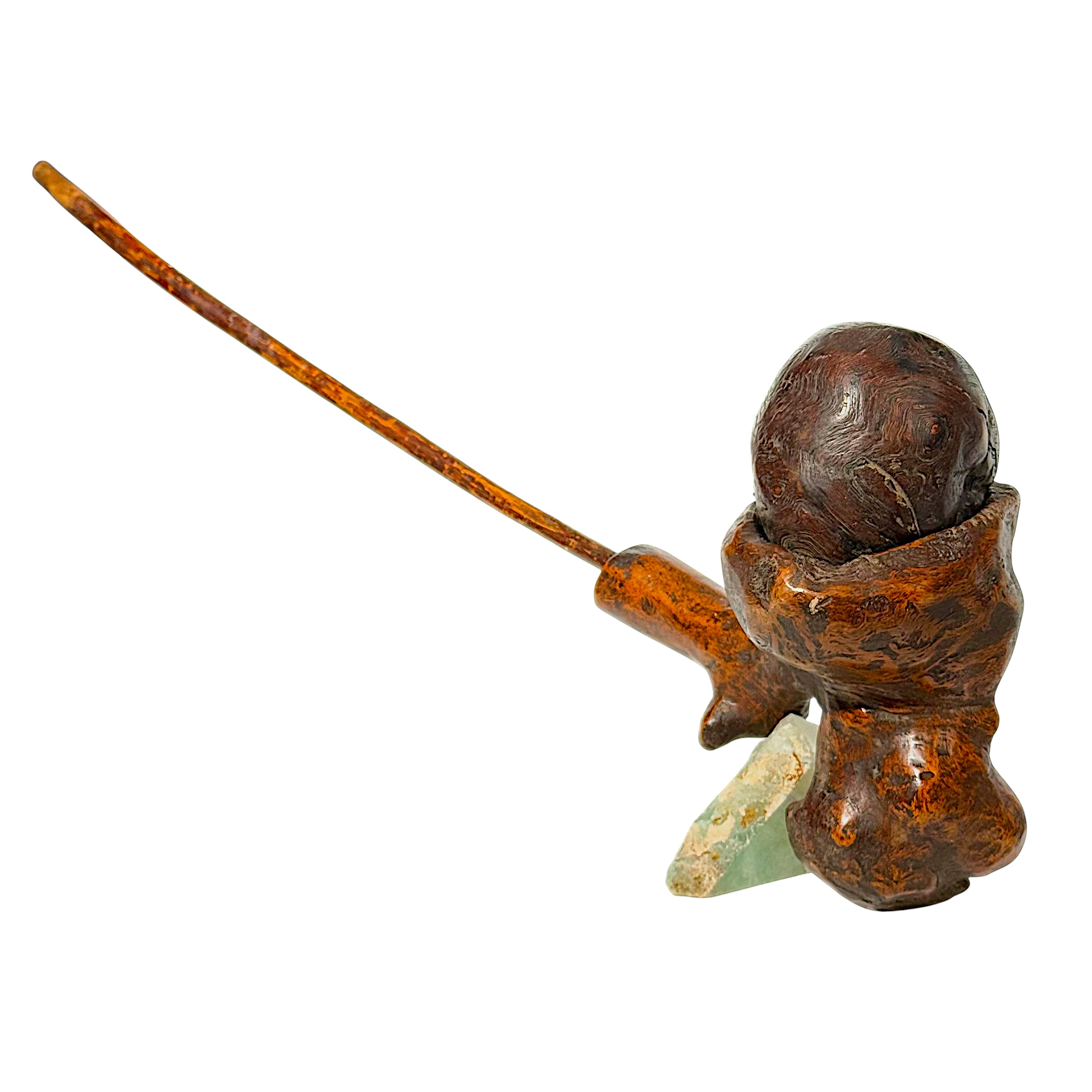
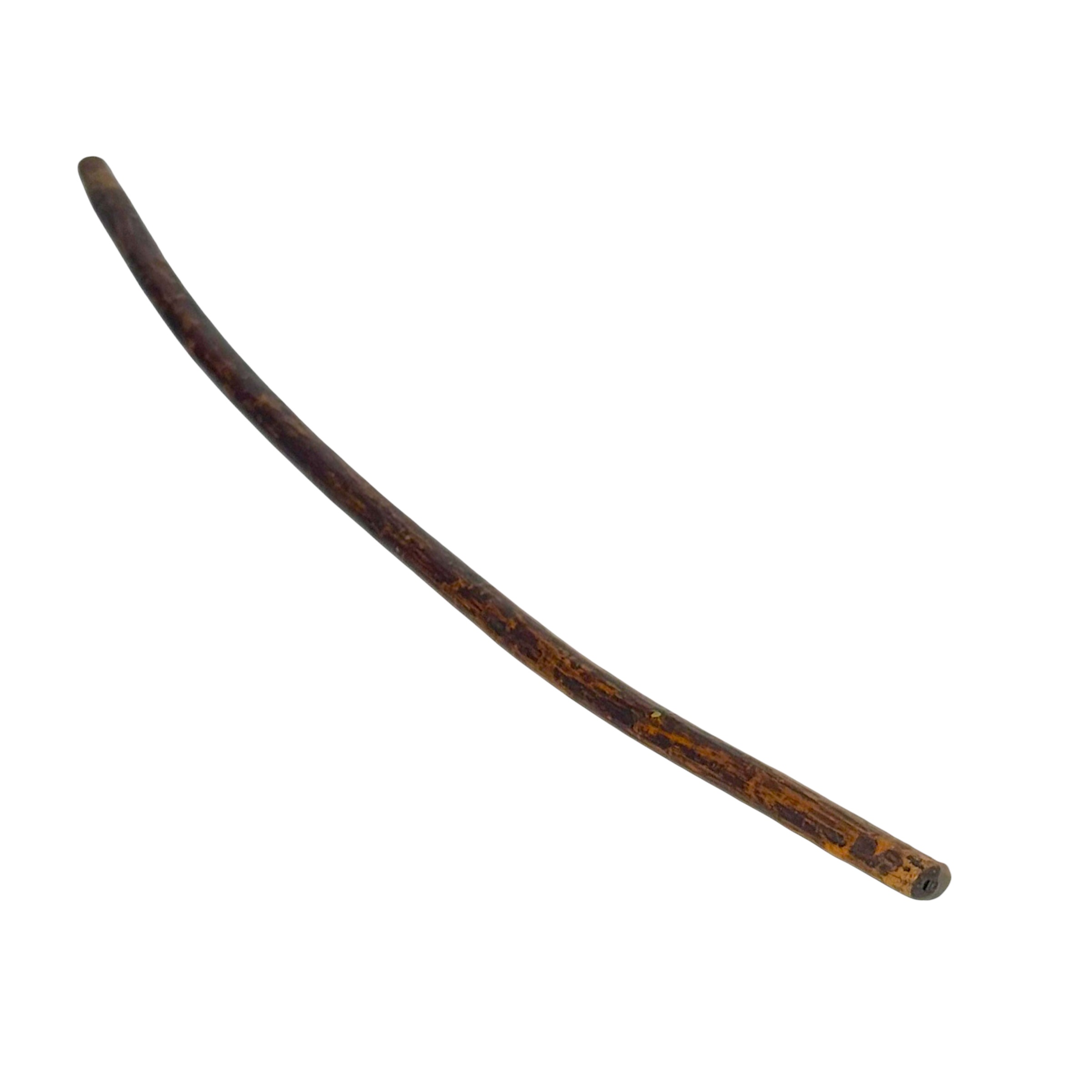
This extraordinary antique smoking pipe was hand-carved from a massive natural burl or root formation and is one of the most unusual vernacular smoking objects in the History of Smoke collection.
Fully assembled, the pipe measures approximately 24 to 25 inches long, with a detachable wooden stem measuring roughly 18 to 18.5 inches by itself. The carved burl or root body measures approximately 10 to 10.5 inches at its greatest dimension, giving the piece a scale far beyond that of a conventional handheld pipe.
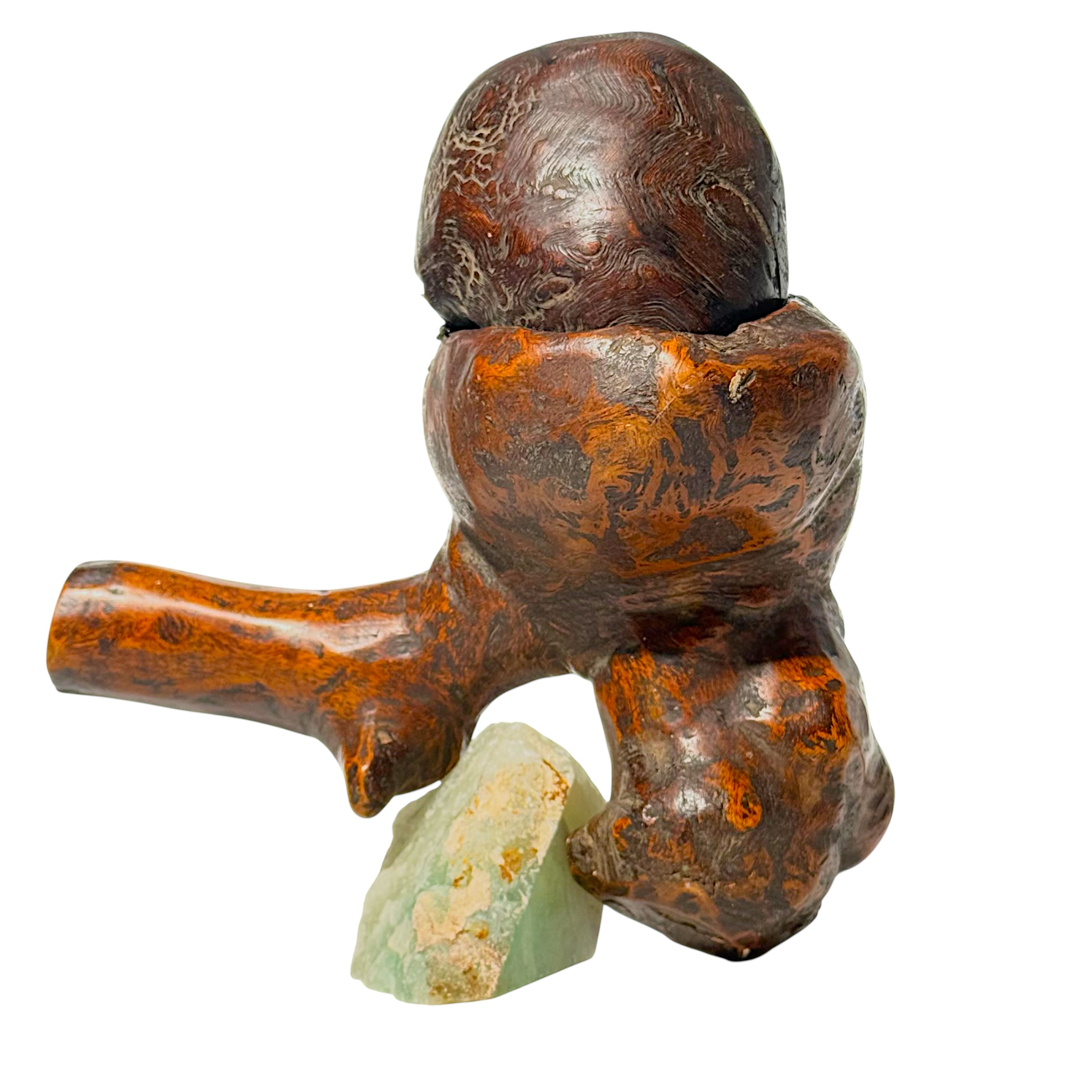
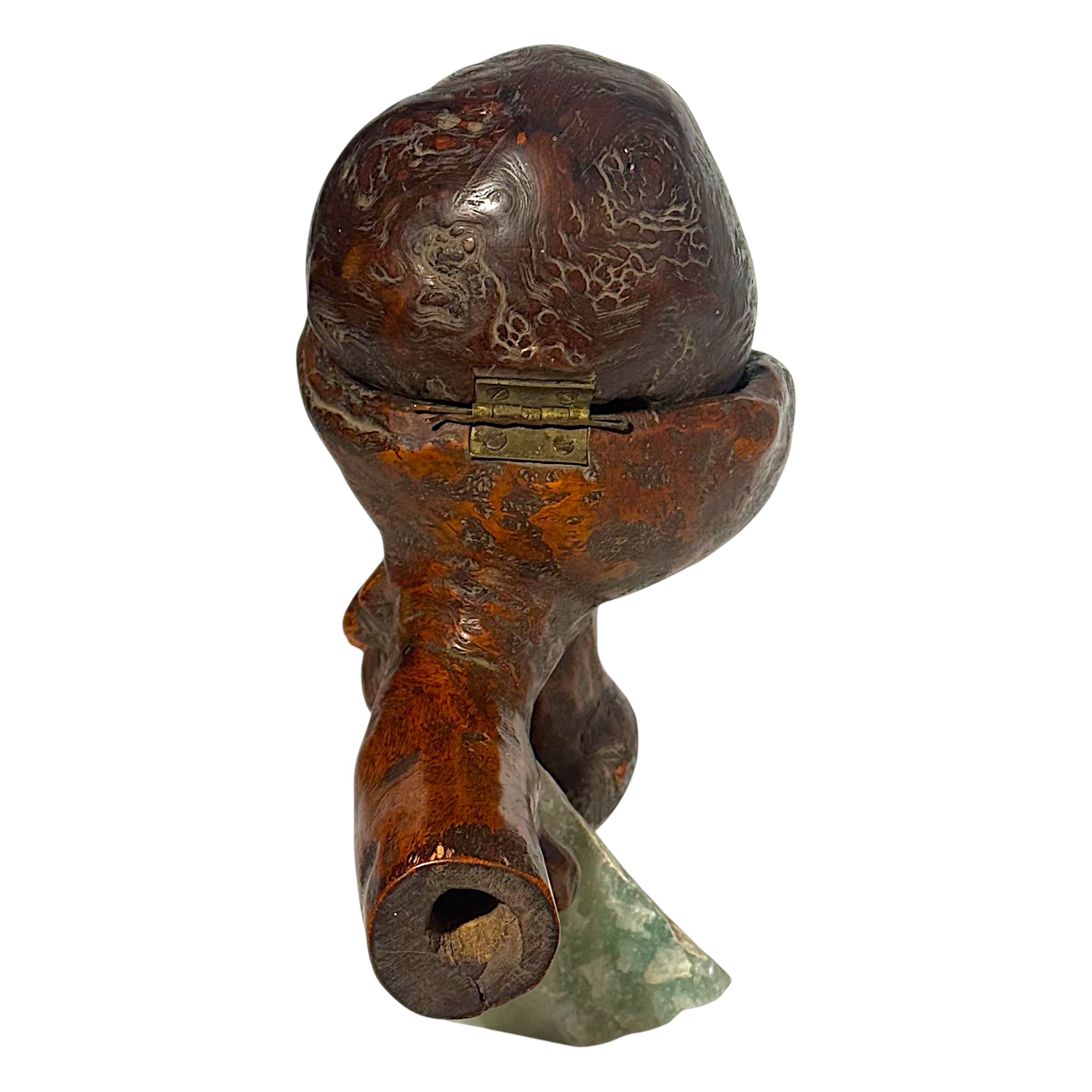
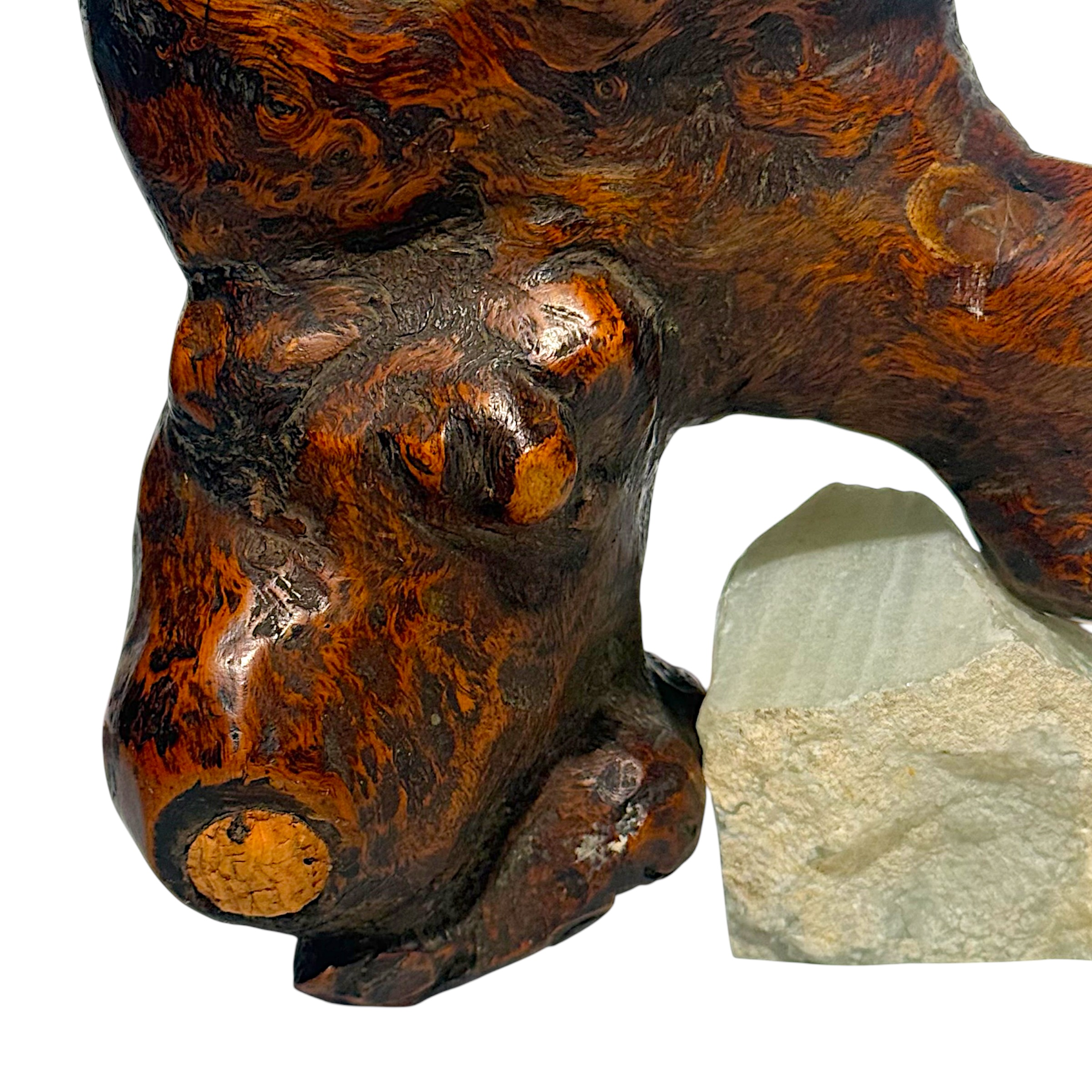
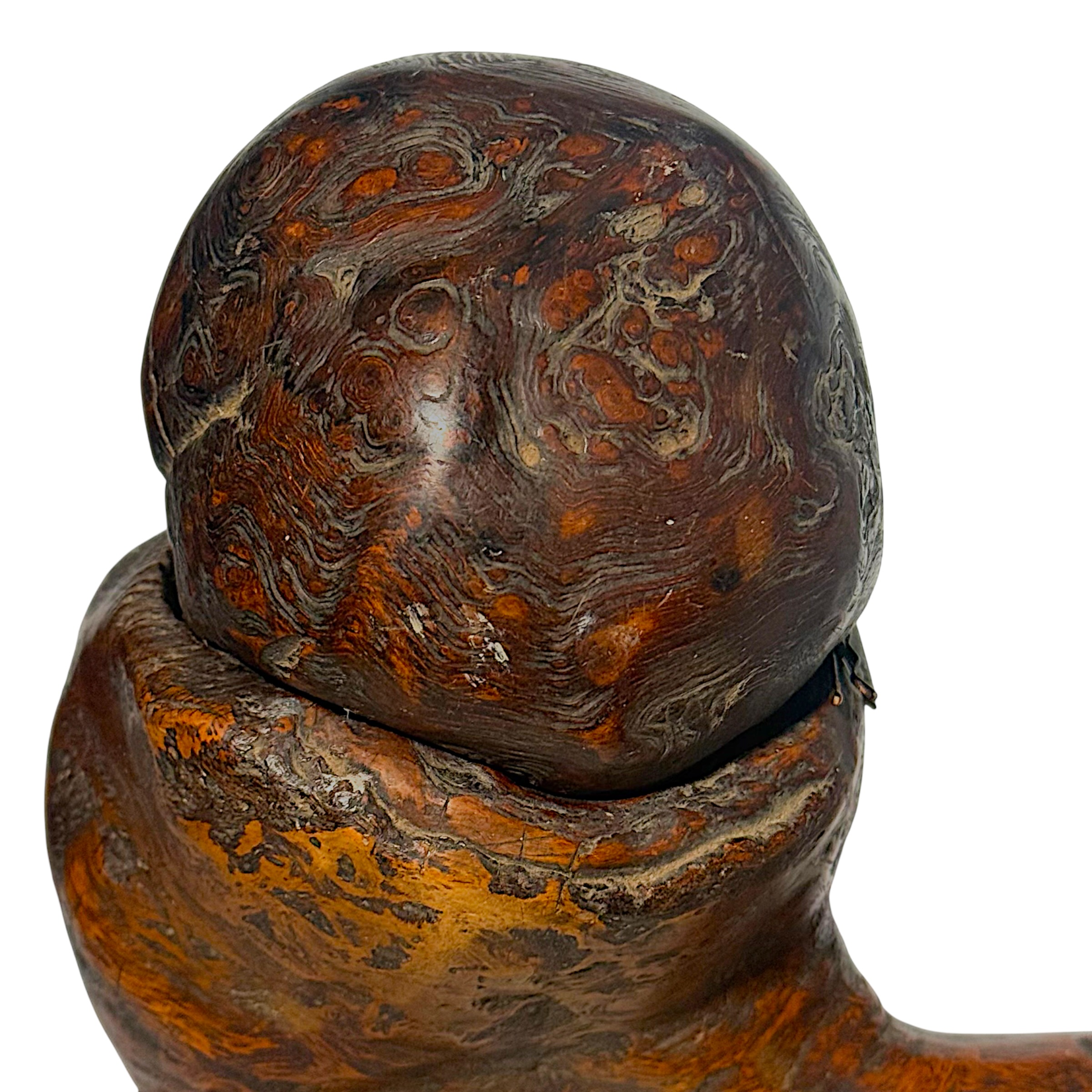
The maker preserved much of the original character of the wood rather than shaping it into a uniform form. Swirling grain, knots, eyes, cavities, fissures, and irregular root-like projections remain visible throughout the body, giving the pipe an almost sculptural appearance.
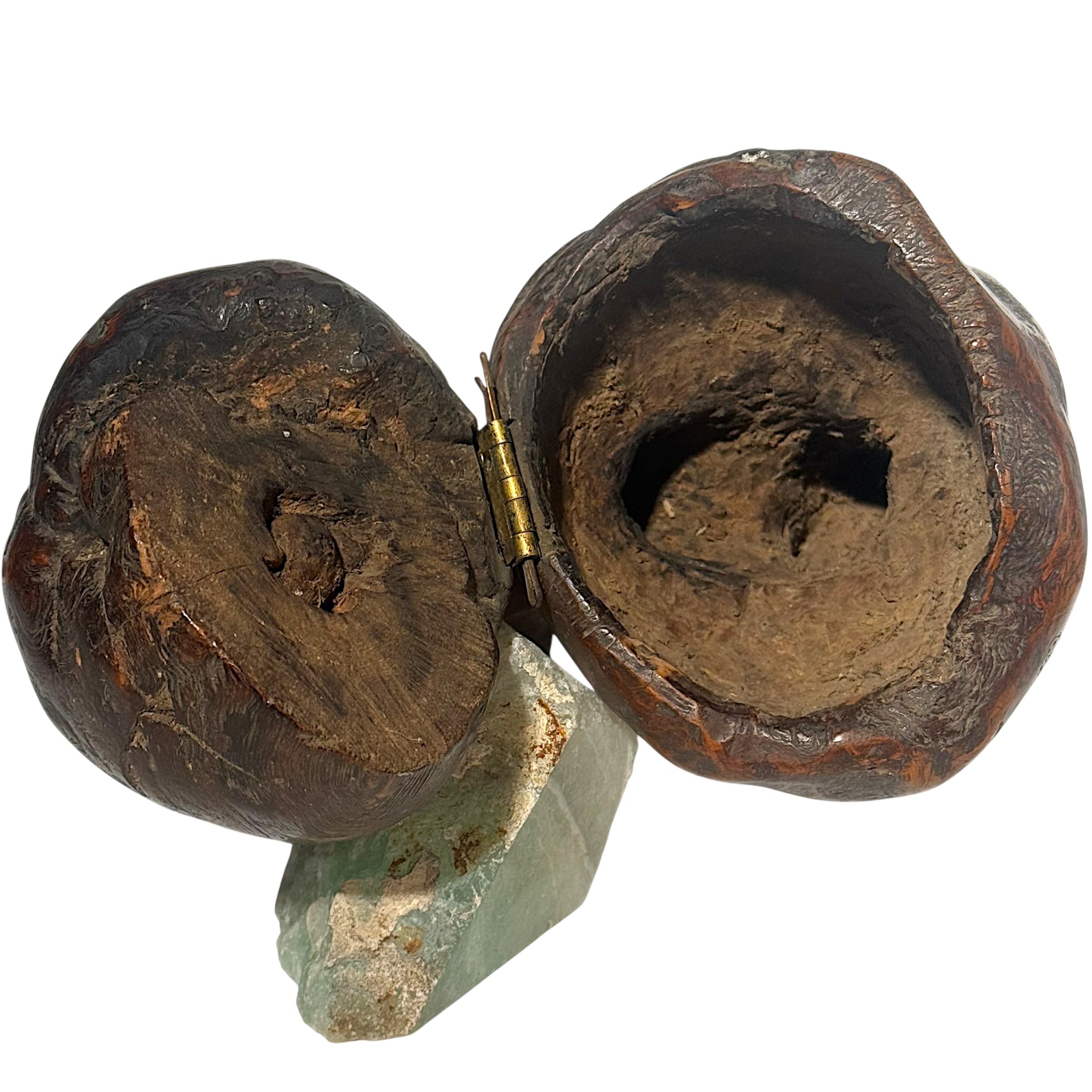
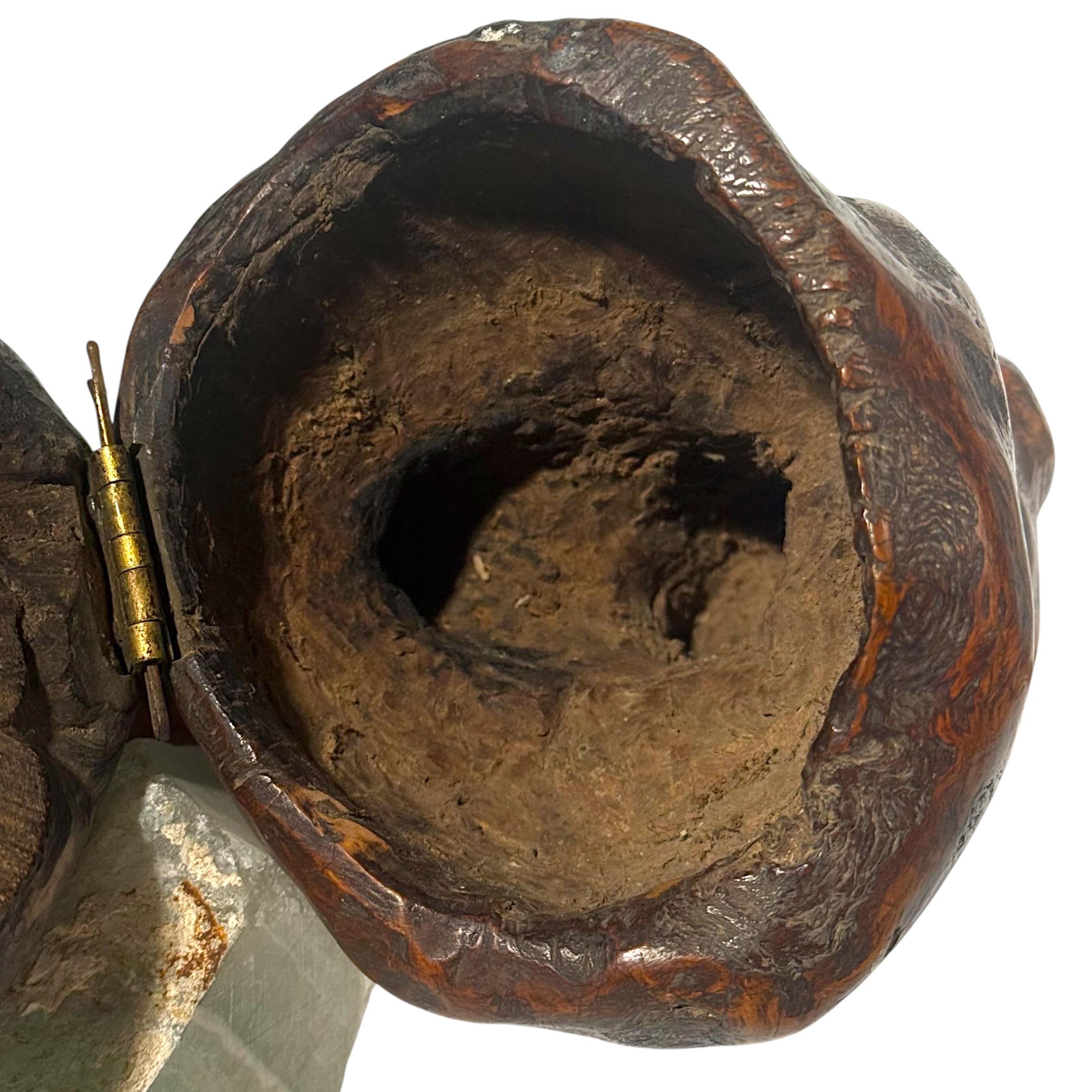
The oversized rounded bowl or upper chamber measures approximately 3.5 to 4 inches across and is covered by a separately carved wooden lid mounted with a simple metal hinge and traditional slotted screws.
Beneath the primary smoking chamber, the pipe appears to incorporate a lower reservoir or moisture-trap system. An aged cork-sealed opening survives on the underside, suggesting that the internal construction was intentionally designed to manage condensation, airflow, or accumulated moisture during use.
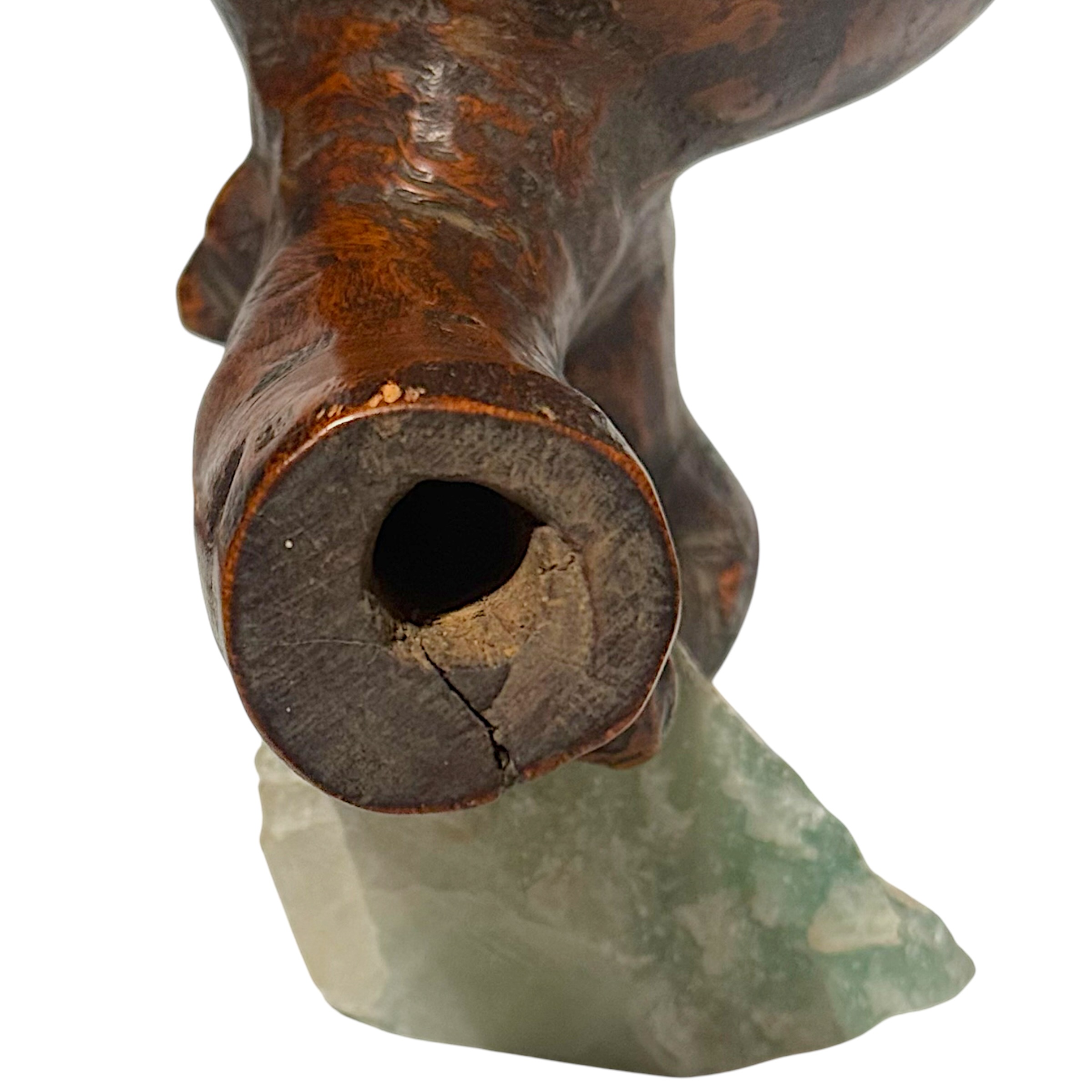
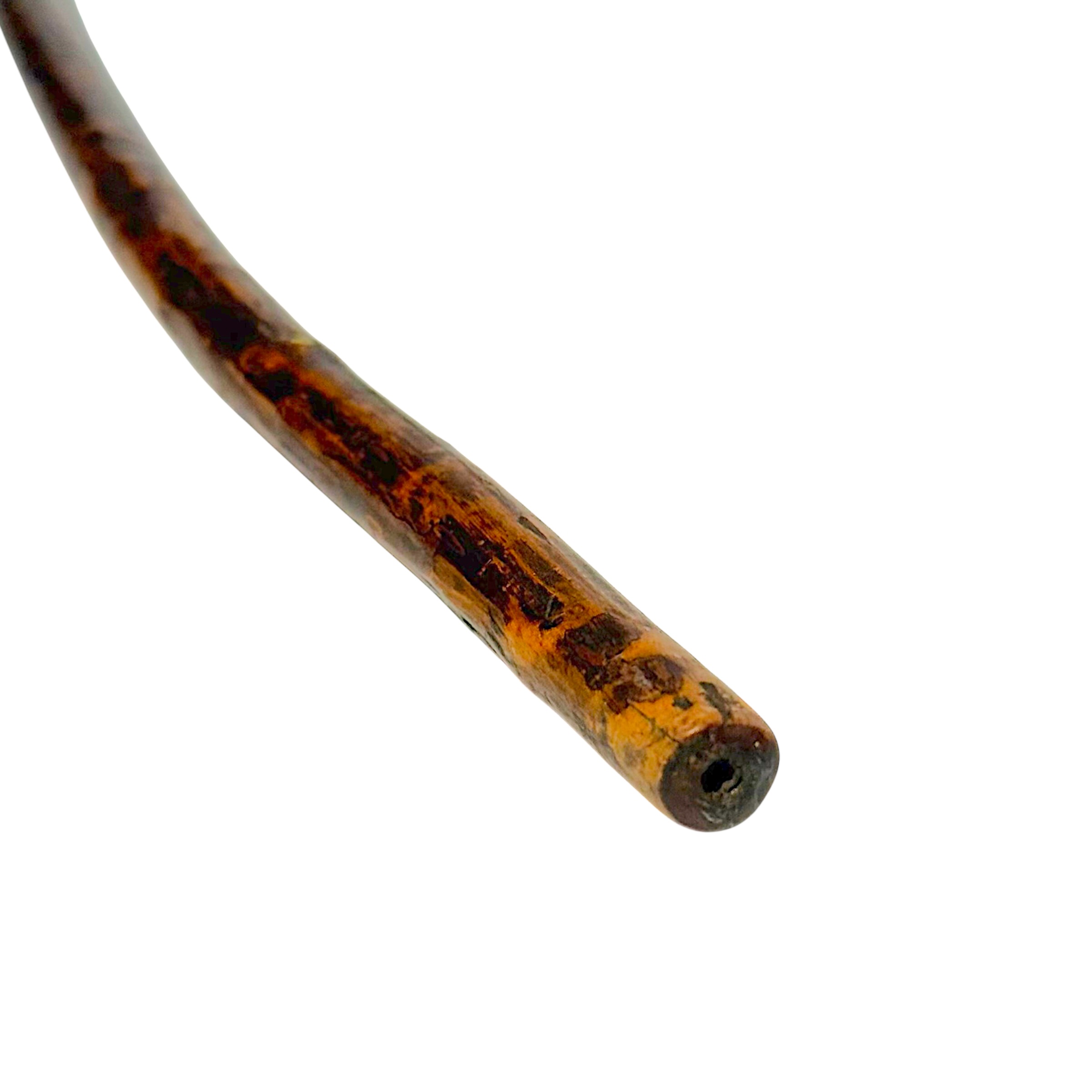
The detachable stem fits into a substantial horizontal socket extending from the body. From the rear of the carved body to the stem connection, the horizontal span measures approximately 8 to 9 inches.
The exact wood species remains unidentified. Its dense, dramatically figured structure is consistent with a natural burl or root wood traditionally selected for smoking pipes, with briar remaining a plausible possibility.
The maker and precise place of manufacture are also unknown. Based on the hinged cover, reservoir-like construction, long detachable stem, cork-sealed underside, and vernacular carving, the piece is provisionally attributed to a European folk smoking tradition, possibly German or Austrian.
The pipe displays extensive age-related character, including darkened recesses, worn high points, oxidized hardware, natural fissures, surface variation, and interior discoloration associated with historic use.
More than a conventional smoking implement, this object reflects a tradition in which natural materials, practical engineering, and folk craftsmanship could merge into an extraordinary and highly individual form.
Object Details
Date: 19th century, potentially earlier
Origin: Europe, possibly Germany or Austria
Object Type: Monumental covered reservoir smoking pipe
Material: Natural burl or root wood, possibly briar; wood stem; metal hardware; cork
Overall Length: Approximately 24 to 25 in.
Detachable Stem: Approximately 18 to 18.5 in.
Carved Body: Approximately 10 to 10.5 in. at greatest dimension
Body / Stem-Socket Span: Approximately 8 to 9 in.
Rounded Bowl / Upper Element: Approximately 3.5 to 4 in. across
Construction: Hand-carved
Features: Hinged wooden lid, slotted screws, oversized chamber, lower reservoir or moisture trap, cork-sealed underside, detachable long stem
Maker: Unknown
Condition: Good antique condition with extensive patina, natural fissures, surface wear, oxidized hardware, and evidence of historic use
Collector Context
This highly unusual pipe holds particular significance for collections focused on European folk art, antique tobacciana, historic smoking technology, vernacular woodworking, natural burl objects, and unusual examples of 19th-century material culture.
Its extraordinary size, massive carved root form, complex internal construction, surviving detachable stem, hinged lid, cork-sealed reservoir, and unresolved regional origin make it one of the more enigmatic smoking objects preserved within the History of Smoke collection.
Reviews
There are no reviews yet.