
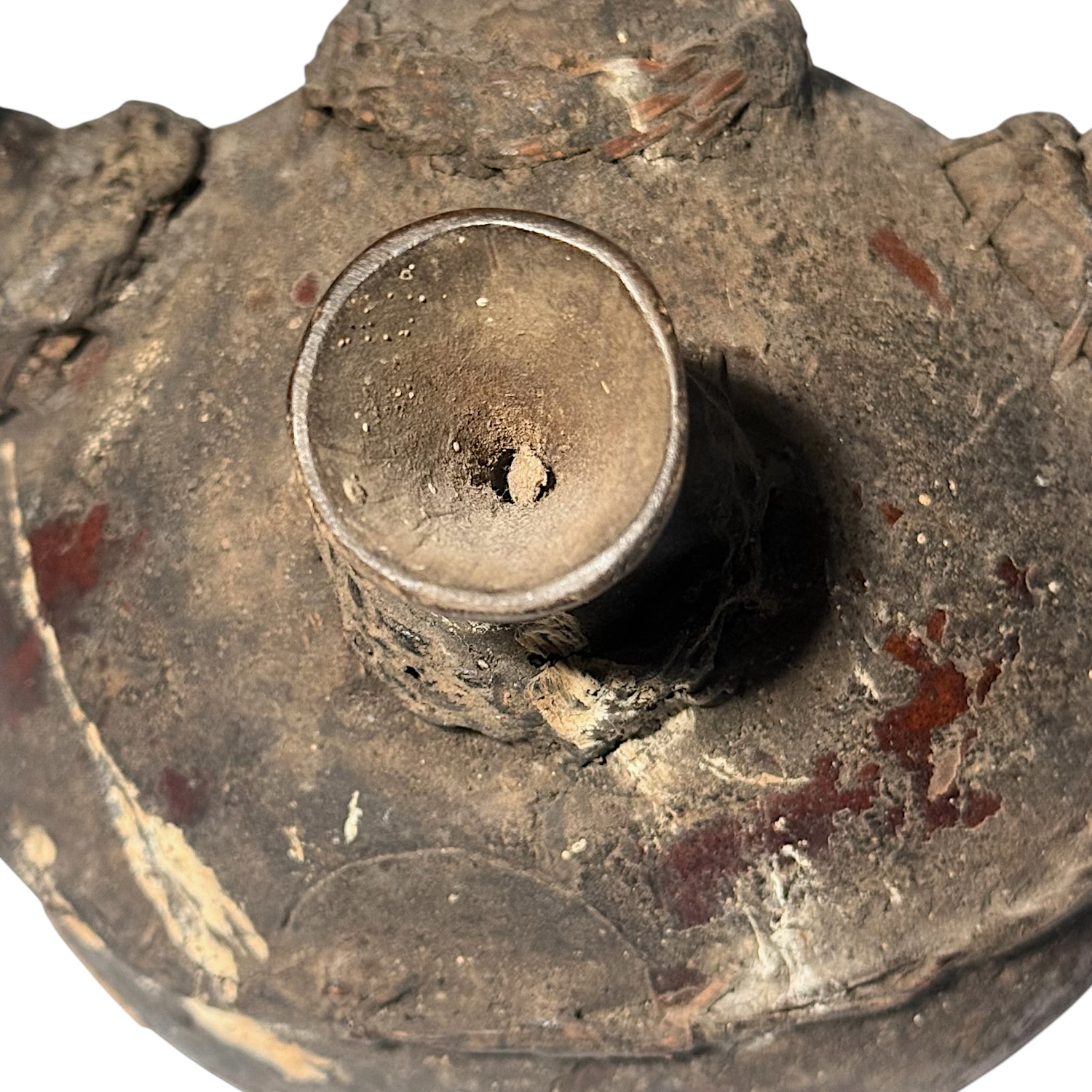
Luba Figural Ceremonial Gourd Water Pipe
Democratic Republic of the Congo, circa 1850–1950
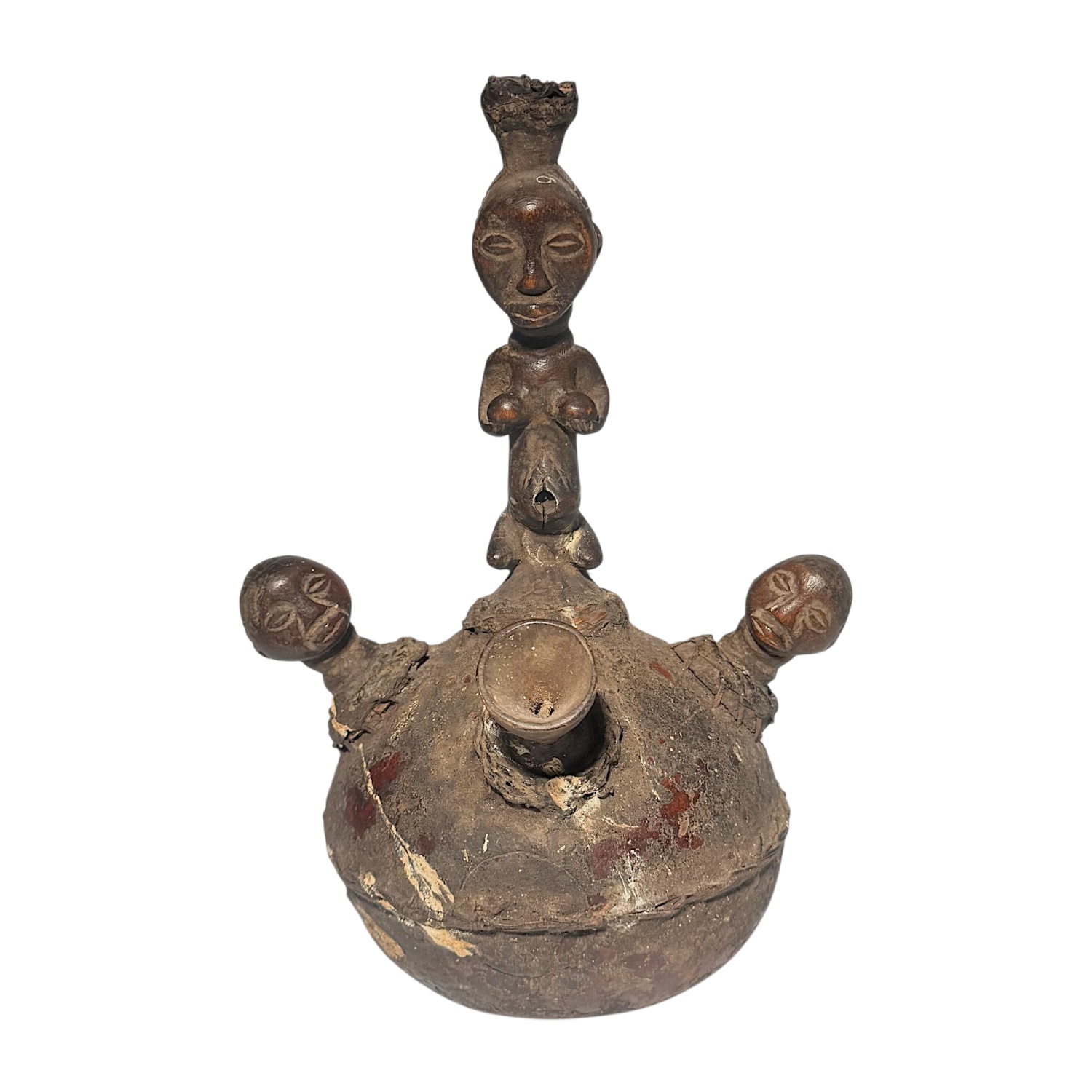
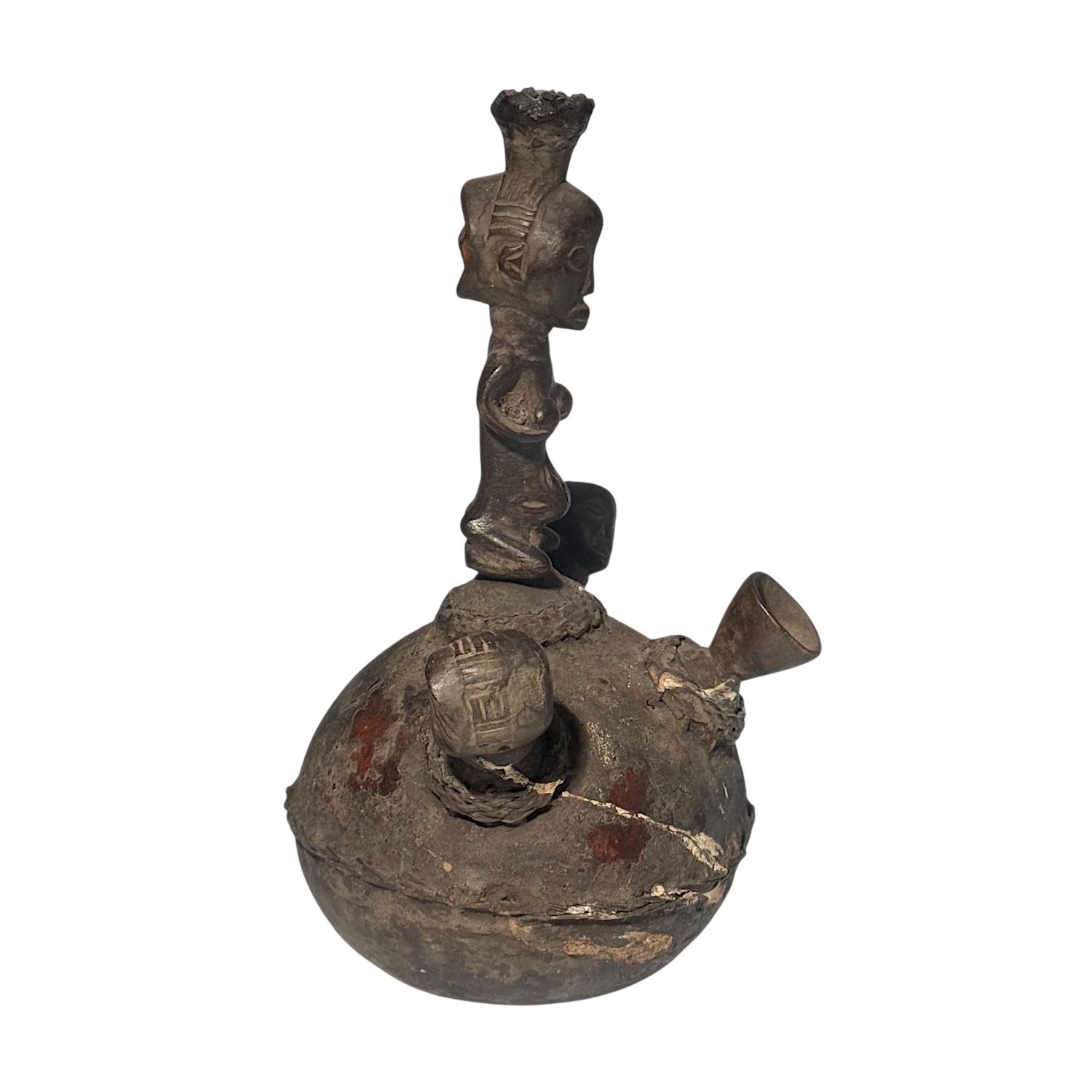
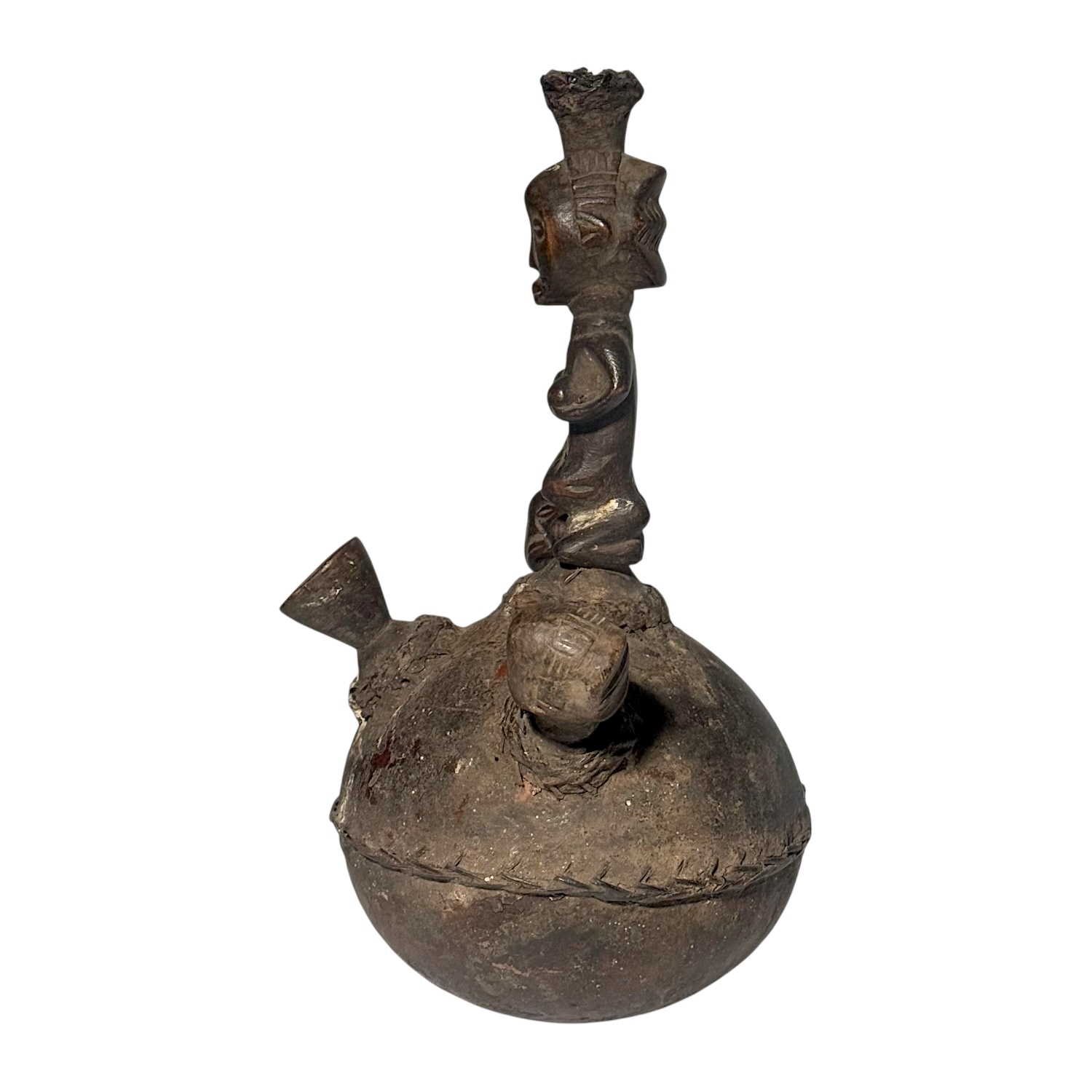
This remarkable Luba water pipe transforms a functional smoking implement into a complex piece of figural sculpture.
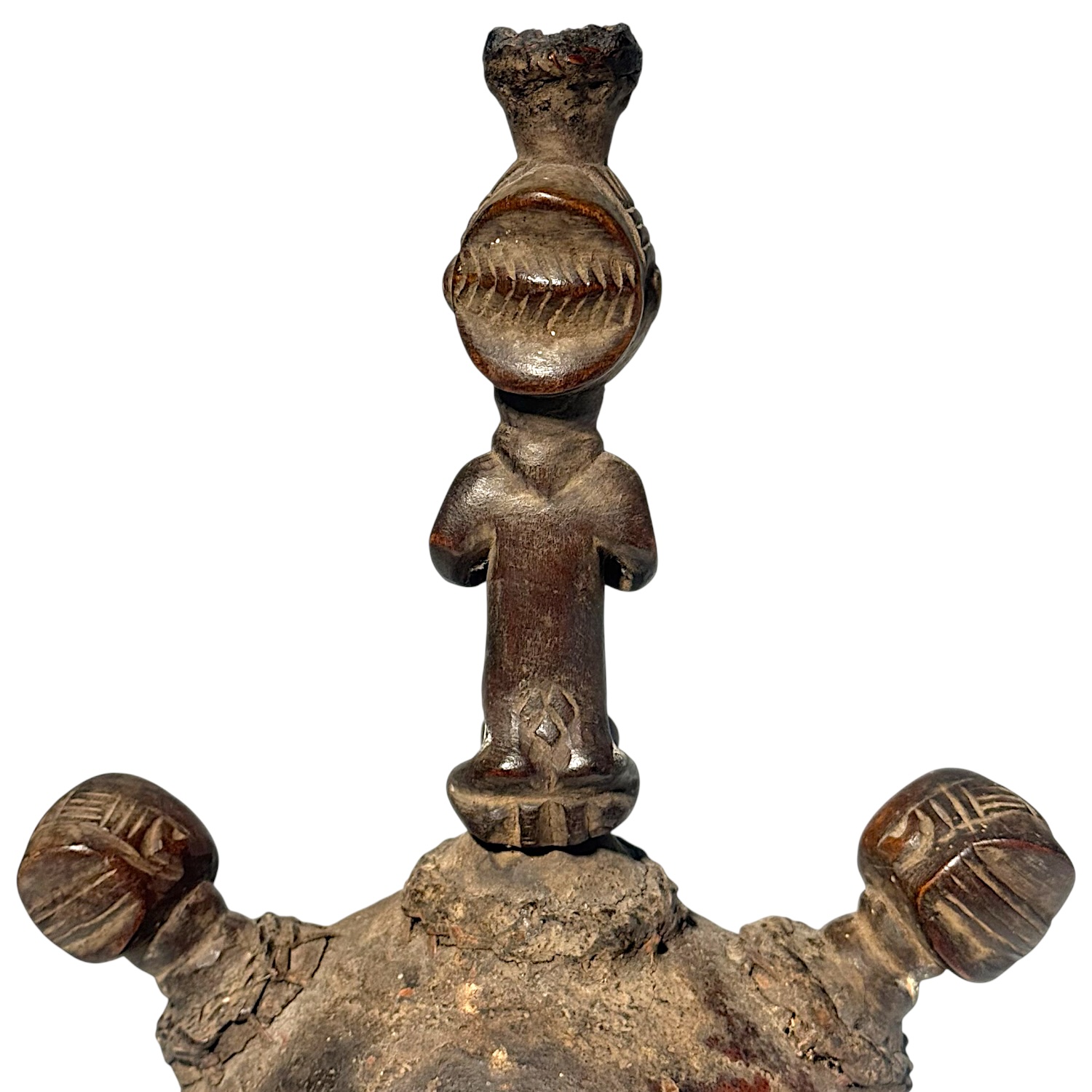
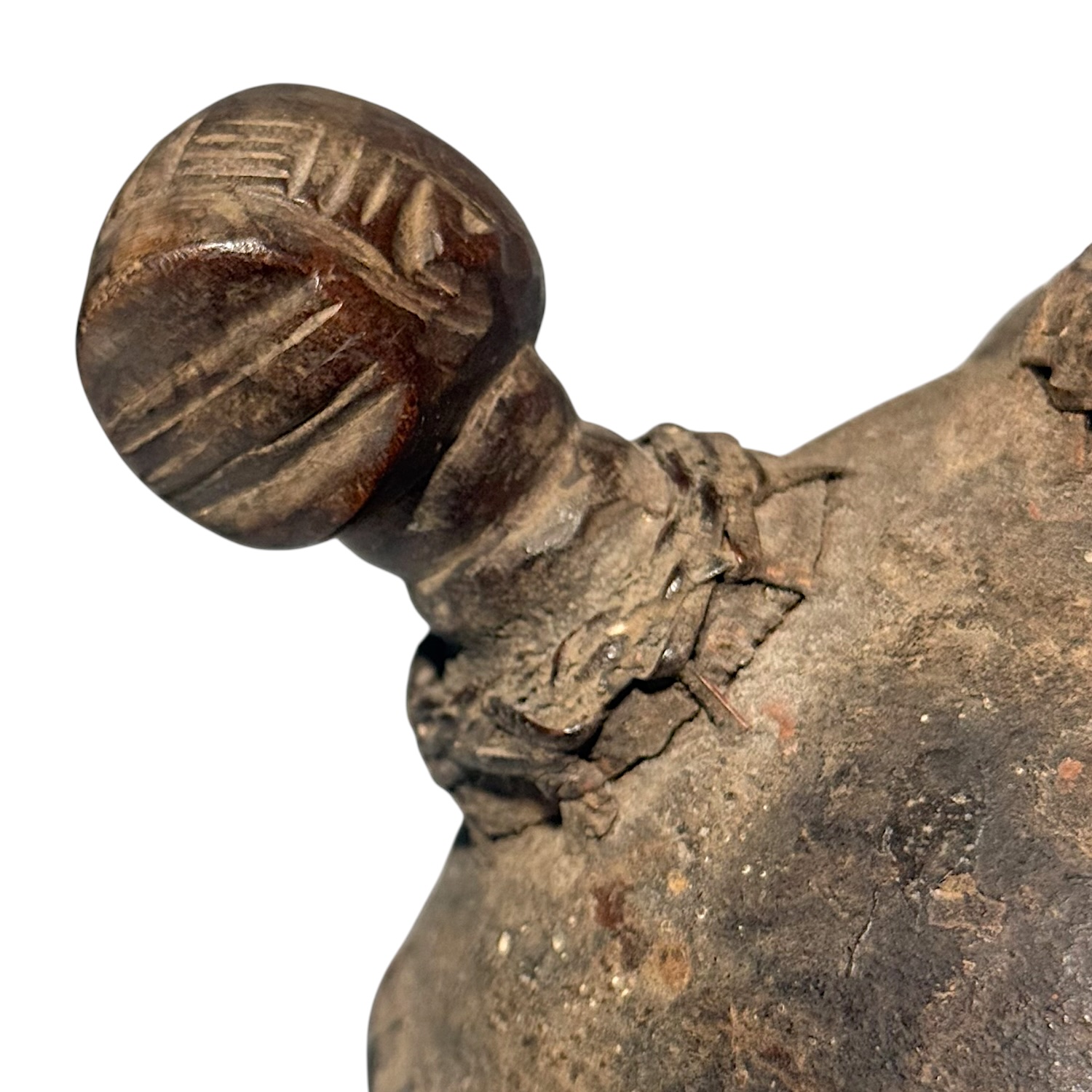
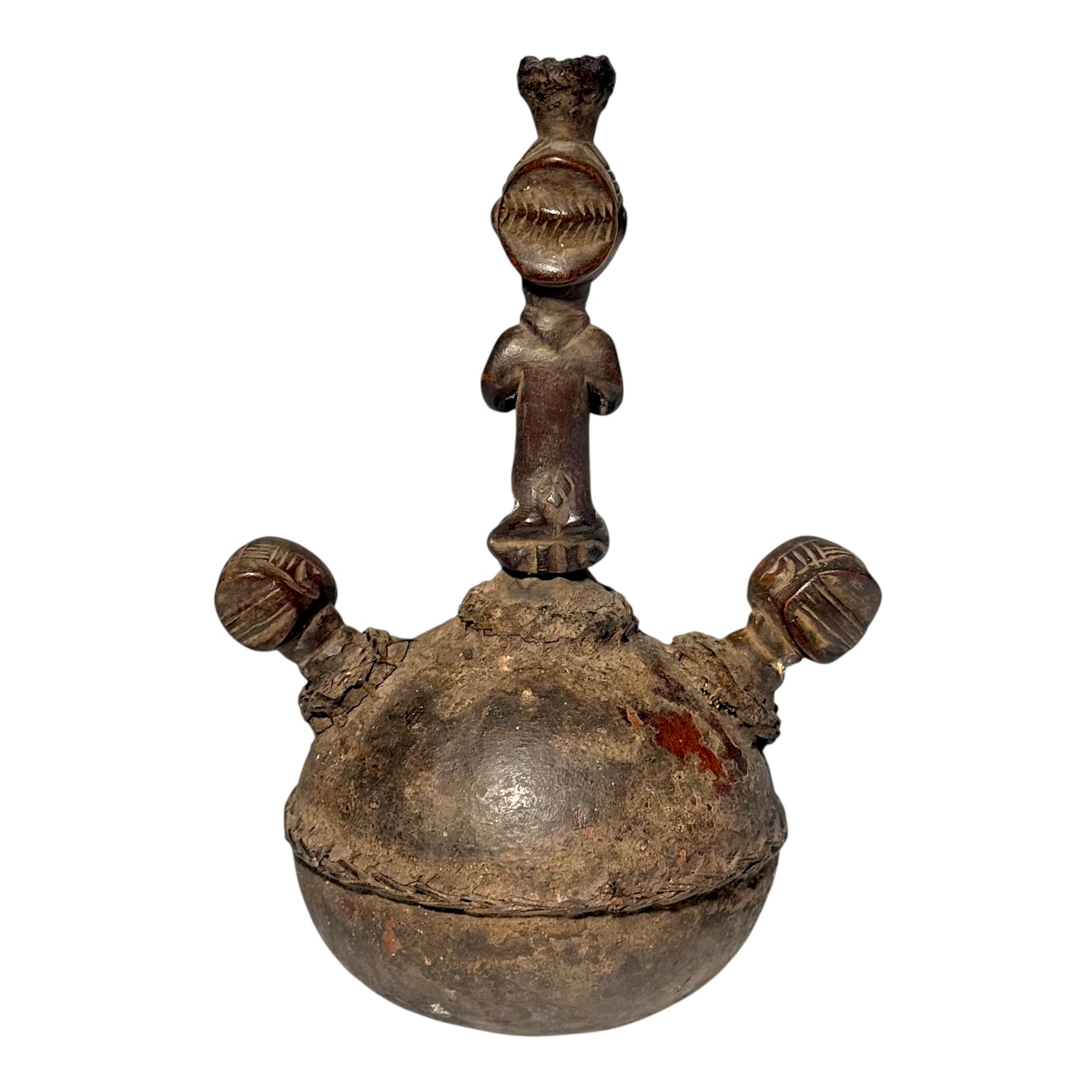
Constructed around a large natural calabash gourd, the pipe incorporates a clay smoking bowl, a tall carved female figure, multiple smaller carved heads, organic bindings, surviving pigment, and a heavily aged surface shaped by generations of handling and use.
Measuring approximately 10 3/8 inches high x 7 1/4 inches wide x 6 1/2 inches deep, the object has considerable sculptural presence despite its relatively compact dimensions.
The pipe was formerly part of the Collection of William and Diane Itter, adding an important documented collecting history to an already unusual surviving object.
Object Details
Date: Circa 1850–1950
Origin: Democratic Republic of the Congo
Culture: Luba
Object Type: Figural ceremonial gourd water pipe
Materials: Gourd, carved wood, clay / earthenware, organic bindings, pigment
Height: Approximately 10 3/8 in.
Width: Approximately 7 1/4 in.
Depth: Approximately 6 1/2 in.
Provenance: Collection of William and Diane Itter
Condition: Antique condition with substantial historic wear and patina
A Pipe Built Around a Gourd
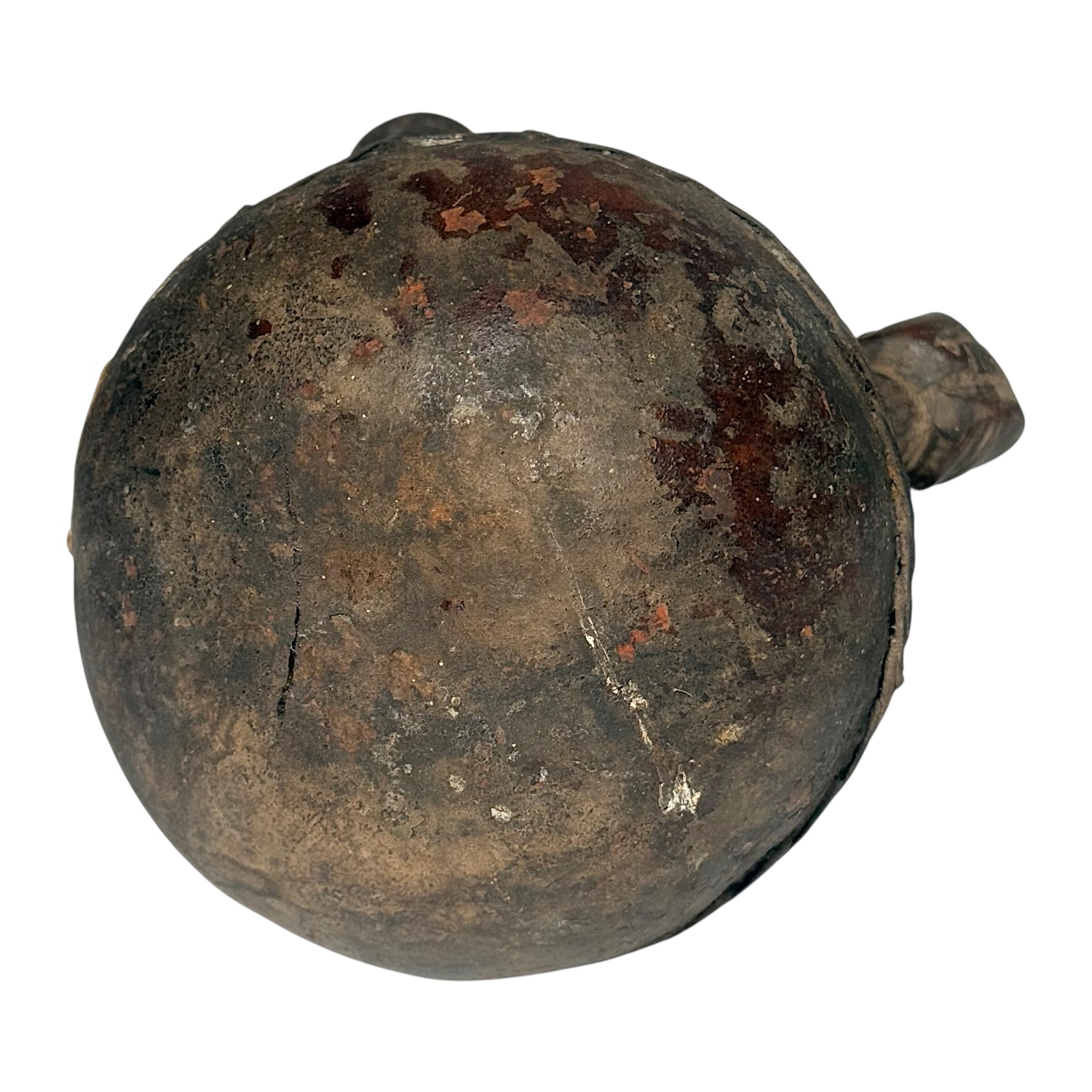
At the center of the object is a natural calabash gourd.
Rather than serving merely as decoration, the gourd formed the functional body and water reservoir of the pipe.
The smoking bowl fed smoke into the enclosed chamber, where it could pass through or across water before being drawn through an attached stem or mouthpiece.
Water-pipe traditions developed in a number of regions around the world, but Luba examples from Central Africa became particularly distinctive because makers often incorporated complex figural sculpture directly into the apparatus.
Surviving museum and collection examples demonstrate gourd-bodied Luba and related water pipes constructed with carved wooden figures and separate smoking bowls. Tribal Art Gallery
Figural Sculpture
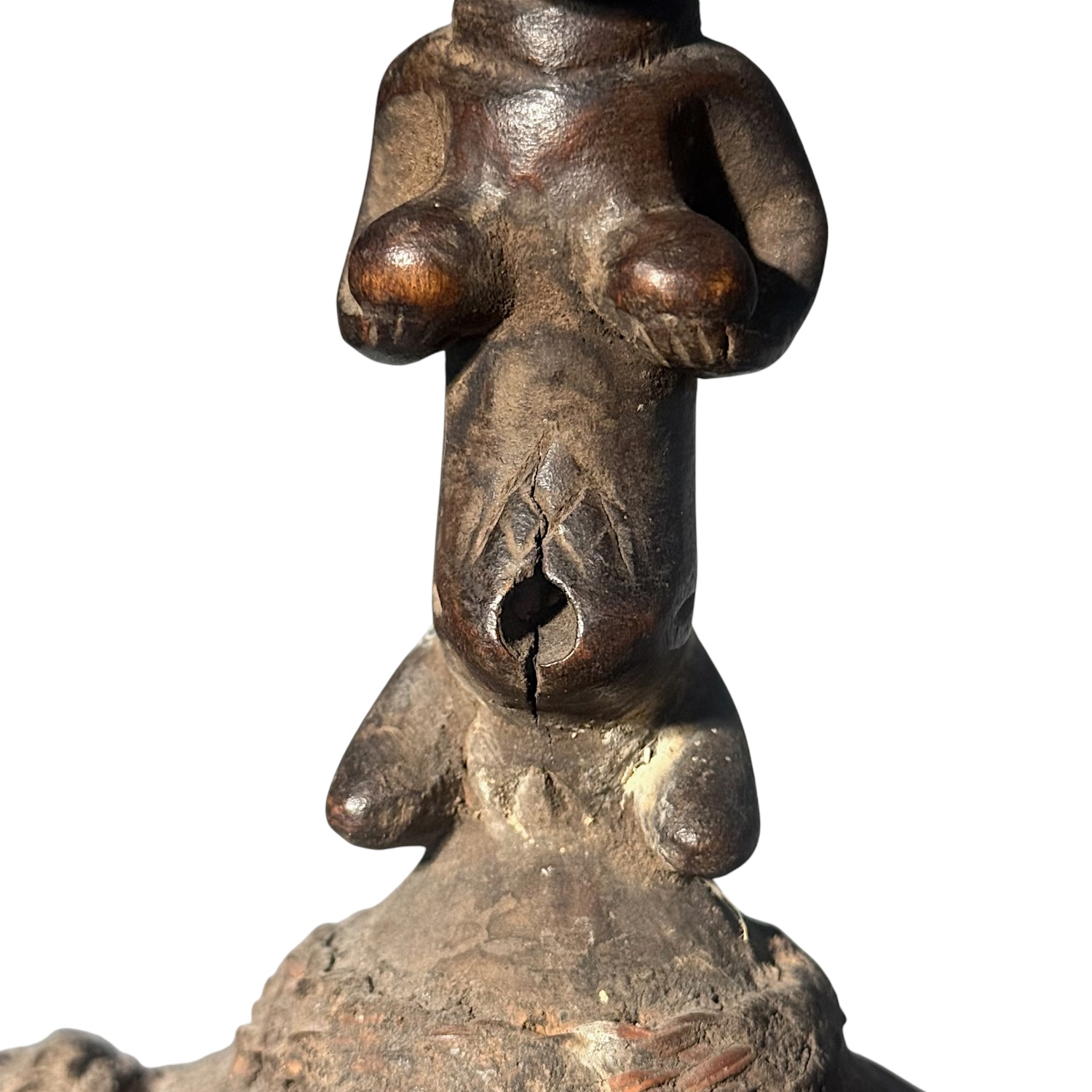
The most visually commanding element is the tall anthropomorphic figure rising from the gourd.
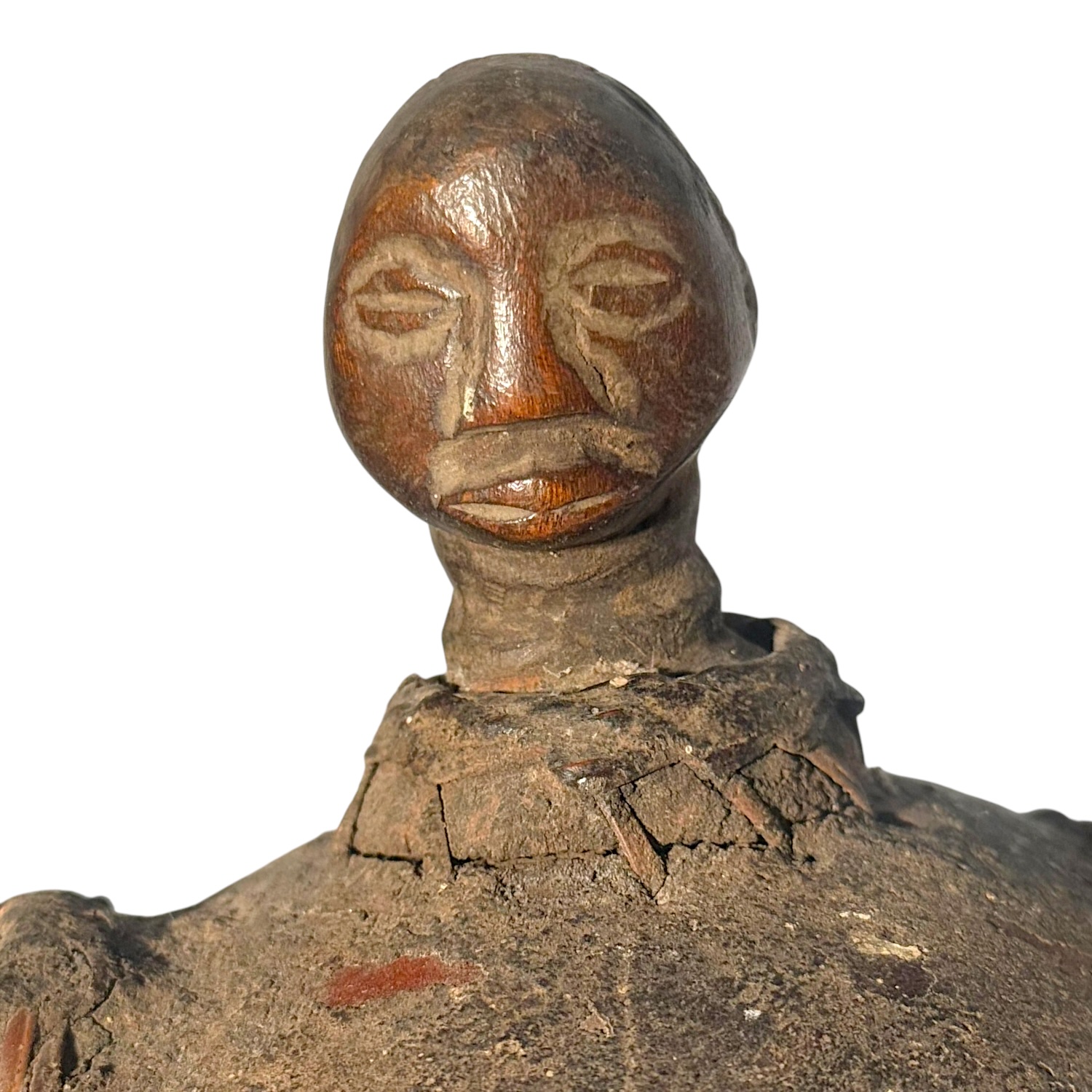
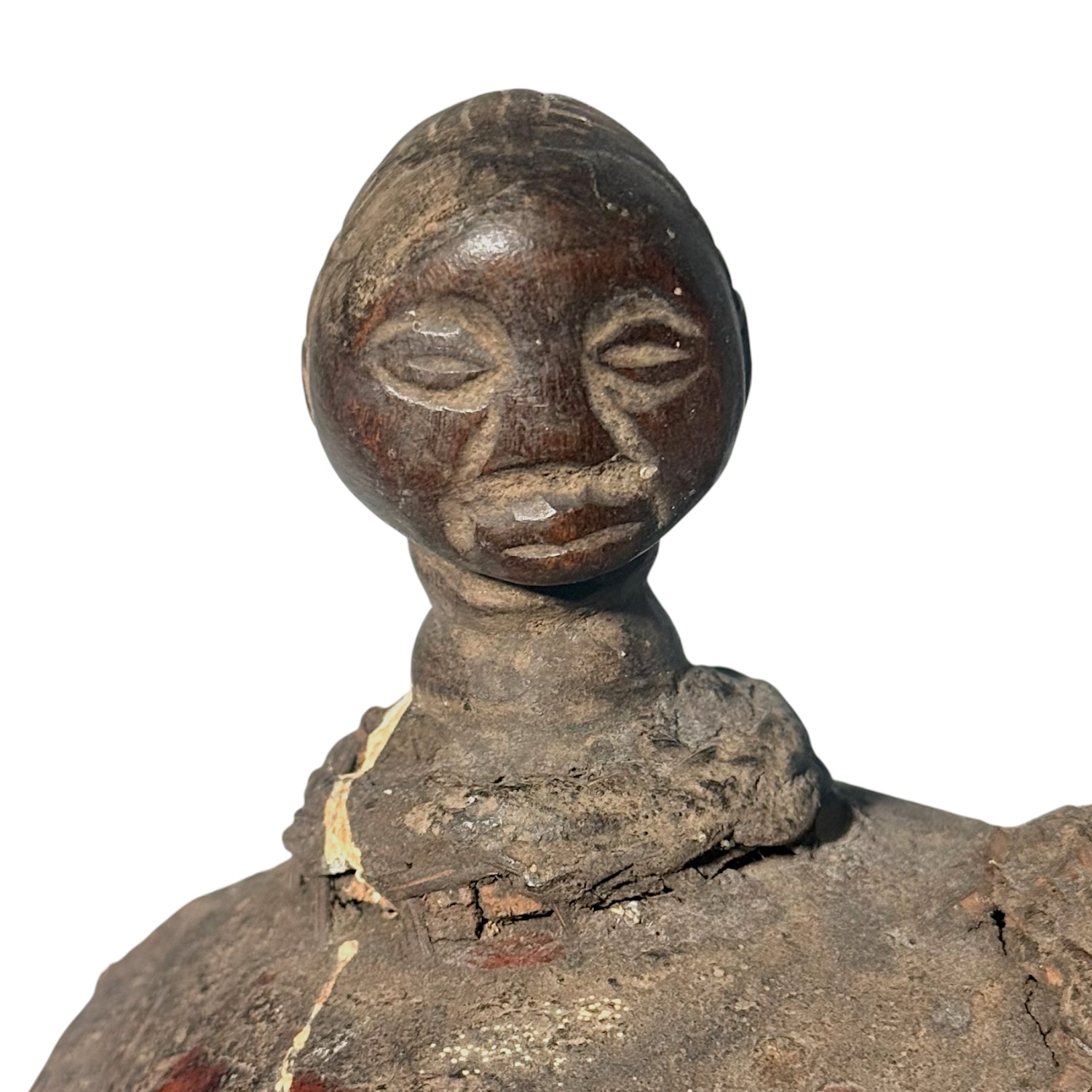
Around it are several smaller carved heads, producing an unusually dense sculptural composition in which nearly every side of the object presents a different face or profile.
The figures do not appear to have been added simply as decoration.
Within Luba art, the human form—particularly the female form—appears repeatedly on prestige objects associated with leadership, memory, spirituality, and social identity.
Luba artists incorporated female figures into royal seats, staffs of office, vessels, and water pipes, making the body itself an important carrier of meaning. The Metropolitan Museum of Art
Women in Luba Art
Female imagery holds a particularly important place within the artistic traditions of the Luba.
The Metropolitan Museum of Art notes that representations of women occur throughout Luba leadership regalia and are closely connected with ideas of spiritual power and the foundations of kingship. The Metropolitan Museum of Art
Historic Luba water pipes also survive with prominently carved female figures.
A documented 19th-century example associated with the Brooklyn Museum incorporates a female figure holding her breasts, an image interpreted in museum scholarship through ideas of motherhood, respect, social status, and the safeguarding of knowledge. Wikimedia Commons
This pipe belongs to that broader visual world in which smoking implements could become sculptural objects carrying meanings far beyond their purely practical function.
Ceremonial and Prestige Pipes
Large and elaborately carved pipes could occupy a different cultural position from simple everyday smoking implements.
Historic documentation connects anthropomorphic Luba water pipes with individuals of status and with contexts involving chiefs, diviners, and other socially significant figures.
A surviving historical account references a photograph from 1910 showing a Luba chief or diviner using a water pipe, illustrating the relationship between smoking, status, and certain spiritual or ceremonial contexts. LOT-ART
For this reason, objects of this form are frequently described in collections and the art market as ceremonial, prestige, or anthropomorphic water pipes.
The Clay Bowl
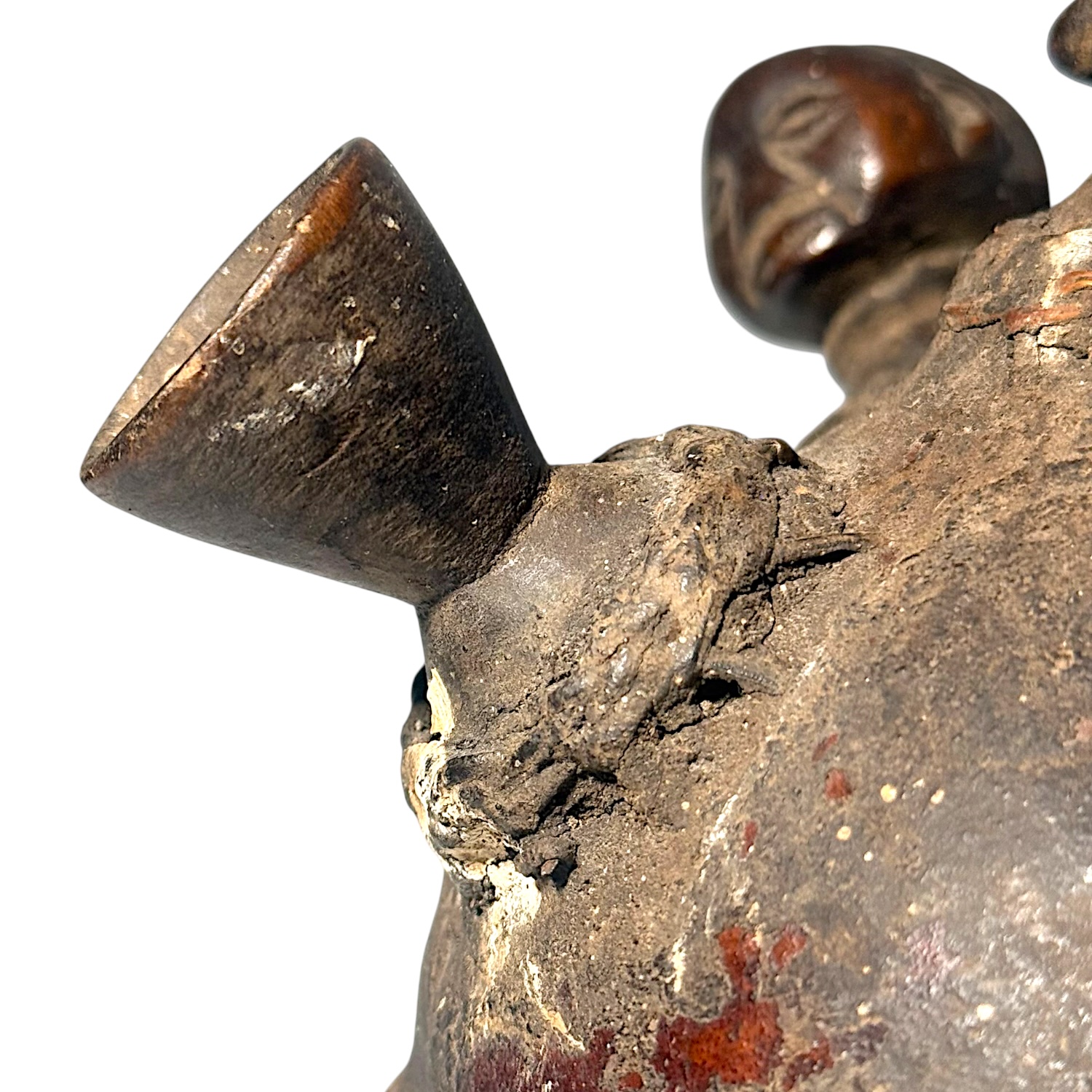
A separate dark clay or earthenware bowl is fitted into the upper portion of the gourd.
Its deep chamber preserves extensive dark deposits and discoloration consistent with historical smoking use.
The bowl was the combustion point of the apparatus.
Material placed within the chamber would be ignited, with the resulting smoke traveling downward into the larger gourd reservoir.
The simple utilitarian form of the clay bowl creates a striking contrast with the elaborate carving surrounding it.
Historical Water Filtration
The gourd reservoir gave this object a function very different from that of a conventional dry pipe.
Water pipes associated with Luba and neighboring communities are documented as using the water chamber to soften the smoke before inhalation.
Specialist literature on surviving examples describes Luba anthropomorphic water pipes as part of a broader eastern Congolese smoking tradition. LOT-ART
The result is essentially a compact sculptural water-pipe system built from natural and locally workable materials.
Carved Heads
Several smaller heads project outward from the body of the pipe.
Their placement creates an unusual multi-figural composition.
Viewed from different angles, the object continually changes: the central figure dominates from one side, while the surrounding heads emerge more clearly from others.
This quality makes the pipe as successful visually as a piece of sculpture as it was functionally as a smoking implement.
Surface and Pigment
The surface preserves substantial evidence of age.
The carved wood carries a dark patina with lighter areas created by abrasion and handling.
Remnants of pigment remain visible on portions of the figures, while the gourd itself displays irregular coloration, staining, cracking, and surface variation.
Rather than obscuring the object, these changes give it much of its visual character.
The different materials have aged independently, creating a layered surface that immediately communicates the object’s long physical history.
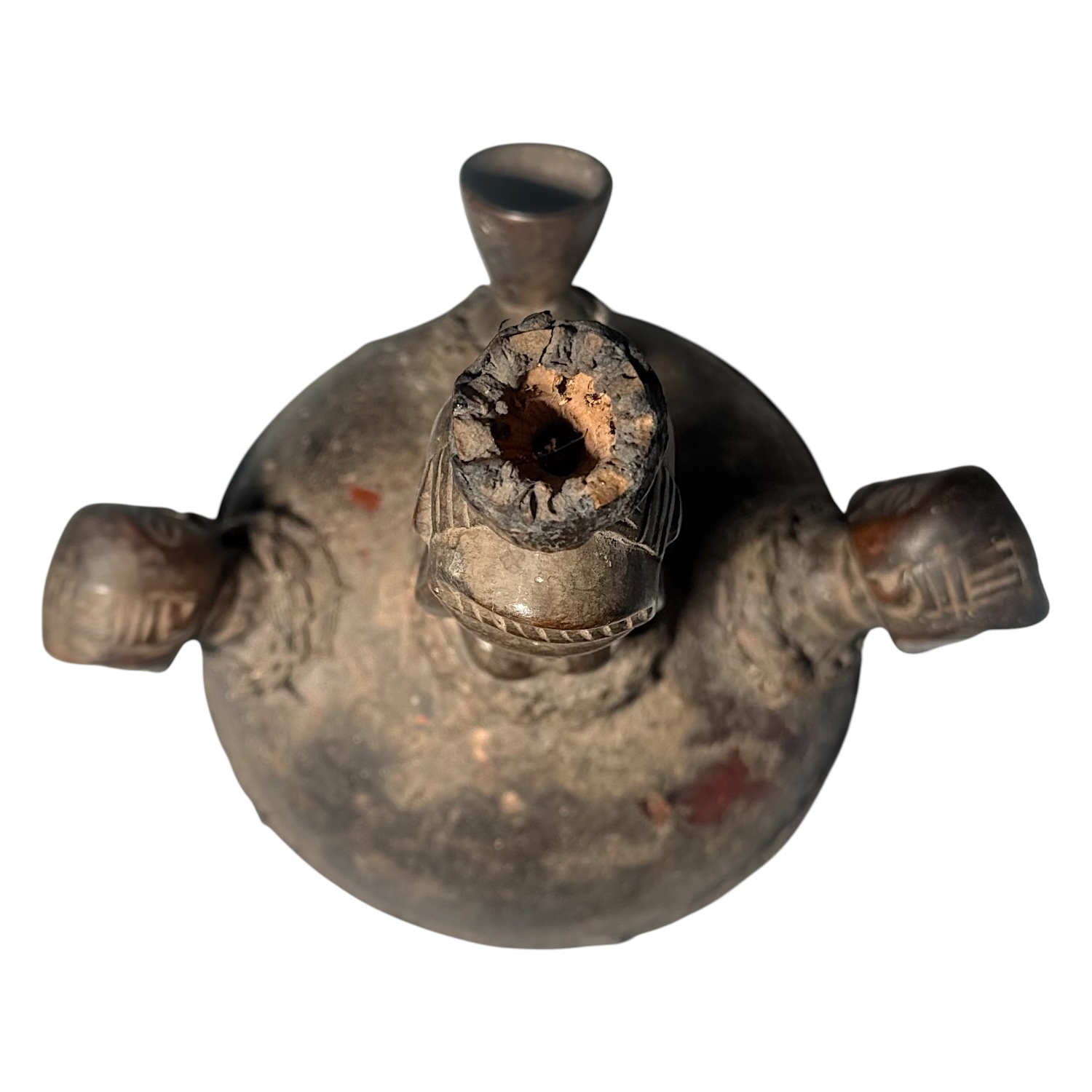
Missing Draw Stem
The opening at the top of the central figure indicates where an additional draw tube or mouthpiece would originally have been fitted.
Comparable Luba water pipes survive with long projecting stems or tubes inserted at this point.
That removable element is no longer present on this example.
Its absence does not prevent the original construction from being understood, but it is an important part of the object’s present condition and history.
William and Diane Itter Collection
The pipe was formerly part of the Collection of William and Diane Itter.
William M. Itter was an artist, Professor Emeritus at Indiana University, teacher, and longtime collector.
William and Diane began collecting during the 1970s, gradually assembling what Indiana University’s Eskenazi Museum of Art describes as an extensive group of ethnographic objects, particularly African ceramics, textiles, baskets, sculpture, and related handmade material.
For Itter, collecting served not simply as accumulation but as a visual resource for studying form, surface, craftsmanship, and the physical traces left by makers. Sidney and Lois Eskenazi Museum of Art
That provenance is particularly appropriate for this object, whose appeal lies heavily in the interplay between natural material, sculptural form, handmade construction, and accumulated surface history.
Luba Artistic Tradition
The Luba peoples developed one of the most distinctive sculptural traditions of Central Africa.
Historic Luba objects include:
- Royal stools
- Staffs of office
- Prestige vessels
- Divination objects
- Masks and figures
- Headrests
- Ceremonial implements
- Anthropomorphic smoking pipes
Many of these objects combine practical or political function with sophisticated sculptural imagery.
The Metropolitan Museum of Art documents elaborate Luba objects from the 19th through early 20th century, including leadership insignia incorporating female figures, copper, carved wood, and symbolic imagery. The Metropolitan Museum of Art
The present pipe belongs naturally within this larger tradition of objects in which utility, social meaning, and sculpture become inseparable.
Condition
The pipe remains in strongly evocative antique condition.
The gourd displays age cracking, discoloration, staining, abrasions, and surface variation.
The wooden figures show wear, scratches, pigment loss, small losses, and extensive dark patination.
The clay smoking bowl remains present and exhibits deposits and darkening associated with historical use.
Organic bindings and attachments show substantial age.
The original upper draw-stem or mouthpiece is no longer present.
These characteristics form part of the object’s surviving historical surface and should be considered integral to its appearance.
Please review all photographs carefully for a complete record of condition.
Collector Context
This piece may appeal to collectors of:
- Luba art
- Central African sculpture
- Antique smoking pipes
- Historic water pipes
- African ceremonial objects
- Democratic Republic of the Congo material culture
- Gourd vessels
- African figural carving
- Ethnographic smoking artifacts
- Historic tobacciana
- African decorative arts
Its combination of sculptural complexity, unusual water-pipe construction, multiple carved figures, natural gourd body, extensive historic patina, and William and Diane Itter provenance makes it one of the more visually distinctive forms found within historic smoking culture.

Reviews
There are no reviews yet.