
Democratic Republic of the Congo | c. 1900–1930, possibly late 19th century
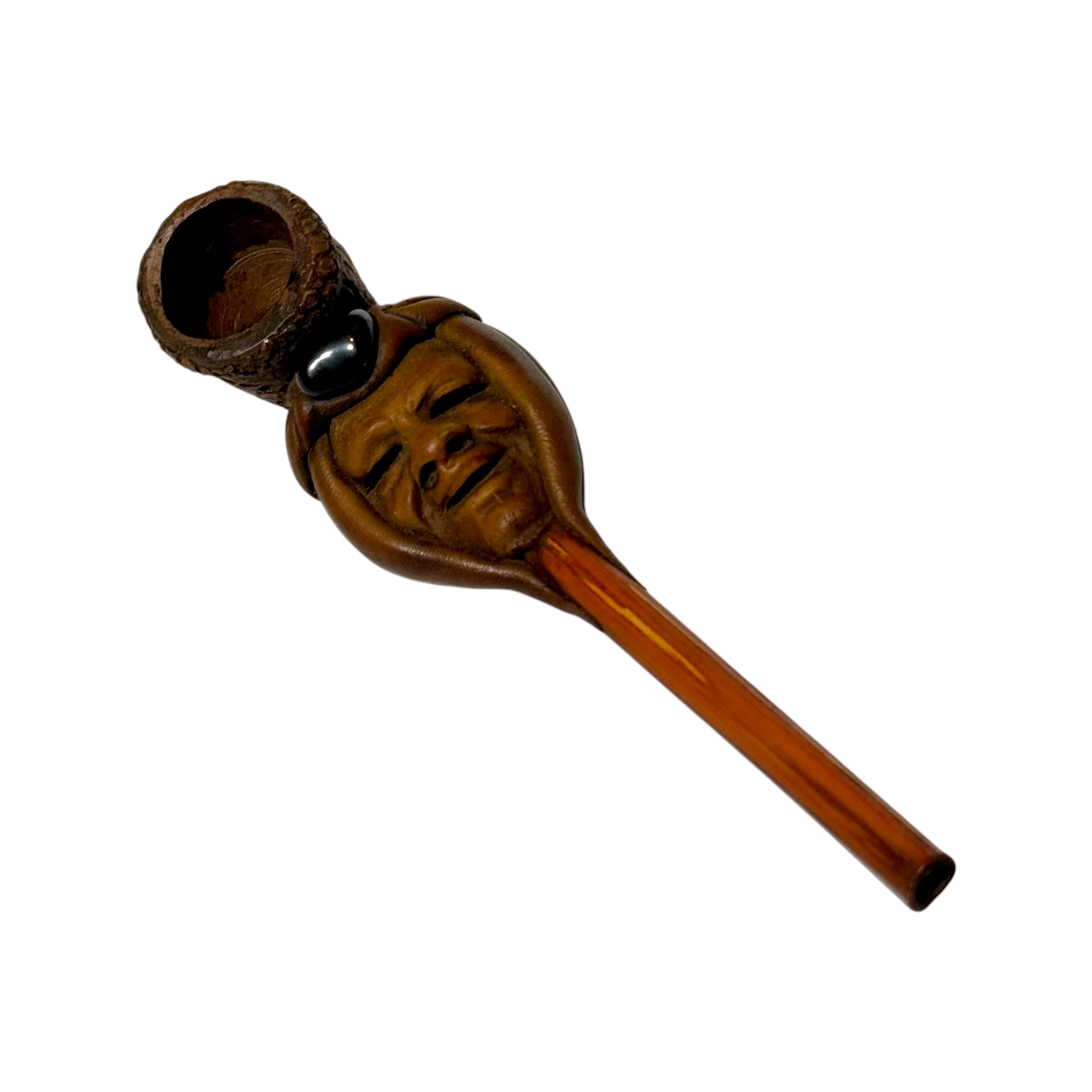
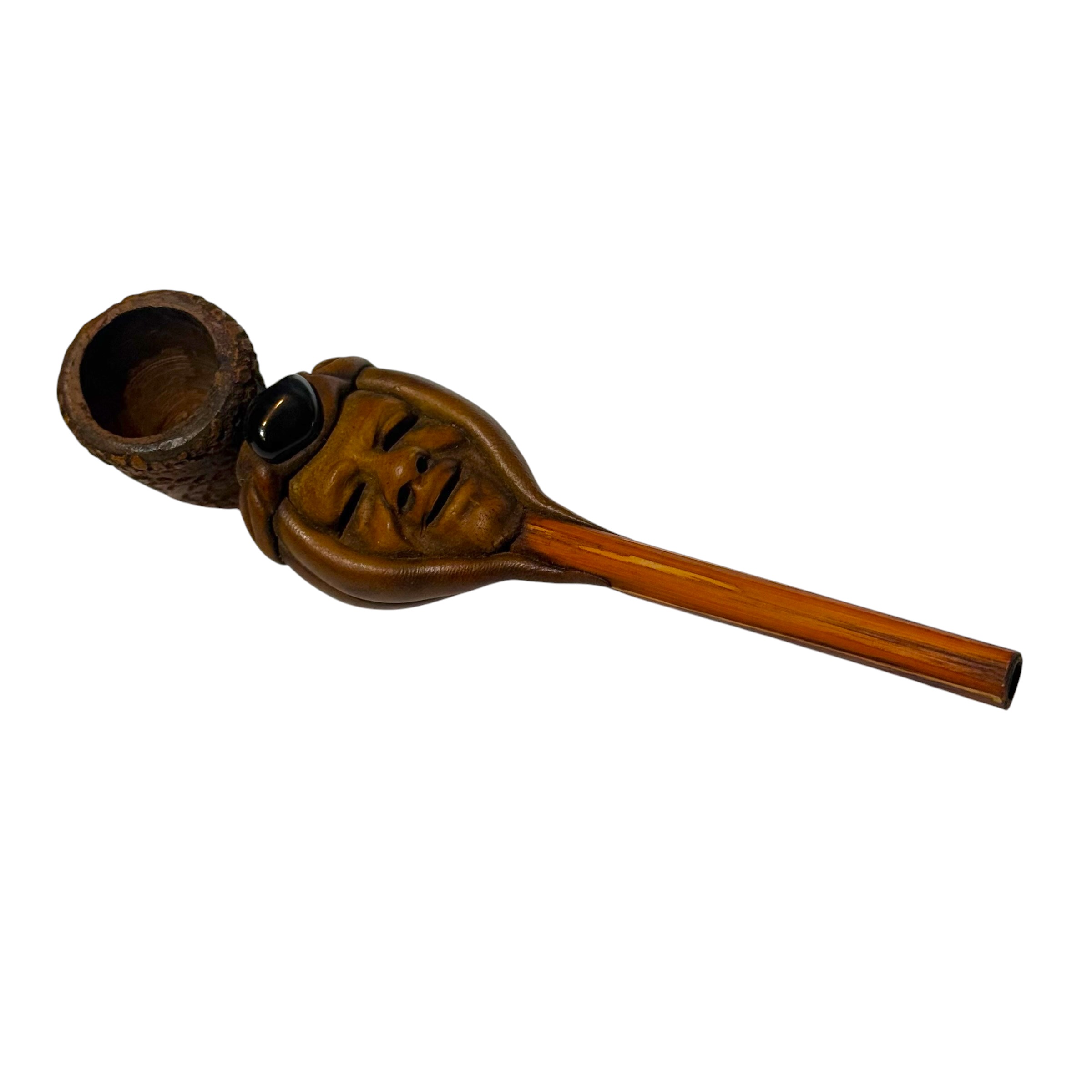
This unusual anthropomorphic smoking pipe is provisionally attributed to the Kuba cultural sphere or a related Kasai-region people of the Democratic Republic of the Congo and likely dates to approximately 1900–1930, with a late 19th-century date remaining possible.
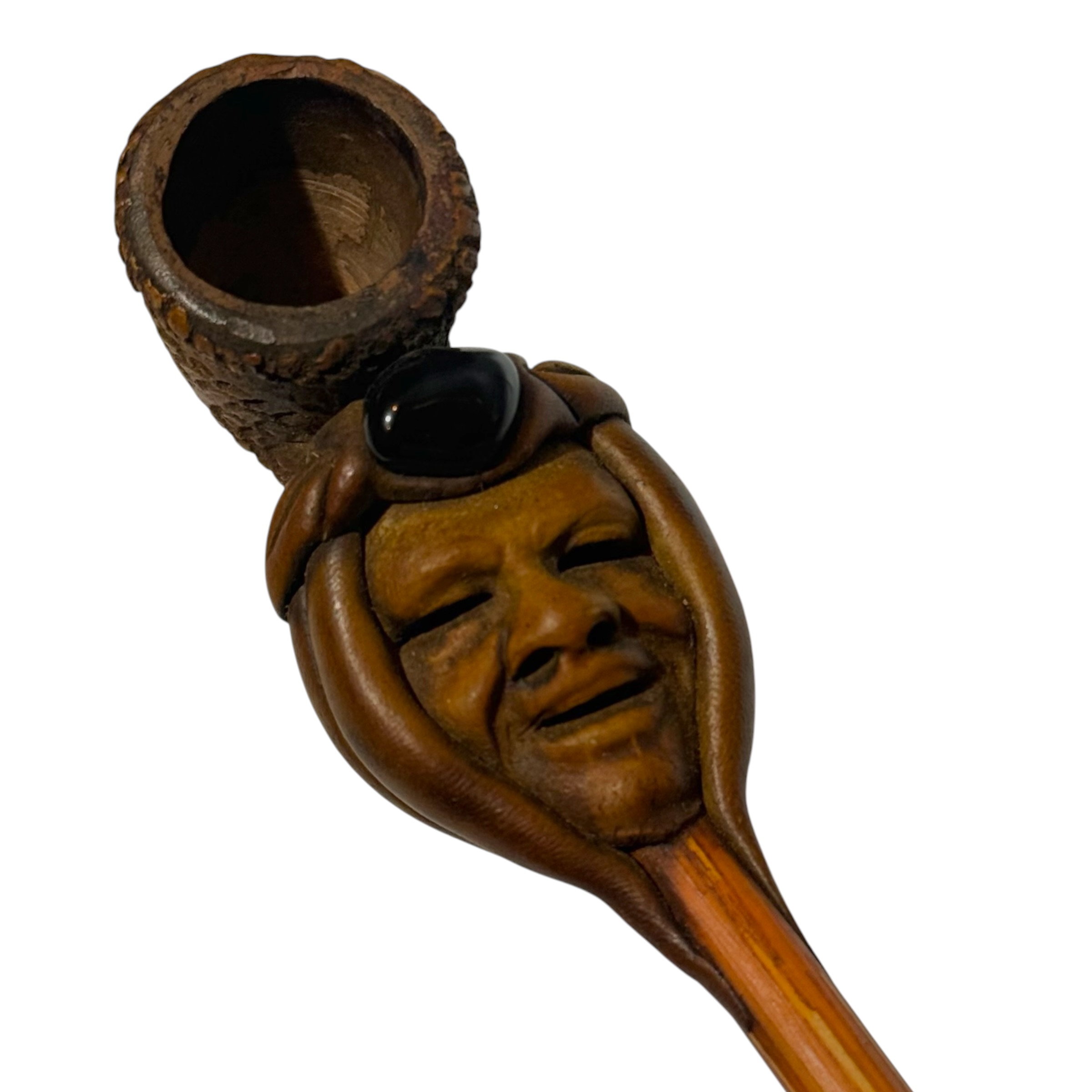
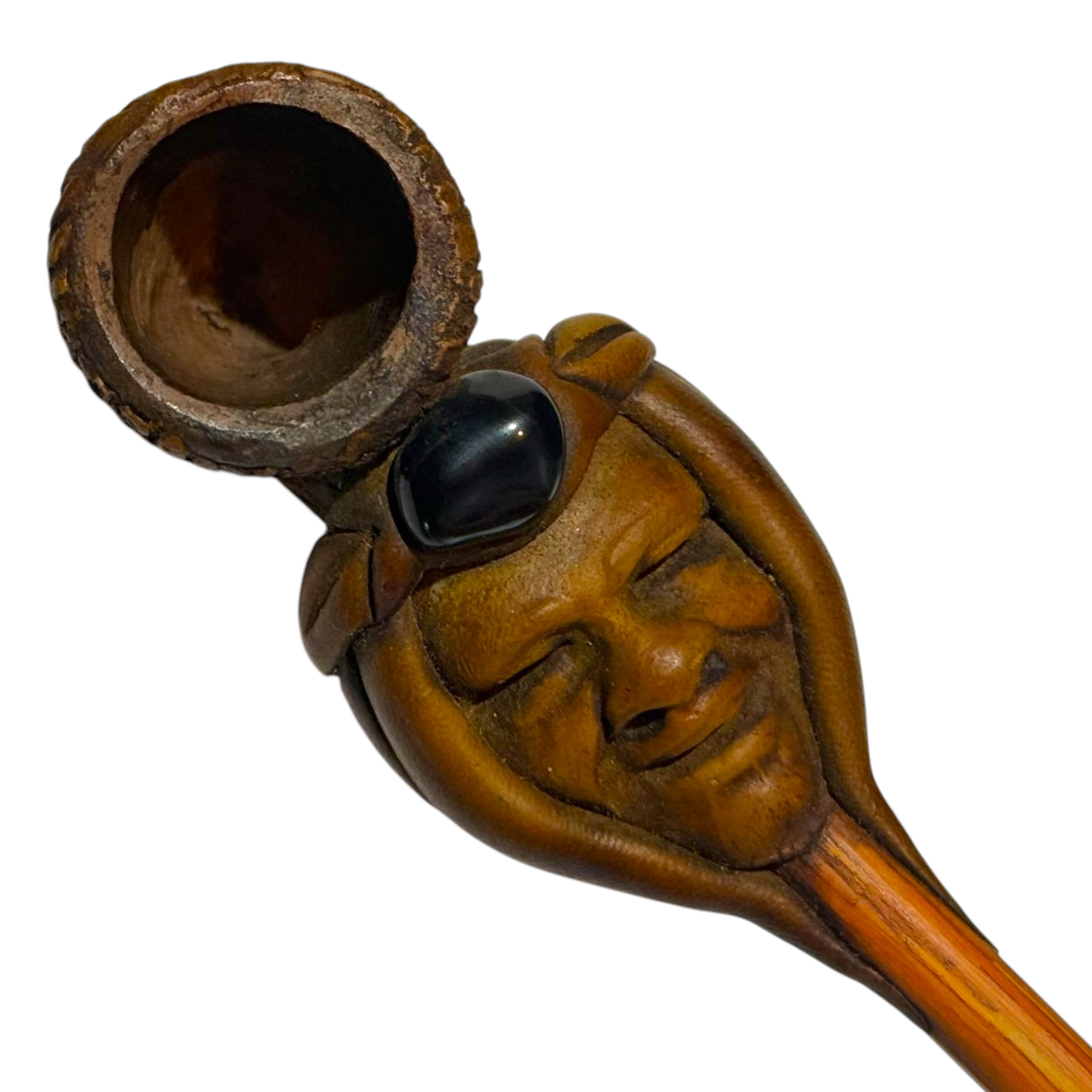
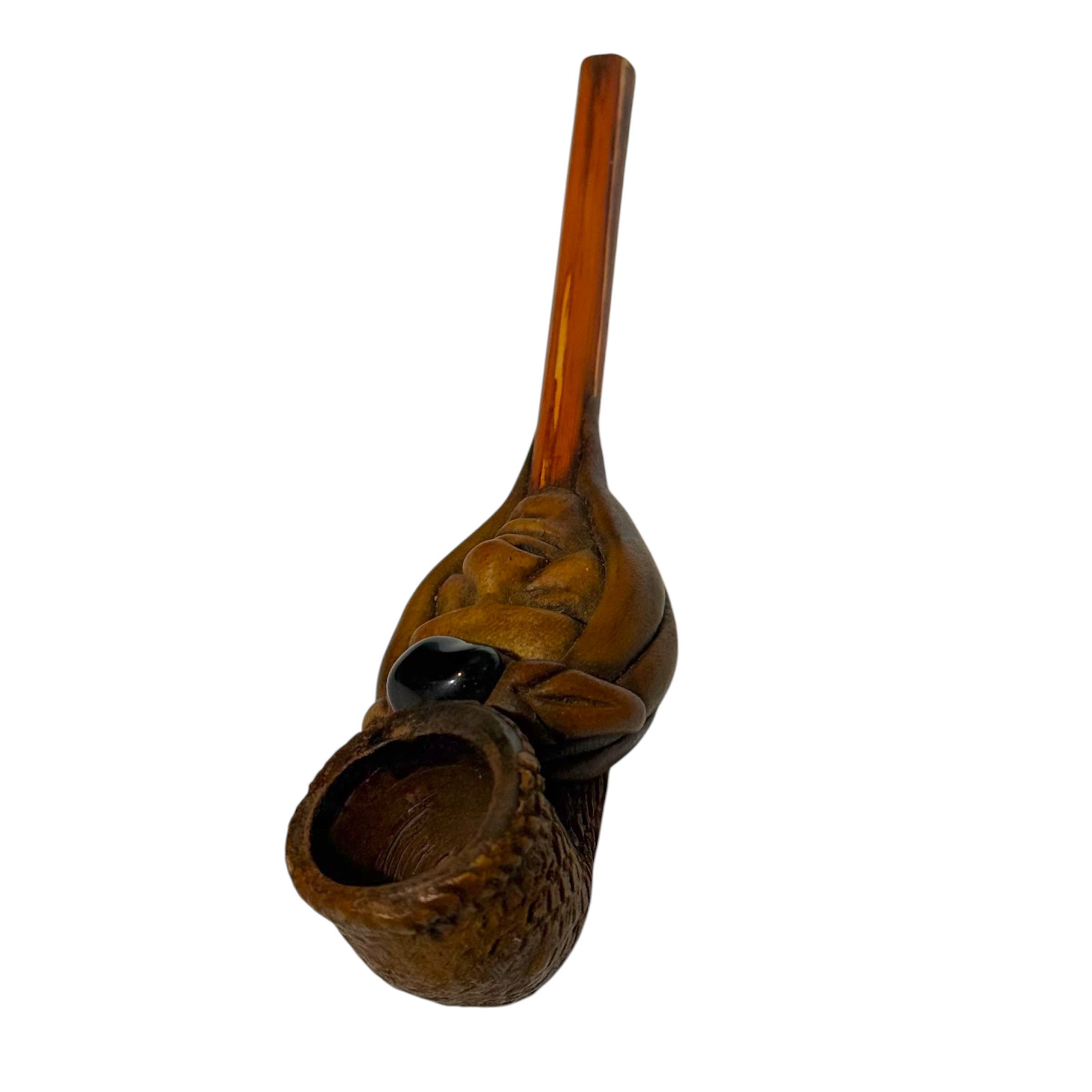
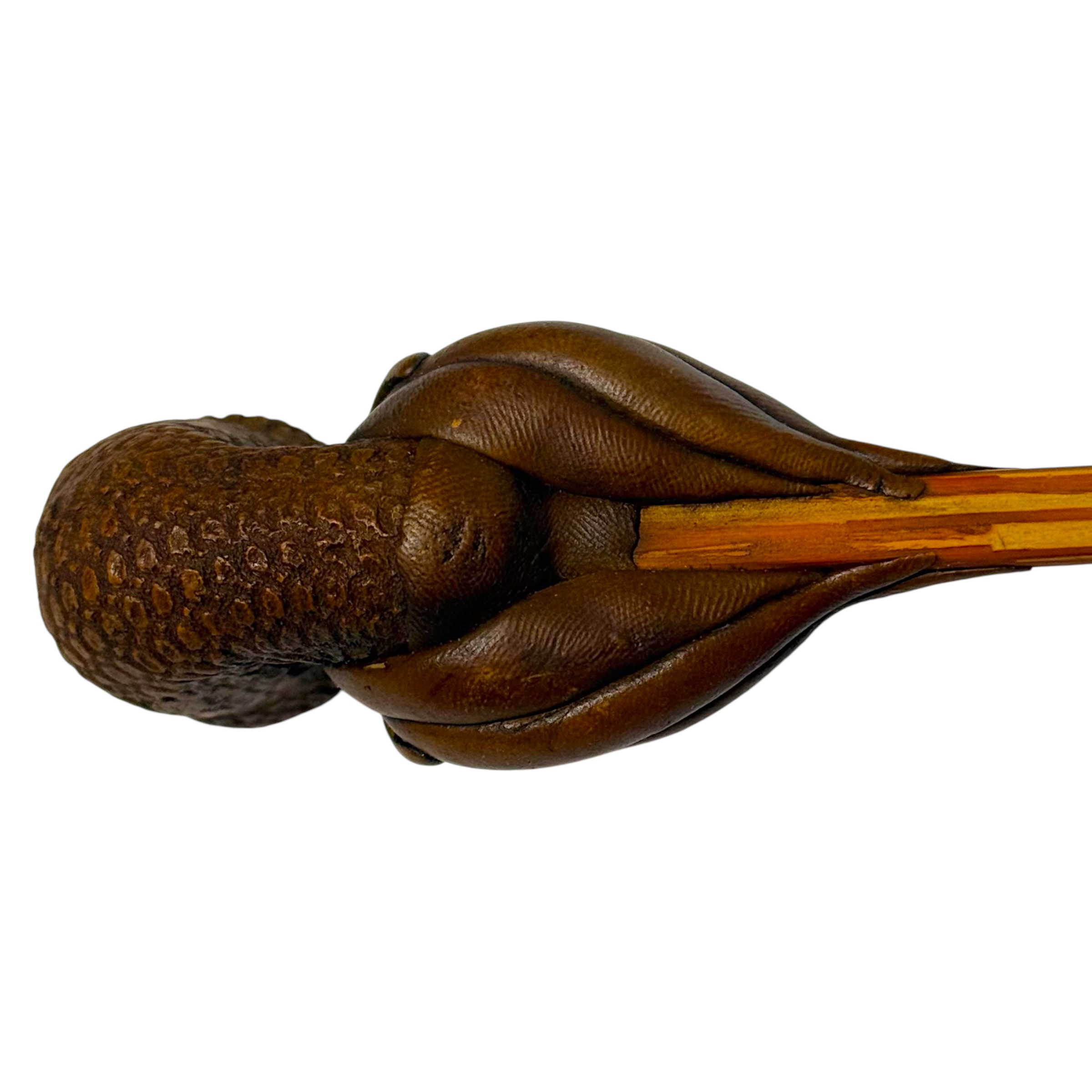
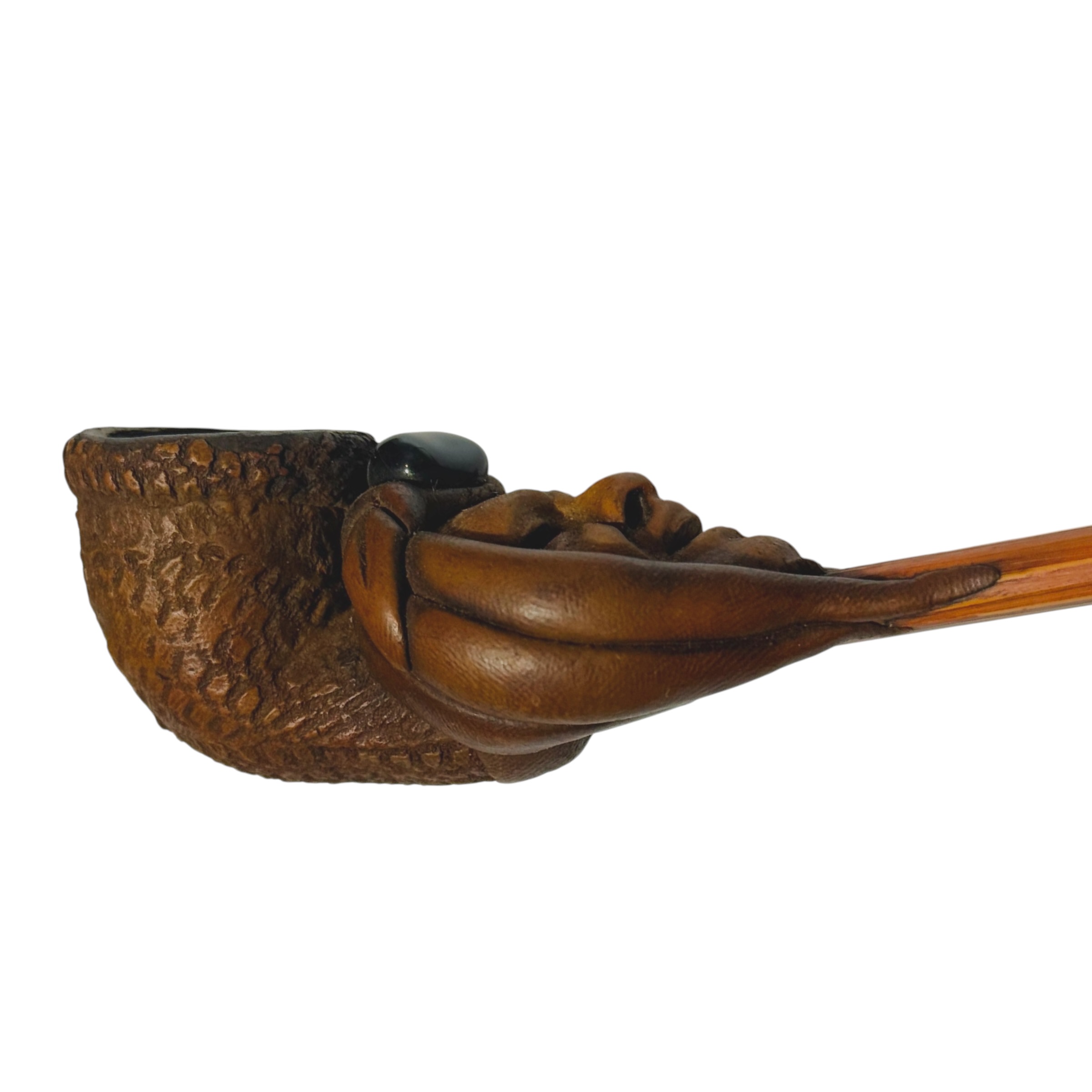
The pipe is dominated by a deeply modeled human face framed by long curving sculptural elements that sweep around the head and converge toward the stem. The figure has heavily lowered eyes, a prominent nose, projecting lips, and a calm expression that gives the object an unusually contemplative presence.
Above the forehead is a large polished black inset. Its precise material has not yet been identified and may be stone, glass, horn, or another polished material. Its prominent placement suggests that it was intended as an important visual element rather than merely a structural addition.
Behind the head rises the smoking chamber. Its exterior is much rougher than the smoothly finished face, creating a dramatic contrast between the heavily textured bowl and the polished anthropomorphic carving. The chamber interior shows substantial darkening associated with historic use.
A long reddish-brown wooden or cane-like stem extends from the rear of the sculptural body. The contrast between the stem, warm brown carving, roughened bowl, and polished black inset gives the pipe a particularly distinctive mixed-material appearance.
The exact maker and cultural community remain unidentified. However, the combination of anthropomorphic carving, prestige-oriented presentation, warm brown surface, separate long stem, and figural composition has strong parallels within the historic smoking traditions of the Kuba and neighboring Kasai-region peoples.
Among the Kuba and related Central African cultures, smoking pipes could serve as far more than utilitarian objects. Elaborately carved examples were associated with personal status, social identity, artistic display, and elite material culture. Pipes could be carried, displayed, and used as highly visible markers of refinement and prestige.
Rather than functioning solely as smoking equipment, this piece belongs to a broader tradition in which everyday objects were transformed into miniature works of sculpture.
Object Details
Date: c. 1900–1930, possibly late 19th century
Origin: Democratic Republic of the Congo
Probable Culture: Kuba cultural sphere or related Kasai-region people
Object Type: Anthropomorphic prestige smoking pipe
Material: Probably carved hardwood with separate wooden or cane stem and unidentified polished black inset
Decoration: Sculpted human face, elongated framing elements, contrasting textured bowl, polished inset
Use: Smoking and prestige display
Maker: Unknown Central African artist
Condition: Good historic condition with age-related surface wear, darkening to the smoking chamber, and evidence of historic use
Historical Context
The Kuba kingdom and surrounding Kasai-region cultures developed one of Central Africa’s most sophisticated traditions of prestige art.
Carved cups, boxes, stools, masks, textiles, personal ornaments, and smoking pipes could all communicate rank, wealth, social position, and aesthetic refinement.
Anthropomorphic pipes belong to this wider artistic world. Human faces were incorporated directly into the structure of the smoking implement, transforming an intimate personal object into a small sculptural statement.
The long separate stem and elaborately modeled head of this example suggest that both appearance and presentation were central to its design.
Collector Context
This distinctive pipe holds particular significance for collections focused on Central African art, Kuba material culture, historic smoking traditions, ethnographic sculpture, antique pipes, and early 20th-century African decorative arts.
Its unusual facial treatment, warm brown carved surface, polished black forehead inset, and unresolved workshop attribution make it an especially intriguing object within the History of Smoke collection.

Reviews
There are no reviews yet.