
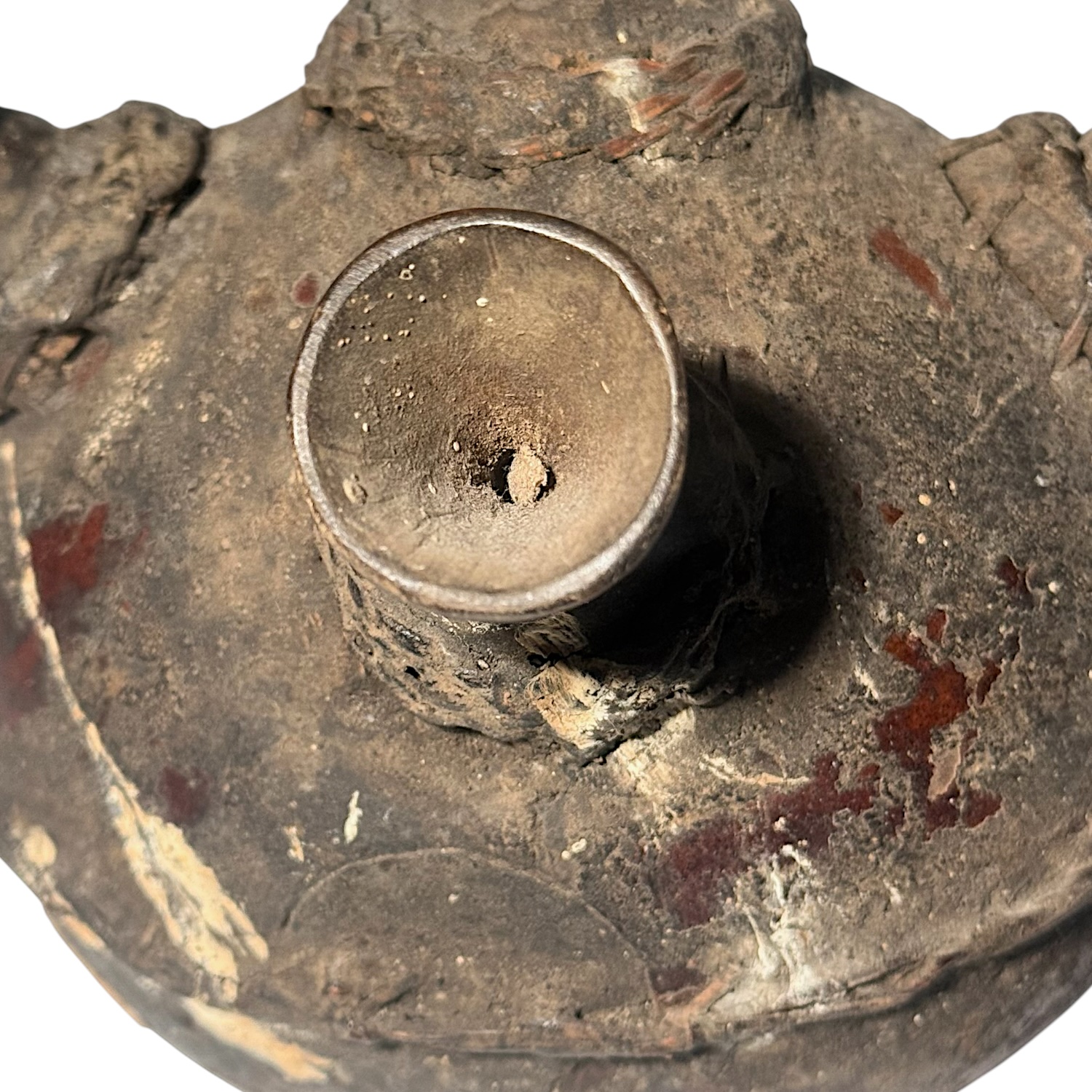
Luba Figural Ceremonial Gourd Water Pipe
Democratic Republic of the Congo, circa 1850–1950
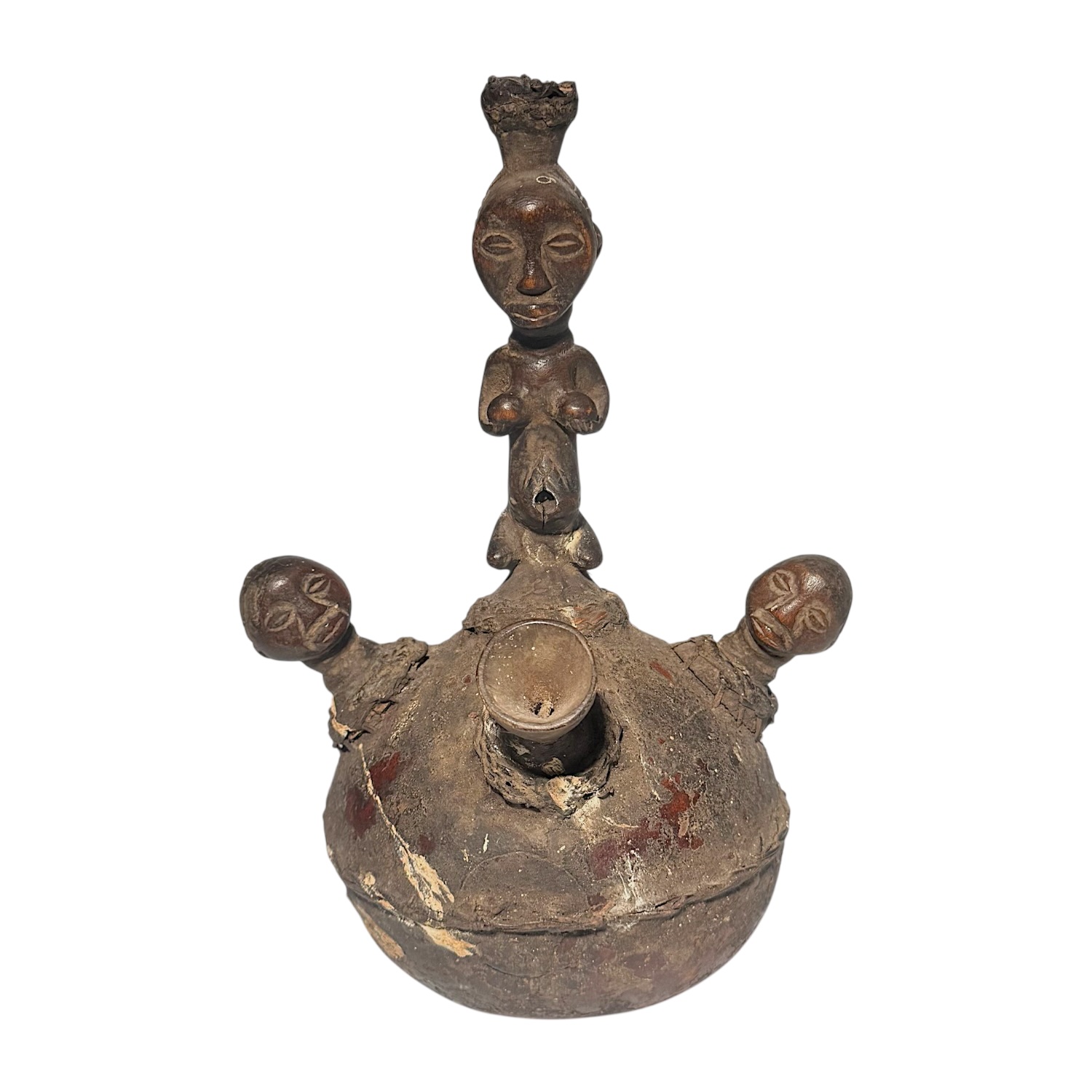
This remarkable Luba water pipe transforms a functional smoking implement into an elaborate piece of figural sculpture.
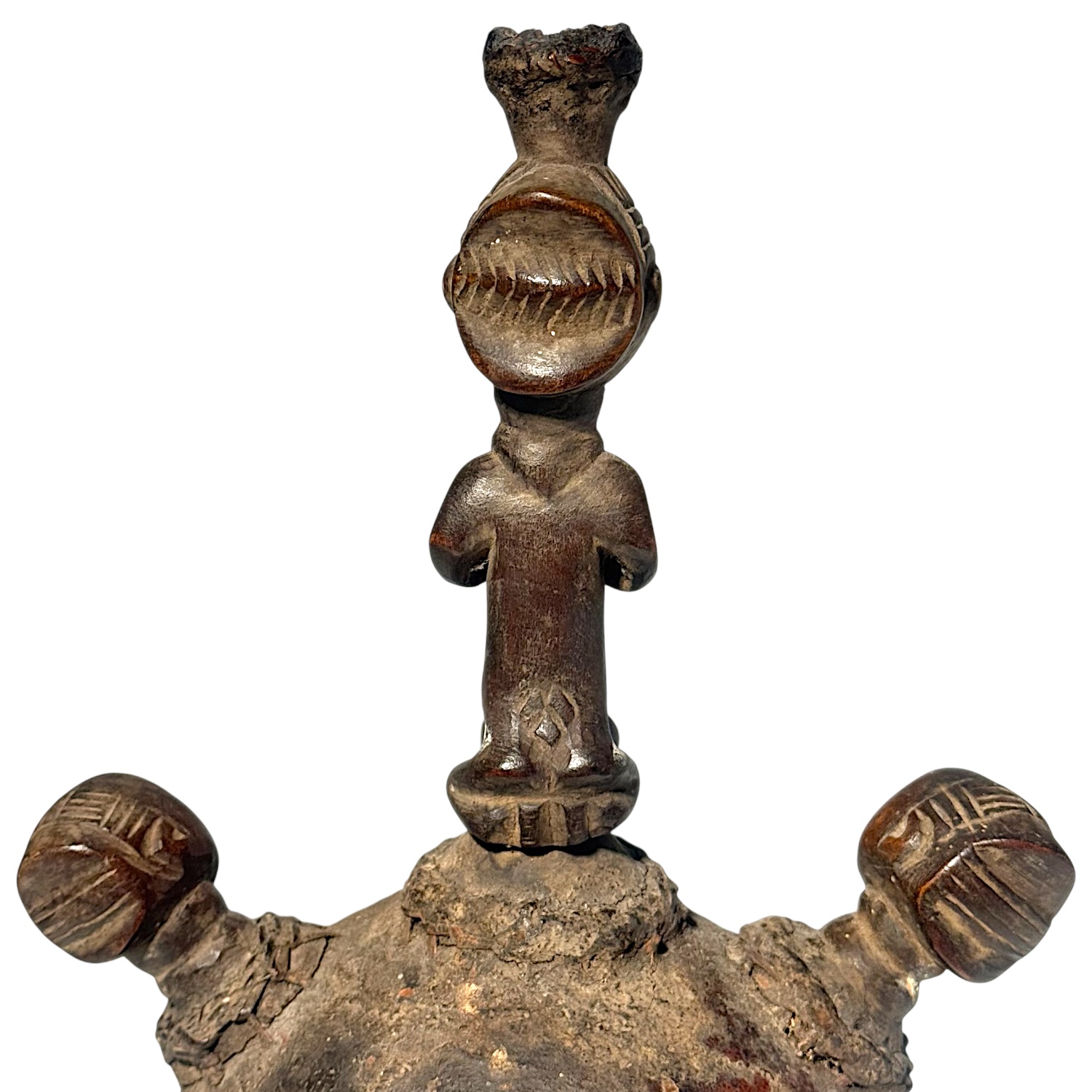
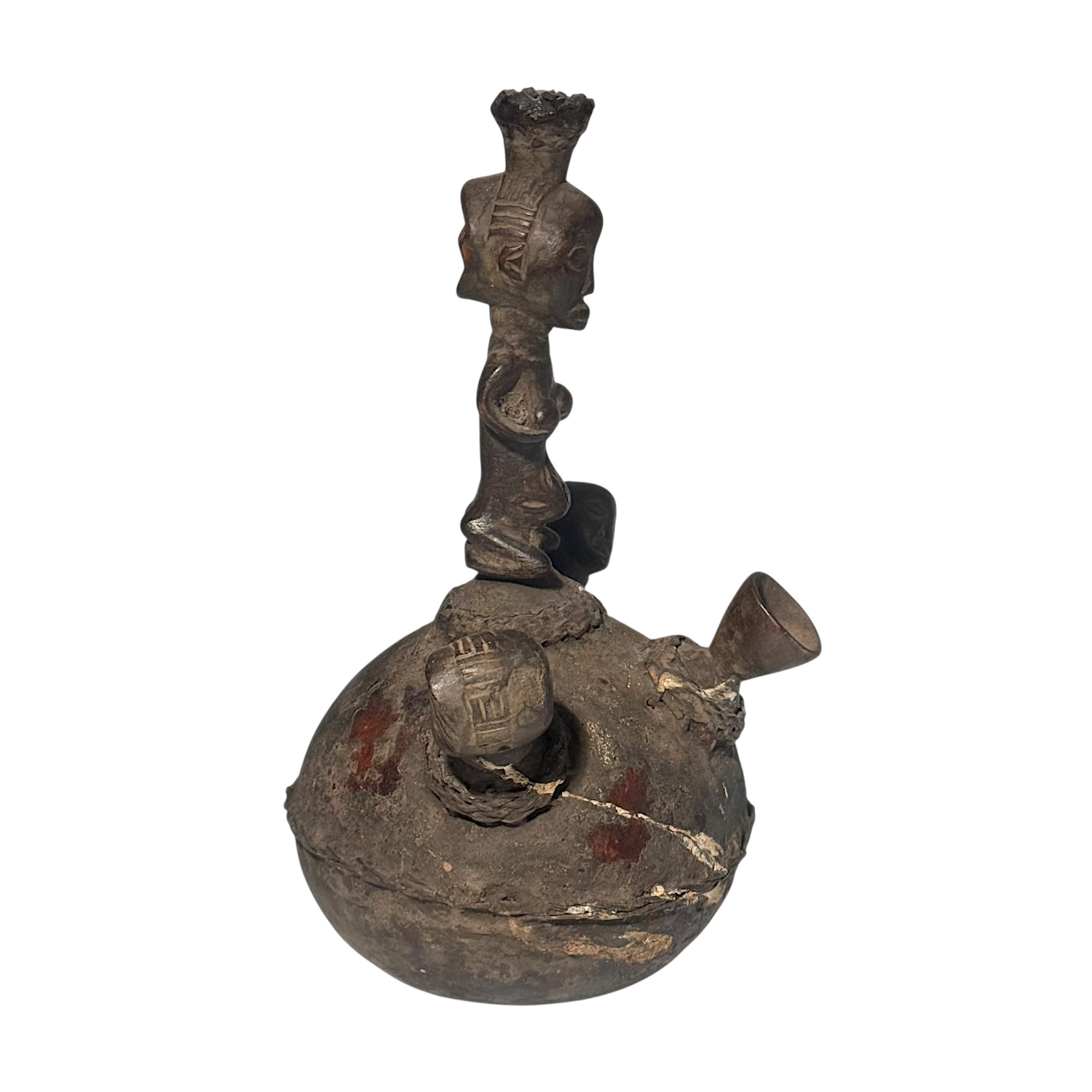
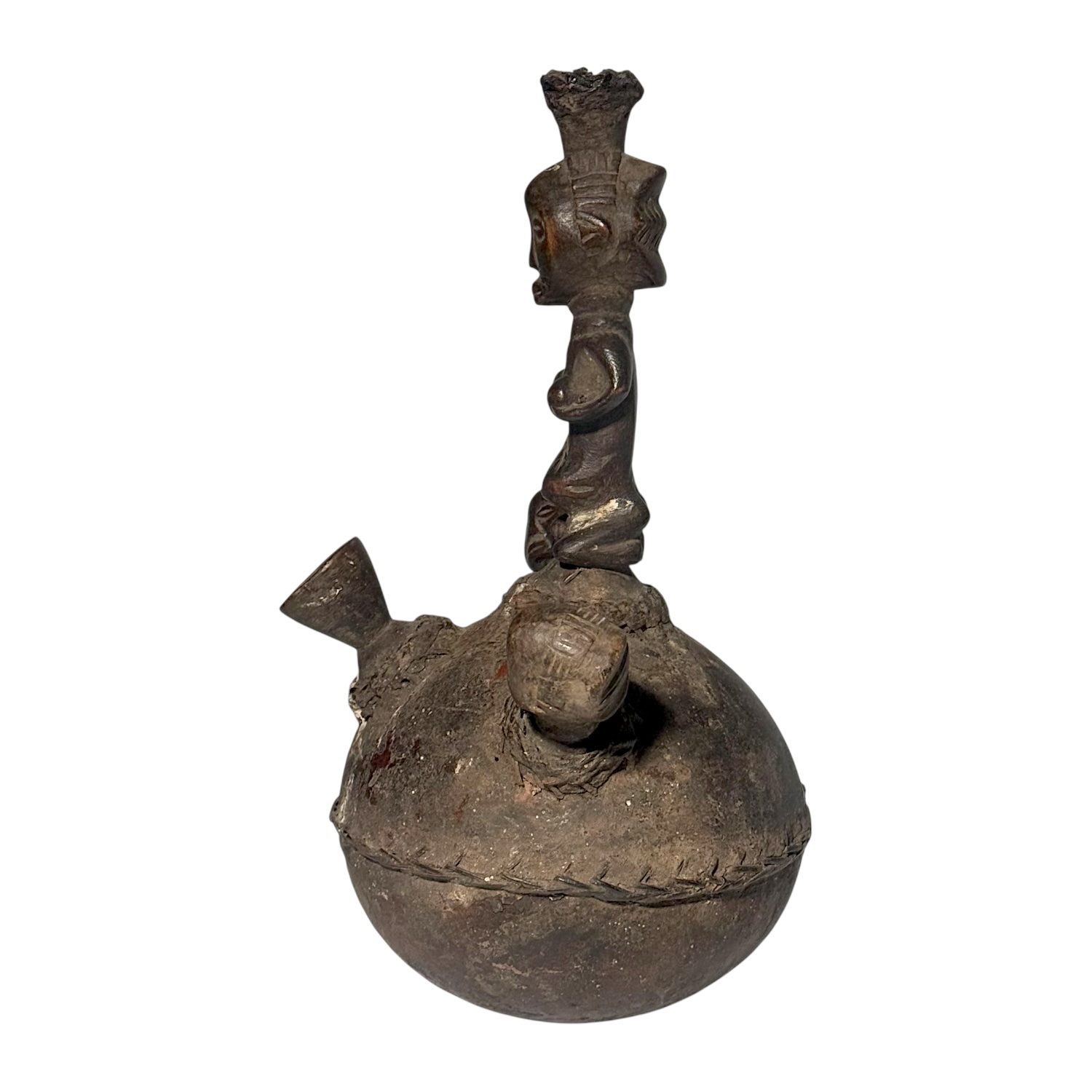
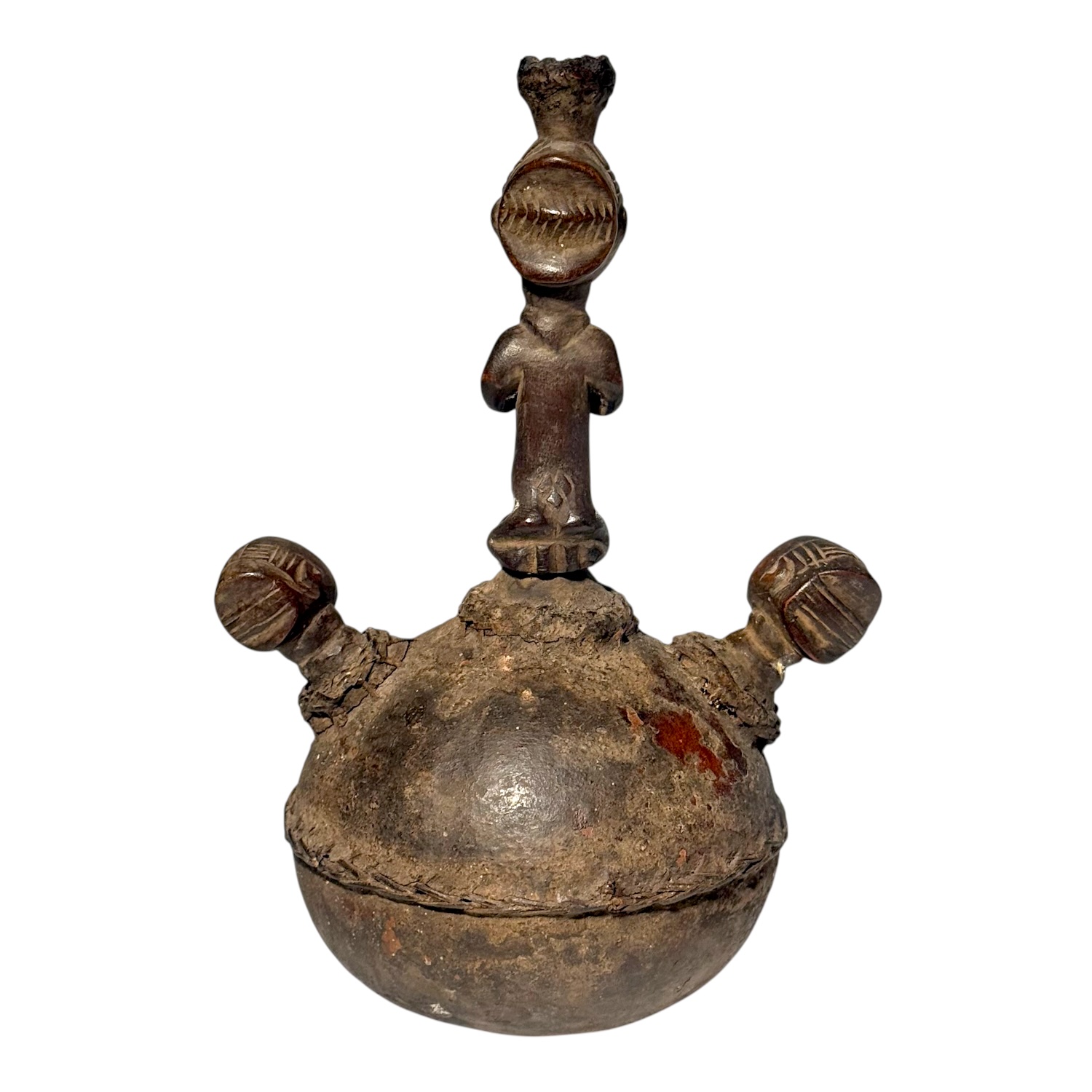
Constructed around a large natural calabash gourd, the pipe incorporates a carved wooden smoking bowl, a tall carved female figure forming the principal draw stem, two smaller carved male heads, organic bindings, surviving pigment, and a heavily aged surface shaped by generations of handling and use.
Measuring approximately 10 3/8 inches high x 7 1/4 inches wide x 6 1/2 inches deep, the object has considerable sculptural presence despite its relatively compact dimensions.
The pipe was formerly part of the Collection of William and Diane Itter, giving the piece a documented collecting history alongside its unusual cultural and functional significance.
Object Details
Date: Circa 1850–1950
Origin: Democratic Republic of the Congo
Culture: Luba
Object Type: Figural ceremonial gourd water pipe
Materials: Natural gourd, carved wood, organic bindings, pigment
Height: Approximately 10 3/8 in.
Width: Approximately 7 1/4 in.
Depth: Approximately 6 1/2 in.
Provenance: Collection of William and Diane Itter
Condition: Antique condition with substantial historic wear and patina
A Pipe Built Around a Gourd
At the center of the object is a natural calabash gourd.
Rather than serving merely as decoration, the gourd forms the functional body and water reservoir of the pipe.
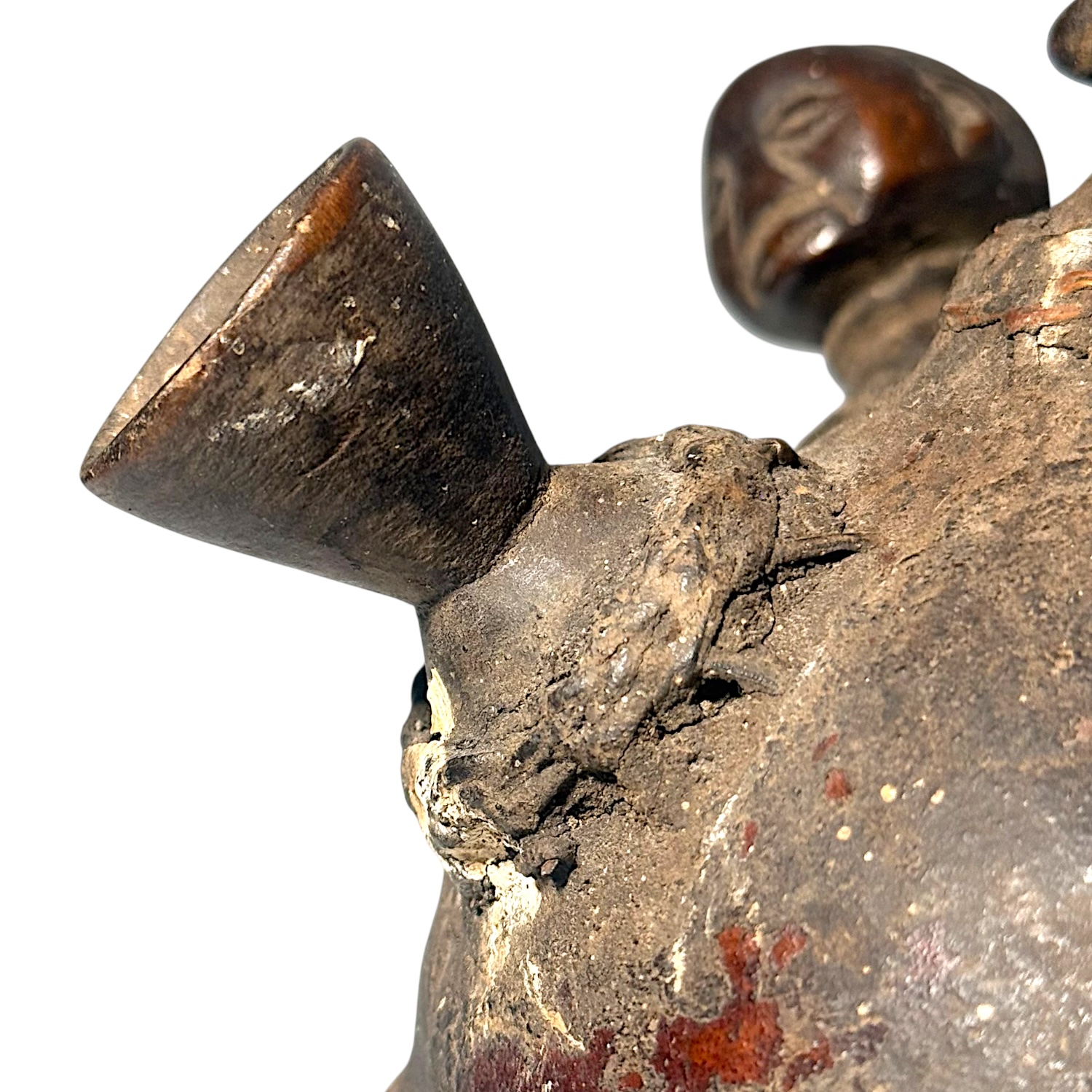
A carved wooden smoking bowl is fitted into the upper surface of the vessel. Smoke drawn from this bowl would enter the enclosed gourd chamber before continuing through the carved wooden figural stem.
Water pipes of this type are among the most visually distinctive smoking implements associated with Central Africa because their functional components could be incorporated directly into anthropomorphic sculpture.
The result is an object in which vessel, smoking apparatus, sculpture, and symbolic imagery become inseparable.
The Female Figure
The most visually commanding element is the tall carved female figure rising from the gourd.
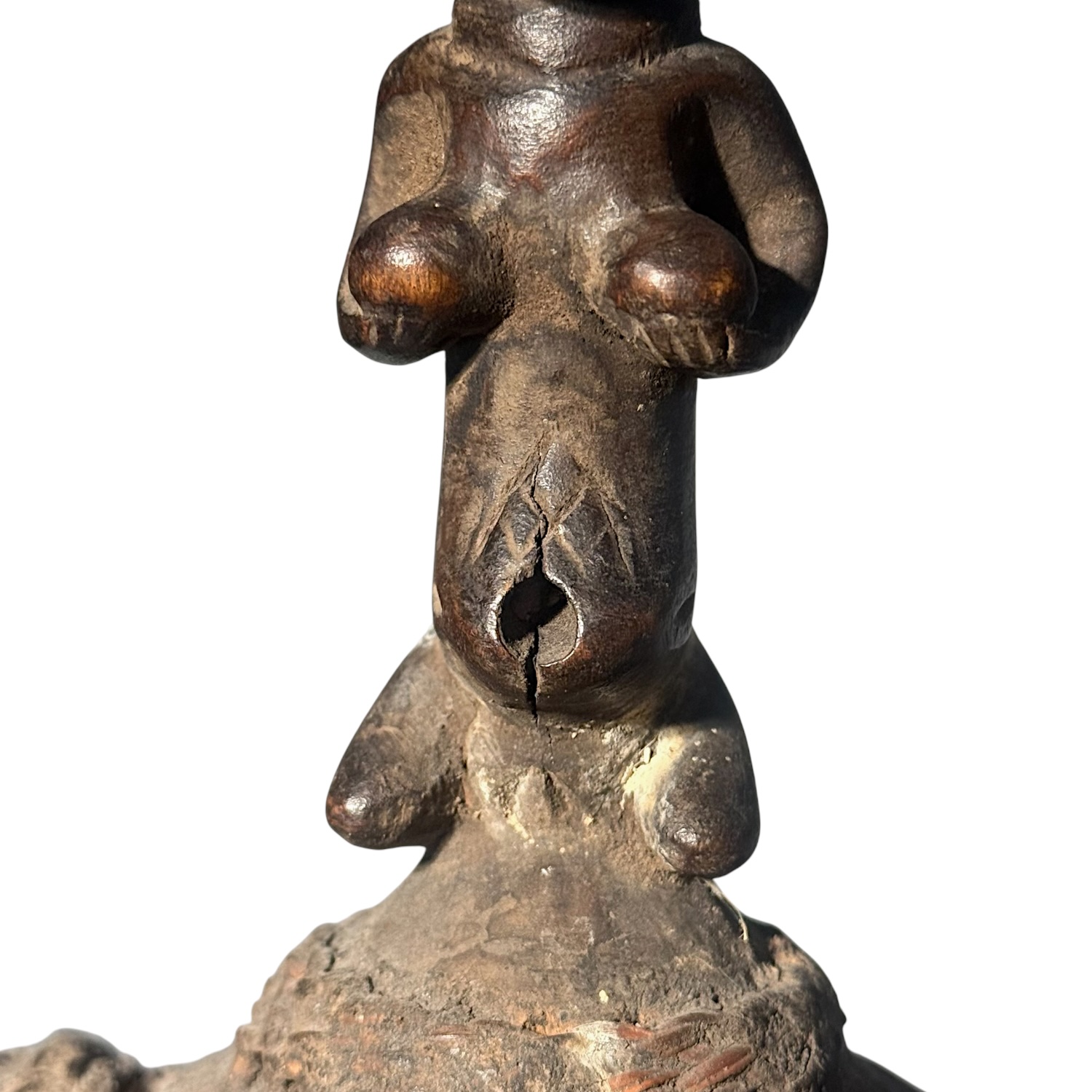
She is represented nude, with both hands raised to her breasts. Her body is not simply decorative. It forms part of the actual smoking system.
The figure is hollowed internally to create part of the draw passage, while a small opening centered at her bellybutton appears to function as a carburetor or secondary air-control opening.
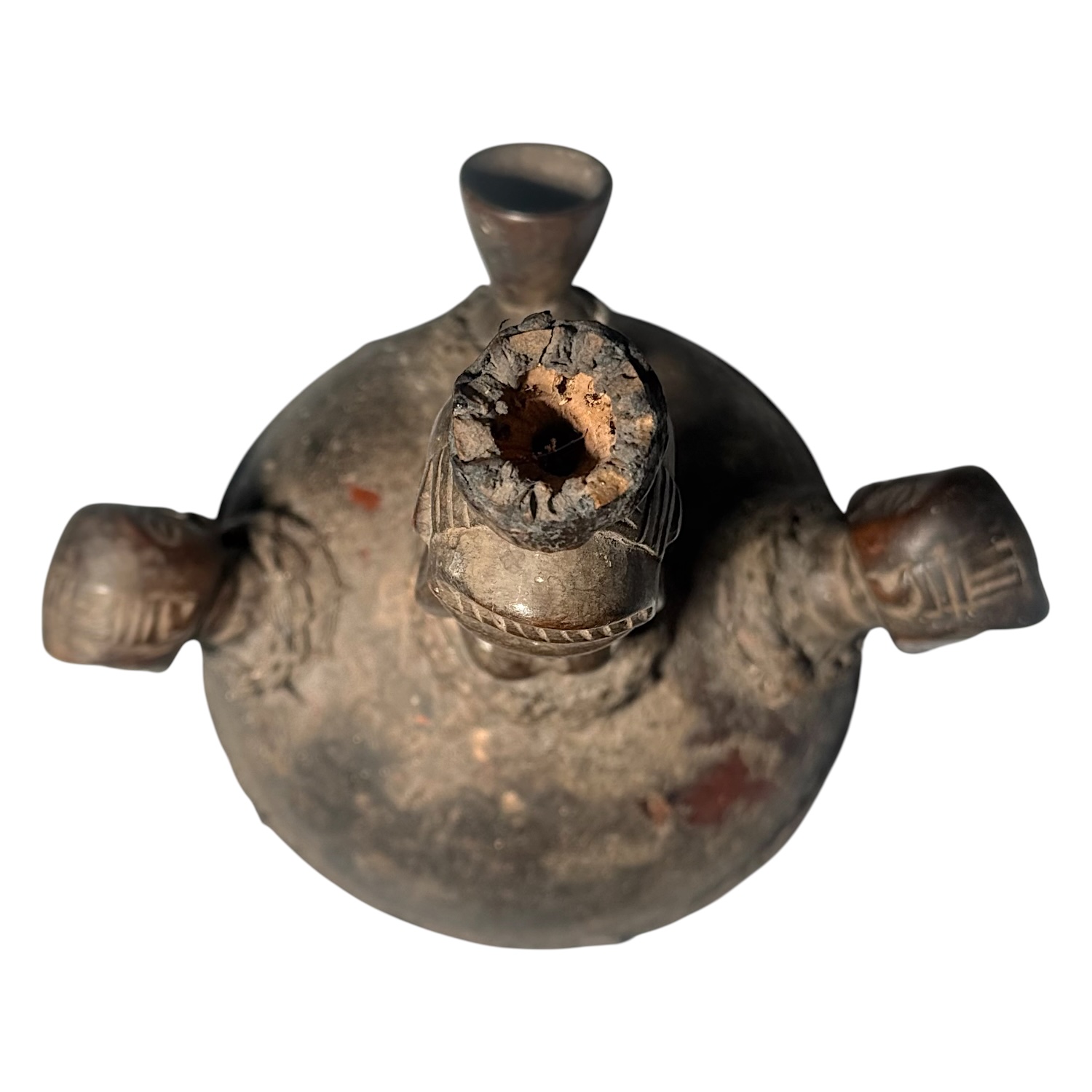
At the top of the figure is the surviving opening where an additional draw tube or mouthpiece would originally have been inserted.
The integration of the human body into the functional mechanics of the pipe is one of the most fascinating aspects of the object.
Women in Luba Art
Female imagery occupies an especially important place within Luba artistic and political traditions.
Women appear repeatedly on royal stools, staffs of office, prestige vessels, divination objects, and other sculptural forms connected with authority, memory, ancestry, and spiritual power.
Within Luba visual culture, the female body could symbolize the ability to contain and transmit spiritual force, ancestral knowledge, and the memory necessary to sustain kingship.
The gesture of holding the breasts carries several interconnected meanings.
At one level, it evokes motherhood, nourishment, and the continuation of lineage.
At another, the gesture has been associated with the safeguarding of privileged knowledge, sacred traditions, and the secrets and prohibitions connected with royal authority.
The female figure therefore transforms the pipe into something far more complex than a purely practical smoking implement.
The Body as Vessel
There is a particularly striking relationship between the symbolism of the female figure and the physical construction of the pipe.
Within Luba thought, women could be understood metaphorically as vessels capable of containing spiritual power, memory, and protected knowledge.
Here, that symbolism exists within an object that is itself literally a vessel.
The gourd contains water and smoke, while the carved female body forms the passage through which the smoke is ultimately drawn.
Whether every element of that relationship was consciously intended by the original maker cannot be known with certainty, but the connection between body, vessel, memory, power, and smoking gives the object an unusually layered presence.
The Carved Wooden Bowl
The central smoking bowl is carved from wood and inserted directly into the upper portion of the gourd.
Its deep chamber preserves dark deposits and discoloration consistent with historical smoking use.
Material would have been placed within the chamber and ignited, allowing the resulting smoke to travel downward into the larger gourd reservoir.
The restrained form of the bowl contrasts with the elaborate figural carving surrounding it, creating a clear distinction between the practical combustion chamber and the more sculptural elements of the pipe.
Historical Water Filtration
The large gourd reservoir gives this pipe a function very different from that of a conventional dry pipe.
Smoke produced in the wooden bowl entered the enclosed gourd chamber, where water could be held before the smoke continued through the figural draw stem.
This basic principle is shared with other historical water-pipe traditions around the world: the reservoir creates distance between burning material and smoker while allowing smoke to interact with water before inhalation.
Luba and neighboring Central African traditions developed particularly sculptural interpretations of this technology, transforming working smoking implements into elaborate objects of status, identity, and artistic expression.
The Bellybutton Carburetor
A small opening is carved into the center of the female figure’s abdomen at the bellybutton.
This opening forms part of the functional smoking system and appears to operate as a carburetor or secondary air-control hole.
By covering or uncovering the opening while drawing through the upper mouthpiece, the smoker could alter airflow through the pipe.
Its placement is especially noteworthy because the maker incorporated a practical mechanical feature directly into the anatomy of the carved figure.
The function does not interrupt the sculpture. Instead, the body itself becomes part of the engineering of the object.
The Two Carved Male Heads
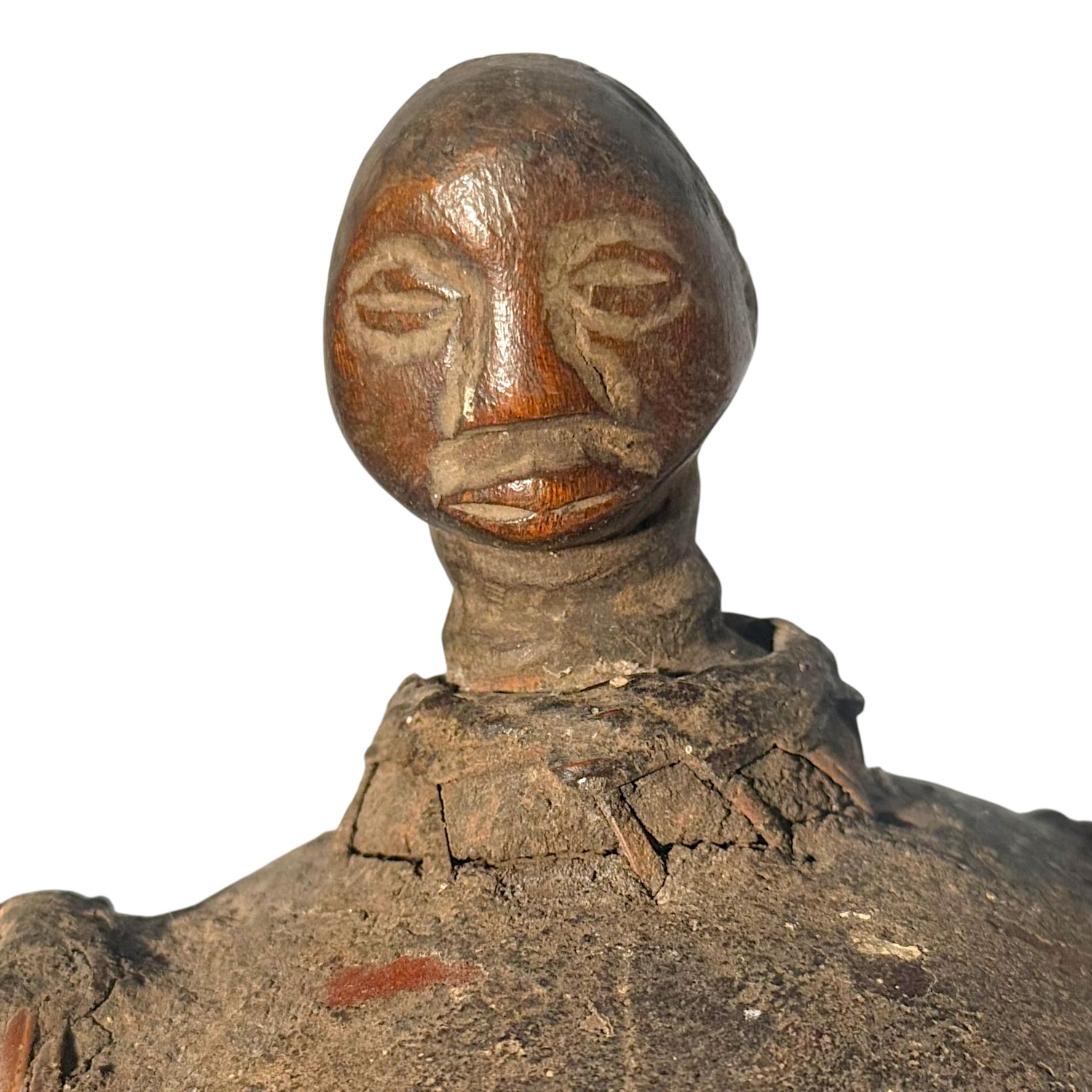
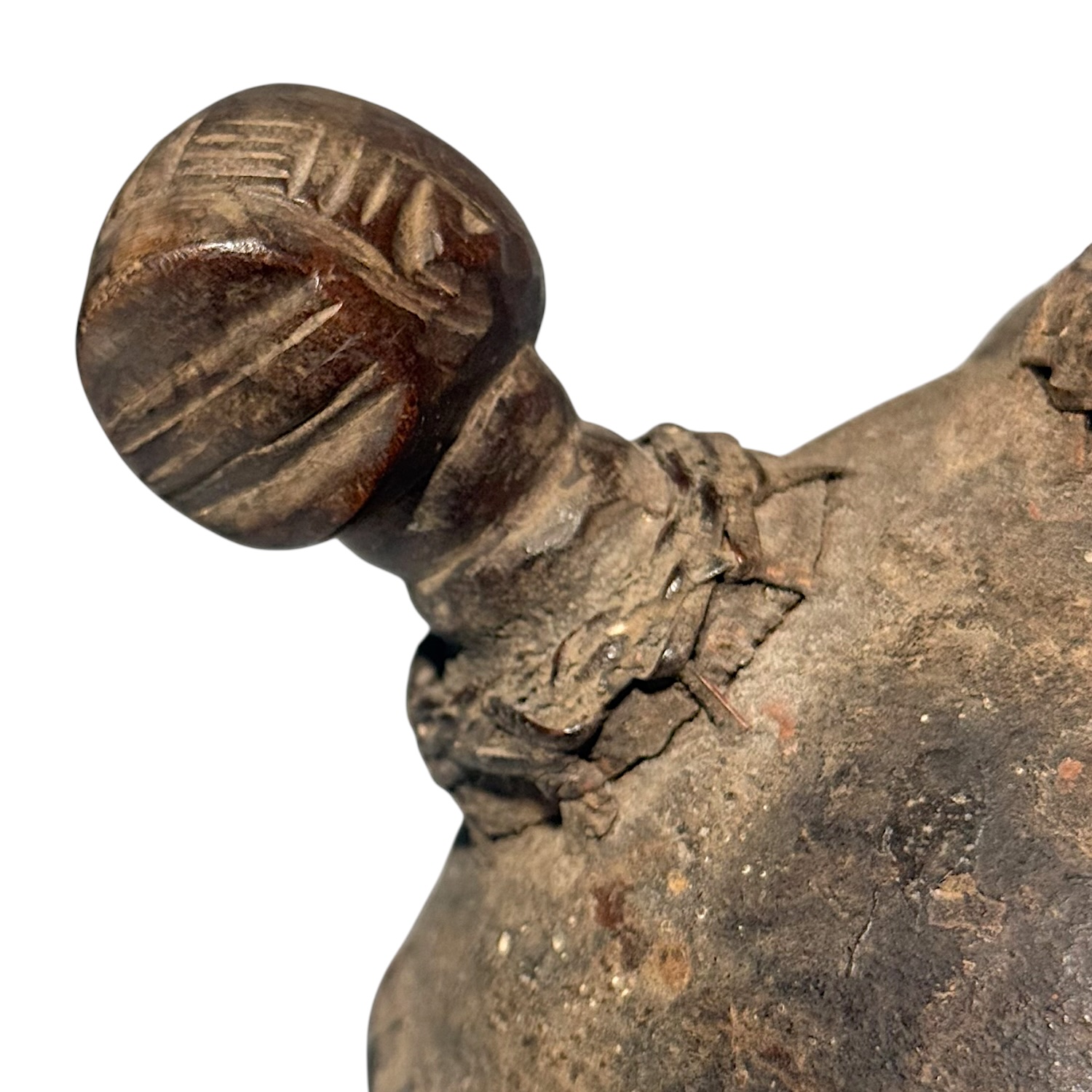
Two smaller carved male heads project from both sides of the gourd.
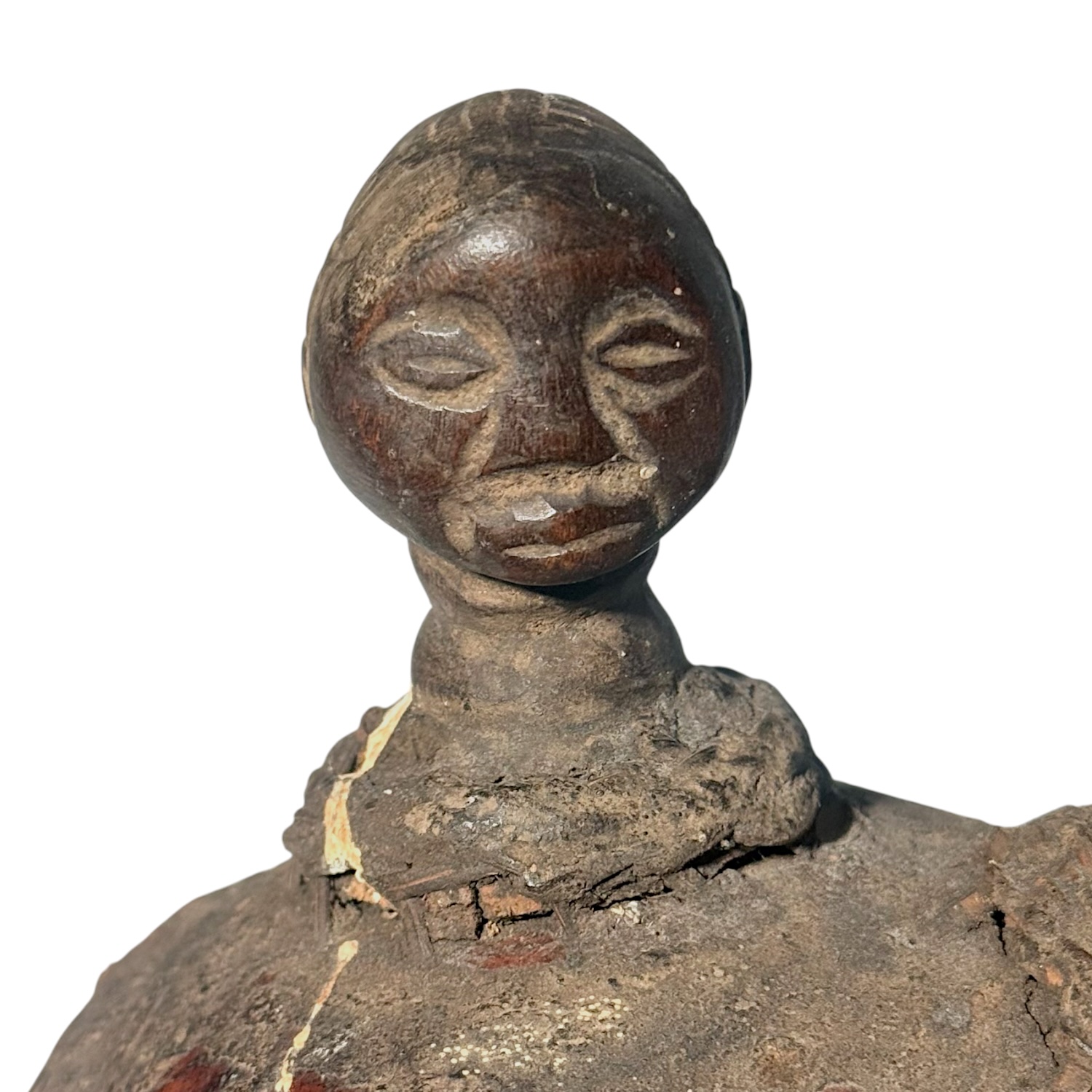
Each is separately carved and secured to the vessel with aged organic bindings or cordage.
Their faces are individualized with incised eyes, noses, mouths, and geometric details extending around the backs of the heads.
Together with the central female figure, they create an unusual multi-figural composition in which the object changes dramatically depending on the angle from which it is viewed.
Their exact symbolic role cannot be established with certainty, but their deliberate placement clearly contributes to the larger human and social imagery of the pipe.
The contrast is particularly striking: a dominant central female figure rises vertically from the vessel, while the two male heads emerge horizontally from both sides of the gourd.
Ceremonial and Prestige Pipes
Elaborately carved anthropomorphic pipes could occupy a very different cultural position from simple everyday smoking implements.
Historic documentation connects Luba water pipes with individuals of status and with contexts involving chiefs, diviners, and other socially significant figures.
A historical account references a 1910 photograph of a Luba chief or diviner using a water pipe, illustrating the relationship between smoking, prestige, and certain spiritual or ceremonial settings.
For this reason, objects of this general type are frequently described as ceremonial, prestige, or anthropomorphic water pipes.
The extent of carving and symbolic imagery present on this example strongly separates it from a purely utilitarian smoking vessel.
Figural Sculpture
The pipe rewards examination from nearly every angle.
From the front, the central female figure dominates the composition while the two male heads project from both sides of the gourd.
From the side, the relationship between the carved figures, bindings, smoking bowl, and spherical reservoir becomes more apparent.
From behind, additional incised decoration reveals how extensively the wooden components were worked.
The pipe therefore operates visually much like a sculpture in the round.
Its function can only be fully understood by moving around it and seeing how the figures, openings, bowl, reservoir, and bindings relate to one another.
Surface and Pigment
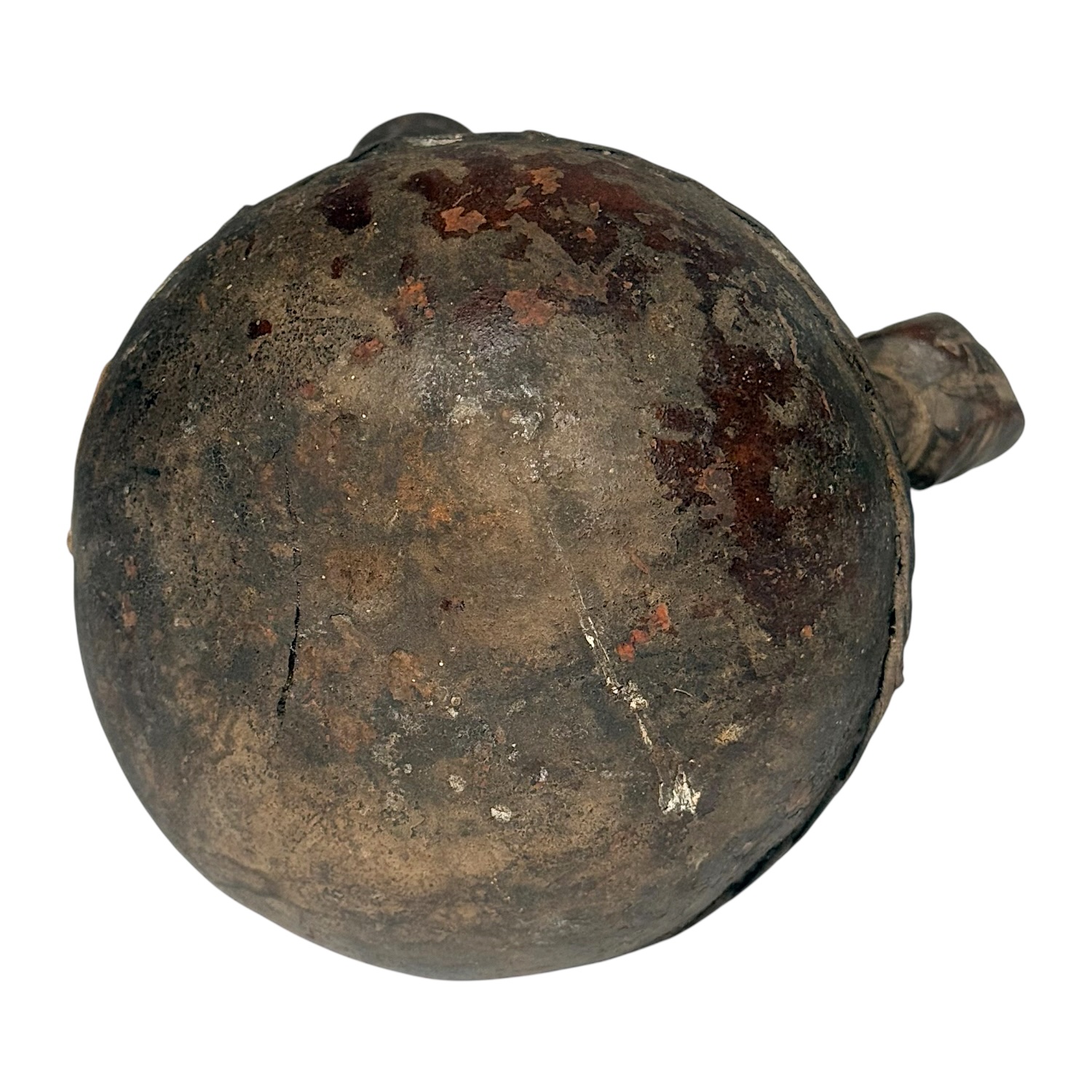
The surface preserves substantial evidence of age.
The carved wooden elements carry a dark patina with lighter areas produced by abrasion, handling, and wear.
Traces of red and lighter-colored pigment remain visible across portions of the gourd and carved components.
The gourd displays irregular coloration, staining, cracking, deposits, abrasions, and extensive surface variation.
The organic bindings have dried and deteriorated with age while remaining visually integral to the object’s construction.
These different materials have aged independently, producing a layered surface that communicates the long physical history of the pipe more effectively than a restored or heavily cleaned surface ever could.
Missing Upper Draw Stem
The opening at the top of the female figure indicates where an additional draw tube or mouthpiece would originally have been fitted.
Comparable Luba water pipes survive with long projecting stems or tubes emerging from this position.
That removable upper element is no longer present on this example.
The surviving hollowed wooden figure, bellybutton carburetor opening, carved bowl, gourd chamber, and upper socket nevertheless preserve enough of the original construction for the operating principle of the pipe to remain clearly understandable.
William and Diane Itter Collection
The pipe was formerly part of the Collection of William and Diane Itter.
William M. Itter was an artist, Professor Emeritus at Indiana University, teacher, and longtime collector.
William and Diane began collecting during the 1970s, gradually assembling an extensive group of ethnographic objects with particular strength in African ceramics, sculpture, textiles, baskets, and other handmade material.
For Itter, collecting was not simply an act of accumulation.
Objects served as a visual resource for studying form, surface, craftsmanship, material, and the physical traces left behind by makers and users.
That history is particularly appropriate for this pipe.
Its significance lies not only in its age or rarity, but in the relationship between natural material, hand carving, functional design, symbolic imagery, accumulated patina, and cultural meaning.
Luba Artistic Tradition
The Luba peoples developed one of the most distinctive sculptural traditions of Central Africa.
Historic Luba objects include royal stools, staffs of office, prestige vessels, divination objects, figures, headrests, ceremonial implements, and anthropomorphic smoking pipes.
Many of these objects combine practical, political, spiritual, and social functions with sophisticated sculpture.
Female figures appear with particular frequency.
Their importance reflects broader Luba concepts surrounding spiritual authority, ancestry, political legitimacy, memory, continuity, and the transmission of knowledge between generations.
The present pipe belongs naturally within this larger tradition of objects in which utility and meaning cannot easily be separated.
Condition
The pipe remains in strongly evocative antique condition.
The natural gourd displays age cracking, discoloration, staining, abrasions, deposits, pigment loss, and extensive surface variation.
The carved wooden bowl, central female figure, and two smaller male heads show scratches, wear, small losses, dark patination, and accumulated deposits associated with age and historical use.
The smoking bowl retains darkening and residue within the chamber.
The organic bindings securing the carved elements show substantial age, drying, cracking, and deterioration.
The original upper draw tube or mouthpiece is no longer present.
These characteristics form an important part of the object’s surviving historical surface and should be considered integral to its appearance.
Please review all photographs carefully for a complete record of condition.
Collector Context
This pipe stands at the intersection of several areas of historical collecting: Luba sculpture, Central African material culture, historic smoking implements, gourd vessels, and figural ceremonial objects.
What makes it especially compelling is the way those categories are fused into a single functioning object.
The carved female figure is not simply applied decoration but part of the pipe’s actual draw system. Her bellybutton incorporates a functional opening. The separately carved male heads are physically bound to the gourd. The wooden smoking bowl feeds into a natural water reservoir. Traces of pigment, smoke deposits, worn carving, organic bindings, and accumulated surface variation preserve the history of the object’s actual use.
The provenance from the Collection of William and Diane Itter adds another important layer. Their collection was built through a serious engagement with African material culture, craftsmanship, surface, and form, placing this object within a documented history of study and collecting rather than leaving it as an anonymous market find.
Within History of Smoke, the pipe is particularly significant because it demonstrates how a smoking implement could become far more than a practical tool.
Here, smoking technology, sculpture, symbolism, spiritual ideas, social status, memory, natural materials, and human imagery all exist within the same object.
Its combination of functional water-pipe construction, carved female stem, bellybutton carburetor, paired male heads, natural gourd reservoir, surviving pigment, extensive historical patina, and William and Diane Itter provenance makes it one of the most visually and culturally distinctive objects represented within History of Smoke.

Reviews
There are no reviews yet.