
Plains / Upper Missouri or Plains–Great Lakes region | c. 1830–1860
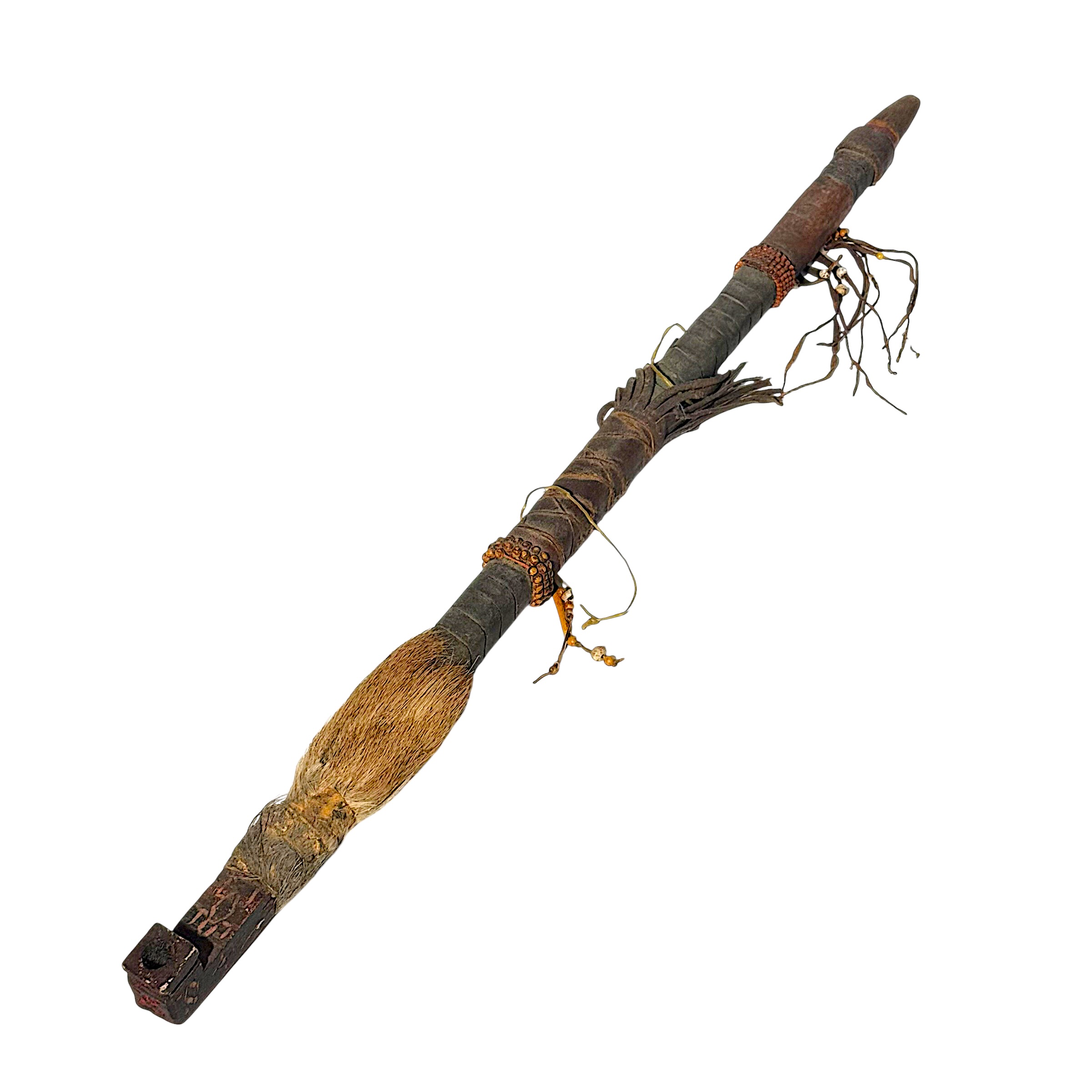
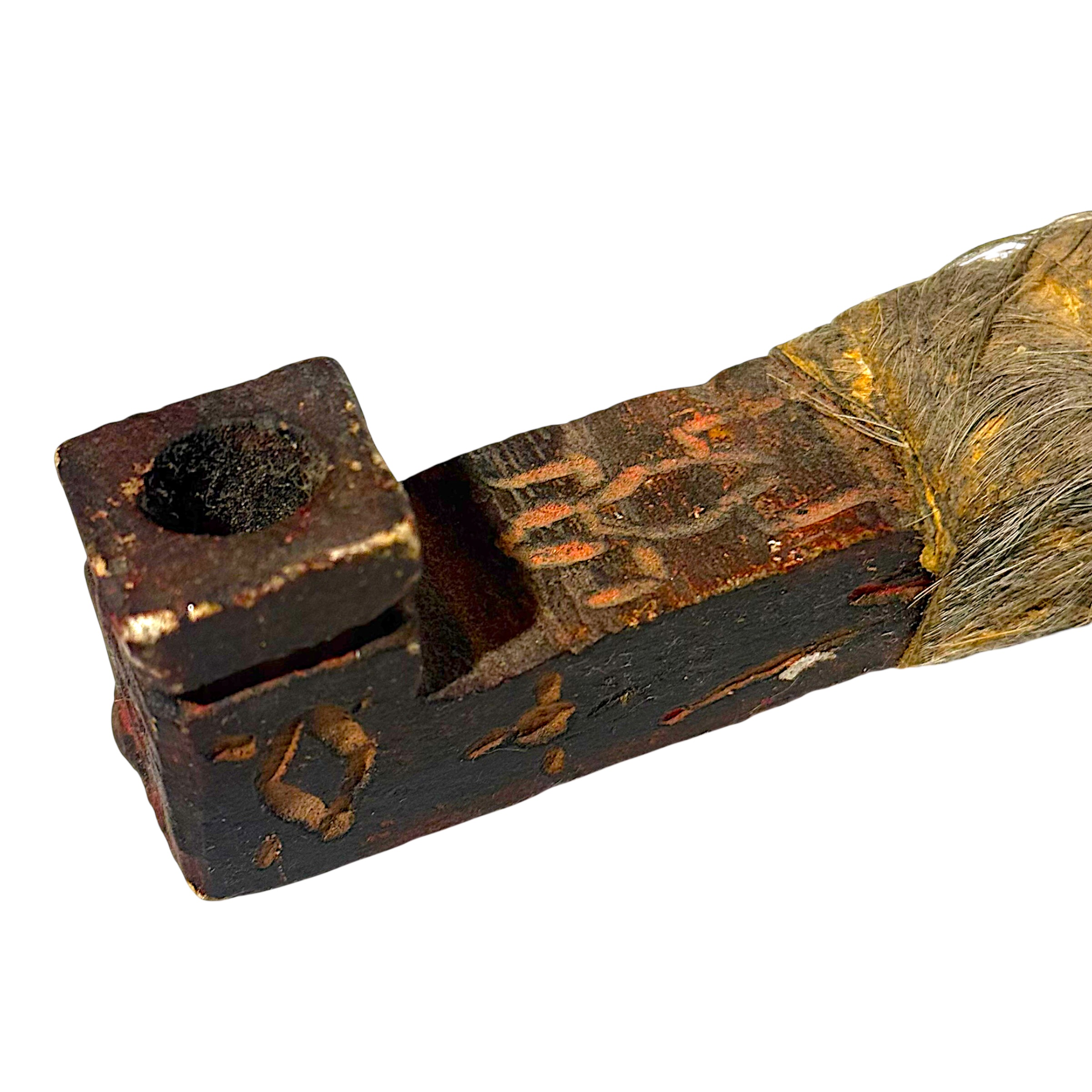
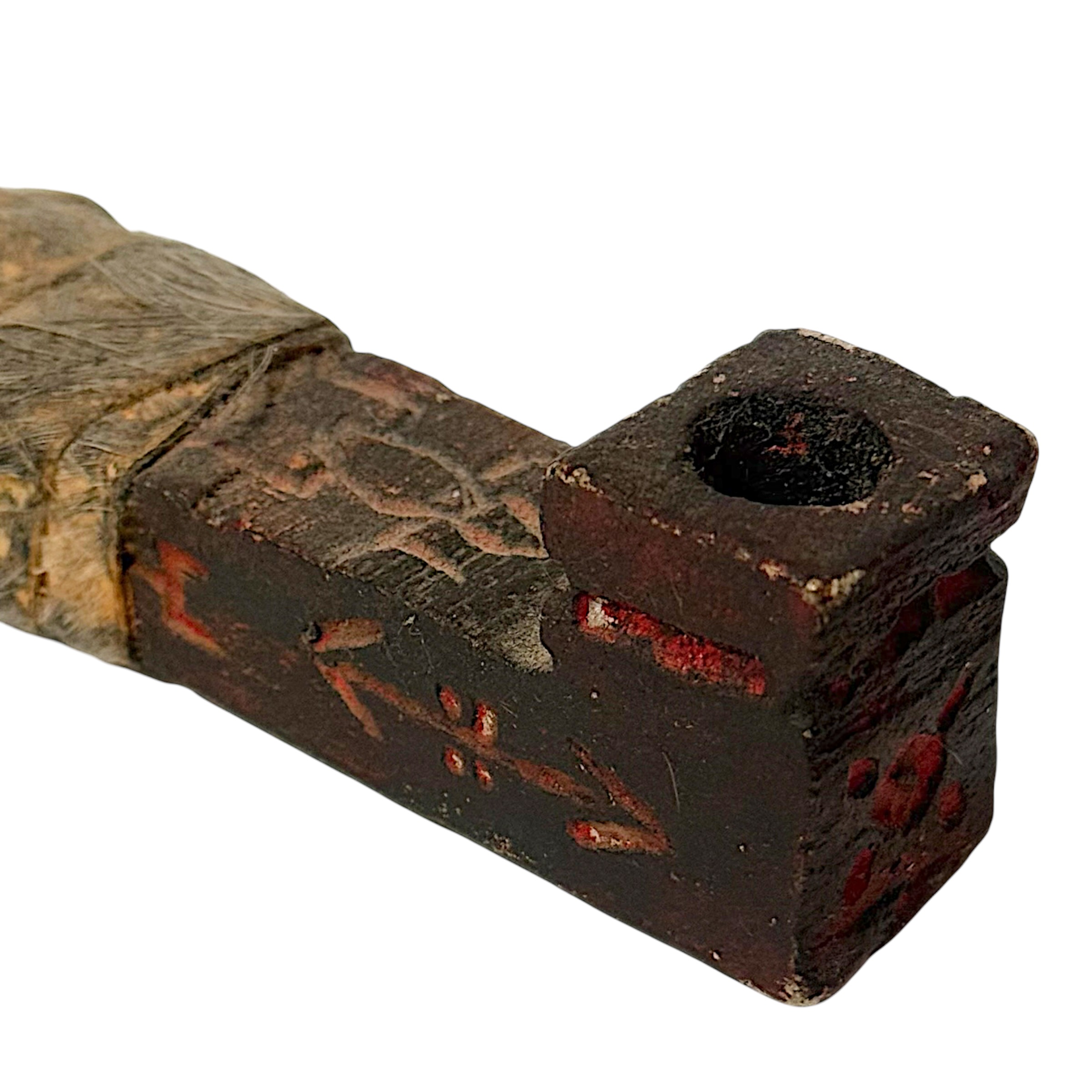
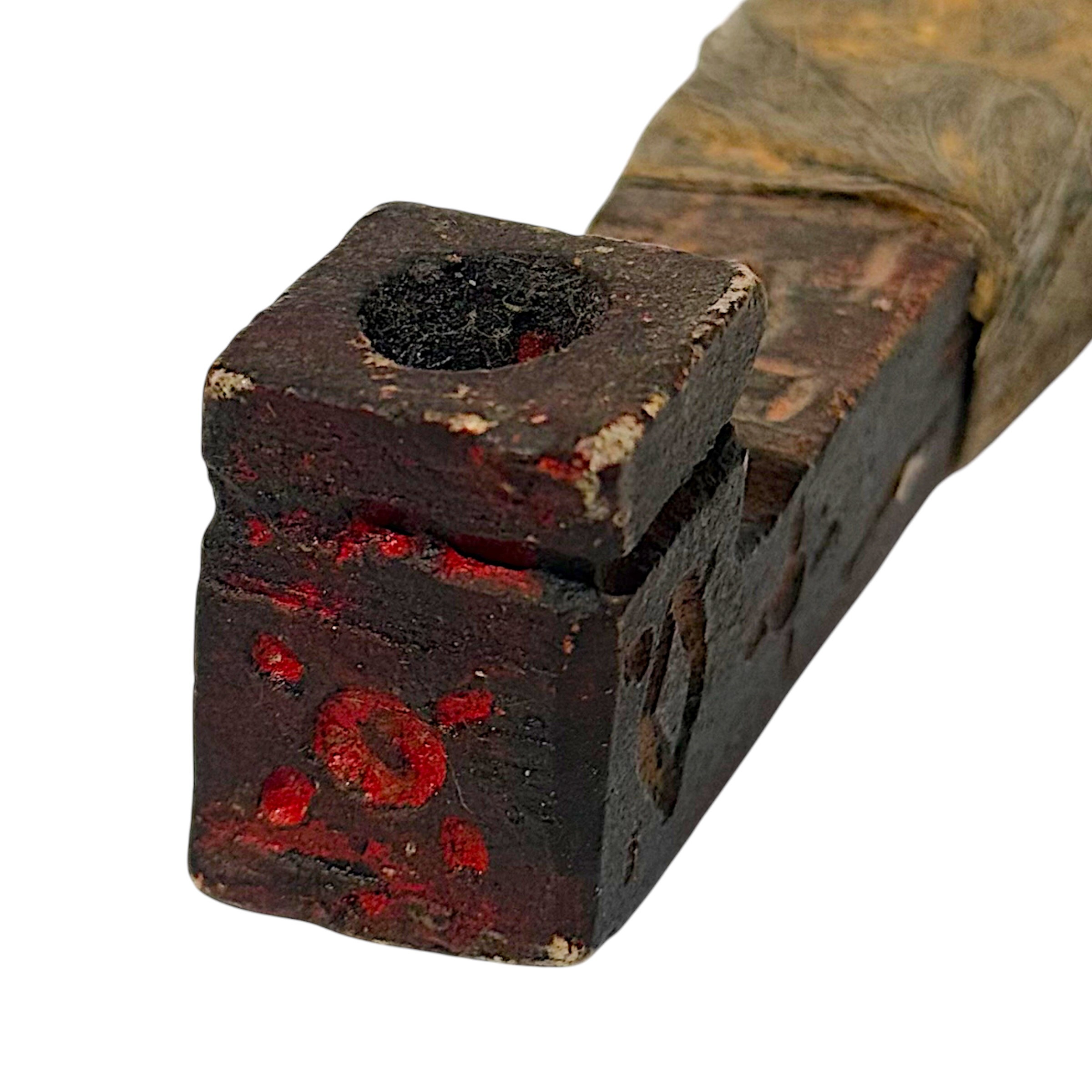
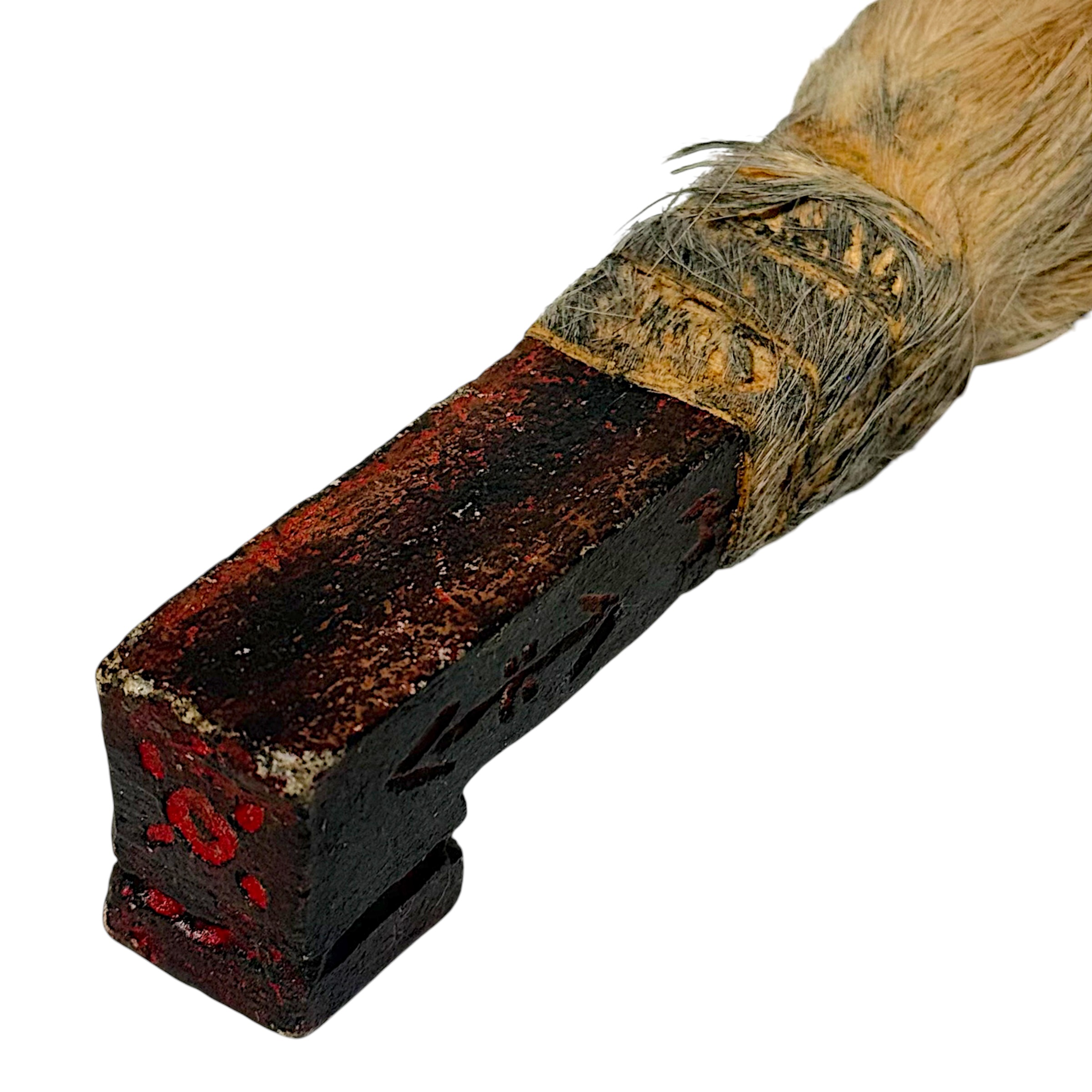
This remarkable Native American ceremonial pipe dates to approximately 1830–1860 and combines a separately carved stone bowl with a long, heavily decorated wooden stem.
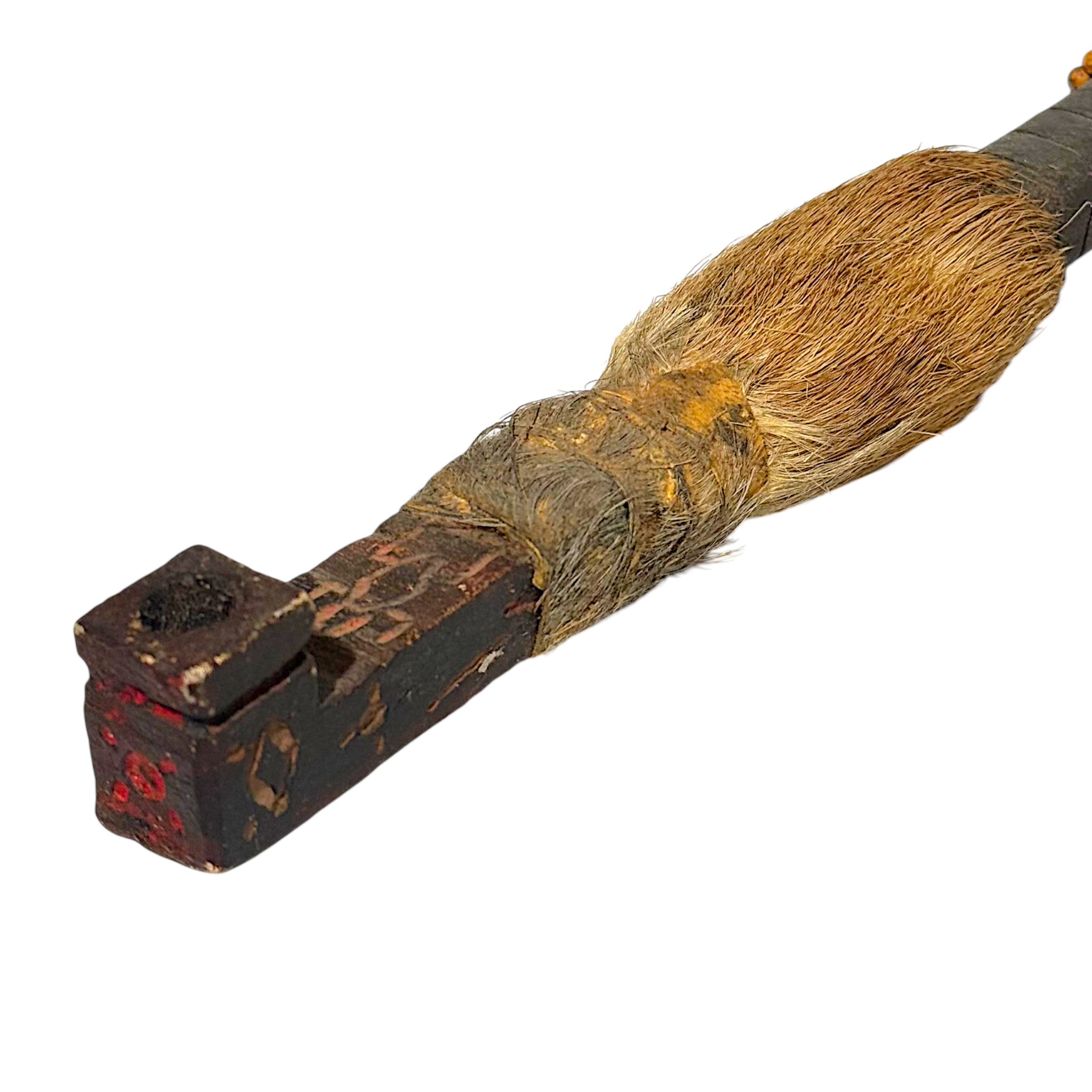
Measuring approximately 25.5 inches in overall length, the pipe has the scale and visual presence associated with ceremonial smoking traditions rather than ordinary personal use. The stone bowl measures approximately 4 inches long and is fitted to a decorated stem wrapped in aged hide and fiber.
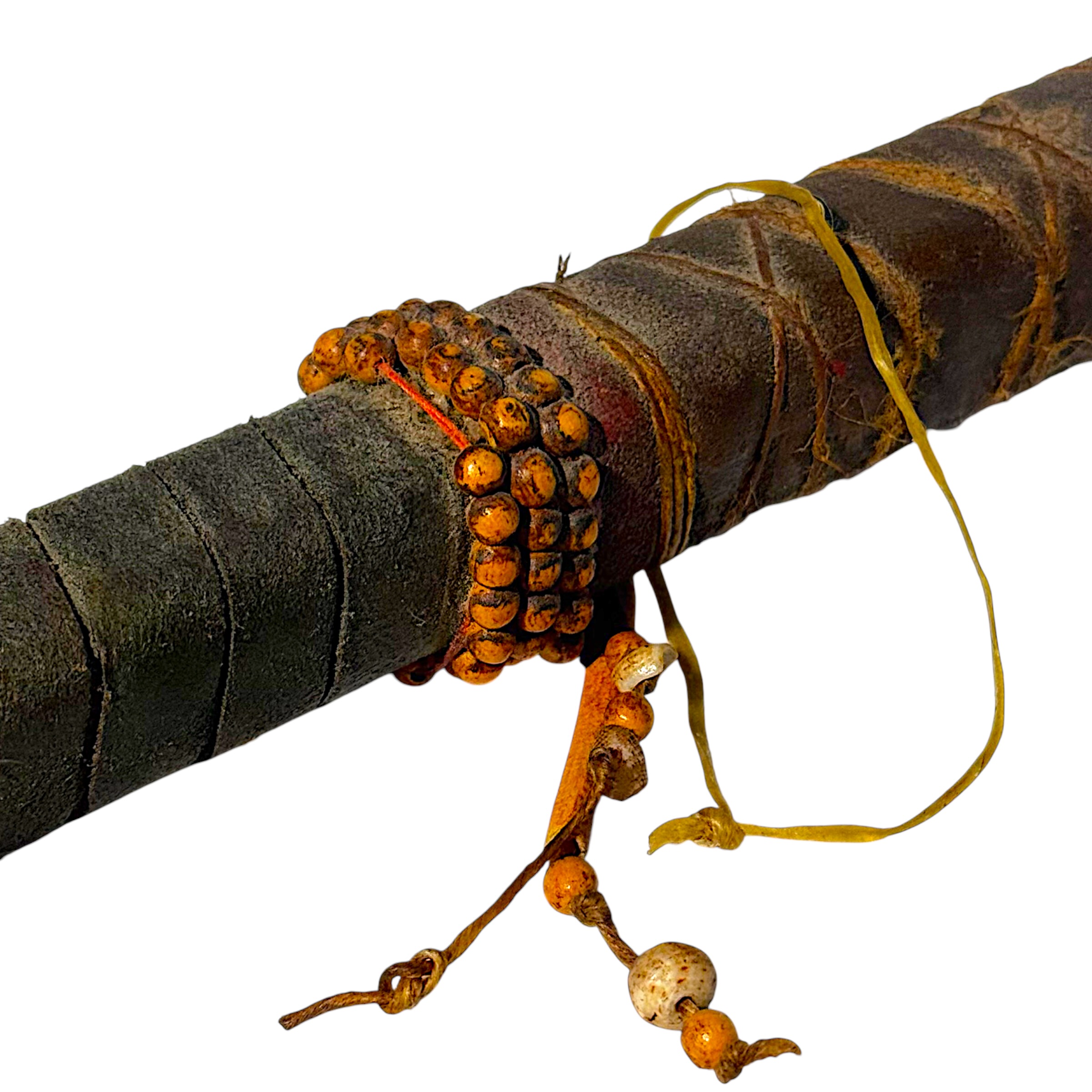
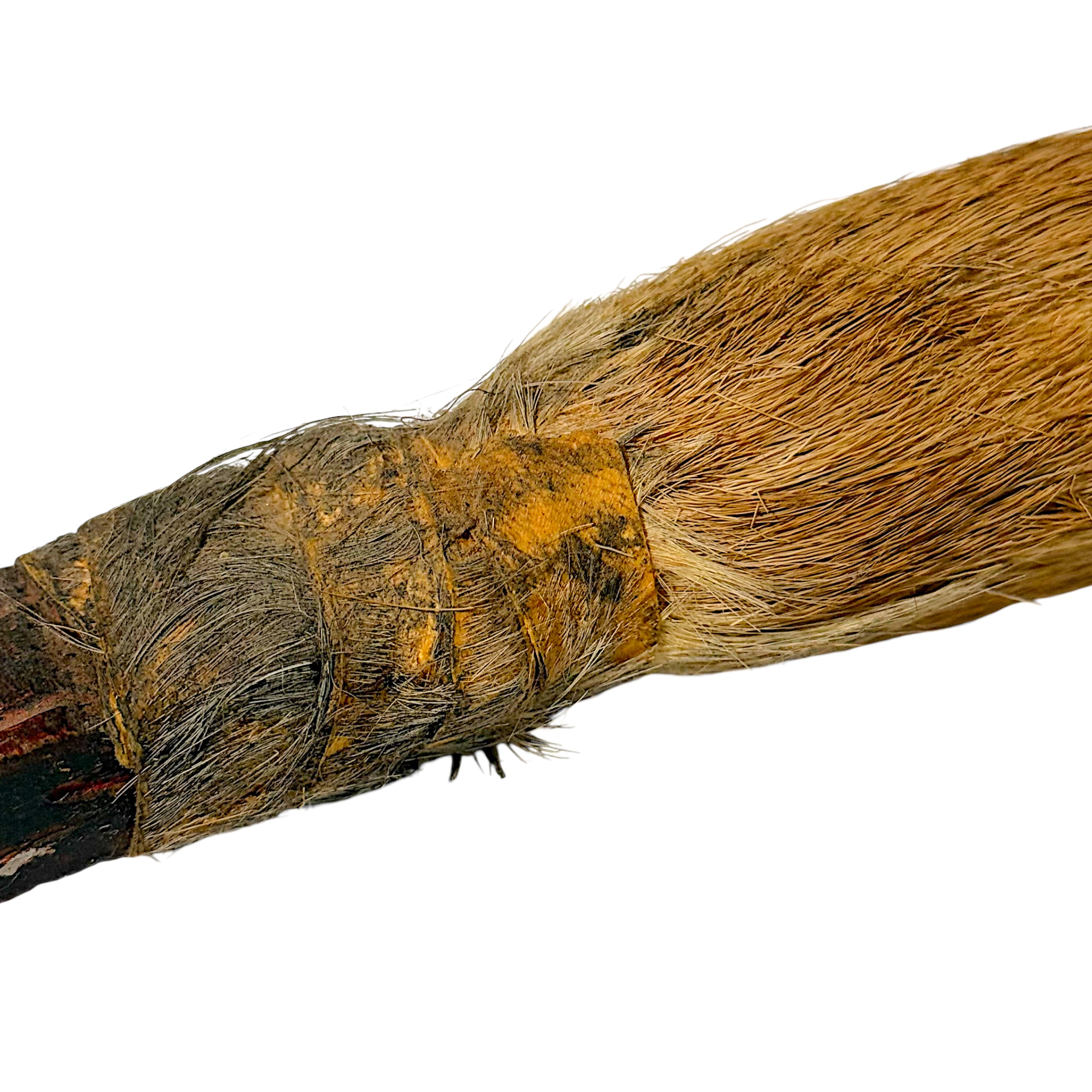
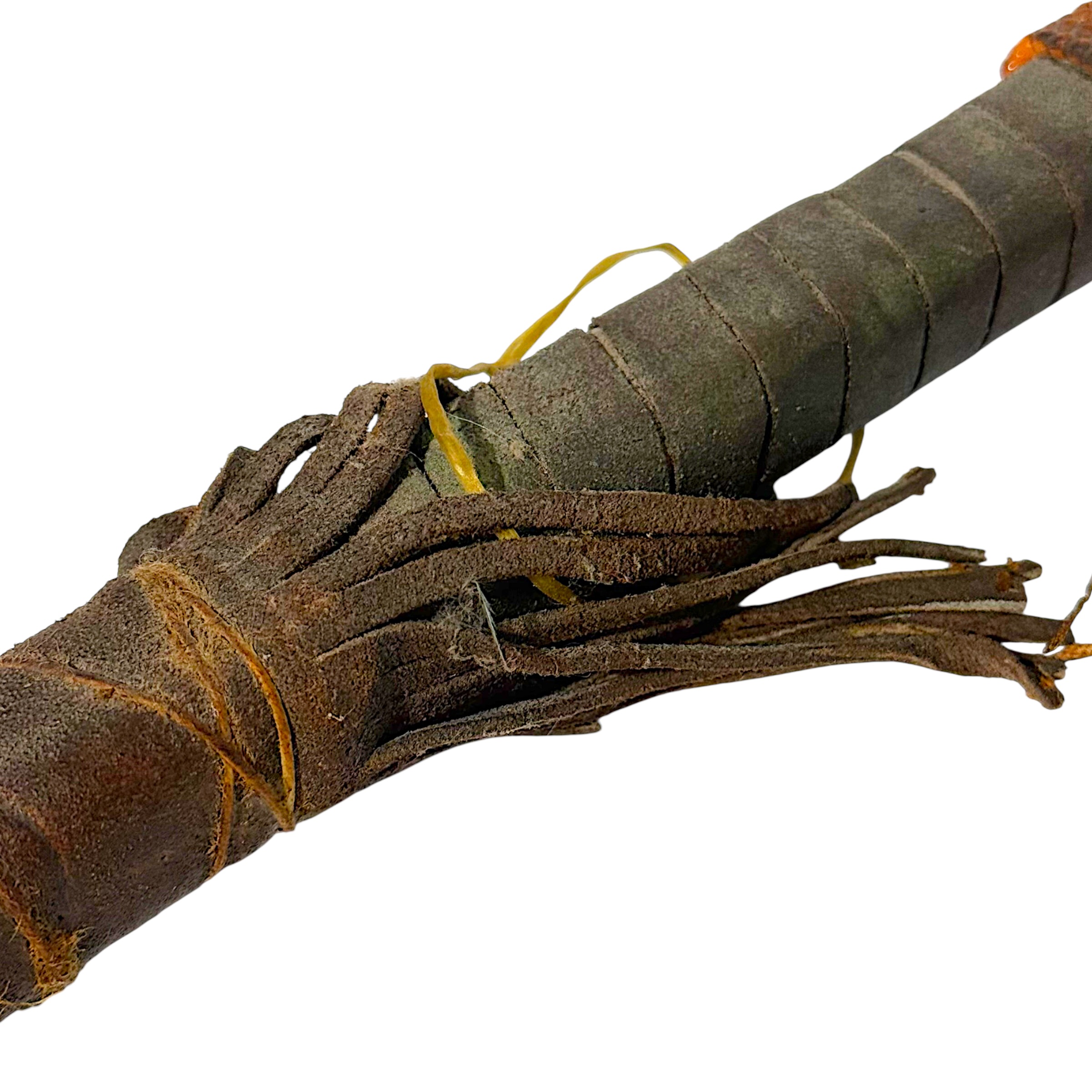
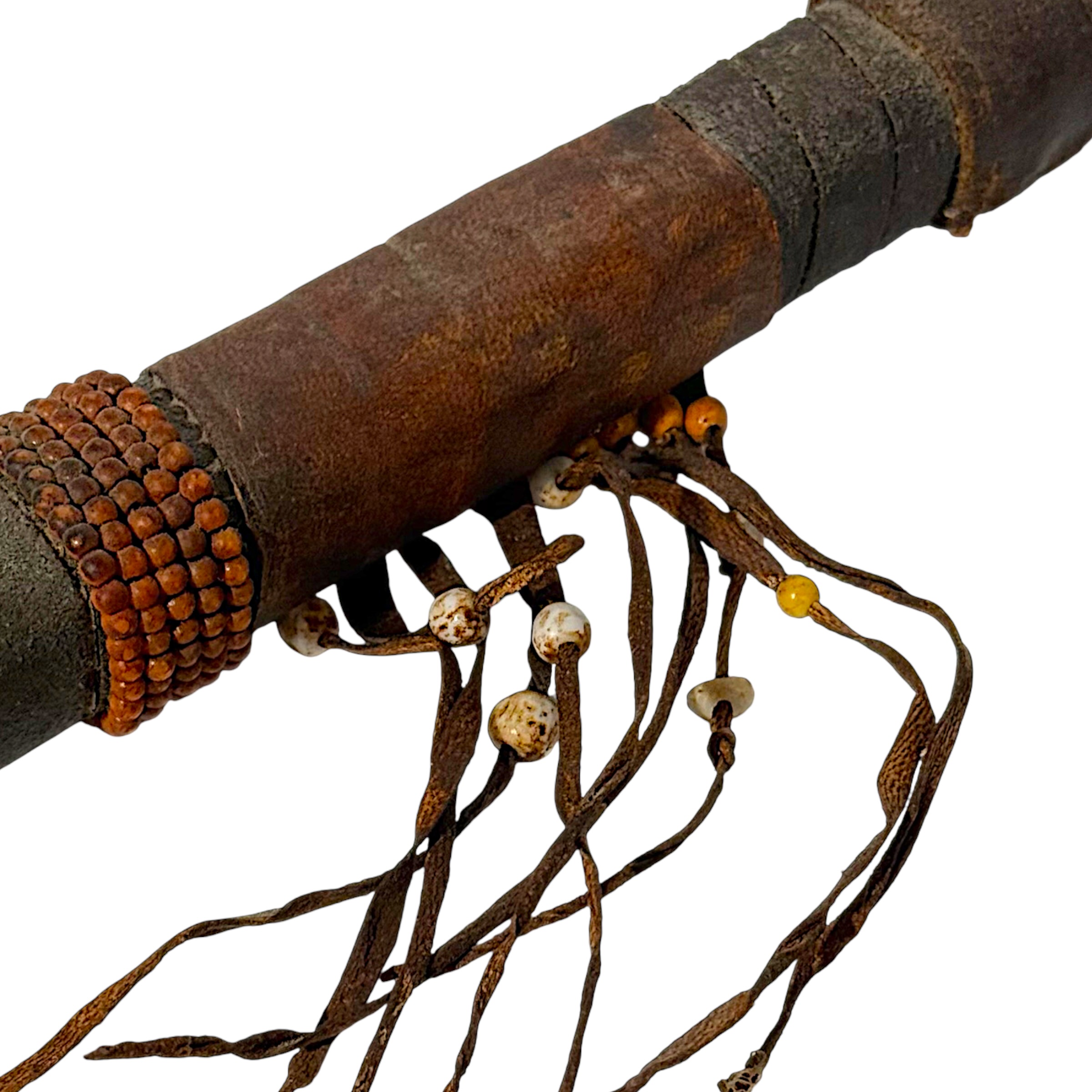
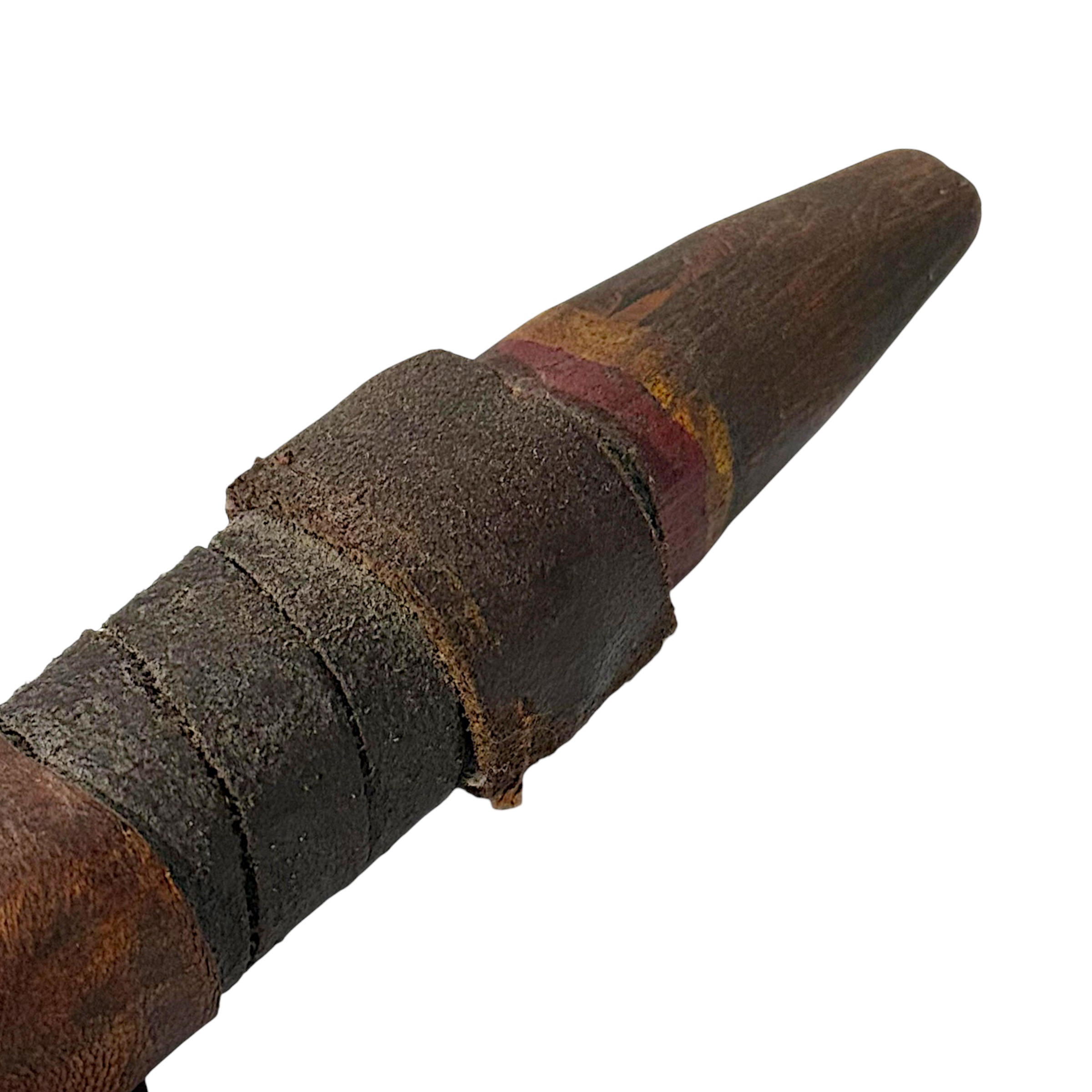
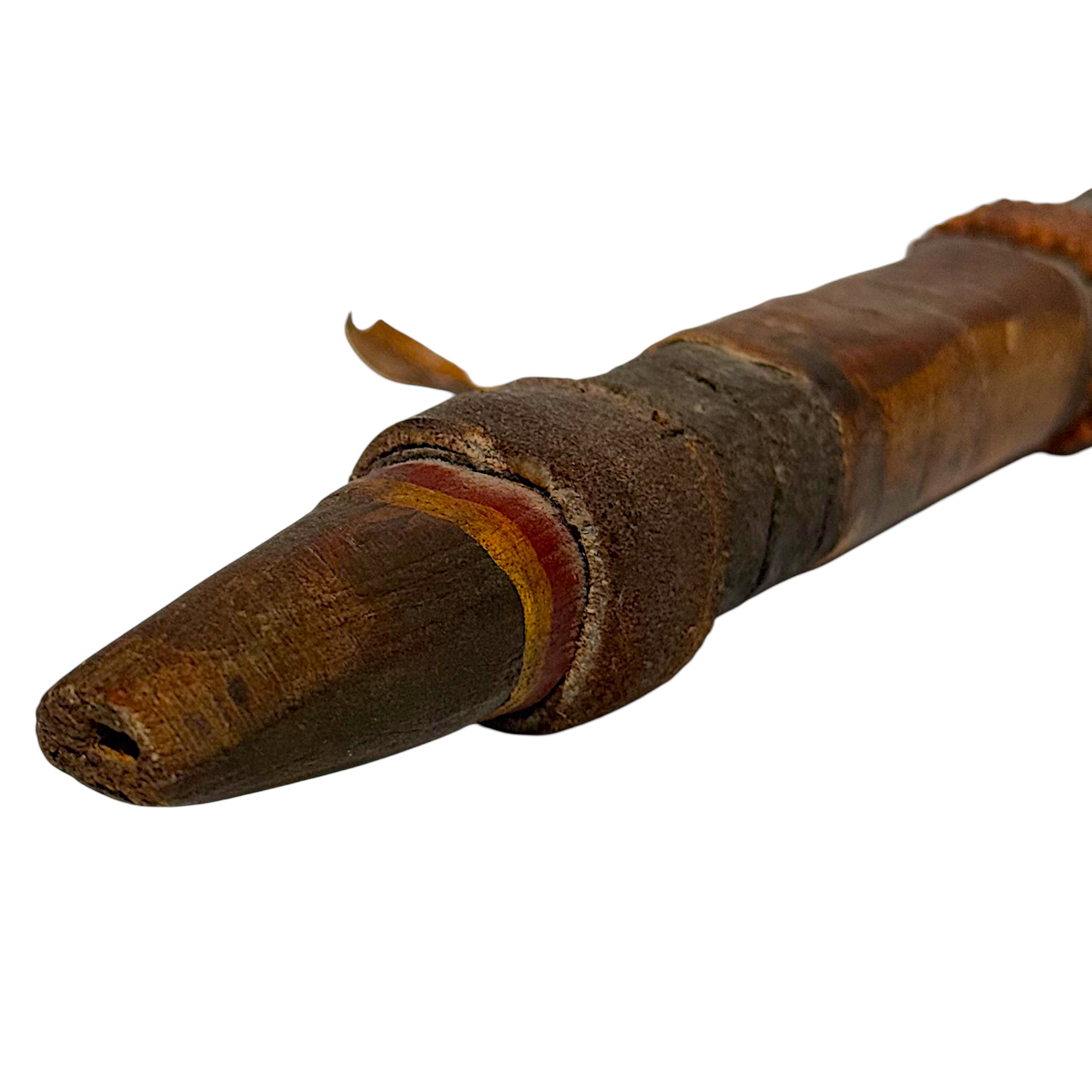
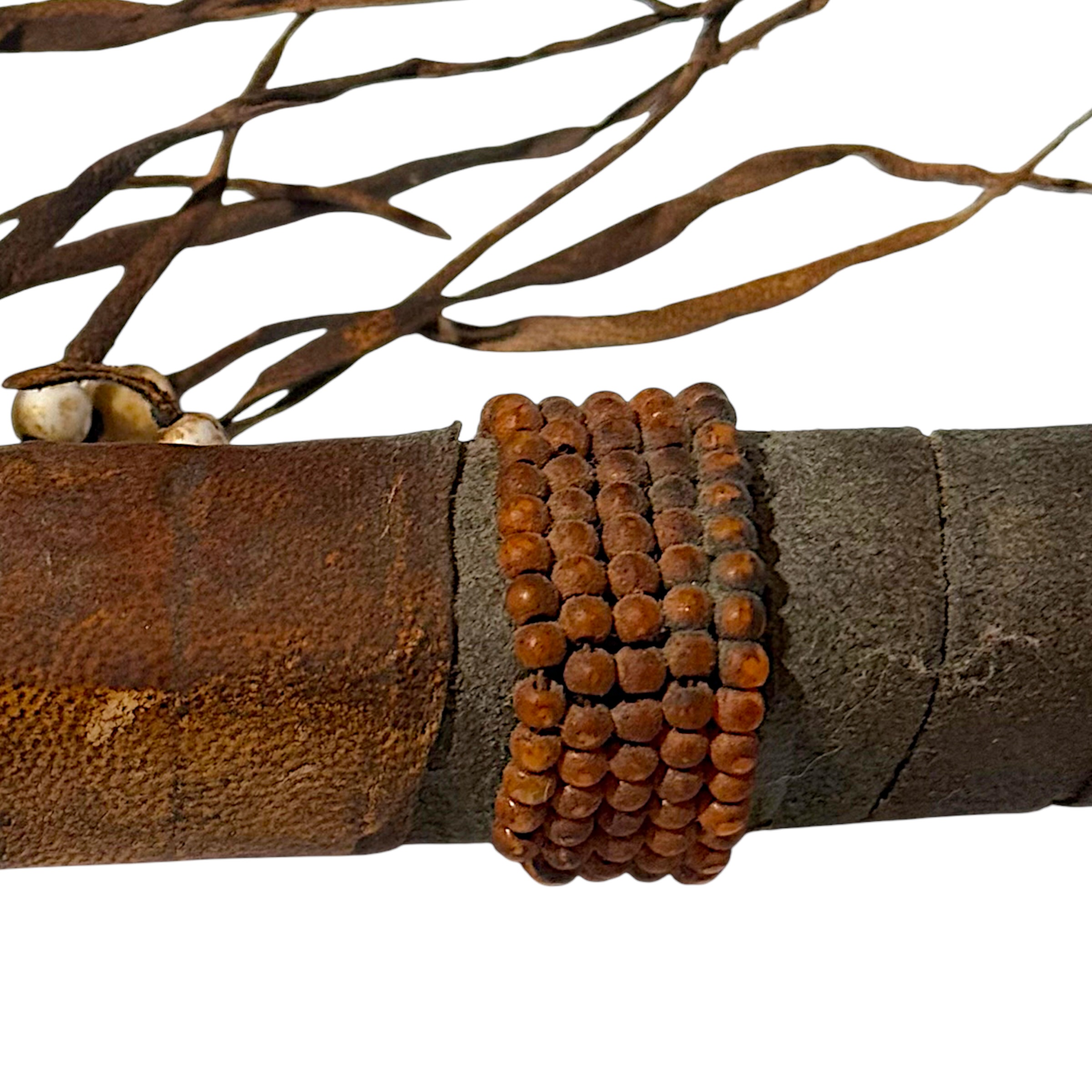
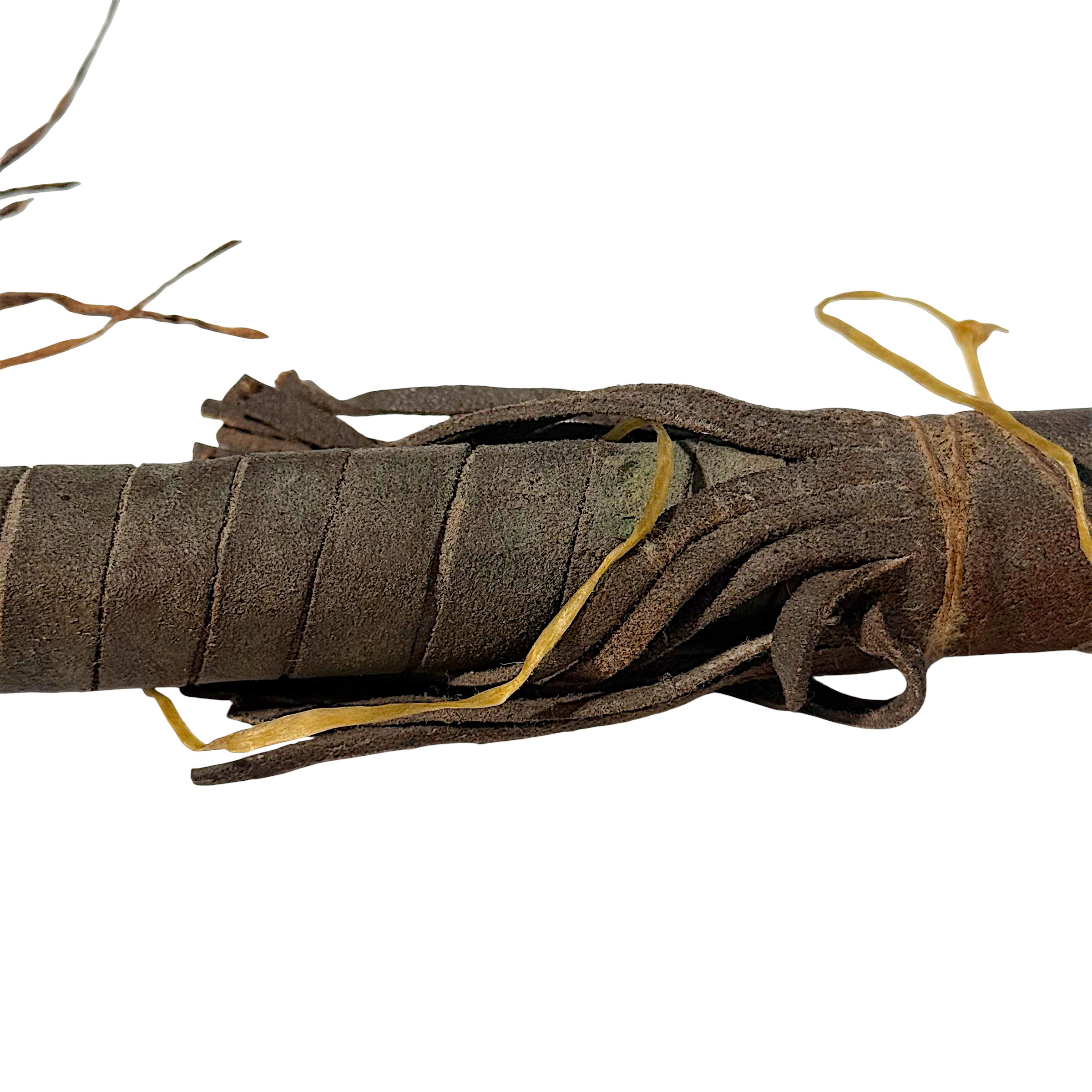
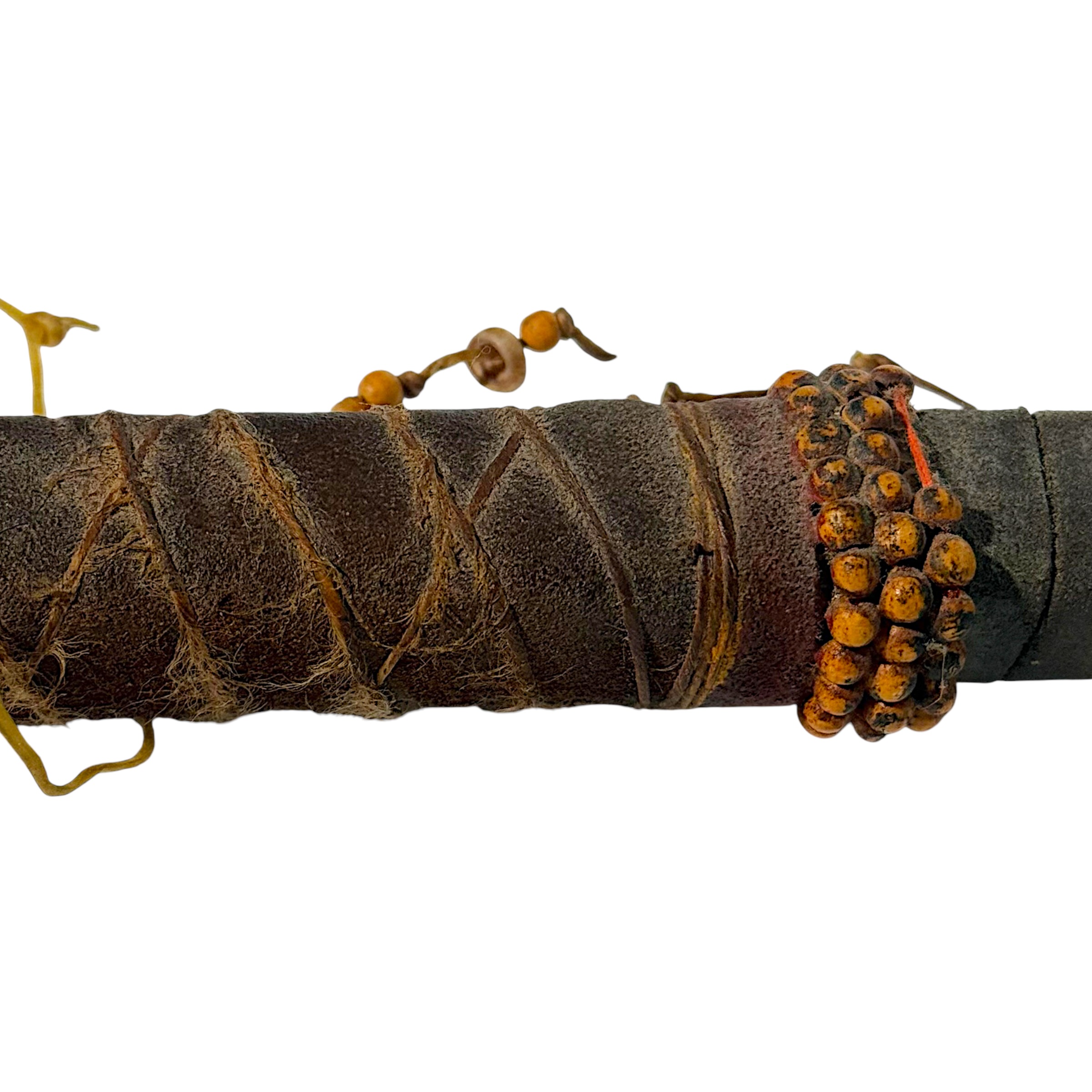
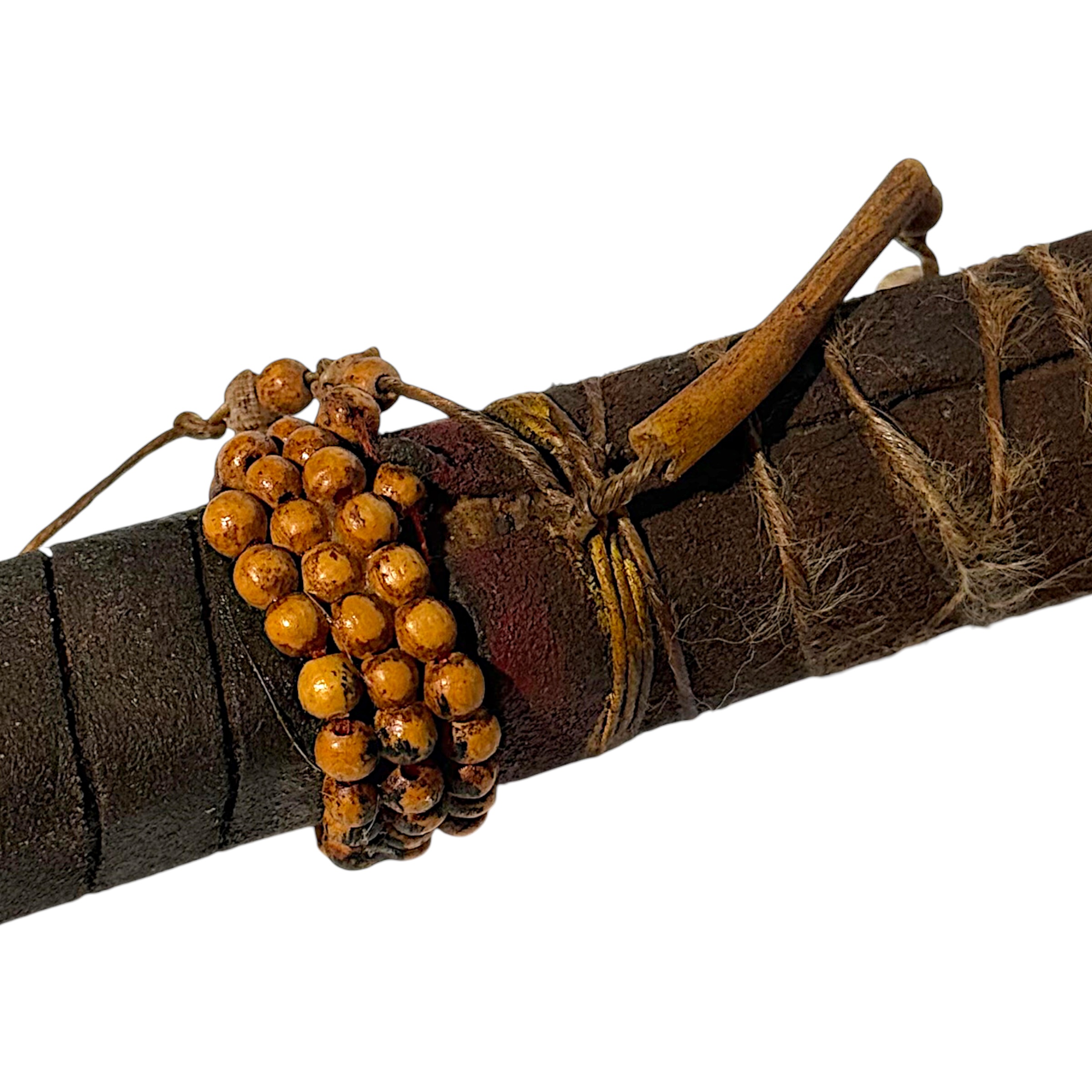
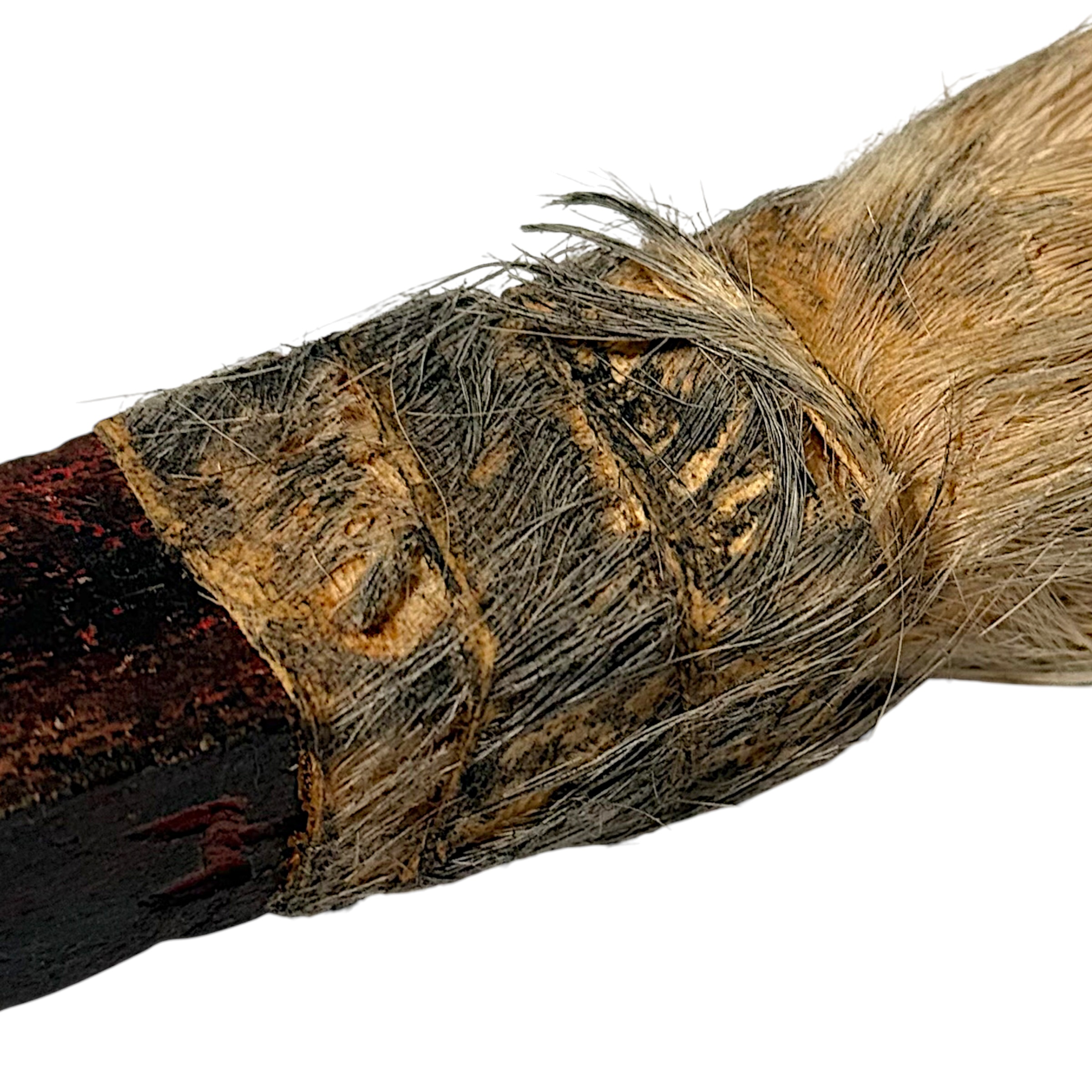
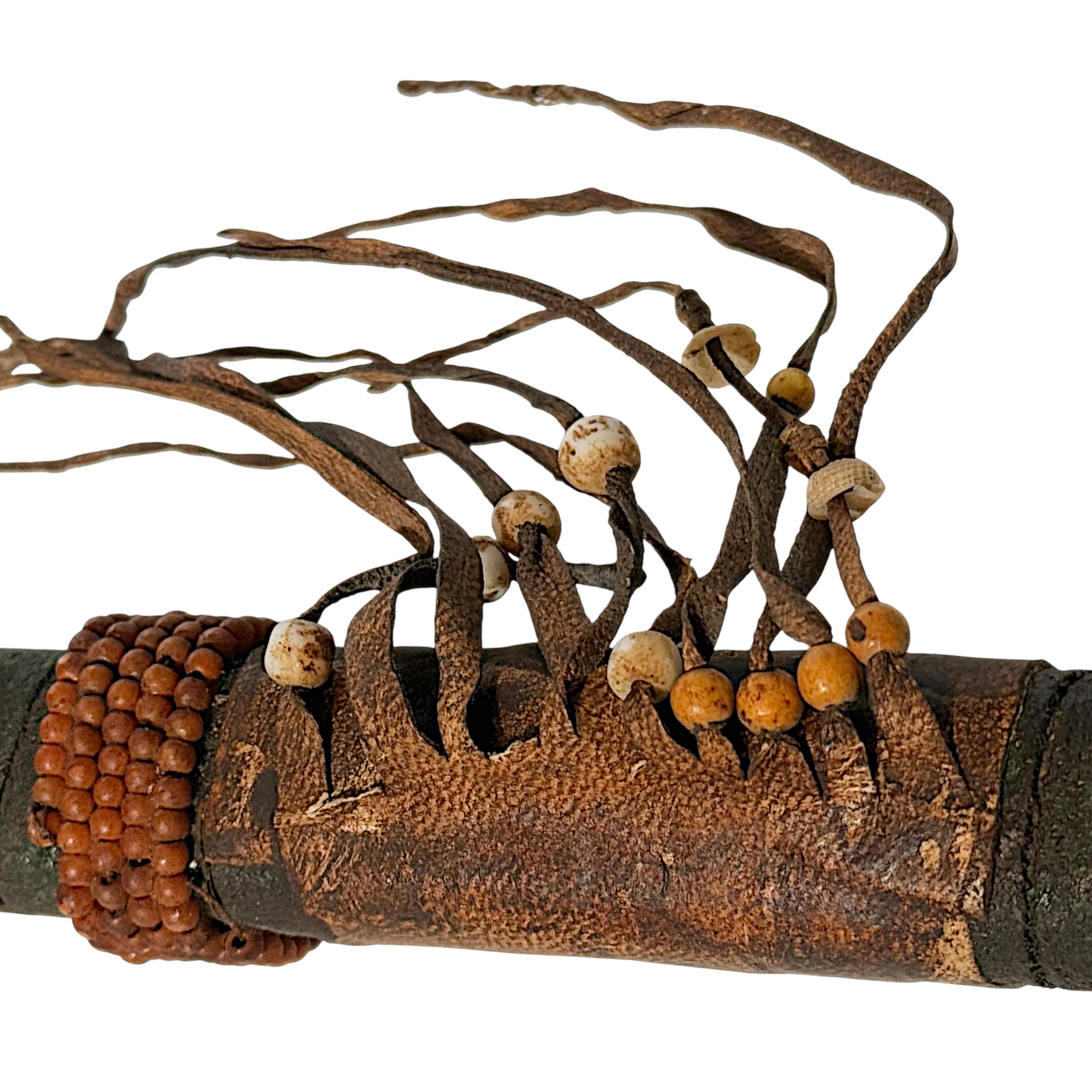
The stem is embellished with what appears to be deer hair, handmade organic beads, probable bone elements, leather strips, suspended cords, and surviving pigment. The materials are irregular and individually worked, with no obvious modern glass beadwork visible.
The hide has become heavily dried and frayed with age, while the wooden components have darkened considerably from oxidation, handling, and time. These signs of wear are consistent across the object and contribute to its strong historic character.
The stone bowl is particularly important. Its compact rectangular form differs from the more familiar red catlinite elbow bowls associated with many Plains traditions and suggests a more regional or individually made form. The chamber shows substantial darkening and evidence of historic use.
The pipe’s long stem, separate stone bowl, animal hair, hide wrapping, handmade organic ornament, and suspended decorative elements are all consistent with early Native North American ceremonial pipe traditions.
The exact nation or community of origin remains unidentified. Based on the construction and decorative vocabulary, the piece is conservatively attributed to the Plains / Upper Missouri cultural region, with possible connections to the broader Plains–Great Lakes sphere.
Rather than using the generalized term “peace pipe,” this object is best understood as a ceremonial smoking pipe, a category that could encompass ritual, diplomatic, social, spiritual, and community use depending on the specific cultural context.
Object Details
Date: c. 1830–1860
Origin: Native North America
Probable Region: Plains / Upper Missouri or Plains–Great Lakes
Object Type: Ceremonial smoking pipe
Overall Length: Approximately 25.5 in.
Stone Bowl: Approximately 4 in. long
Materials: Stone, wood, hide/leather, probable deer hair, fiber or sinew cordage, handmade organic beads including probable bone, and pigment
Construction: Separate stone bowl and decorated wooden stem
Decoration: Hair, hide wrapping, suspended leather elements, handmade beads, fiber bindings, and painted details
Maker: Unknown Indigenous artist
Condition: Good historic condition with substantial age-related drying, fraying, pigment loss, wear, and oxidation consistent with considerable age and use
Collector Context
This early ceremonial pipe holds particular significance for collections focused on Native American material culture, Plains ceremonial objects, historic smoking traditions, Indigenous craftsmanship, early 19th-century ethnographic material, and American cultural history.
Its early date, 25.5-inch scale, separate stone bowl, probable deer hair, handmade organic ornament, and extensively aged construction make it a particularly compelling survivor from the pre-Reservation era of Native North American smoking culture.
Reviews
There are no reviews yet.