
Attributed to the Northern/Central Plains and Upper Missouri cultural region | c. 1820–1870
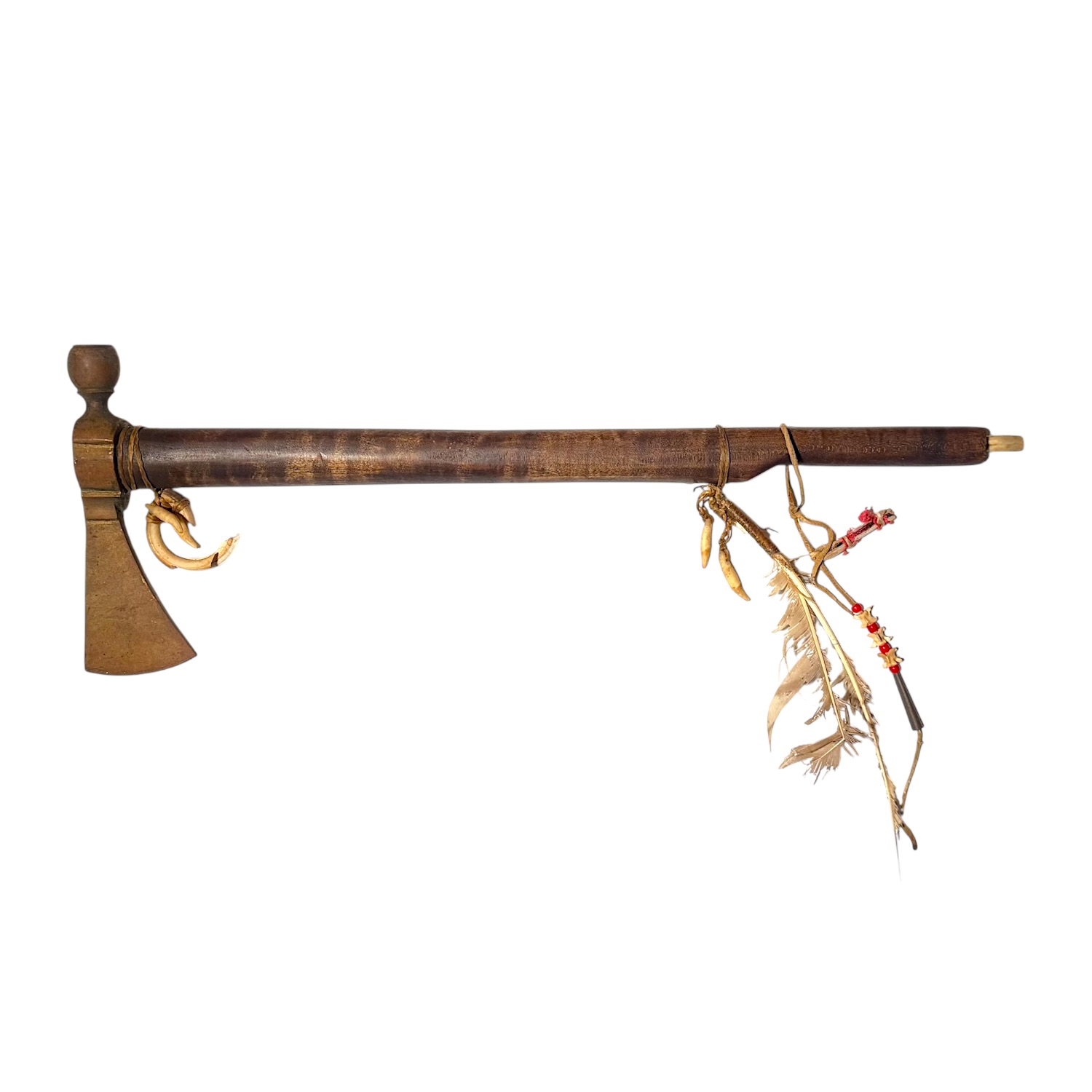
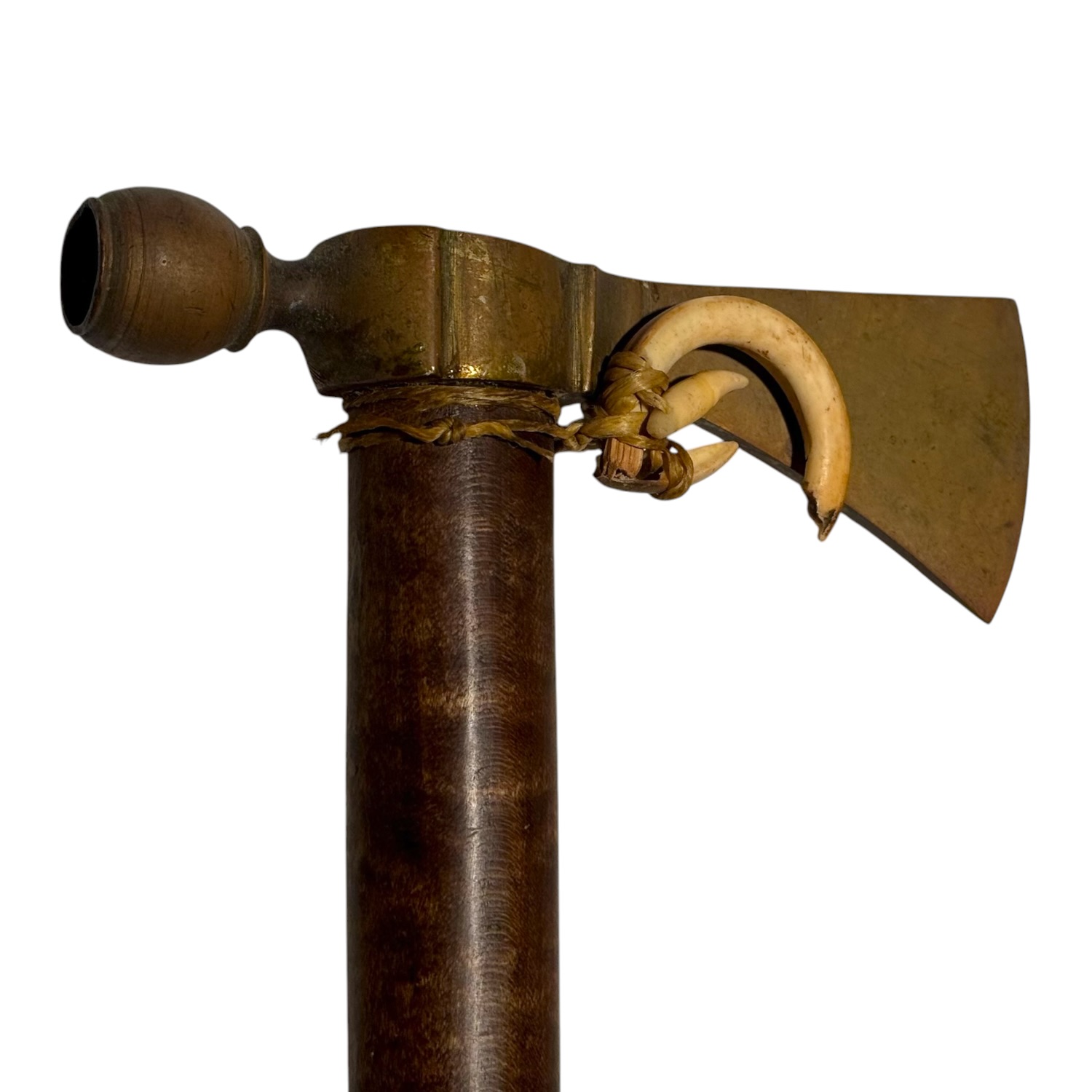
This remarkable Native American ceremonial pipe tomahawk dates to approximately 1820–1870 and combines a hollow smoking haft with an integral metal pipe bowl and flaring axe blade in one of the most distinctive hybrid forms of early American material culture.
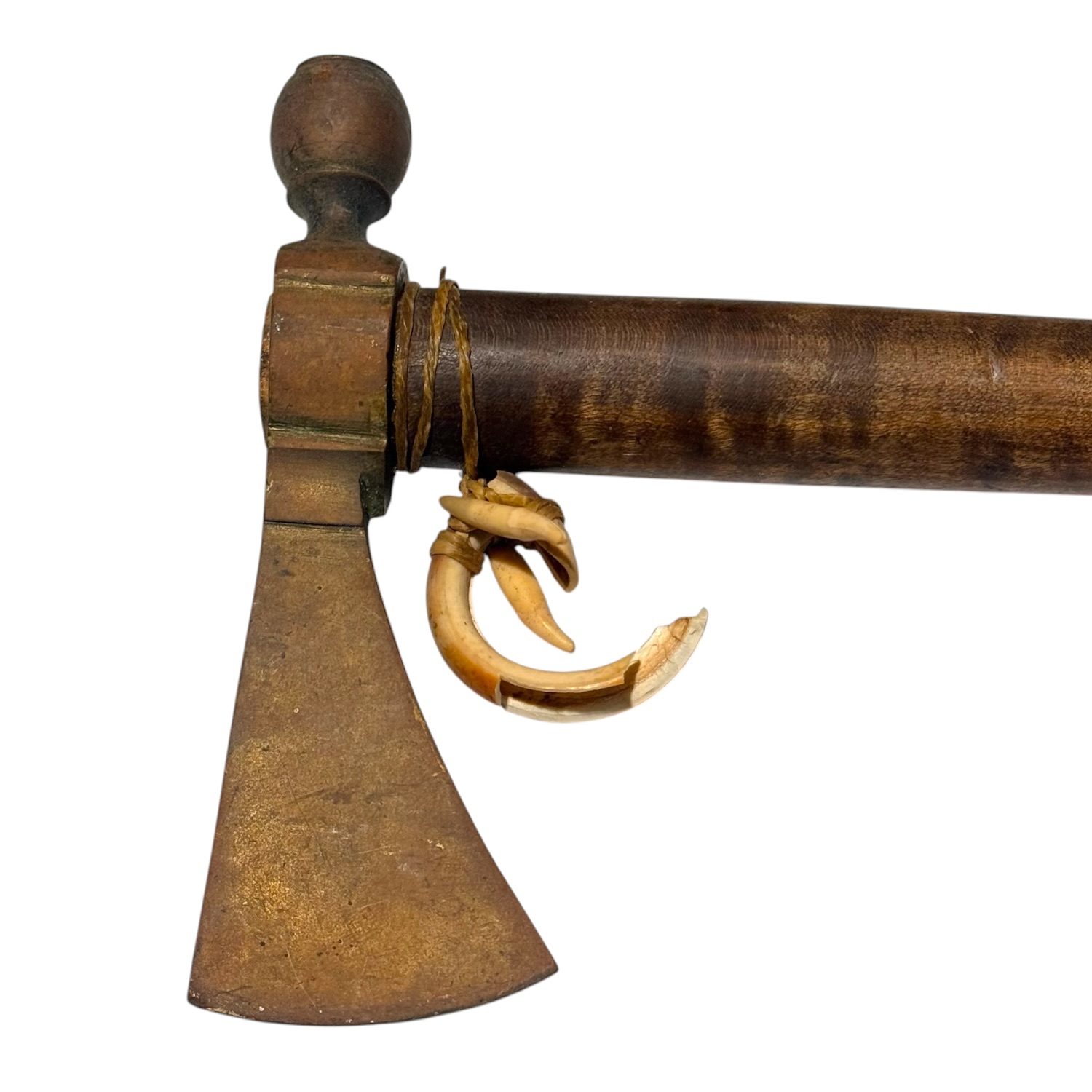
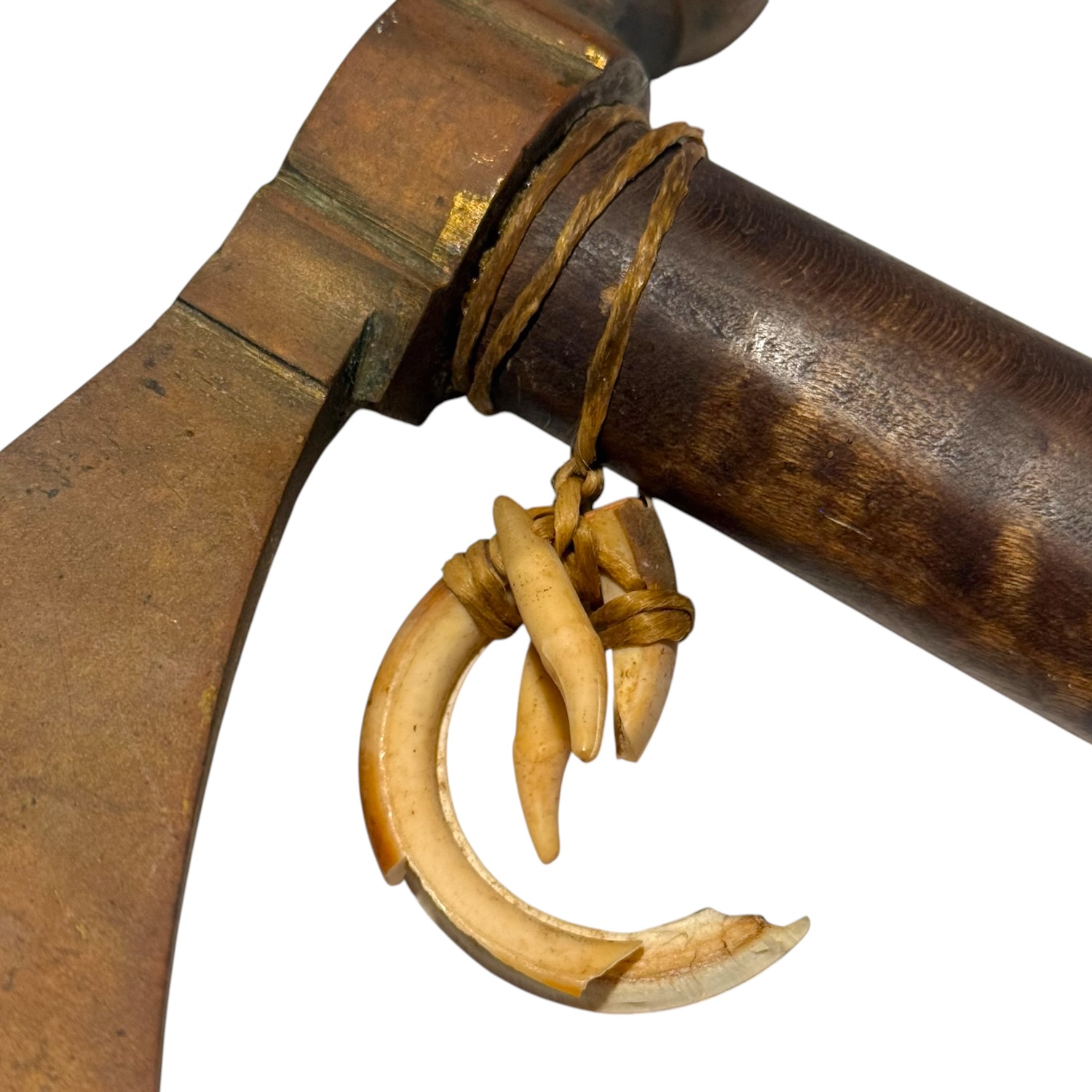
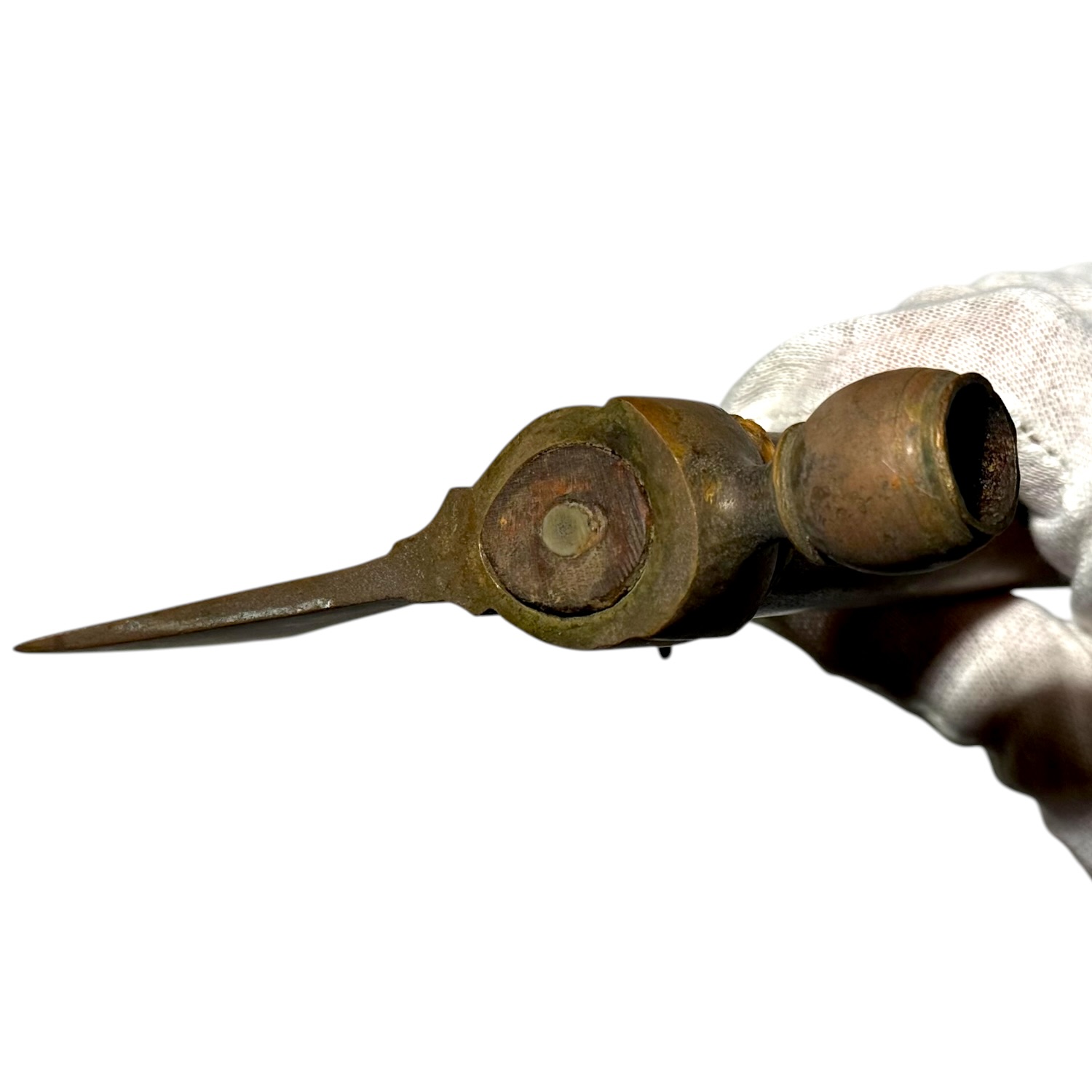
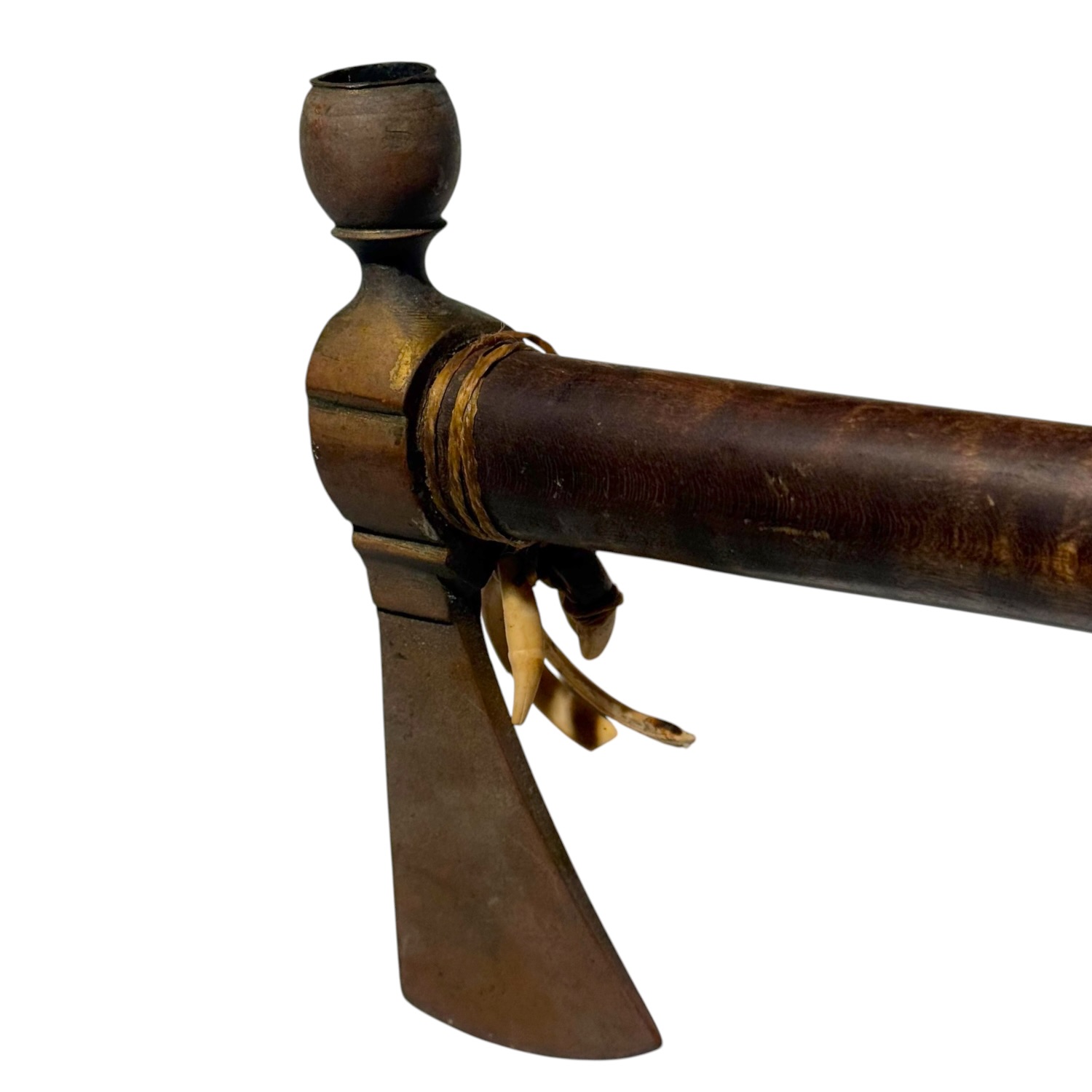
Measuring approximately 17 inches in overall length, with roughly 6 inches from the top of the pipe bowl to the lower edge of the blade, the piece has a compact but commanding presence. The head appears to be formed from brass or another copper alloy and incorporates an upright smoking bowl opposite the broad axe blade.
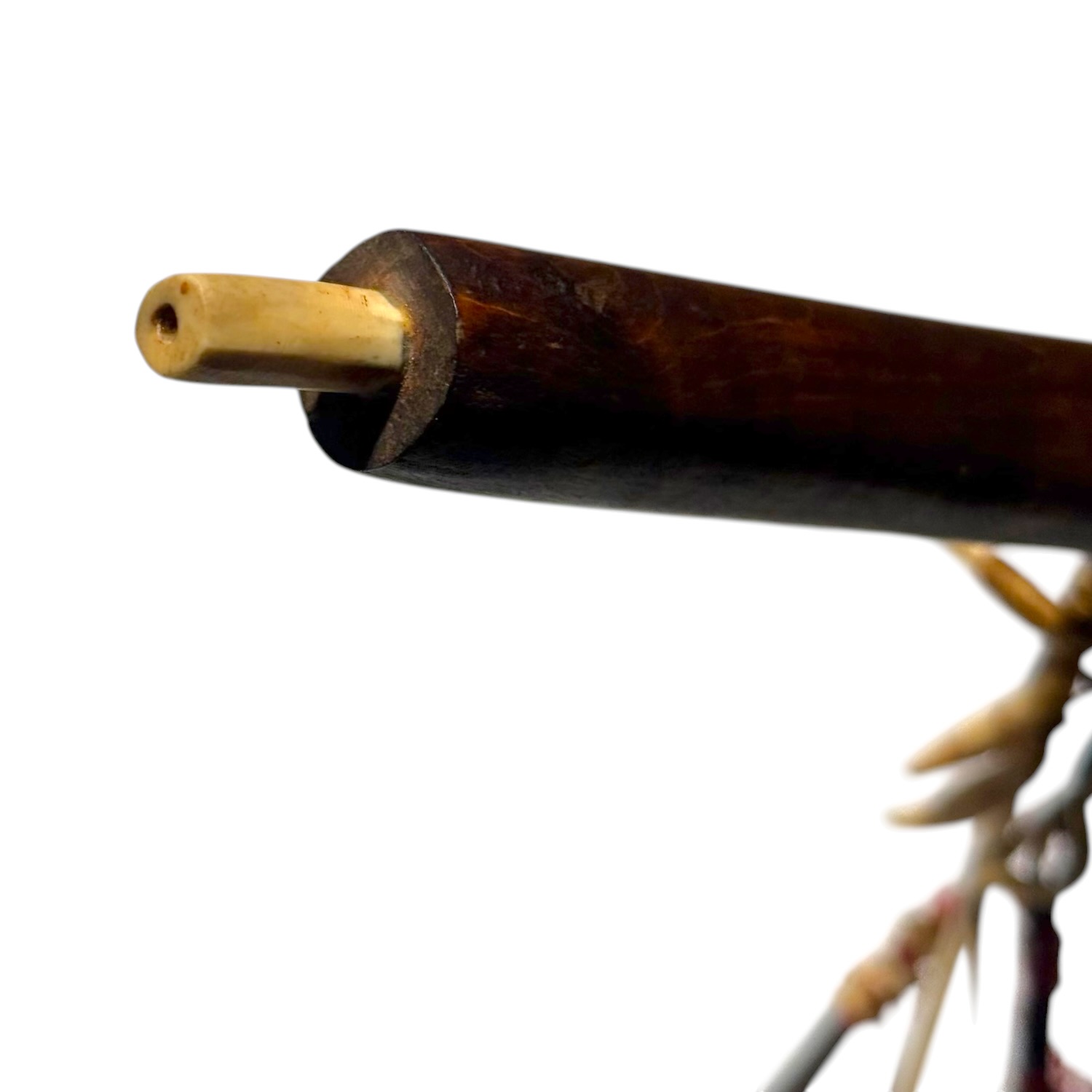
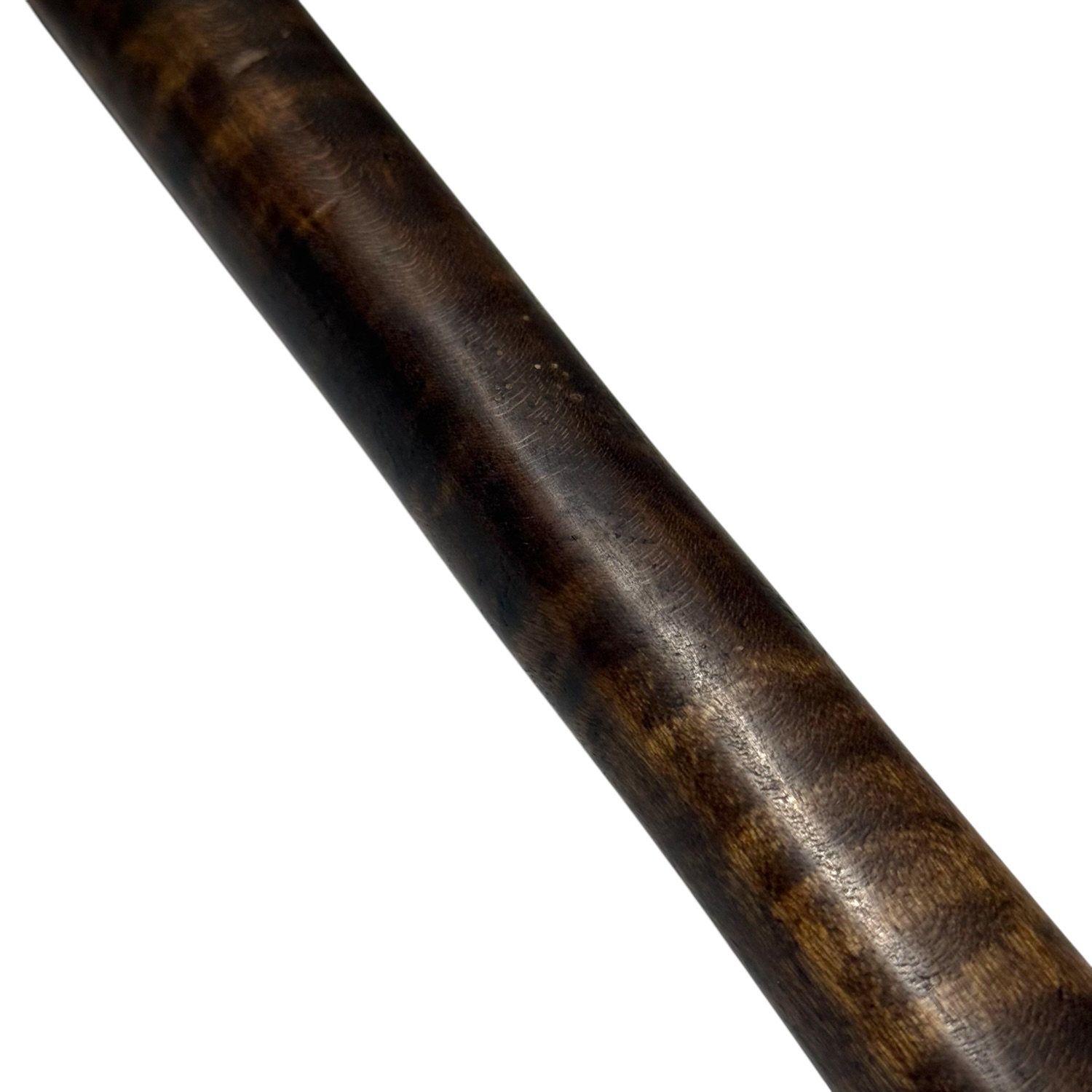
A dark figured hardwood haft passes directly through the metal head and functions as the pipe stem. The wood displays pronounced natural figuring and extensive surface wear from age and handling. At the opposite end is a separately fitted pale mouthpiece, probably fashioned from bone, antler, horn, or another dense organic material.
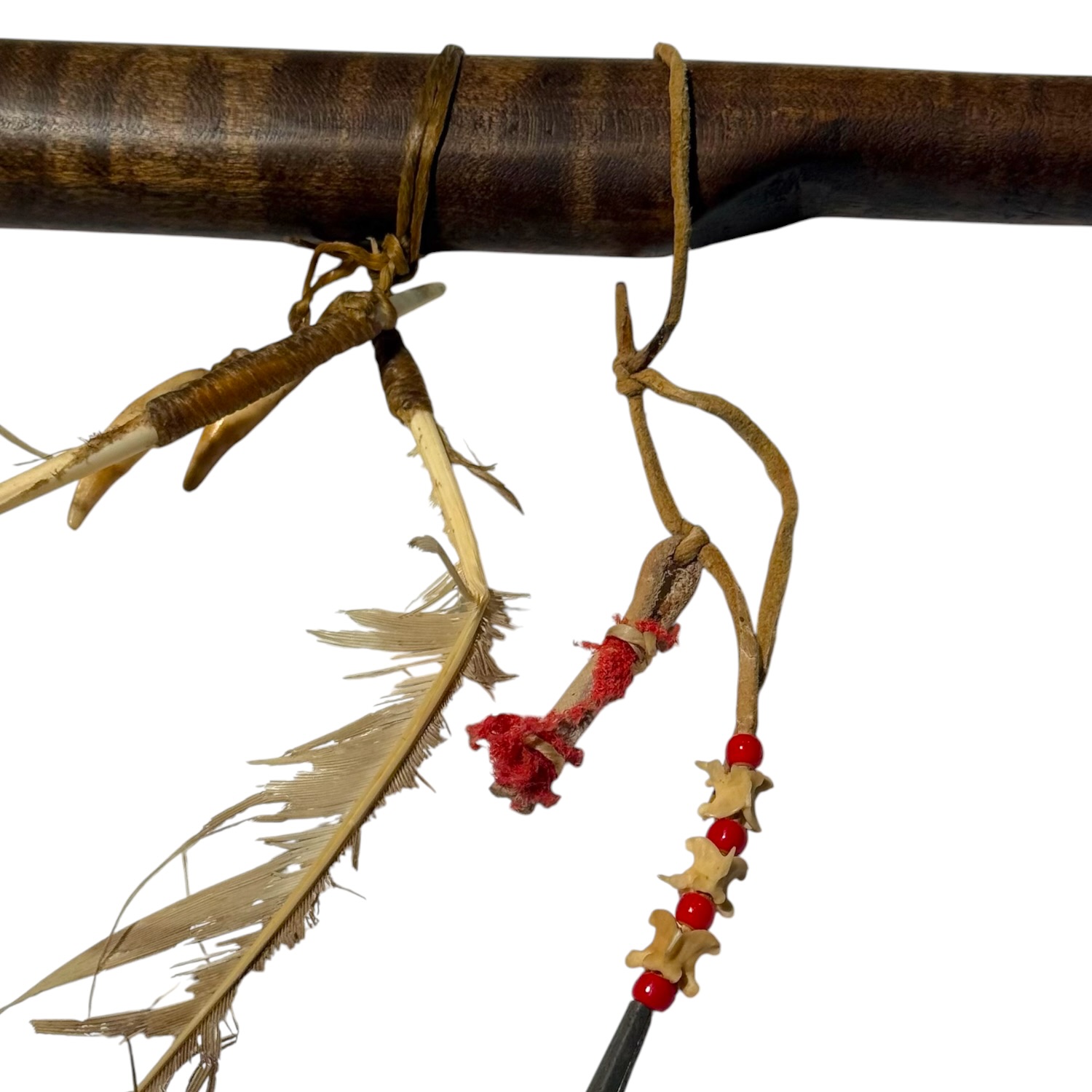
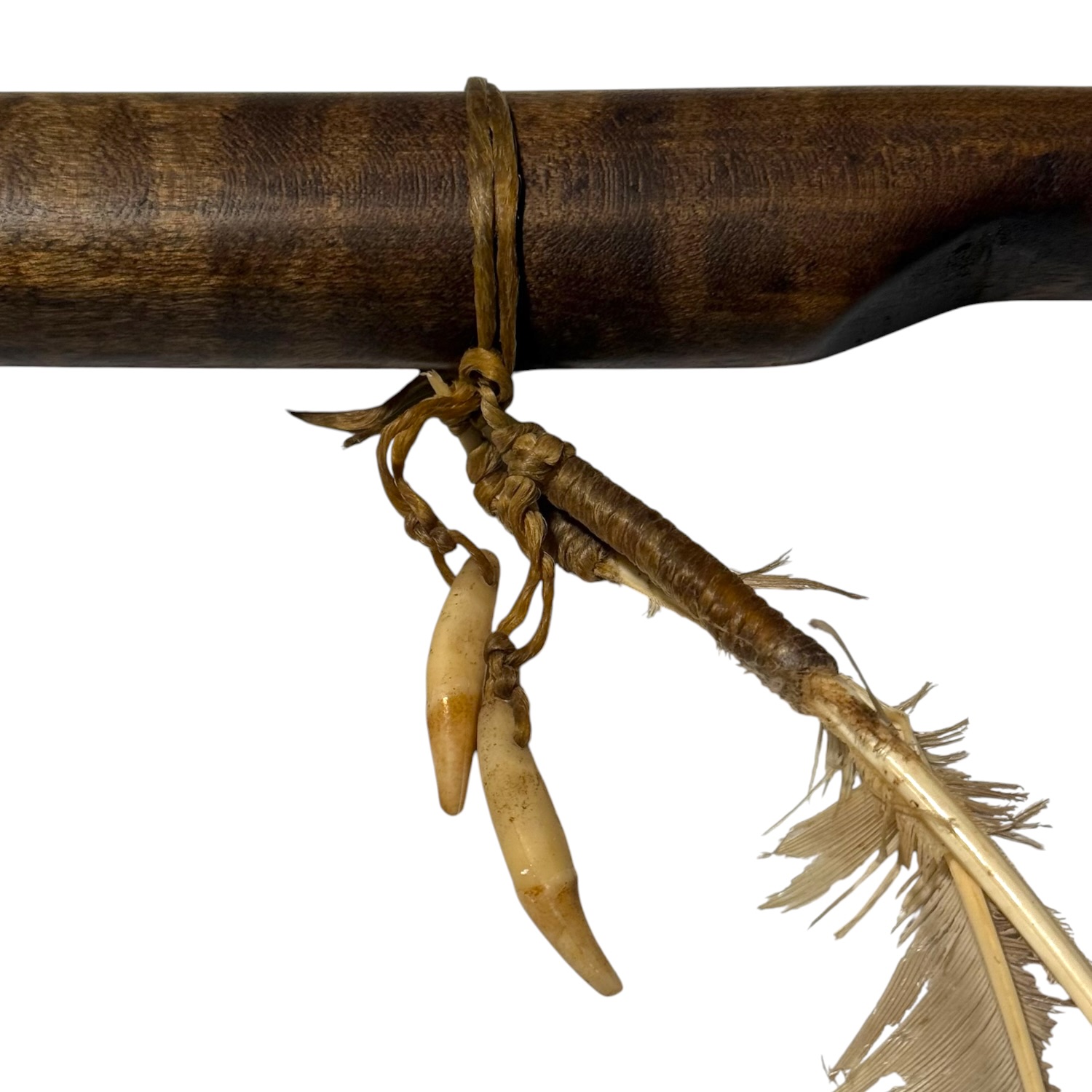
Suspended from the haft are several historically significant organic elements, including aged hide or rawhide thongs, a heavily worn feather, curved animal-derived ornaments, smaller tooth or claw-like elements, bone components, and beads. These attachments appear to have been individually tied and incorporated into the pipe rather than added as simple surface decoration.
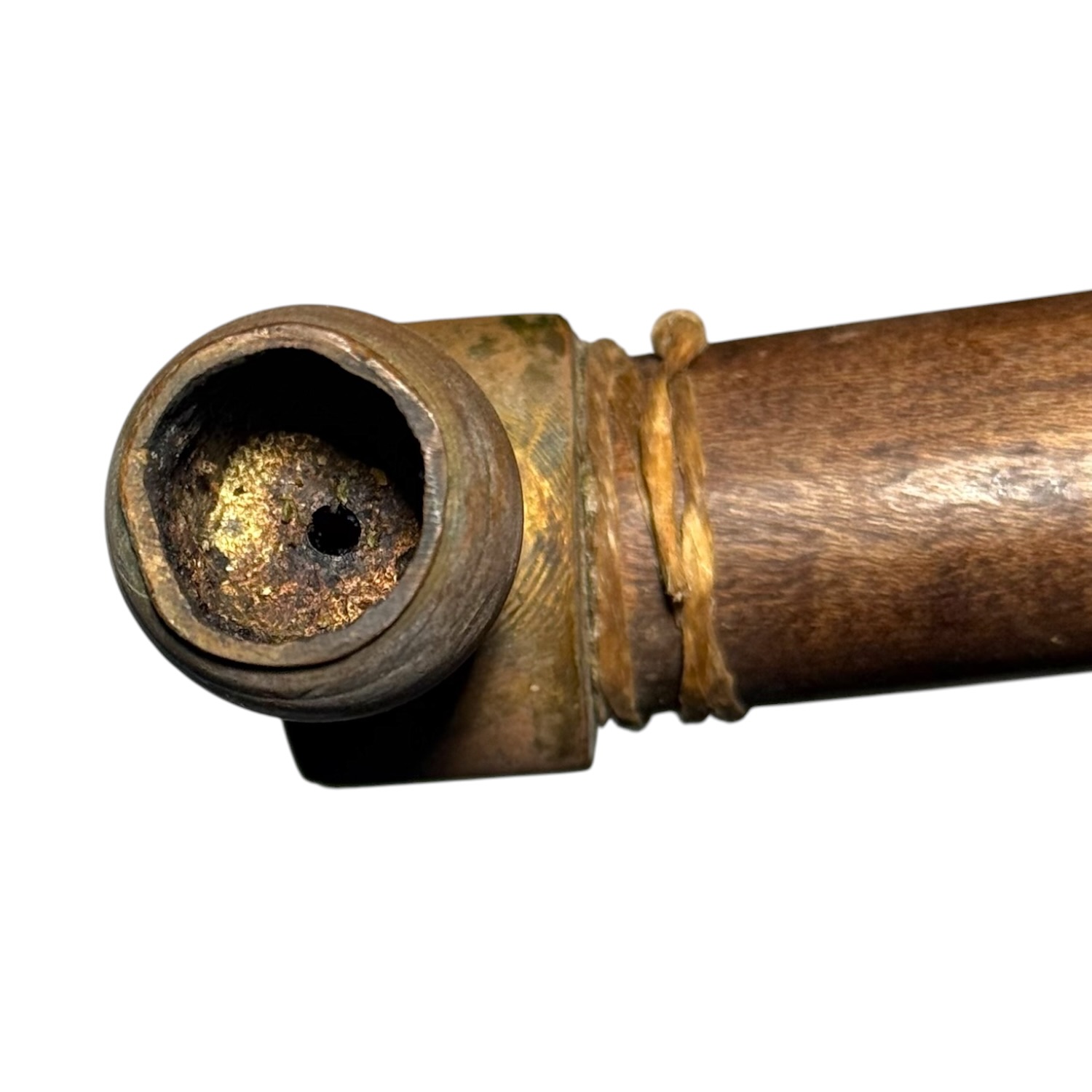
The smoking bowl retains substantial interior darkening and residue from historic use. A visible airway at the base of the bowl connects through the hollow wooden haft toward the mouthpiece, confirming the object’s construction as a genuine pipe tomahawk rather than a purely symbolic axe form.
Pipe tomahawks emerged from the complex cultural exchanges of Native North America during the 18th and 19th centuries. Metal heads were frequently produced through Indigenous, European, and Euro-American trade networks, then hafted, carried, smoked, personalized, and incorporated into Native ceremonial and diplomatic traditions.
Among Plains and Upper Missouri peoples, such objects could function simultaneously as smoking implements, personal prestige objects, diplomatic gifts, signs of authority, and ceremonial possessions.
The exact nation associated with this example remains unidentified. Based on its brass or copper-alloy head, hollow figured-wood haft, organic attachments, feather, bone or tooth ornaments, and overall form, the piece is attributed to the Northern/Central Plains and Upper Missouri cultural region, with possible associations to Blackfoot, Mandan/Hidatsa, Dakota/Lakota, or neighboring Plains peoples.
Object Details
Date: c. 1820–1870
Origin: Native North America
Cultural Attribution: Northern/Central Plains and Upper Missouri cultural region
Possible Associations: Blackfoot, Mandan/Hidatsa, Dakota/Lakota, or neighboring Plains peoples
Object Type: Ceremonial pipe tomahawk
Overall Length: Approximately 17 in.
Head Height, Bowl to Blade: Approximately 6 in.
Head: Brass or copper alloy with integral smoking bowl and flaring axe blade
Haft: Figured hardwood, possibly curly maple
Mouthpiece: Probable bone, antler, horn, or related organic material
Attachments: Hide/rawhide or sinew, feather, animal-derived teeth/claw/bone ornaments, beads, and suspended elements
Maker: Unknown
Condition: Good historic condition with substantial age-related wear, oxidation, drying to organic materials, losses to feather elements, and evidence of historic smoking use
Historical Context
Pipe tomahawks occupy a unique position in the history of Native North America.
Their combined axe and pipe form developed through the interaction of Indigenous traditions and colonial trade networks. Over time, the pipe tomahawk became associated not simply with utility but with diplomacy, exchange, authority, social standing, and ceremonial practice.
Brass-headed examples in particular were often better suited to symbolic and prestige use than to heavy chopping. The addition of hide, feathers, beads, animal-derived ornaments, and other personal elements could further transform the object into an individualized possession carrying cultural and social meaning.
This example survives with both its smoking system and a substantial group of organic attachments intact, preserving a rare combination of material, function, and personal expression.
Collector Context
This early pipe tomahawk holds particular significance for collections focused on Native American material culture, Plains and Upper Missouri history, historic smoking traditions, ceremonial objects, Indigenous-European trade, frontier-era material culture, and early American ethnographic art.
Its c. 1820–1870 date, 17-inch scale, brass or copper-alloy pipe head, figured hardwood haft, surviving mouthpiece, organic attachments, feather, animal-derived ornaments, and evidence of historic use make it one of the more historically compelling smoking objects represented within the History of Smoke collection.

Reviews
There are no reviews yet.