
Attributed to Margaret Pino | Southwestern United States | Late 20th Century
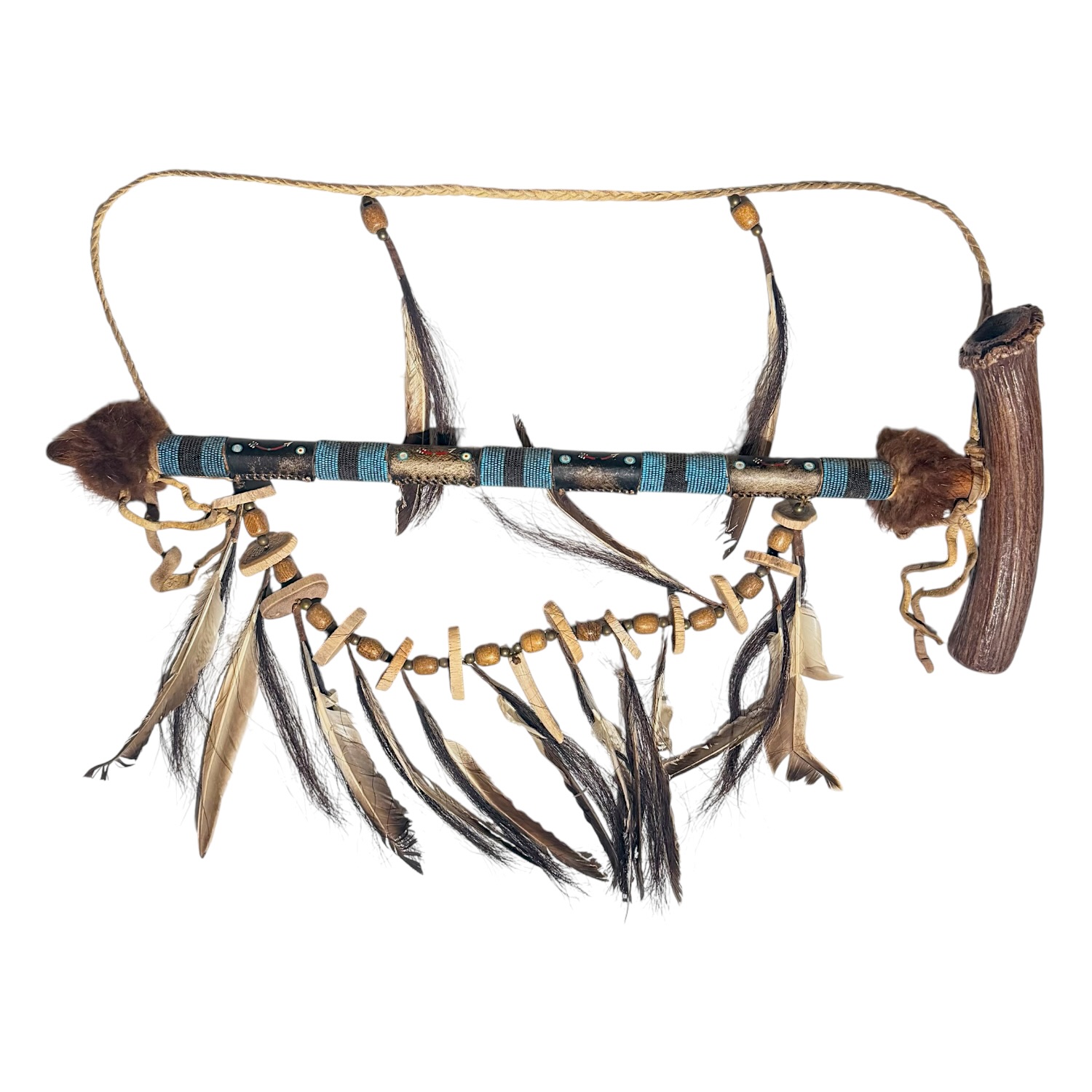
This extraordinary Native American spirit pipe is attributed to Navajo/Diné artist Margaret Pino, whose distinctive antler pipes are known for combining beadwork, hide, horsehair, feathers, fur, bone, antler, and other natural materials into elaborate sculptural smoking objects.
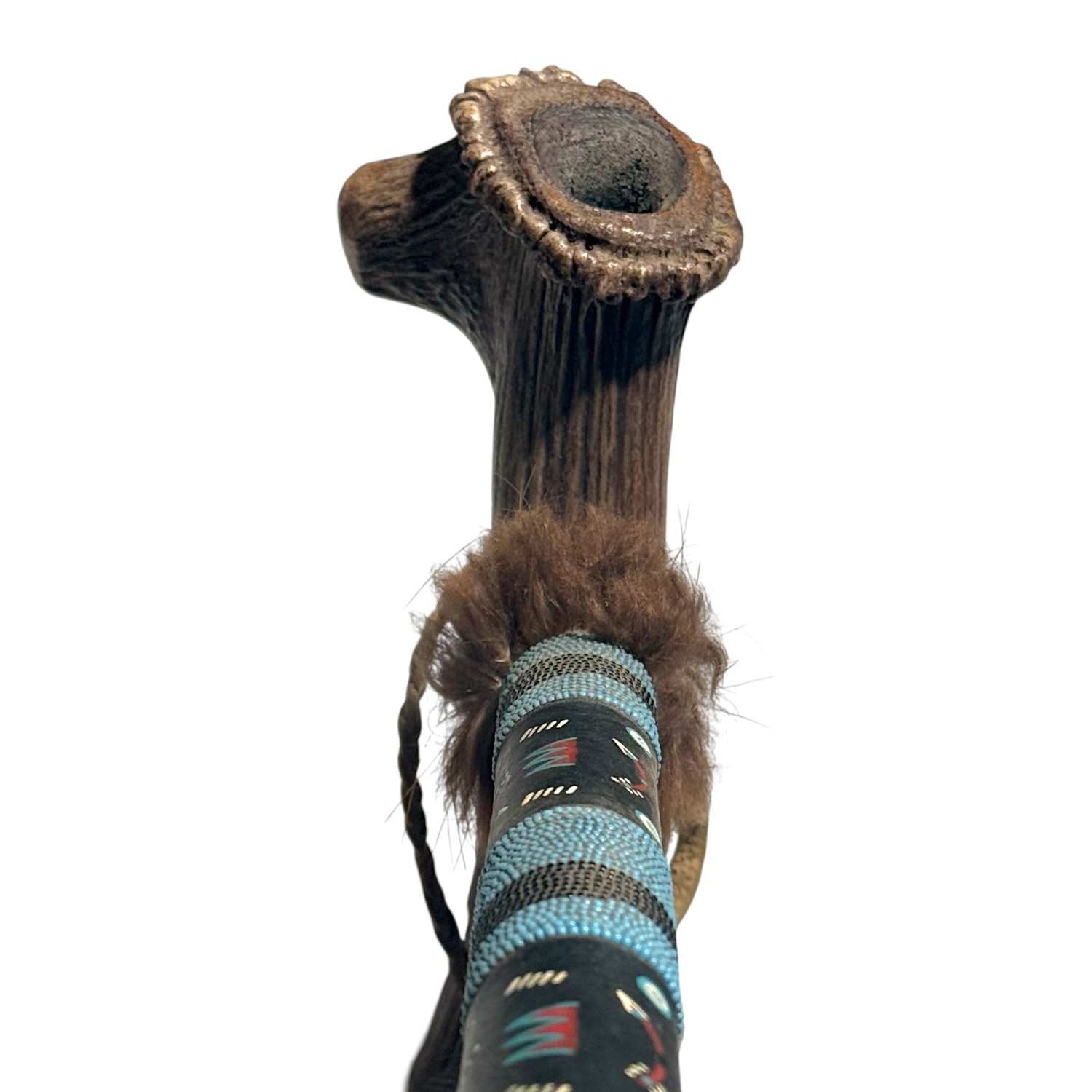
Measuring approximately 24 inches long, with a dramatic 9-inch total bowl height, the pipe is built around a long wooden stem terminating in a naturally formed deer-antler smoking bowl.
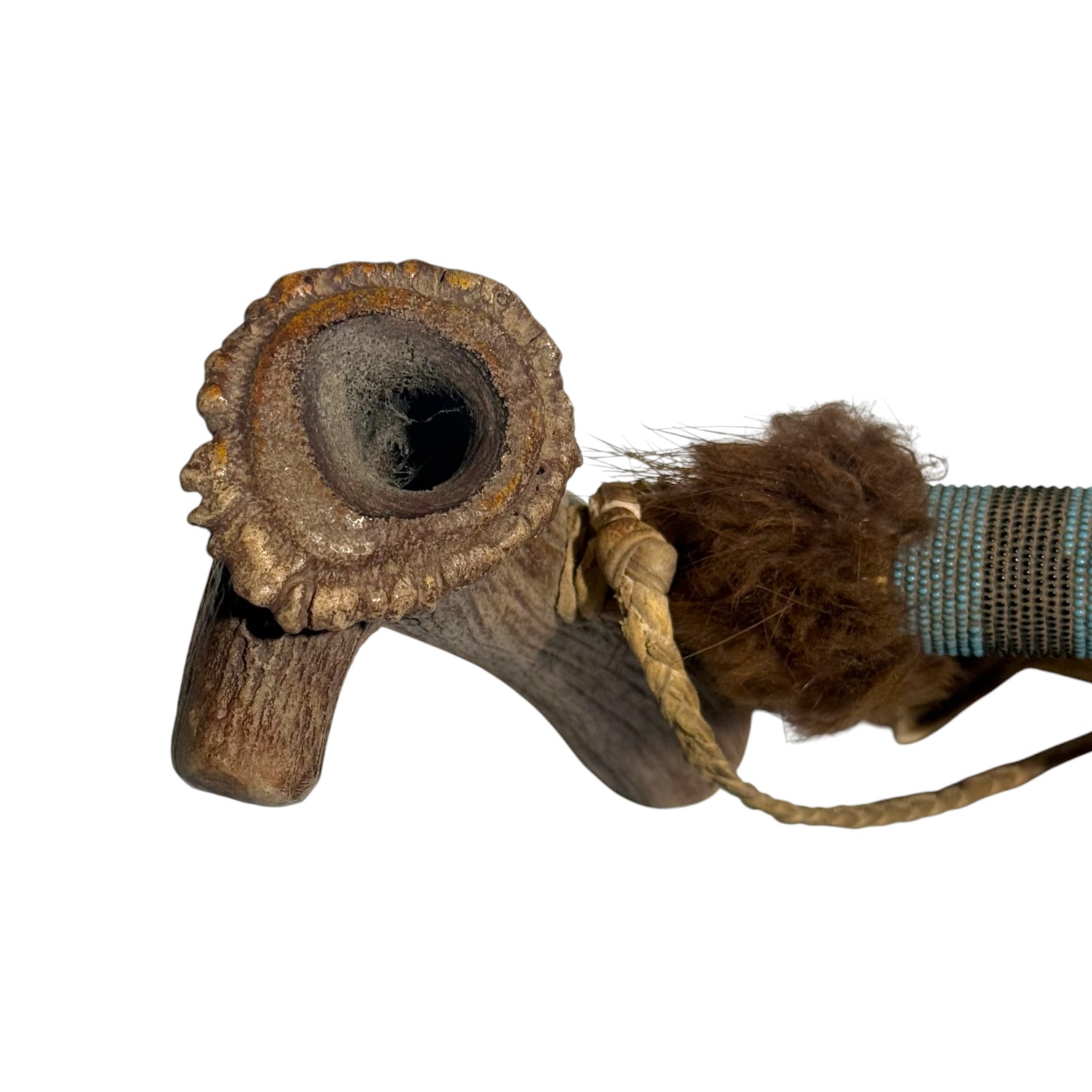
The bowl retains the deep vertical texture of the antler from which it was fashioned. Its upper end has been hollowed into a substantial smoking chamber, while the natural branching form of the antler creates a powerful sculptural profile.
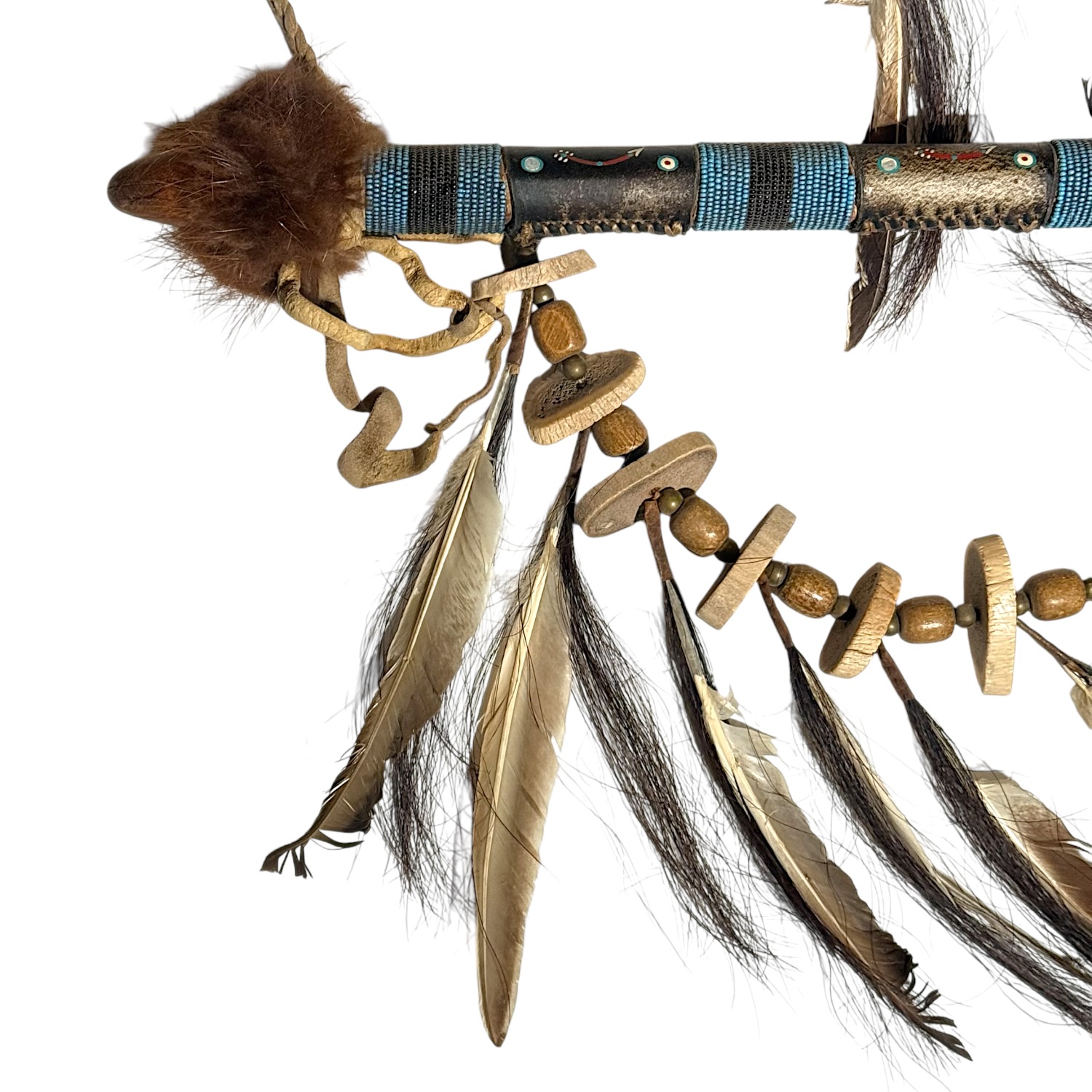
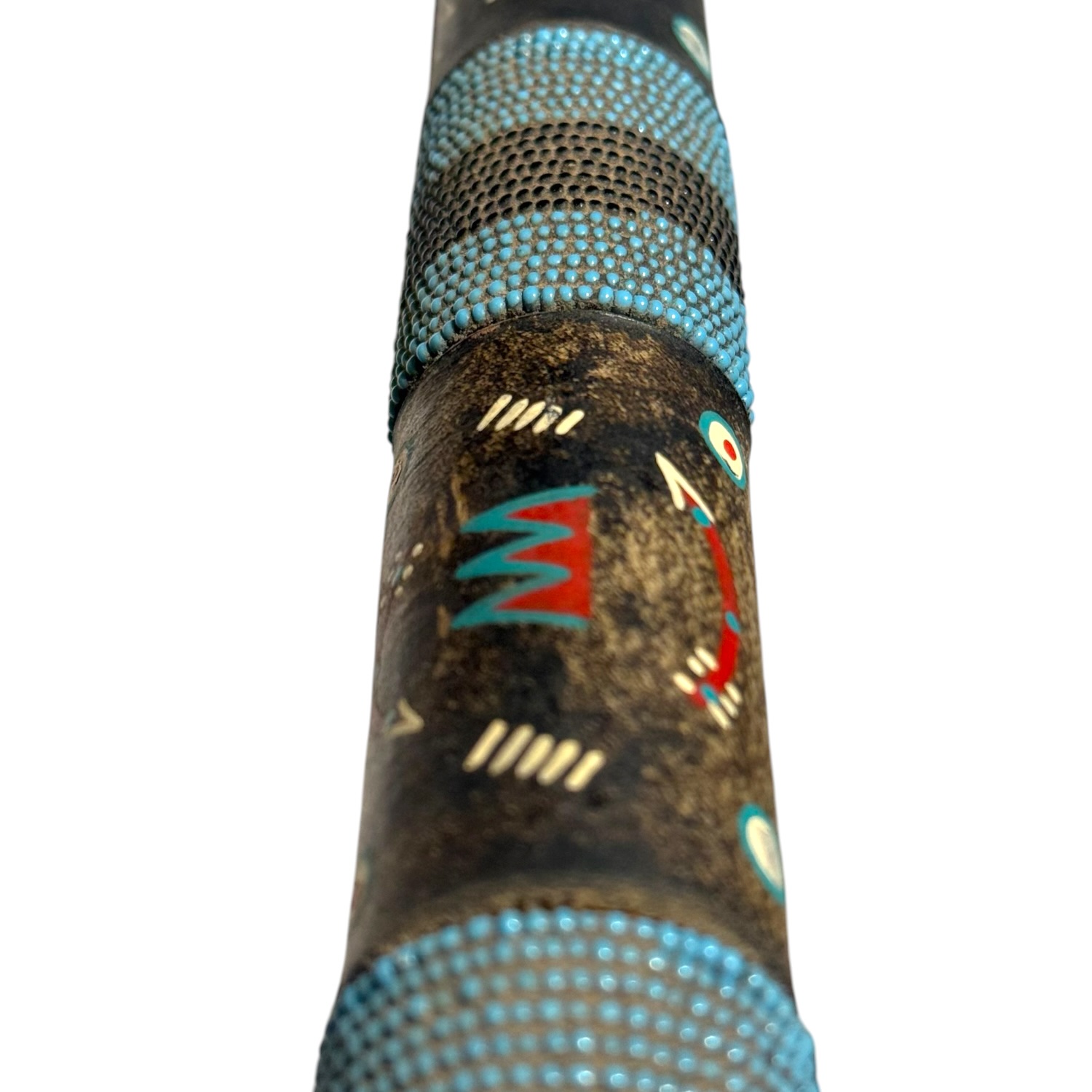
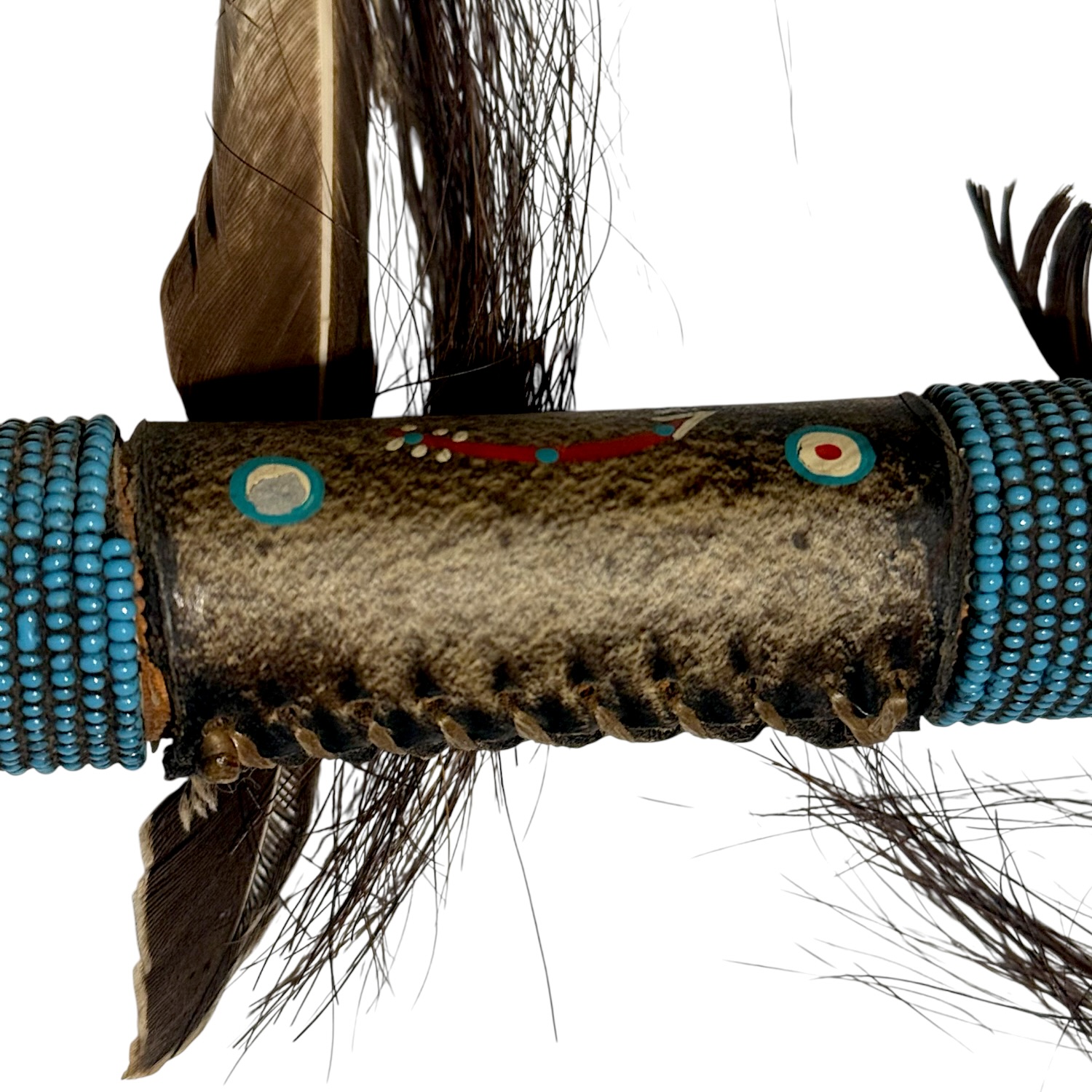
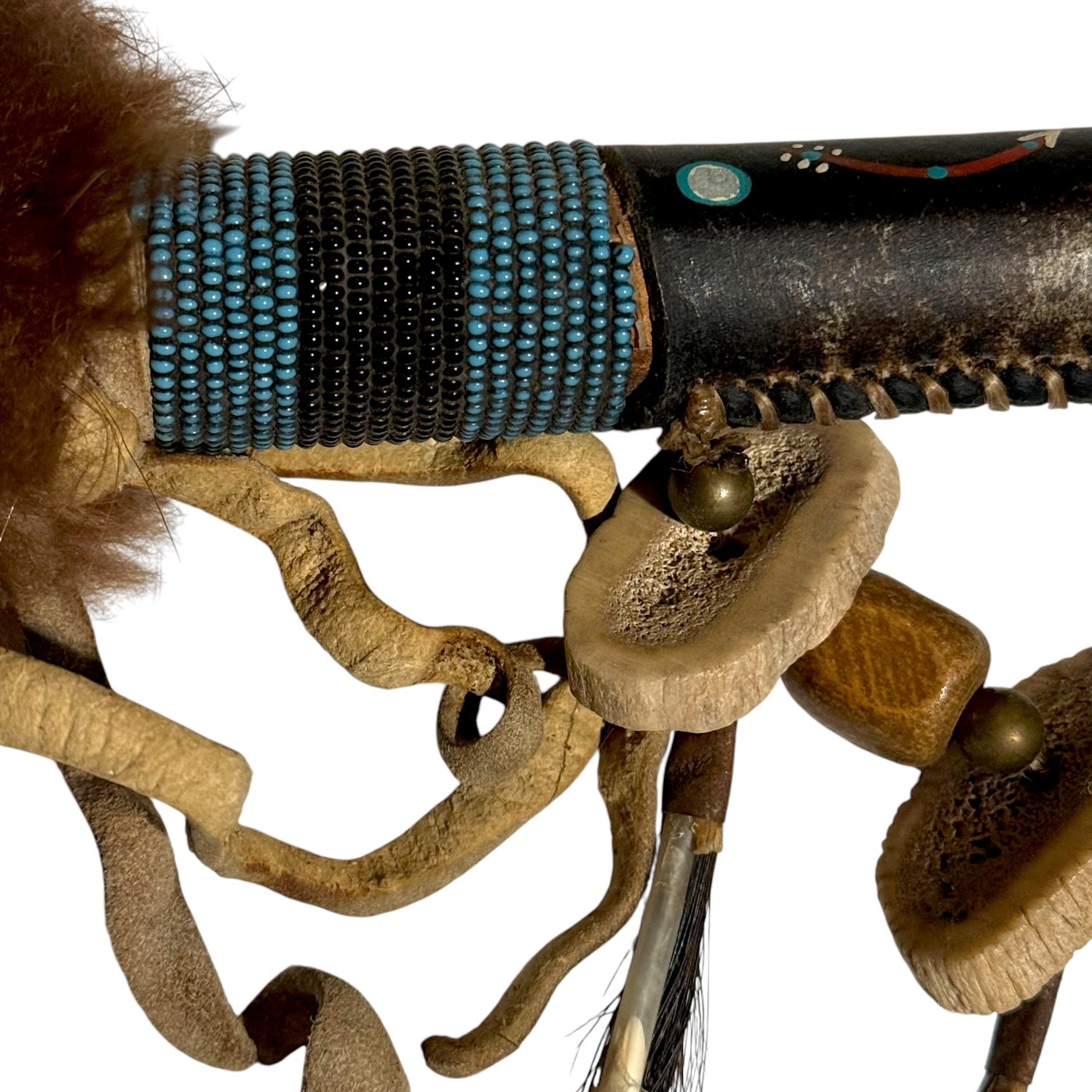
The wooden stem is wrapped at intervals with hundreds of tiny turquoise-blue and black glass seed beads, arranged in alternating bands. Between these sections are dark stitched hide panels painted with small geometric and abstract designs in turquoise, red, white, and cream.
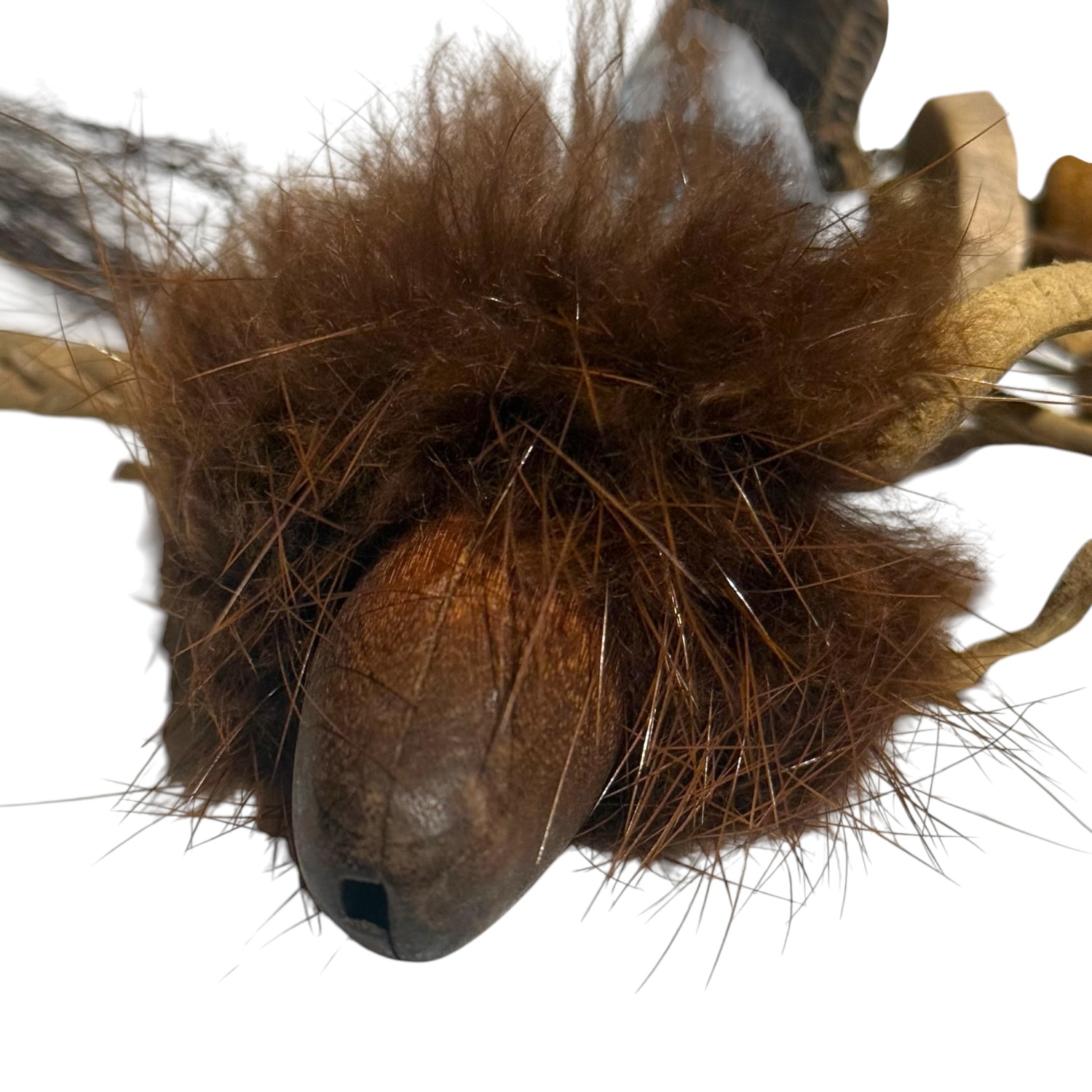
Animal fur is fitted around the stem near either end, while numerous suspended elements hang below the pipe.
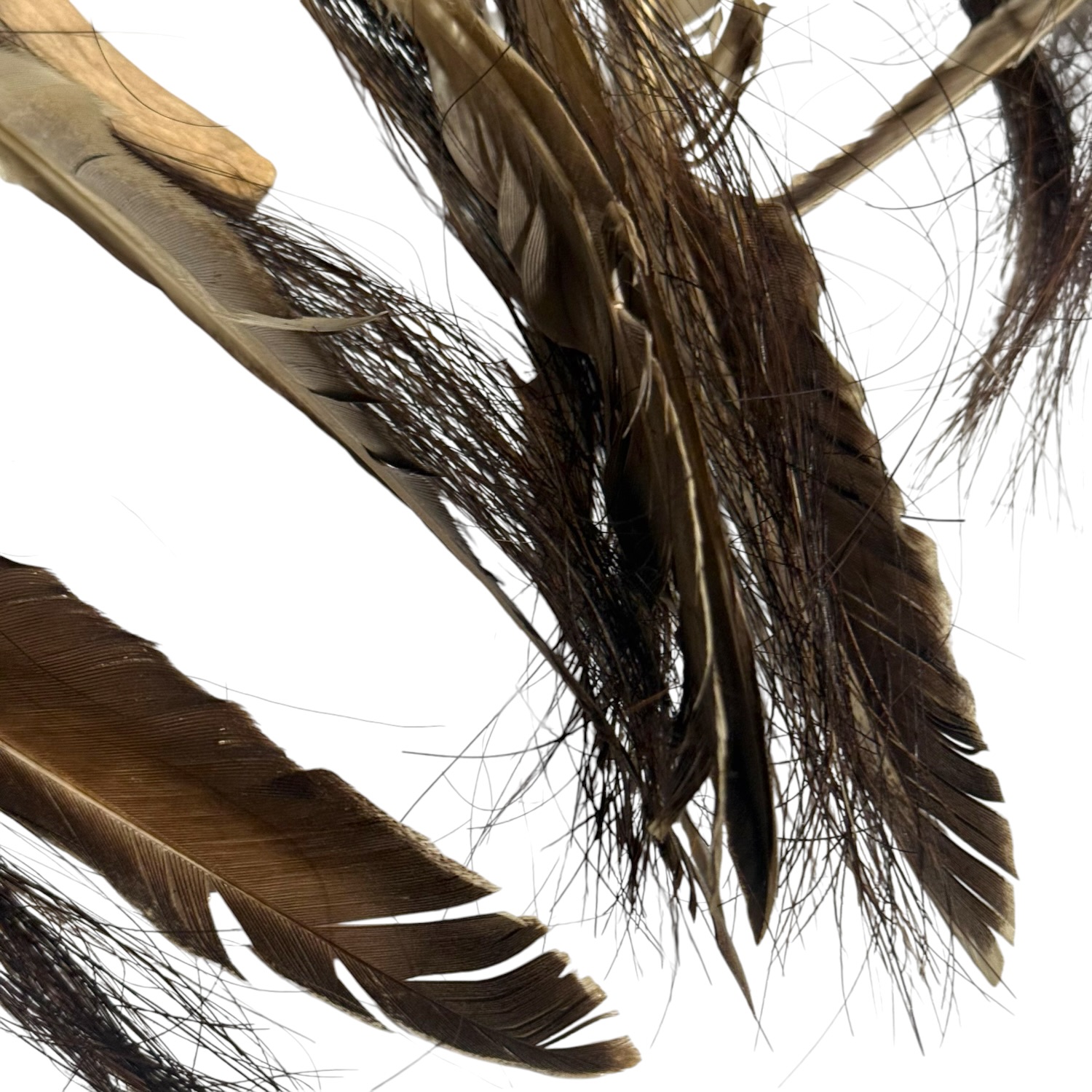
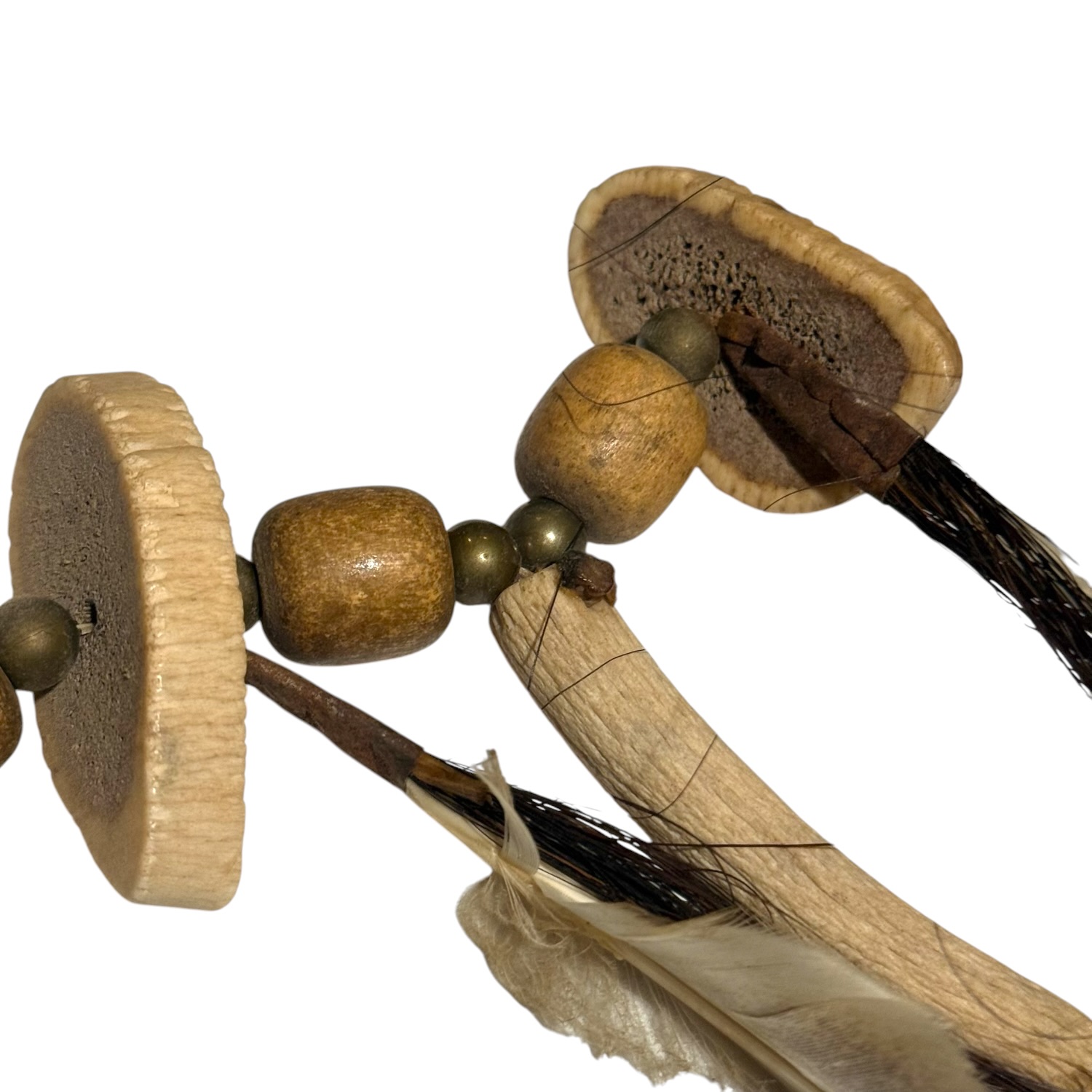
These include horsehair, feathers, circular antler sections, elongated bone or antler elements, wooden beads, metal beads, hide thongs, and other organic ornaments. Several of the large pale discs clearly retain the porous internal structure of antler, making the material itself an important visual feature.
A braided hide cord runs above the stem and allows the pipe to be carried or suspended.
The extraordinary combination of antler bowl, turquoise-and-black beadwork, painted hide panels, fur collars, horsehair drops, feathers, antler discs, wood and metal beads, and braided suspension cord closely corresponds with documented pipes attributed to Margaret Pino.
Because no surviving signature, certificate, or original sales documentation presently accompanies this particular example, the History of Smoke collection preserves the attribution as Margaret Pino, attributed, while recognizing the exceptionally close relationship to her known body of work.
Object Details
Artist: Margaret Pino, attributed
Culture: Navajo / Diné
Origin: Southwestern United States
Date: Late 20th century, probably c. 1980–2000
Object Type: Spirit / ceremonial-style smoking pipe
Overall Length: Approximately 24 in.
Total Bowl Height: Approximately 9 in.
Bowl: Deer antler
Stem: Wood
Beadwork: Turquoise-blue and black glass seed beads
Decoration: Painted and stitched hide panels
Attachments: Horsehair, feathers, fur, antler, probable bone, wooden beads, metal beads, and hide
Suspension: Braided hide cord
Condition: Very good vintage condition with natural aging and losses to some feather and organic elements
Antler Bowl
The antler bowl is the visual anchor of the pipe.
Rather than disguising the natural material, the maker incorporated the ridged exterior and irregular antler form directly into the design. The smoking chamber was hollowed into the upper portion, producing a striking contrast between the rough natural antler surface and the carefully finished beadwork of the stem.
Antler has a long history of use in Native North American material culture because of its strength, availability, and distinctive natural form.
Beadwork and Painted Hide
Bands of minute turquoise-blue and black seed beads wrap tightly around much of the wooden shaft.
Between these bands are sections of dark hide stitched around the stem and painted with small colored motifs. The combination of beadwork and painted hide creates alternating zones of texture and color across the pipe.
This patterned construction is particularly characteristic of documented Margaret Pino pipes.
Suspended Elements
Much of the pipe’s visual impact comes from the materials suspended beneath it.
Horsehair and feathers form long flowing drops, while cross-cut antler discs, elongated bone or antler components, wood beads, metal beads, and leather thongs create a complex network of hanging elements.
These materials respond to movement, giving the pipe a dramatically different appearance when carried or viewed from different angles.
Historical Context
This object belongs to a later Native American artistic tradition rather than the early historic Plains pipe forms of the 18th and 19th centuries.
Its design draws from a broader Native ceremonial smoking vocabulary in which long stems, beadwork, feathers, hair, hide, and natural materials could transform a smoking implement into an object of identity, symbolism, artistry, and display.
Margaret Pino’s work represents a late 20th-century continuation and reinterpretation of this visual tradition within the Southwestern Native arts world.
The result is neither a simple utilitarian pipe nor an anonymous reproduction. It is an elaborate Native-made art object in which smoking culture, natural materials, beadwork, and sculptural presentation intersect.
Collector Context
This large attributed Margaret Pino pipe is especially significant for collections focused on Native American smoking history, Navajo/Diné art, Southwestern craftsmanship, beadwork, antler objects, ethnographic pipes, and contemporary Native material culture.
Its exceptional 24-inch length, 9-inch antler bowl, extensive seed beadwork, painted hide, horsehair, feathers, fur, and suspended antler elements make it one of the most visually elaborate Native American pipes represented within the History of Smoke collection.

Reviews
There are no reviews yet.