
Burma, probably Shan State, circa 1850–1900
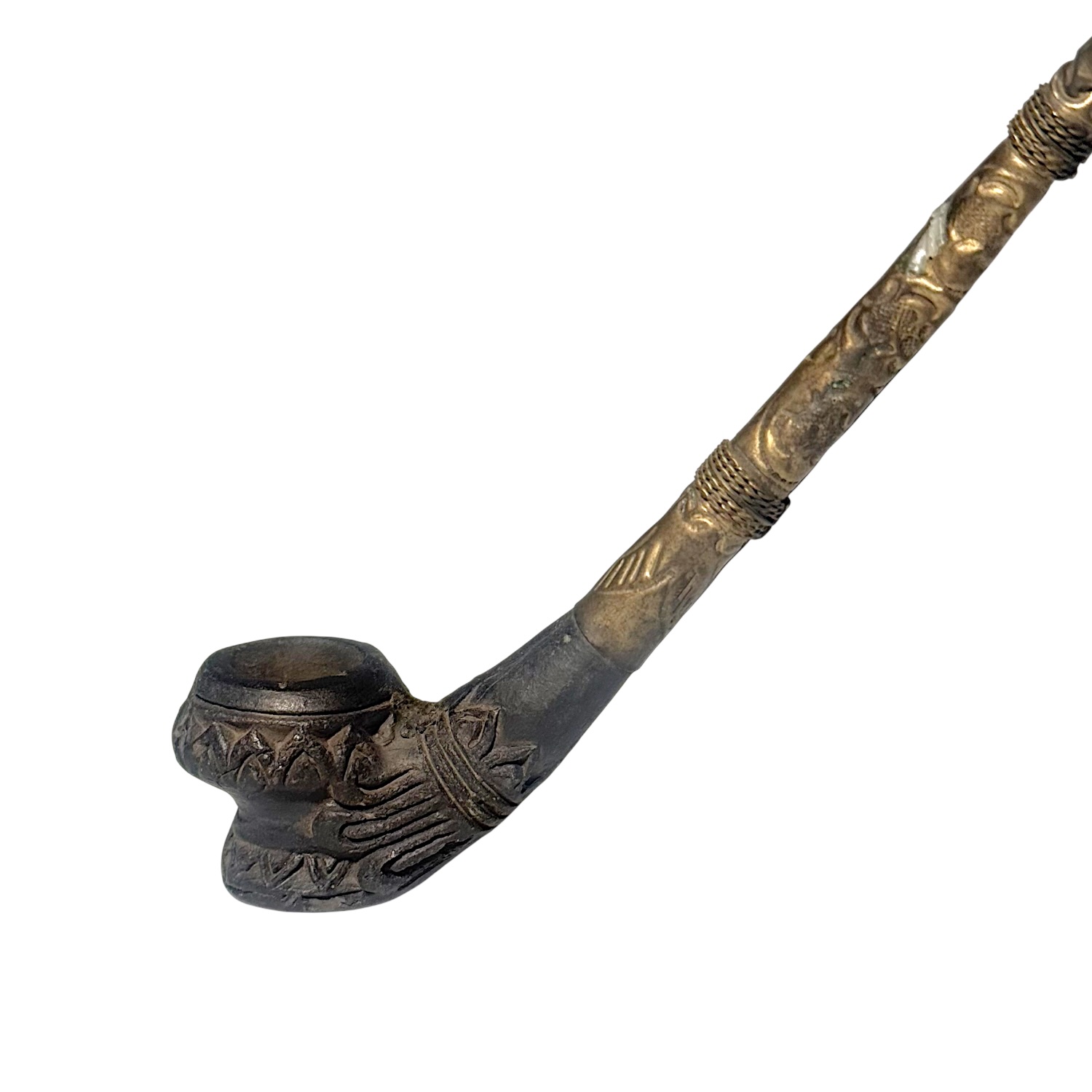
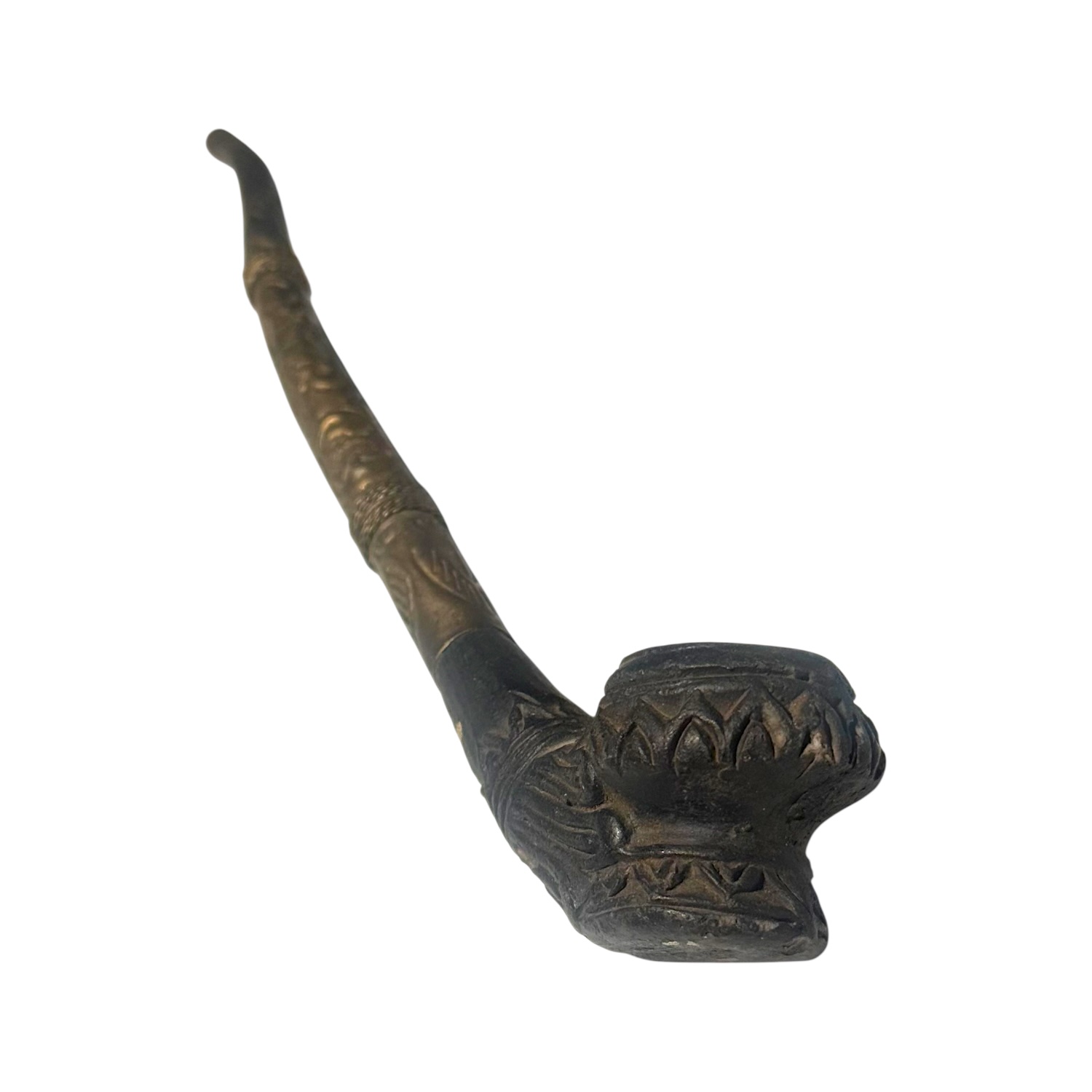
This elaborately decorated 19th-century Burmese smoking pipe combines a dark molded clay bowl with a long, extensively ornamented nickel-silver stem.
Measuring approximately 8 inches long, the pipe is compact but remarkably detailed, with nearly every visible surface incorporated into its decorative design.
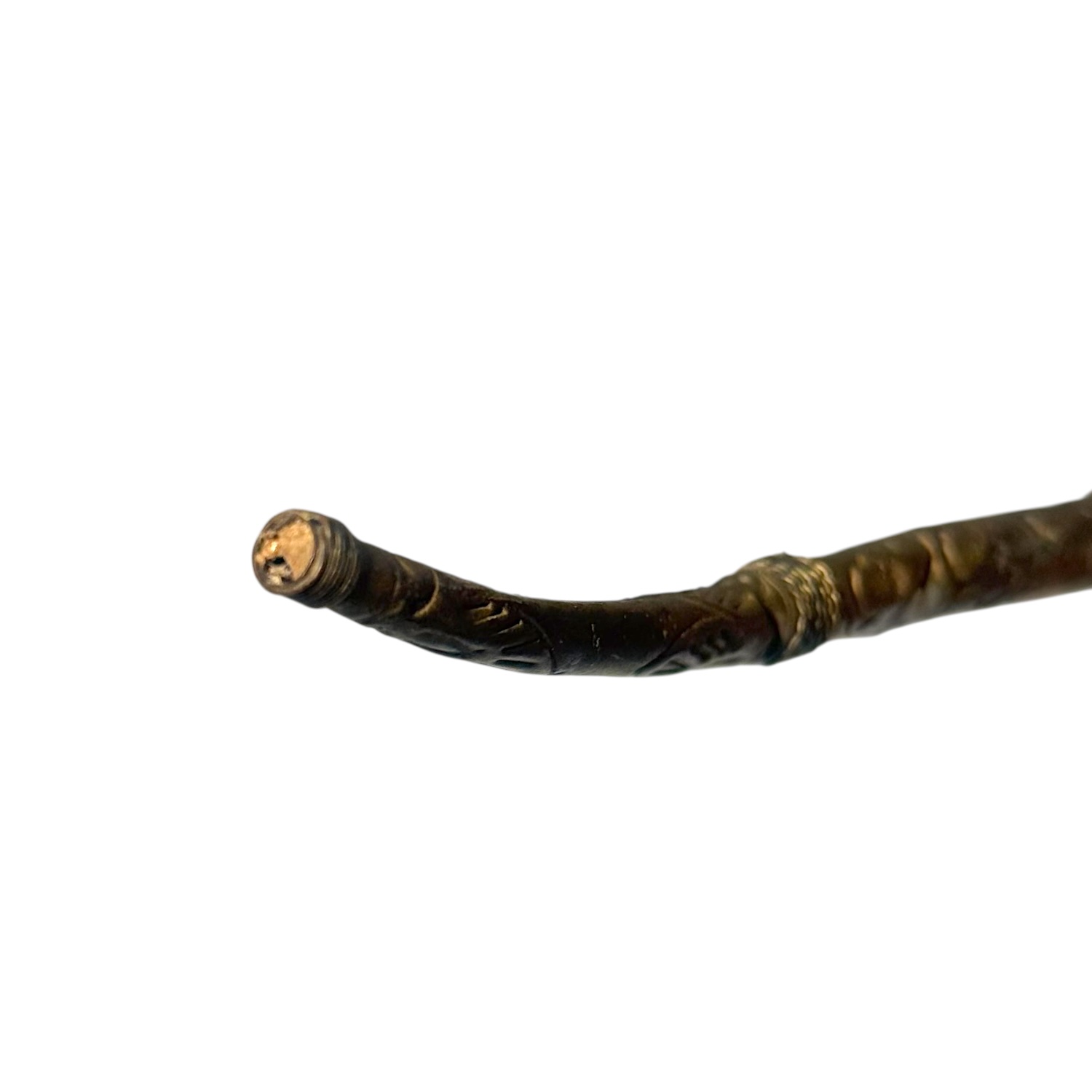
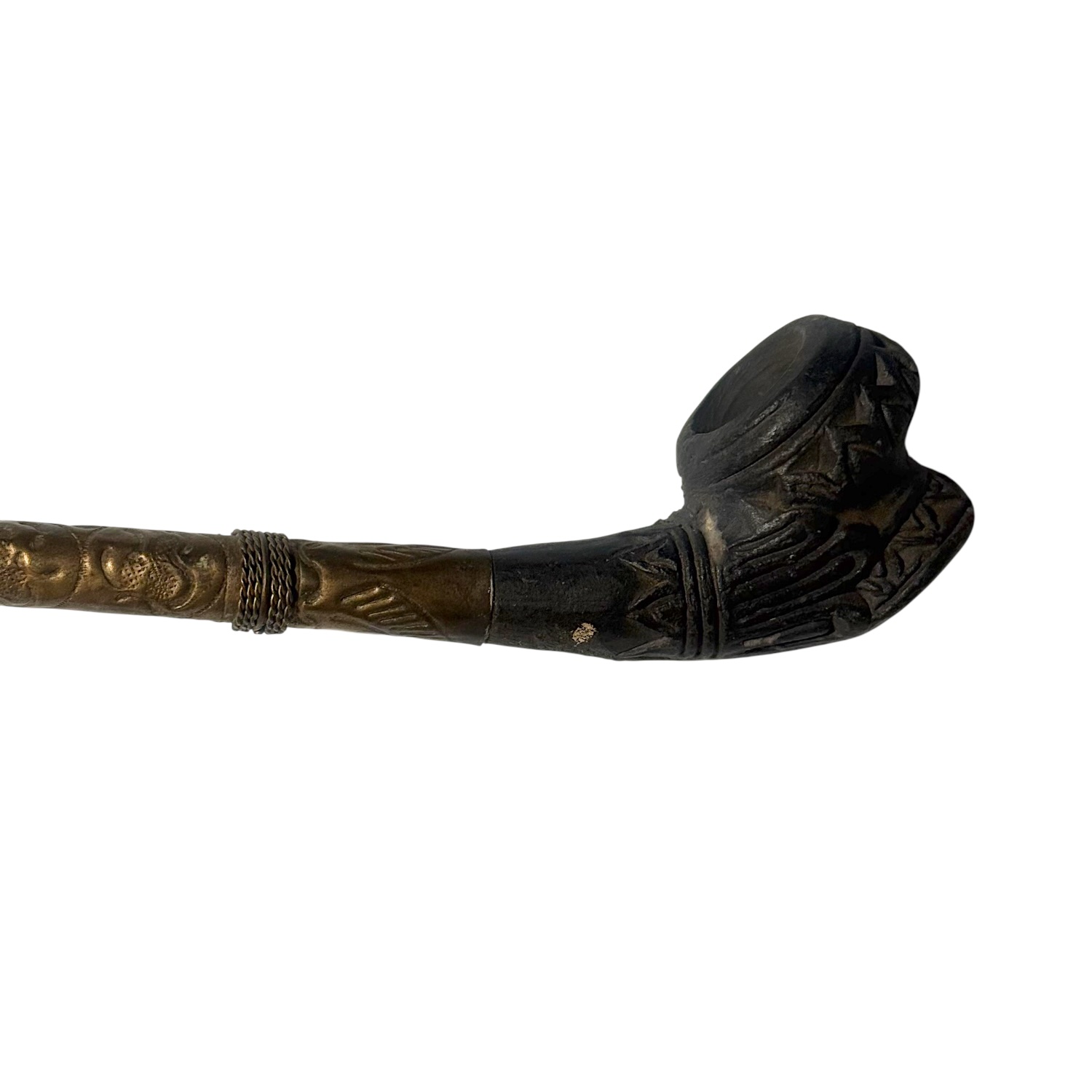
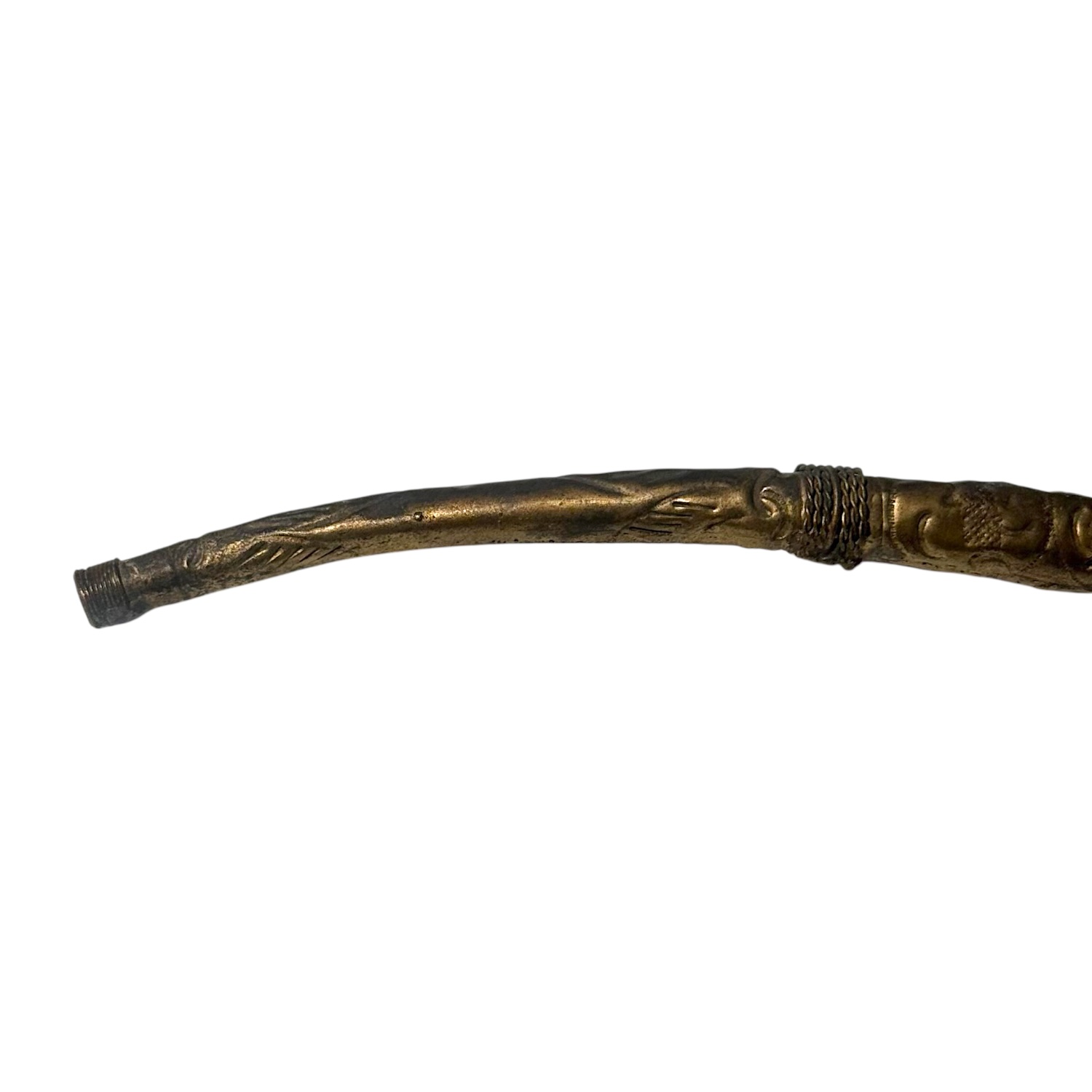
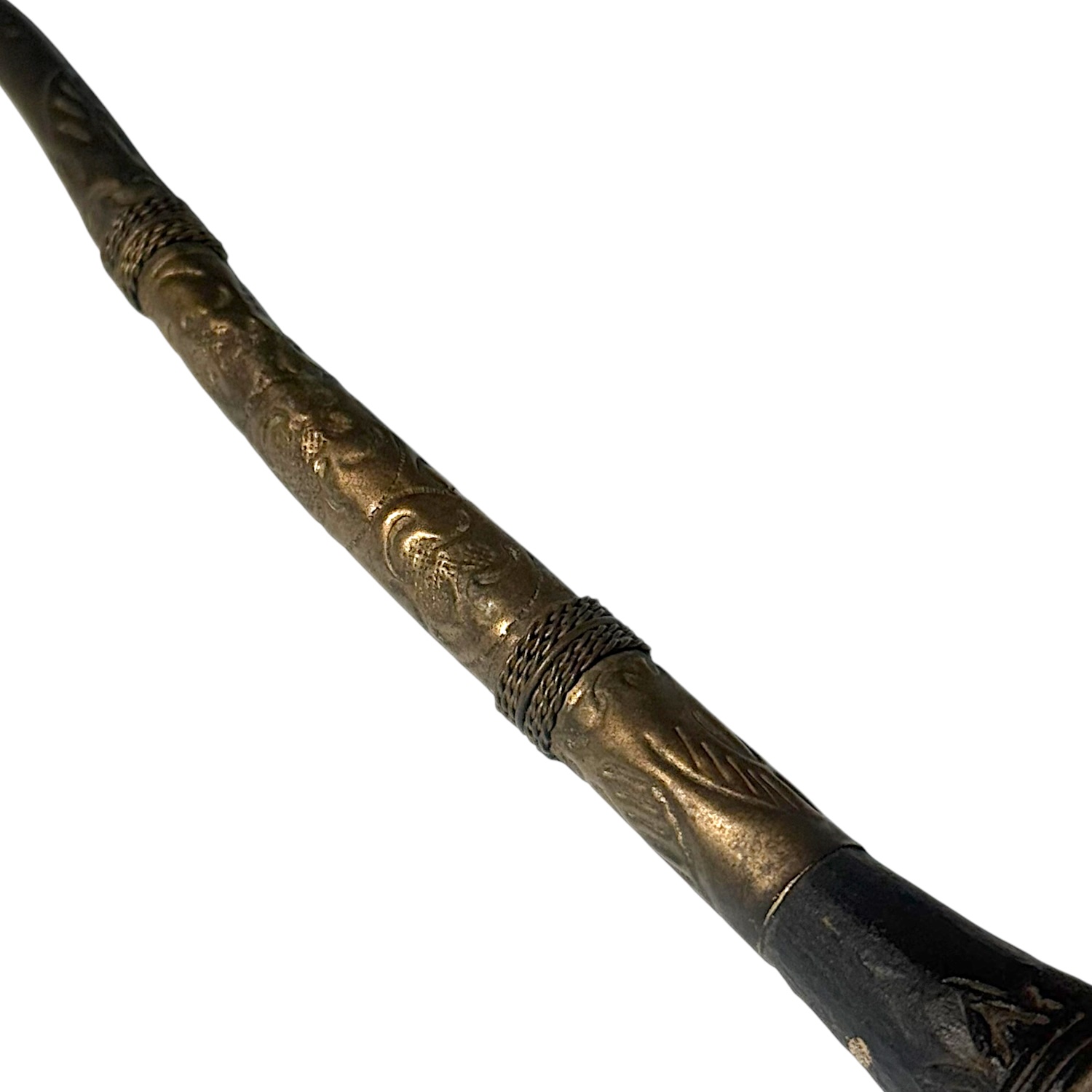
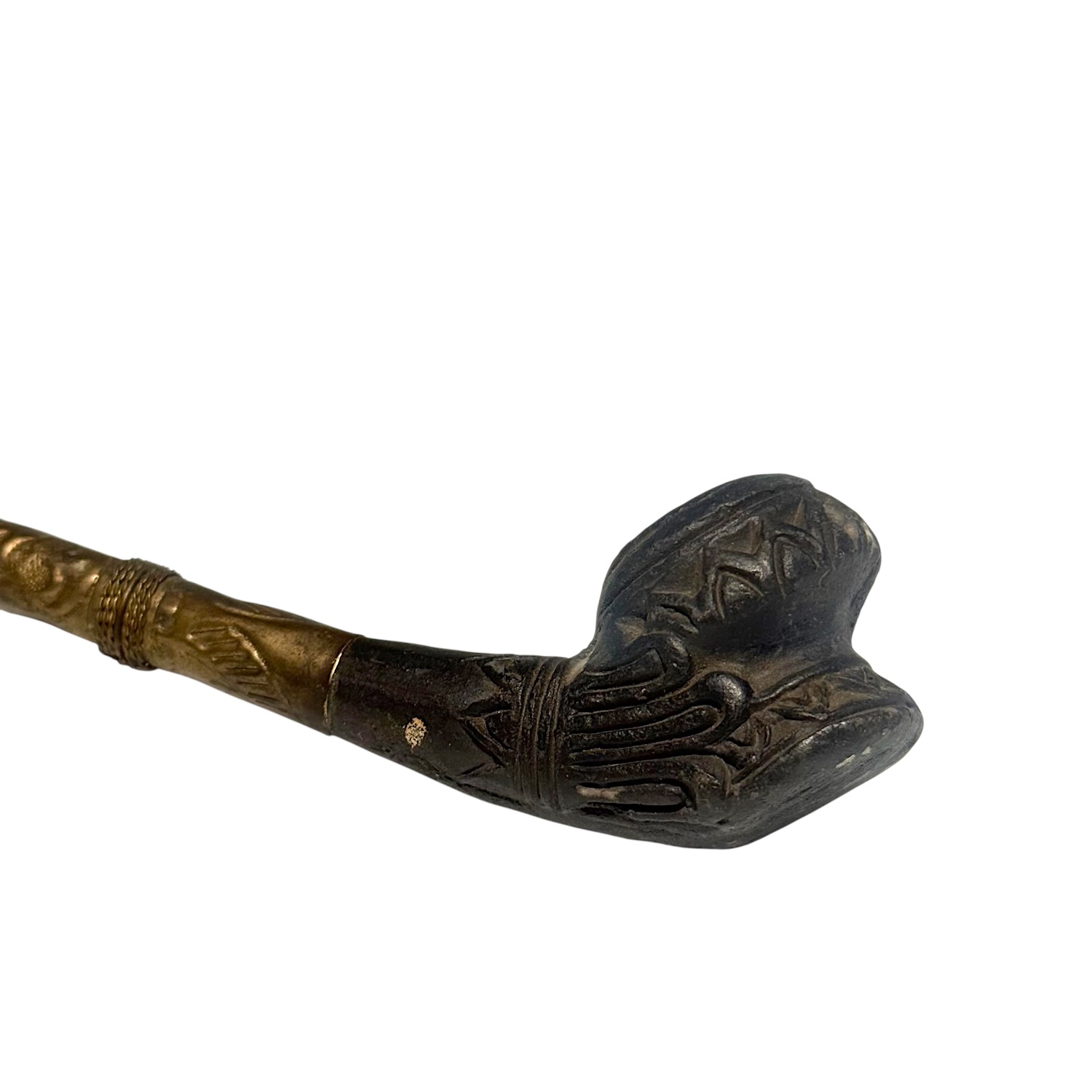
The approximately 2.5-inch bowl is formed from dark fired clay and covered with molded geometric, petaloid, and foliate ornament. A long metal stem extends from the bowl, decorated with repeating patterns and multiple tightly wound wire collars before terminating in a gently curved mouth end.
The form closely corresponds with documented smoking pipes from Burma, particularly the Shan region and the historic town of Yawnghwe, where numerous decorated clay pipe bowls were recorded during the late 19th and early 20th centuries. British Museum
Object Details
Date: Circa 1850–1900
Origin: Burma, present-day Myanmar
Region: Probably Shan State
Object Type: Smoking pipe
Use: Pipe for dry plant material
Material: Molded dark clay / ceramic with nickel-silver stem
Length: Approximately 8 in.
Bowl: Approximately 2.5 in.
Decoration: Molded geometric and petaloid designs, engraved and chased metalwork, applied wire collars
Condition: Good antique condition with visible historical use
Burmese Pipe Tradition
Smoking pipes were produced in a remarkable variety of forms across 19th-century Burma.
In the Shan States, pipes could combine locally produced ceramic bowls with elaborate metal fittings, creating objects that were simultaneously functional and decorative.
The historic Shan town of Yawnghwe, today generally known as Nyaungshwe, is particularly important in the surviving archaeological record.
The British Museum holds a substantial group of 19th-century pipe bowls recovered there, including examples specifically attributed to Shan State. Their ornament includes lotus molding, petaloid forms, grooves, and geometric decoration remarkably consistent with the broader visual language seen on this example. British Museum
Molded Clay Bowl
The bowl is formed from a dense, dark-fired ceramic body.
Although its surface can initially resemble carved stone, the material is consistent with the dark pottery and stoneware used for documented Burmese smoking pipes.
The bowl has been extensively molded or carved with repeating decoration.
Pointed petal-like forms encircle the upper chamber, while additional geometric and flowing motifs cover the lower body and shank.
Rather than leaving the bowl as a simple utilitarian vessel, the maker transformed nearly its entire exterior into an ornamental surface.
Lotus and Petaloid Decoration
The pointed motifs surrounding the bowl are particularly characteristic.
Documented 19th-century pipe bowls from Yawnghwe include lotus molding and petaloid ornament, suggesting that these forms belonged to an established regional decorative vocabulary rather than being purely abstract decoration. British Museum
On this example, repeated pointed forms create a rhythmic band around the chamber.
Similar motifs continue along the shank, visually connecting the ceramic bowl with the ornament of the metal stem.
Nickel-Silver Stem
The long metallic stem appears to be constructed from nickel silver, a copper-based alloy containing nickel and zinc rather than elemental silver.
Its aged surface has developed a warm brown-gold coloration with darker oxidation and isolated areas of greenish copper-alloy patina.
The stem is extensively decorated with impressed, chased, and engraved patterns.
Repeating foliate and geometric motifs run along its length, creating a continuous decorative surface from the bowl toward the mouthpiece.
Comparable 19th-century Burmese pipes survive with closely related clay bowls and nickel-silver stems, making the material attribution particularly consistent with known examples from the region.
Wire-Wrapped Collars
Several sections of the metal stem are encircled by tightly wound wire.
These collars divide the stem into individual decorative registers while also giving the pipe additional texture.
The wirework appears integral to the original design rather than a later repair.
The combination of molded ceramic, decorated metal, and wire binding gives the pipe a layered construction that becomes increasingly intricate when viewed closely.
Metalwork and Ornament
The metal stem was not treated simply as a functional airway.
Its entire length became another surface for ornament.
Raised forms, engraved lines, repeated geometric elements, and small textured fields cover the metal from the bowl junction almost to the mouth end.
This dense decoration gives the pipe a striking visual continuity: the patterns molded into the ceramic bowl transition naturally into those worked into the metal stem.
Shan State and Yawnghwe
Shan State occupies a large region of eastern Burma bordering areas of present-day Thailand, Laos, and China.
The region historically supported extensive cultural and commercial networks, and smoking implements formed part of its material culture.
Yawnghwe was an important Shan center, and archaeological finds there produced a particularly large body of historic smoking-pipe bowls.
British Museum records identify numerous examples from the town as 19th century, with some specifically recorded as having been made in Shan State. British Museum
One museum record also preserves an interesting historical observation: silver-mounted bowls were associated with more ornamental presentation, while copper fittings were used for ordinary pipes. This demonstrates that combining ceramic pipe bowls with elaborate metal components was an established part of the local tradition. British Museum
Functional Construction
Despite its extensive ornament, the object remains clearly functional.
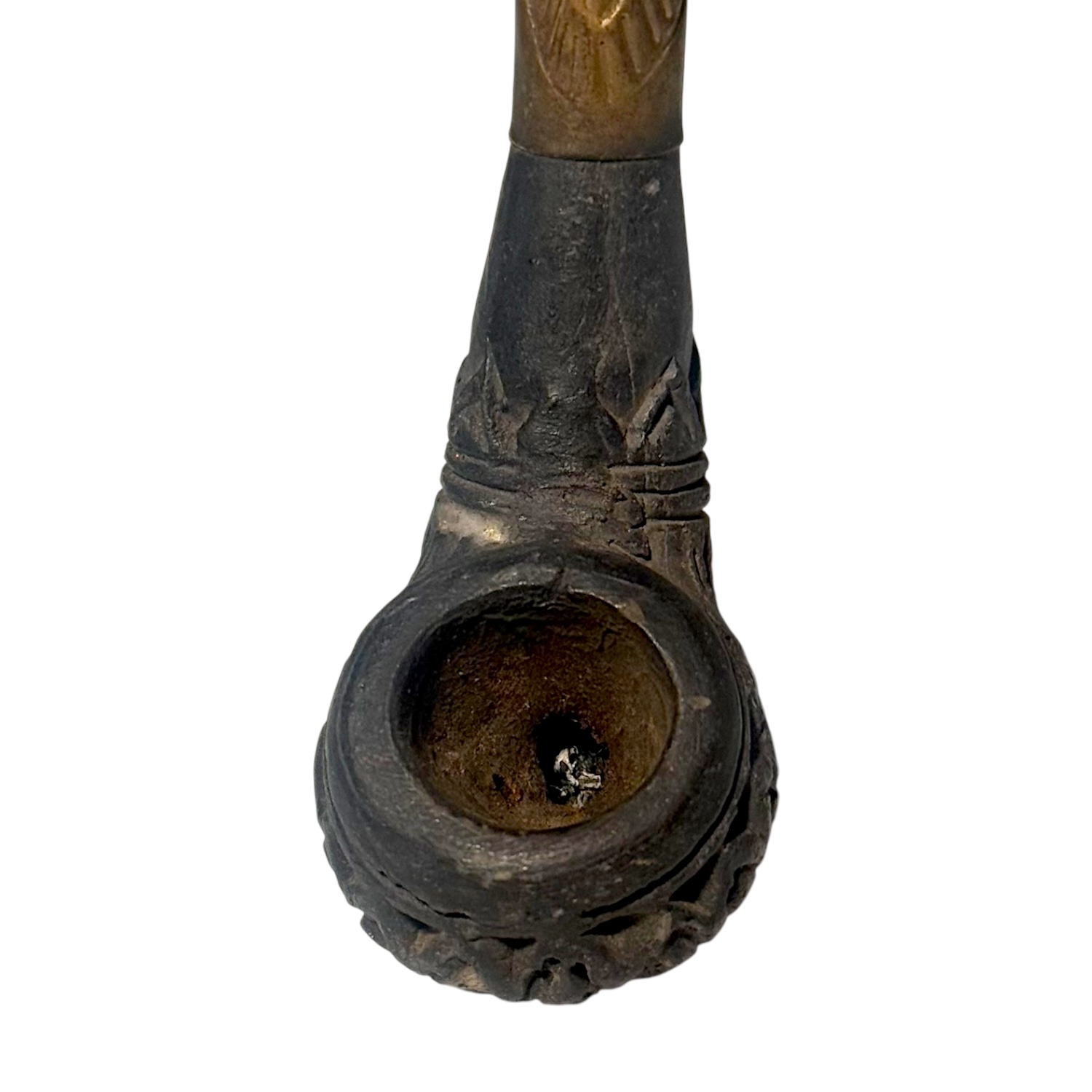
The open bowl contains a deep chamber with an airway at its base leading directly into the stem.
Dry plant material would have been placed within the chamber and ignited, with smoke traveling through the internal passage and along the narrow metal stem.
The long curved stem provided distance between the heated bowl and the smoker while also creating the pipe’s distinctive silhouette.
Evidence of Historical Use
The interior chamber displays substantial darkening and accumulated residue consistent with repeated historical use.
The surrounding ceramic surface shows additional wear, while the metal stem has developed extensive patination and oxidation.
Small losses, scratches, variations in surface color, and wear to raised decoration all contribute to the object’s historic character.
Rather than appearing preserved solely as an ornamental object, the pipe retains clear evidence that it served its original practical function.
19th-Century Burmese Decorative Arts
One of the most compelling features of this pipe is the amount of craftsmanship invested in an everyday personal object.
Metalworkers and ceramic makers throughout Burma developed rich decorative traditions involving:
- Molded ceramic ornament
- Engraved metalwork
- Repoussé and chased decoration
- Wirework
- Floral and foliate motifs
- Geometric patterning
- Lotus imagery
On this pipe, several of those traditions intersect in one compact object.
The resulting piece functions not only as a historical smoking implement but also as an example of 19th-century Burmese decorative craftsmanship.
Condition
The pipe remains in good antique condition considering its age and evidence of historical use.
The ceramic bowl retains extensive original molded ornament, with age-related wear, surface variation, deposits, and small losses.
The interior displays considerable smoking residue and darkening.
The nickel-silver stem retains extensive decorative detail, with oxidation, patination, scratches, and wear throughout. The wire-wrapped collars remain present.
The mouth end shows age-related wear and appears to retain its original functional opening.
Please review all photographs carefully for a complete record of condition.
Collector Context
This piece may appeal to collectors of:
- Burmese decorative arts
- Shan material culture
- Antique smoking pipes
- Southeast Asian antiques
- Historic smoking artifacts
- Nickel-silver metalwork
- Asian ceramics
- 19th-century ethnographic objects
- Antique tobacciana
- Myanmar cultural objects
Its combination of a dark molded clay bowl, elaborate nickel-silver stem, wirework, extensive ornament, and strong documented parallels to 19th-century Burmese pipes makes it an especially compelling surviving artifact of Southeast Asian smoking culture.
Reviews
There are no reviews yet.