How a small community of Chicago pipe collectors, remarkable enthusiasts, and a shared passion for smoking history helped create one of the world’s most influential pipe-collecting traditions.
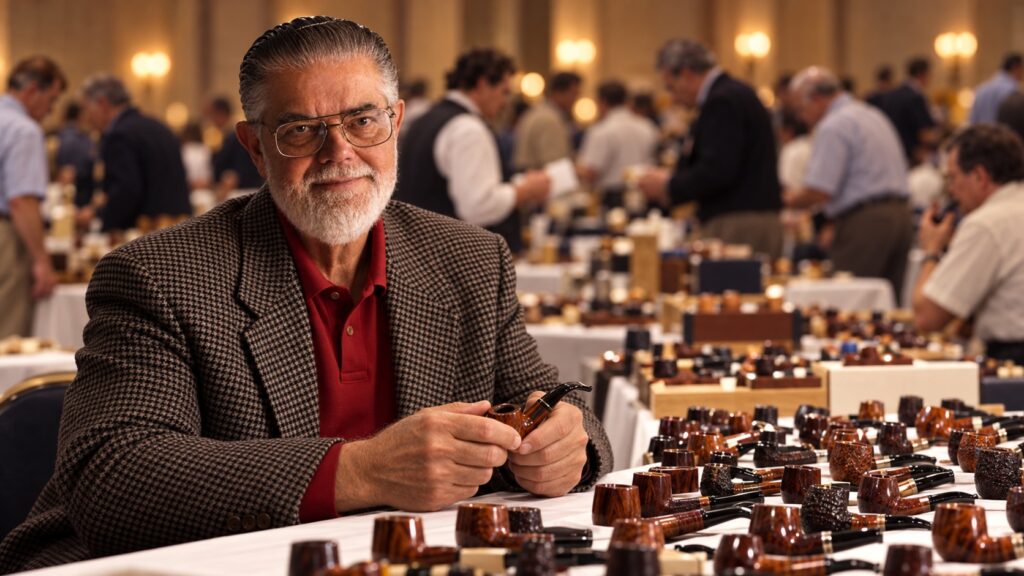
In 1983, Frank Burla and his wife Annette transformed the first floor of their Illinois home into an exhibition of antique smoking pipes. Furniture was moved aside, the kitchen and laundry room became display spaces, and collectors arrived to admire an extraordinary assortment of historical pipes. The artifacts were reportedly valuable enough that armed security guards were present.
Burla, then an FBI special agent, had developed a remarkable passion for collecting smoking pipes. His personal collection would eventually grow to a reported 30,000 examples, representing centuries of craftsmanship and cultures from around the world.
What began as a gathering of dedicated enthusiasts would help lay the groundwork for something far greater.
Today, the Chicagoland Pipe Collectors Club (CPCC) is one of the best-known organizations in the international pipe community, with more than 300 members worldwide and a legacy that includes the Chicago International Pipe Show.
Its history, however, began long before the first international exhibition.
Before the Club: Chicago’s Early Pipe-Collecting Community
Chicago had already developed a thriving tobacconist culture by the middle of the twentieth century.
Established establishments such as Iwan Ries & Co., Cellini Pipe & Cigar Shop, and Larson’s Pipe & Cigars provided places where pipe smokers could discover new tobaccos, purchase handcrafted pipes, and exchange knowledge with fellow enthusiasts.
These shops became informal meeting grounds for collectors who shared an interest in the craftsmanship, history, and artistry of smoking pipes.
In 1963, Diana Silvius established Up-Down Tobacco Shop in Chicago, which became another important gathering place for the city’s pipe community. In 1977, she organized a customer club called the Sons of Briar, with Paul Bender serving as its president.
Other collecting circles were also developing throughout the Chicago suburbs.
A North Side group gathered around Davis Pipe & Tobacco in Evanston, while a South Side group met at LaTours Pipe Shop in Homewood.
These early gatherings were relatively informal. Collectors brought pipes from their personal collections, discussed manufacturers and historical examples, traded pieces, and shared their knowledge with one another.
Gradually, friendships developed between members of the different groups, creating the foundation for a more organized collecting community.
The Birth of the Chicagoland Pipe Collectors Club
During the 1980s, collectors from Chicago’s North and South Side circles began meeting together more regularly.
Among the individuals involved were Ed Lehman, Al Smith, Judd Perlson, Chuck Rio, Herman Schobel, and Michael “Mike” Reschke.
What had begun as separate groups of enthusiasts gradually developed into a unified organization dedicated to pipe collecting and appreciation.
The United Pipe Clubs of America identifies 1993 as the founding year of the modern Chicagoland Pipe Collectors Club, while the organization’s historical records establish its formal nonprofit incorporation in 1995.
Mike Reschke became the club’s first president.
An accomplished collector, Reschke was particularly known for his extensive collection of Parker pipes, a historic English pipe brand closely associated with Dunhill.
He would remain one of the organization’s central figures for decades, serving as president for most of the period until his death in 2016 and contributing extensively to the development of its international exhibition.
The formation of the CPCC gave Chicago’s pipe enthusiasts something more permanent than occasional informal gatherings.
It provided an organization through which collectors could exchange artifacts, share research, organize exhibitions, and establish relationships with fellow enthusiasts far beyond Illinois.
Yet one individual would have an especially profound influence on what the organization eventually became.
Frank Burla: The Collector Who Dreamed Bigger
Frank Burla was born in Chicago Heights, Illinois, in 1943. A Vietnam veteran and former FBI special agent, he also studied Greco-Roman history at Loyola University.
His interest in historical artifacts eventually developed into an extraordinary collection of smoking pipes.
Burla collected far beyond the familiar briar pipes associated with modern tobacconists. His interests included antique meerschaum pipes, Indigenous American pipes, historical European examples, and smoking artifacts from Asia and other regions.
To Burla, a pipe represented much more than an instrument for smoking. It could reveal the artistic traditions, materials, trade relationships, and social customs of the people who made and used it.
His collection became so extensive that his home effectively functioned as a private pipe museum.
In the documentary Father the Flame, Burla humorously recalled that his collection had grown from approximately 300 pipes when he married to around 30,000, joking that he had simply forgotten to sell them.
The 1983 exhibition hosted by Frank and Annette Burla attracted notable collectors and researchers, including Ben Rapaport, Herb Ratner, Judd Perlson, and other respected figures in pipe collecting.
During the same period, Dennis Di Piazza organized a separate Briar Pipe Show associated with the Chicago-area collecting community.
These early exhibitions occasionally shared venues and participants, helping demonstrate that there was sufficient enthusiasm to support a larger, more ambitious gathering.
By the middle of the 1990s, Burla would be presented with the opportunity to bring that vision to an international audience.
Ten Collectors, $1,000, and the Birth of the Chicago Pipe Show
In 1994, following his retirement from the FBI, Burla was approached about organizing a major exhibition under the Chicagoland Pipe Collectors Club.
He agreed, but with two important requirements: a dependable team of volunteers and sufficient funding to organize the event.
The initial financial goal was remarkably modest.
Ten collectors contributed $100 each, raising the $1,000 needed to begin organizing the show.
Among those involved were Frank Burla, Mike Reschke, Bill Amato, Chuck Rio, Ed Lehman, Al Smith, Judd Perlson, John Goldberg, Herman Schobel, and John Loring.
In 1996, the first CPCC-sponsored Chicago International Pipe and Tobacciana Show was held at the Clarion International Quality Inn in Rosemont, Illinois.
The inaugural exhibition shared space with the National Pocket Lighter Society, another organization dedicated to collecting historical smoking accessories.
It was an appropriate partnership. Both groups appreciated the craftsmanship, design, and history of objects associated with smoking culture.
The event proved successful, but not without complications.
According to a historical account published by Smokingpipes, the hotel declined to host the pipe show again because of the expense involved in cleaning and fumigating the ballroom afterward.
Finding venues willing to accommodate pipe-smoking gatherings became one of the organization’s continuing logistical challenges.
Nevertheless, the exhibition continued.
After its inaugural year in Rosemont, the show moved to the Ramada Inn in Harvey, Illinois, beginning in 1997, and subsequently to Indian Lakes Resort in Bloomingdale in 2001.
What had started with a modest collection of tables and enthusiasts was rapidly becoming an internationally recognized gathering.
From Chicago to the World
A major turning point arrived in 2002, when the Chicago International Pipe Show moved to Pheasant Run Resort in St. Charles, Illinois.
The larger venue provided extensive exhibition space, accommodations, and dedicated areas where attendees could gather socially.
Pheasant Run would remain the show’s home through 2019, becoming closely associated with its most celebrated years.
Pipe makers, collectors, tobacco blenders, historians, and dealers began traveling to Chicago from across the United States and overseas.
European artisans and collectors became regular participants, followed by an expanding presence of Japanese pipe makers during the early 2000s and Chinese collectors in the following decade.
Burla worked tirelessly to cultivate these international relationships, contacting manufacturers, arranging introductions, and personally encouraging respected craftspeople to attend.
Club member Rex Poggenpohl also played an important role in recruiting international artisans, traveling to Europe to establish relationships with pipe makers.
The exhibition gradually became more than a place to buy and sell collectible pipes.
Visitors could meet the people responsible for creating their favorite pipes, examine extraordinary historical examples, participate in workshops, and exchange knowledge that might otherwise have remained confined to private collections.
According to Sykes Wilford, founder of Smokingpipes.com, the Chicago show helped transform pipe exhibitions from primarily collector-oriented trading events into larger gatherings that connected makers, merchants, and enthusiasts directly.
The resulting relationships influenced the development of modern artisan pipe making, introducing collectors to independent craftspeople and giving emerging makers access to an international audience.
For many participants, the Chicago show became an annual pilgrimage.
Preserving Craftsmanship and Recognizing Excellence
The Chicagoland Pipe Collectors Club’s influence extends beyond the success of its international exhibition.
The organization has also helped preserve and celebrate the knowledge of individuals who have made important contributions to pipe collecting, manufacturing, restoration, and historical research.
In 1998, the club began presenting its Doctor of Pipes honors, recognizing individuals who had demonstrated exceptional dedication to the pipe community.
The first recipients were Tom Dunn, longtime publisher of The Pipe Smokers Ephemeris, and Frank Burla.
Subsequent honorees have included respected collectors, historians, manufacturers, and tobacco specialists such as Ben Rapaport, Peter Stokkebye, Mike Reschke, and Mark Irwin.
In 2017, the organization introduced its Master of Pipes recognition, honoring influential figures in the craft and broader pipe industry.
The awards reflect an important aspect of the club’s identity.
While pipe collecting can involve valuable artifacts and rare examples, the preservation of specialized knowledge is equally significant.
Understanding the history of an antique pipe, recognizing the work of a particular artisan, or learning traditional restoration techniques often depends upon the experience of collectors and craftspeople who have spent decades studying their subjects.
By bringing these individuals together, the CPCC has helped create opportunities for that knowledge to be shared with new generations.
Challenges, Change, and the End of an Era
The club’s history has not been without setbacks.
Changing indoor-smoking regulations created new challenges for events that had traditionally allowed attendees to smoke together indoors. Finding accommodating venues became increasingly difficult, requiring organizers to adapt their exhibitions and social arrangements.
The COVID-19 pandemic brought another major disruption.
The 2020 Chicago Pipe Show was canceled, and the closure of Pheasant Run Resort brought an end to the venue that had hosted the exhibition for nearly two decades.
Then, on October 5, 2021, Frank Burla passed away at the age of 78.
His death represented the loss of one of the international pipe community’s most influential organizers and collectors.
Burla had dedicated decades of his life to building relationships between enthusiasts and helping establish Chicago as a central gathering place for the international pipe world.
His legacy, however, extended far beyond the exhibition itself.
The friendships, professional relationships, and collecting traditions cultivated through his efforts continued under the stewardship of the Chicagoland Pipe Collectors Club.
The show eventually found a new home at the Hyatt Regency O’Hare in Rosemont, returning to the community where its first modern international exhibition had taken place in 1996.
Thirty Years Later: The Club Today
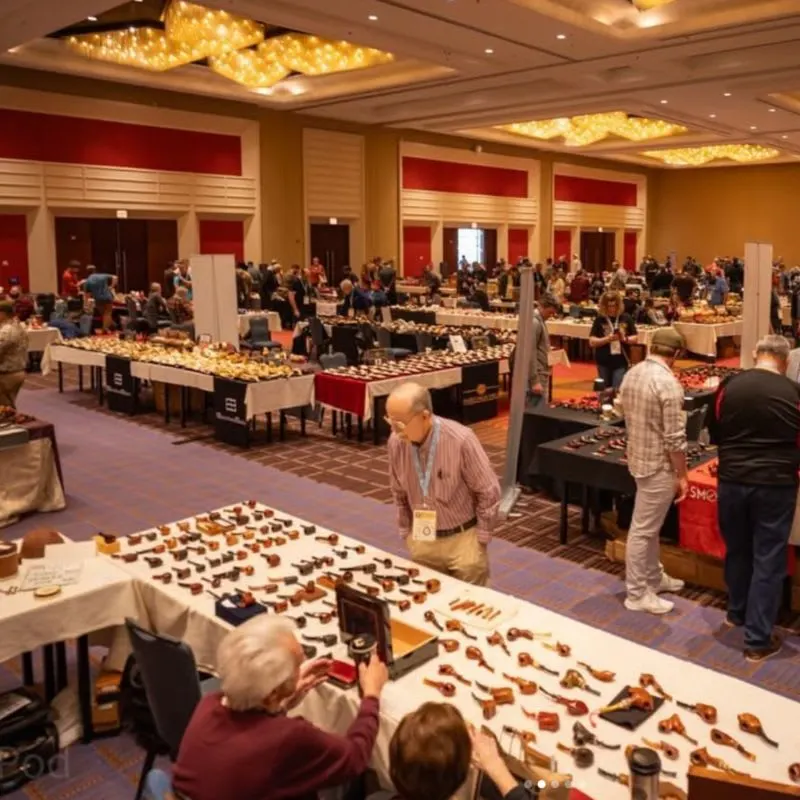
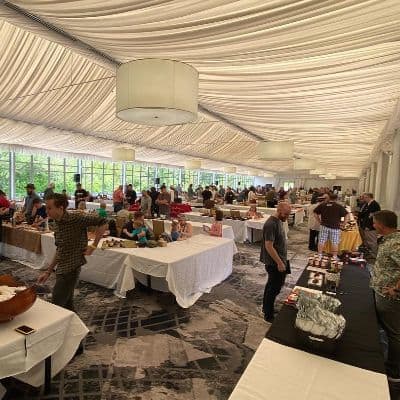
In 2026, the Chicago International Pipe Show celebrated the thirtieth anniversary of its inaugural 1996 exhibition.
The milestone reflected three decades of international gatherings, changing generations of collectors, and the lasting dedication of the volunteers who made the event possible.
The Chicagoland Pipe Collectors Club continues to report more than 300 members worldwide.
Its published leadership includes president Tim Garrity and vice president and show director Ronnie Pecorini, alongside additional officers and board members responsible for organizing club activities.
Beyond the international exhibition, the organization maintains regular meetings and social events where members exchange information, examine pipes, and explore different tobacco blends.
Recent meetings have been hosted at Arlington Pipe & Cigar Lounge in Arlington Heights, Illinois, while other gatherings have included special presentations, seminars, and visits to historic Chicago tobacconists.
These smaller events continue the original purpose of the club: bringing enthusiasts together to exchange knowledge, develop friendships, and appreciate the craftsmanship and history of smoking pipes.
A Legacy Built by Collectors
The story of the Chicagoland Pipe Collectors Club is remarkable not simply because of the size of its international exhibition, but because of the modest circumstances from which it developed.
Small groups of collectors meeting in tobacco shops eventually formed an organization with members around the world. A private exhibition inside Frank Burla’s home helped inspire a gathering that would bring internationally respected artisans and collectors to Chicago. And an initial investment of just $1,000 contributed to a tradition that has endured for thirty years.
Throughout that history, the most important figures were not only the individuals who organized major exhibitions, but also the collectors who brought their pipes to meetings, shared their research, volunteered their time, and introduced newcomers to the hobby.
From the early North and South Side gatherings to the modern Chicago International Pipe Show, the organization’s greatest achievement has been connecting people through a shared appreciation for craftsmanship, collecting, and smoking history.
What began with a few enthusiasts gathering around their pipes ultimately became a tradition that connected collectors across the world.
And decades after those first informal meetings, that tradition continues.
The Chicagoland Pipe Collectors Club maintains its official website at ChicagoPipeClub.com, with information about club activities and membership. Historical information about the Chicago International Pipe Show is available at ChicagoPipeShow.com.
Additional historical research draws upon Chuck Stanion’s The Chicago Pipe Show, his memorial article A Giant Passes: Frank Burla, the United Pipe Clubs of America, and Smokingpipes’ 2026 anniversary feature.
Published by History of Smoke as part of its ongoing documentation of tobacco history, pipe collecting, and the people and institutions preserving historical smoking traditions.