
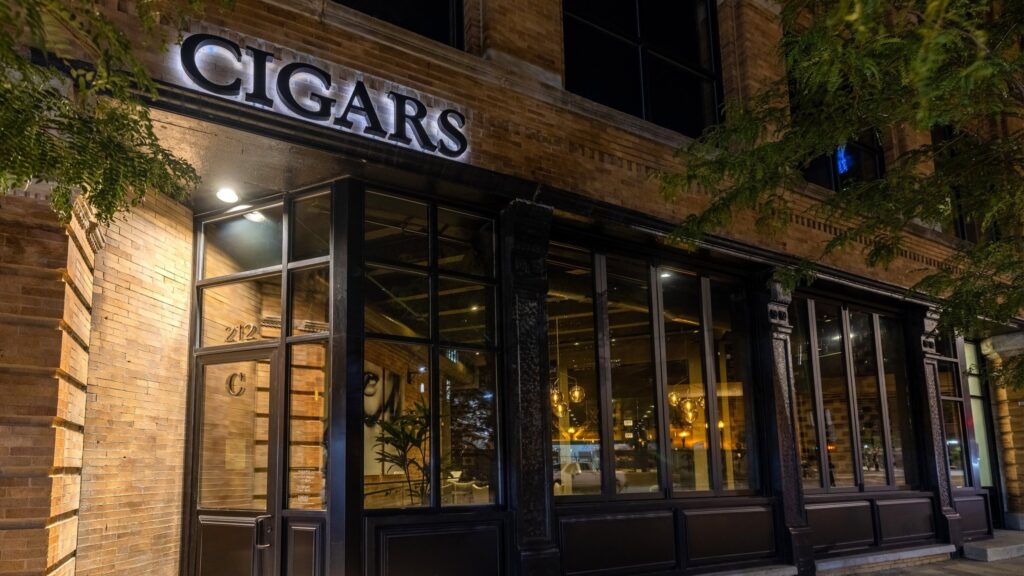
Exploring Chicago’s remarkable private cigar club, its old-world atmosphere, and the traditions that inspired its creation.
By Mike Anthony Vallone | History of Smoke
For generations, cigar lounges and smoking rooms have been places of conversation, relaxation, and good company. From the grand gentlemen’s clubs of nineteenth-century Europe to the private smoking establishments of modern America, these spaces have developed a fascinating history of their own.
During a recent visit to Chicago, I had the pleasure of exploring The Clayton, a remarkable private cigar club that carries much of that tradition into the present.
Located at 212 North Canal Street, near the Chicago River, The Clayton combines modern luxury with an atmosphere reminiscent of the historic smoking rooms of an earlier era.
I was fortunate enough to meet Clay Wilson, one of the club’s founders, who personally showed me around the establishment. Between its history, thoughtful design, and wonderful hospitality, the experience was one of the highlights of my visit to Chicago.
The History Behind The Clayton
The Clayton opened in Chicago in 2016, following an ambitious effort to create a new kind of private cigar club.
Before its opening, founders Clay Wilson and Guy Hancock traveled internationally, visiting cigar establishments and studying the atmosphere, design, and traditions that made them memorable.
Their research helped shape the vision for The Clayton: an establishment that would embrace the character of traditional European smoking rooms while introducing the comforts and sophistication of modern design.
Finding the right building was an important part of that process.
The founders eventually selected a property in Chicago’s Fulton River District, where an extensive renovation transformed the building into a multilevel cigar establishment.
Today, The Clayton encompasses approximately 14,000 square feet, including a cigar retail space, private club rooms, and areas designed for social gatherings.
The original renovation involved substantial architectural and mechanical work, including the installation of glass-enclosed humidors, upgraded ventilation systems, and carefully selected interior finishes.
The result is a modern establishment built around a centuries-old social tradition.
Inside the Club: An Atmosphere of Old-World Elegance
What impressed me most about The Clayton was the extraordinary attention given to its atmosphere.
Throughout the club, antique-inspired furnishings, artwork, warm lighting, and comfortable seating arrangements come together beautifully.
There is an unmistakable old-world character to the interiors, yet the establishment never feels dated. Instead, the historic influences are balanced with a distinctly modern approach to luxury and comfort.
The lighting was particularly impressive.
Each room has its own intimate character, with soft illumination bringing out the richness of the furniture, architectural details, and surrounding artwork.
Even the seating arrangements feel thoughtfully considered, creating inviting spaces for conversation and relaxation.
One especially memorable feature is a concealed passage behind a bookshelf, an unexpected architectural detail that adds a wonderful sense of mystery to the experience of exploring the club.
As someone with a longstanding interest in antiques, decorative arts, and historic interiors, I found myself appreciating these details just as much as the establishment’s connection to cigar culture.
There is a certain art to creating a space that feels luxurious without becoming overly formal.
The Clayton accomplishes this exceptionally well, capturing the elegance of an earlier era while maintaining the comfort and character of a contemporary private club.
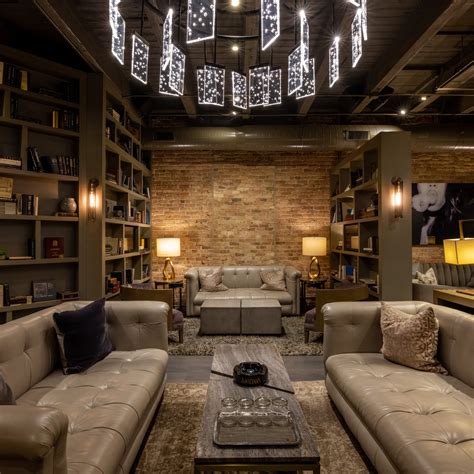

Photography courtesy of The Clayton.
The Enduring Tradition of the Smoking Room
The inspiration behind The Clayton has deep historical roots.
By the nineteenth century, dedicated smoking rooms had become established features of gentlemen’s clubs, fashionable residences, and hotels throughout Europe.
These rooms often incorporated comfortable furniture, decorative artwork, and richly finished interiors, providing a setting where guests could gather and enjoy conversation.
In American cities, cigar shops and private social clubs developed their own traditions around tobacco.
Chicago was no exception. Its tobacco history stretches back well into the nineteenth century, with establishments such as Iwan Ries & Co., whose origins date to 1857, serving generations of local smokers.
As social customs and regulations changed, the traditional smoking room gradually evolved into the modern cigar lounge.
The Clayton represents an interesting continuation of that history.
Although the club itself is relatively young, its atmosphere draws upon traditions established long before its doors opened.
It is a reminder that the history of smoking encompasses more than tobacco, pipes, and cigars. The places where people gathered to enjoy them have their own stories worth preserving.
Meeting Clay Wilson
One of the most enjoyable parts of my visit was having the opportunity to meet Clay and learn more about the club.
He was incredibly welcoming and generous with his time, personally guiding me through the establishment and sharing his enthusiasm for what he has helped create.
What stood out was the clear appreciation for atmosphere, hospitality, and the experience of spending time in a thoughtfully designed space.
The Clayton feels like the result of a carefully developed vision rather than simply an impressive collection of furnishings.
The artwork, lighting, architecture, and surrounding details complement one another remarkably well.
For a club of this scale, maintaining that feeling of intimacy and comfort is especially impressive.
A Modern Chapter in Cigar Culture
My visit to The Clayton offered a fascinating look at how the traditions of the cigar lounge continue to evolve.
Here, the charm of historic smoking rooms finds a new expression through modern architecture, thoughtful design, and an appreciation for the social customs surrounding cigars.
What makes The Clayton particularly memorable is not any single architectural feature or decorative element, but how naturally everything comes together.
The club is beautiful, comfortable, and full of character.
My sincere thanks to Clay Wilson for the wonderful hospitality and for taking the time to show me around.
The Clayton is a remarkable example of how the atmosphere and traditions surrounding cigar culture can endure, even as the world around them continues to change.
The Clayton — Chicago
212 N Canal Street
Chicago, Illinois 60606
Visit The Clayton’s Official Website
Written by Mike Anthony, founder of History of Smoke and Goodson Gallery.
Photography courtesy of The Clayton.